Loading video…


 20 Concepts
 18.6K views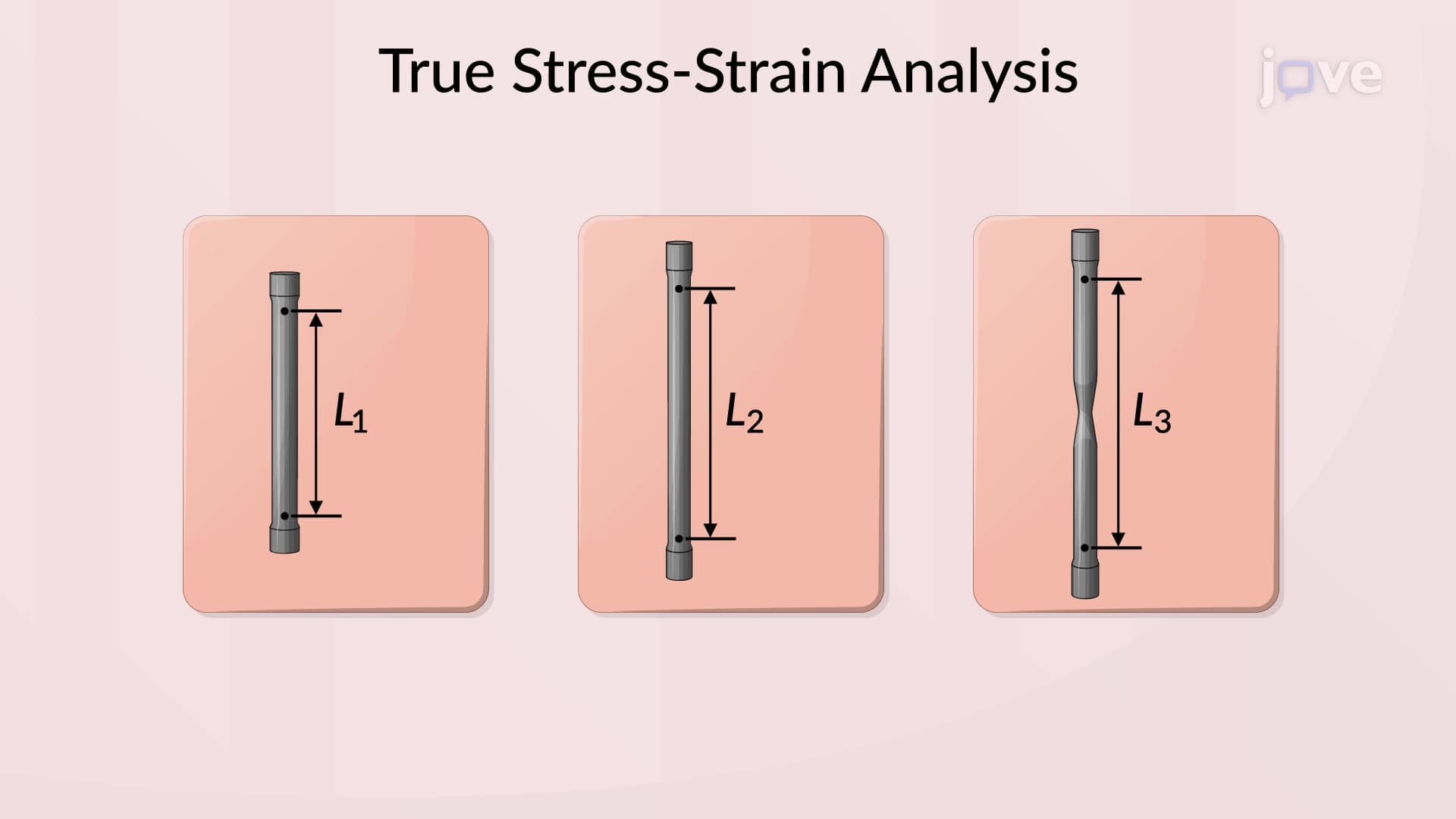

Video Summary: True Stress and True Strain Explained
Ever wonder why a steel cable gets thinner as you pull it harder, yet engineers often ignore this crucial detail in their calculations? True stress and true strain account for the actual changing dimensions of materials under load, unlike simplified engineering calculations that assume constant cross-sectional areas. When Boeing tests aluminum wing components or Ford evaluates steel frame durability, understanding True Stress And True Strain Explained becomes critical for accurate failure predictions and safety margins. Watch the full video on JoVE Coach to master this concept with expert-led visuals and step-by-step explanations.
True Stress And True Strain Explained represents a more accurate approach to analyzing material behavior under load compared to simplified engineering calculations. While engineering stress assumes constant cross-sectional area throughout testing, true stress accounts for the actual, continuously changing dimensions of the specimen. This distinction becomes critically important when materials undergo large deformations, particularly in ductile materials like aluminum, steel, and copper commonly tested in US materials laboratories.
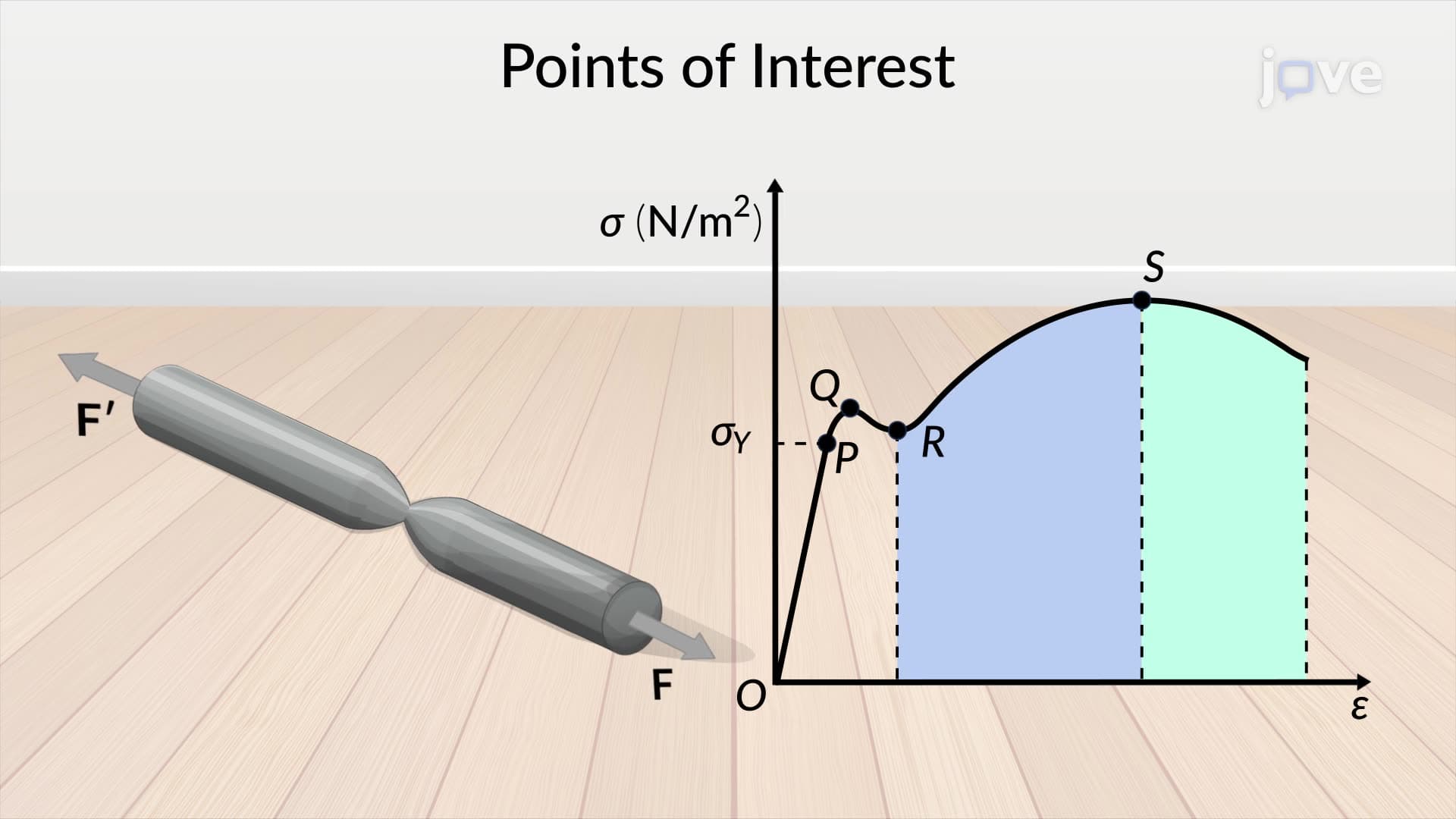
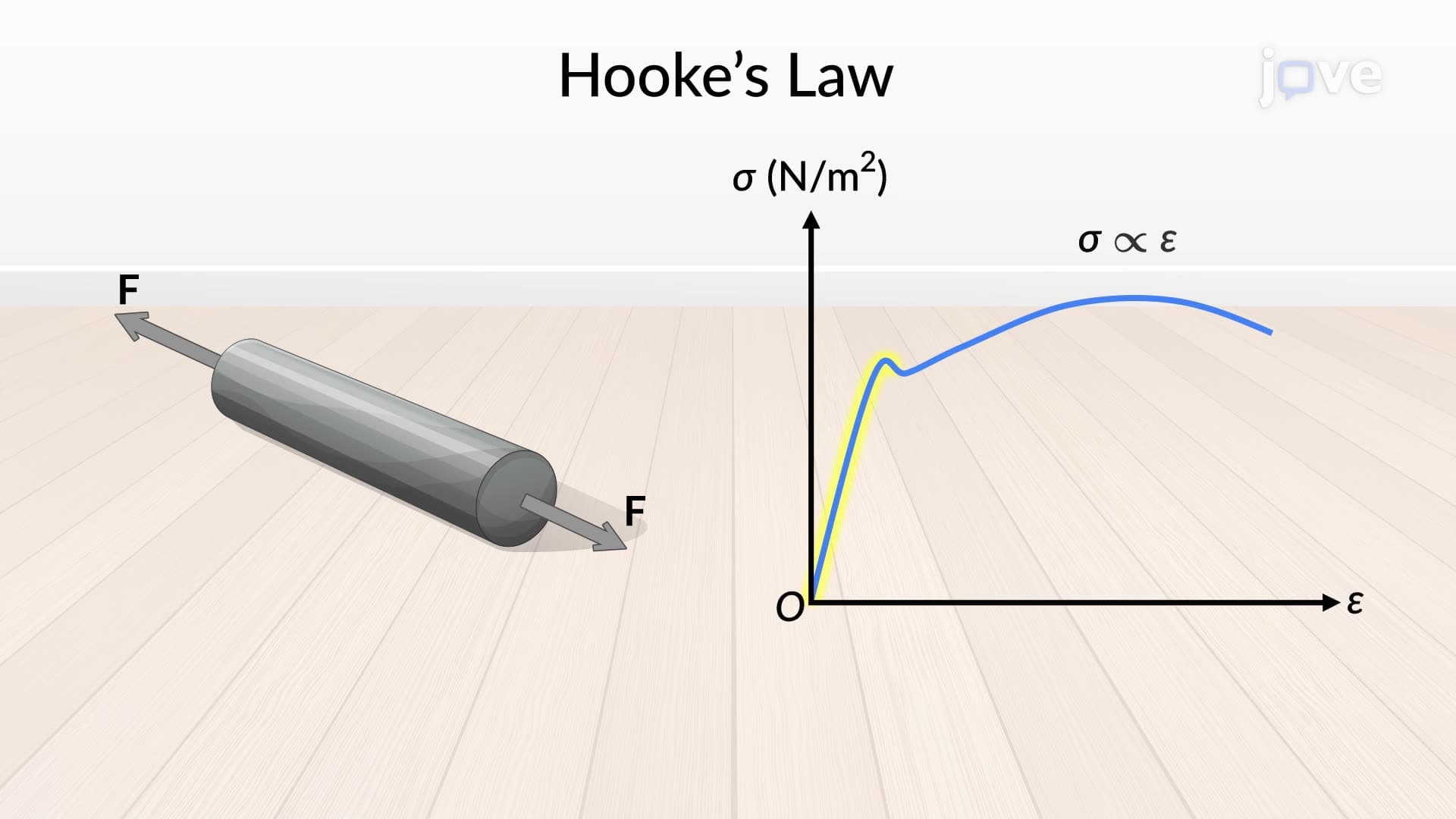
True stress equals the applied load divided by the instantaneous cross-sectional area at any given moment during deformation. As materials stretch and their cross-sections reduce, true stress values increase continuously-even during the necking phase where engineering stress appears to decrease. This phenomenon explains why aerospace companies like Lockheed Martin and SpaceX rely on true stress-strain data when designing critical components that must withstand extreme loading conditions.
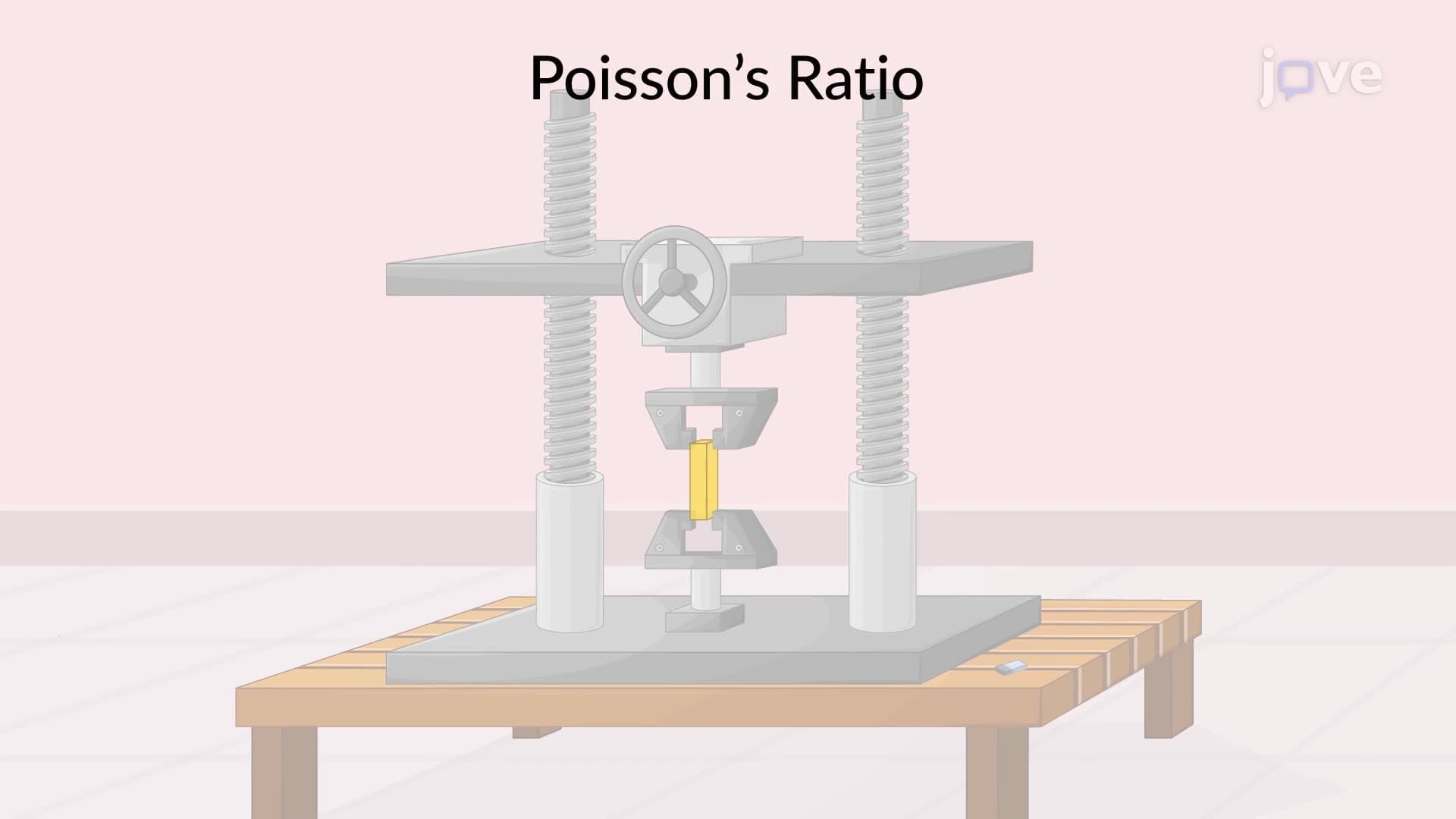
Consider a tensile test specimen in a university materials lab: as the 0.5-inch diameter steel rod stretches, its diameter shrinks to perhaps 0.3 inches at failure. Engineering stress calculations would use the original 0.5-inch diameter throughout, while true stress accounts for the actual 0.3-inch diameter, providing significantly higher-and more accurate-stress values.
True strain calculation involves summing incremental strain values as the material deforms. Unlike engineering strain, which uses only initial and final lengths, true strain considers each successive change in gauge length divided by the corresponding instantaneous length. This approach captures the complete deformation history, making it invaluable for understanding material behavior in applications ranging from automotive crash testing to biomedical implant design.
Students preparing for AP Physics exams, college materials science courses, or engineering licensure examinations frequently encounter true stress-strain concepts. Understanding these principles proves essential for solving problems involving large deformations, predicting material failure modes, and designing safe structures. The consistency of true stress-strain diagrams across different loading conditions makes them particularly valuable for comparative materials analysis in both academic and professional settings.
Related Micro-courses