Loading video…


 20 Concepts
 18.6K views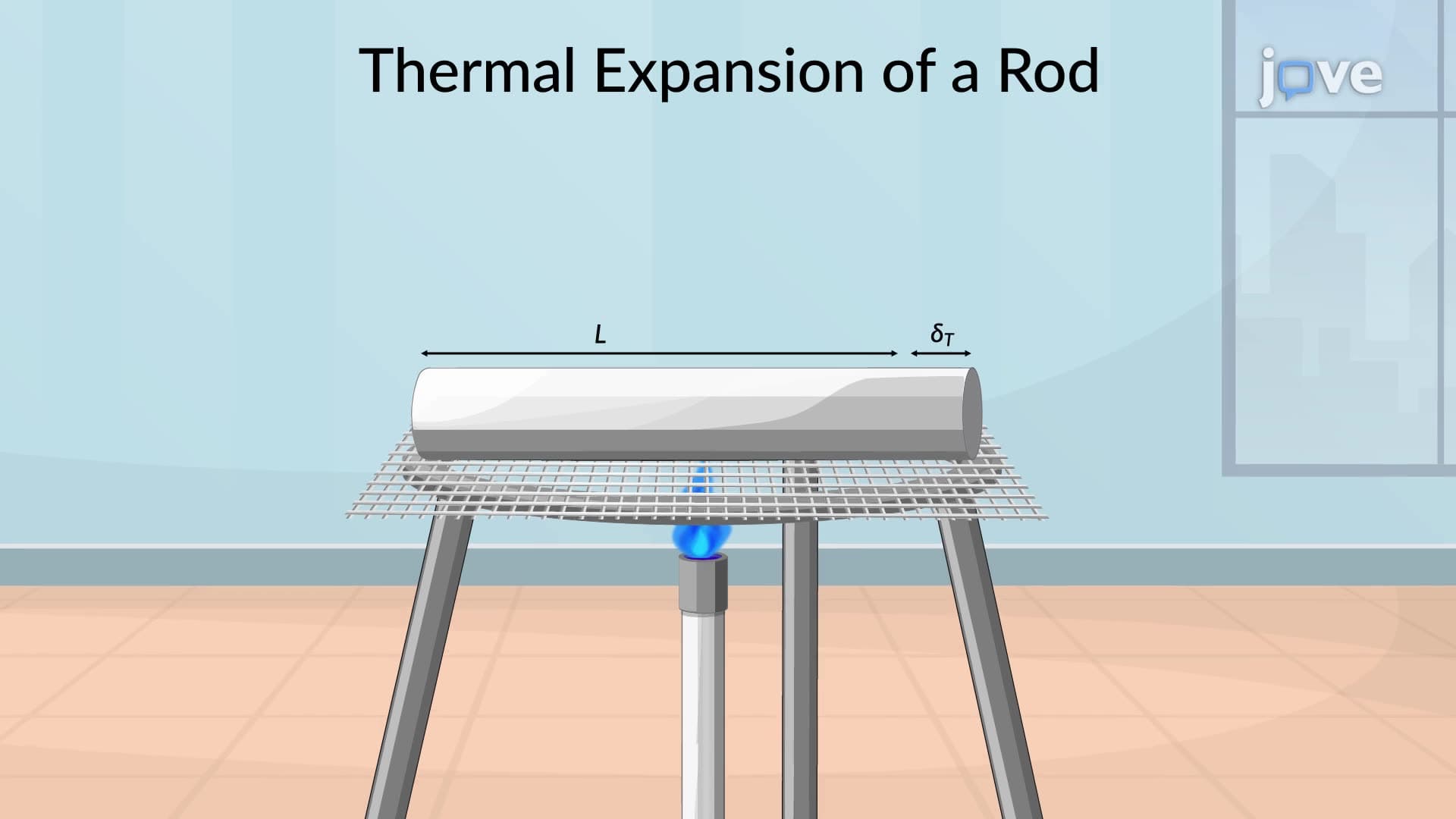

Video Summary: What Is Thermal Strain
Ever wonder why bridges have expansion joints or why railroad tracks have gaps between them? Thermal strain occurs when materials expand or contract due to temperature changes, like when steel railroad tracks expand on hot summer days across the American Southwest. This fundamental engineering concept explains how materials behave under temperature variations, from the Mackinac Bridge in Michigan to skyscrapers in New York City. Watch the full video on JoVE Coach to master this concept with expert-led visuals and step-by-step explanations.
What is thermal strain represents a fundamental concept in materials science and structural engineering. Unlike mechanical strain caused by external forces, thermal strain results purely from temperature changes in materials. When a material experiences a temperature increase, its atoms vibrate more vigorously, causing the material to expand. Conversely, cooling causes contraction. This phenomenon occurs in everything from the concrete in the Hoover Dam to the steel cables of the Golden Gate Bridge.
The magnitude of thermal strain depends on three key factors: the temperature change, the material's original dimensions, and the coefficient of thermal expansion-a material property that quantifies how much a substance expands per degree of temperature change.
When materials can expand or contract freely, they experience pure thermal strain without developing internal stress. Consider a steel beam lying on a construction site in Phoenix, Arizona. As temperatures soar from 70°F in the morning to 115°F by afternoon, the beam expands according to its thermal properties. Since nothing prevents this expansion, the material experiences thermal strain but remains stress-free.
This thermal strain definition encompasses the fundamental principle that free thermal expansion creates deformation without internal forces. Engineers must account for this behavior when designing structures that experience significant temperature variations, such as pipelines crossing different climate zones or buildings in regions with extreme seasonal temperature swings.
The scenario changes dramatically when thermal expansion is prevented by constraints. Imagine a steel rod fixed between two immovable concrete walls in a laboratory setting. When heated, the rod wants to expand but cannot due to the rigid constraints. This creates a fascinating engineering situation: the material develops significant internal stress despite experiencing zero net deformation.
Understanding thermal strain in constrained systems requires recognizing that the prevented expansion creates compressive stress within the material. This principle explains why expansion joints are crucial in structures like the runways at Los Angeles International Airport or the concrete slabs of Interstate highways across temperature-variable regions like Colorado.
Engineers use a clever analytical approach to determine thermal stress in constrained systems. They first calculate how much the material would expand if unconstrained, then determine the force required to compress it back to its original length. This force divided by the cross-sectional area gives the thermal stress-a critical parameter for structural design and safety analysis.
This concept frequently appears on AP Physics exams, college engineering courses, and professional engineering licensing exams, making it essential knowledge for students pursuing STEM careers. Understanding these principles helps explain real-world phenomena and prepares students for advanced coursework in mechanical engineering, civil engineering, and materials science.
Related Micro-courses