Loading subject page…

- Analytical Chemistry
- Introduction to Separation Methods
- Extraction: Effects of pH
Micro-course: Introduction to Separation Methods
36,662 views
Learn key concepts and earn your certificate.


Extraction: Effects of pH

00:00
00:53
Video Summary: What Is Extraction Effects of Ph
Ever wondered why caffeine extraction from coffee beans requires specific acid conditions, or how pharmaceutical companies purify medications? Extraction pH effects determine whether organic compounds dissolve in water or organic solvents by controlling their ionization state. The FDA relies on pH-controlled extraction to separate active ingredients from impurities during drug manufacturing. Understanding what is extraction effects of pH reveals how chemists manipulate molecular charge through acid-base chemistry to achieve selective separations. Watch the full video on JoVE Coach to master this concept with expert-led visuals and step-by-step explanations.
- Understand what is extraction effects of pH and how protonation states control solubility between aqueous and organic phases
- Identify the relationship between partition coefficients, distribution coefficients, and pH-dependent molecular behavior
- Analyze how weak bases convert to water-soluble salt forms when pH changes affect their ionization
- Compare the solubility of neutral molecules versus their ionized conjugate acids in different solvent systems
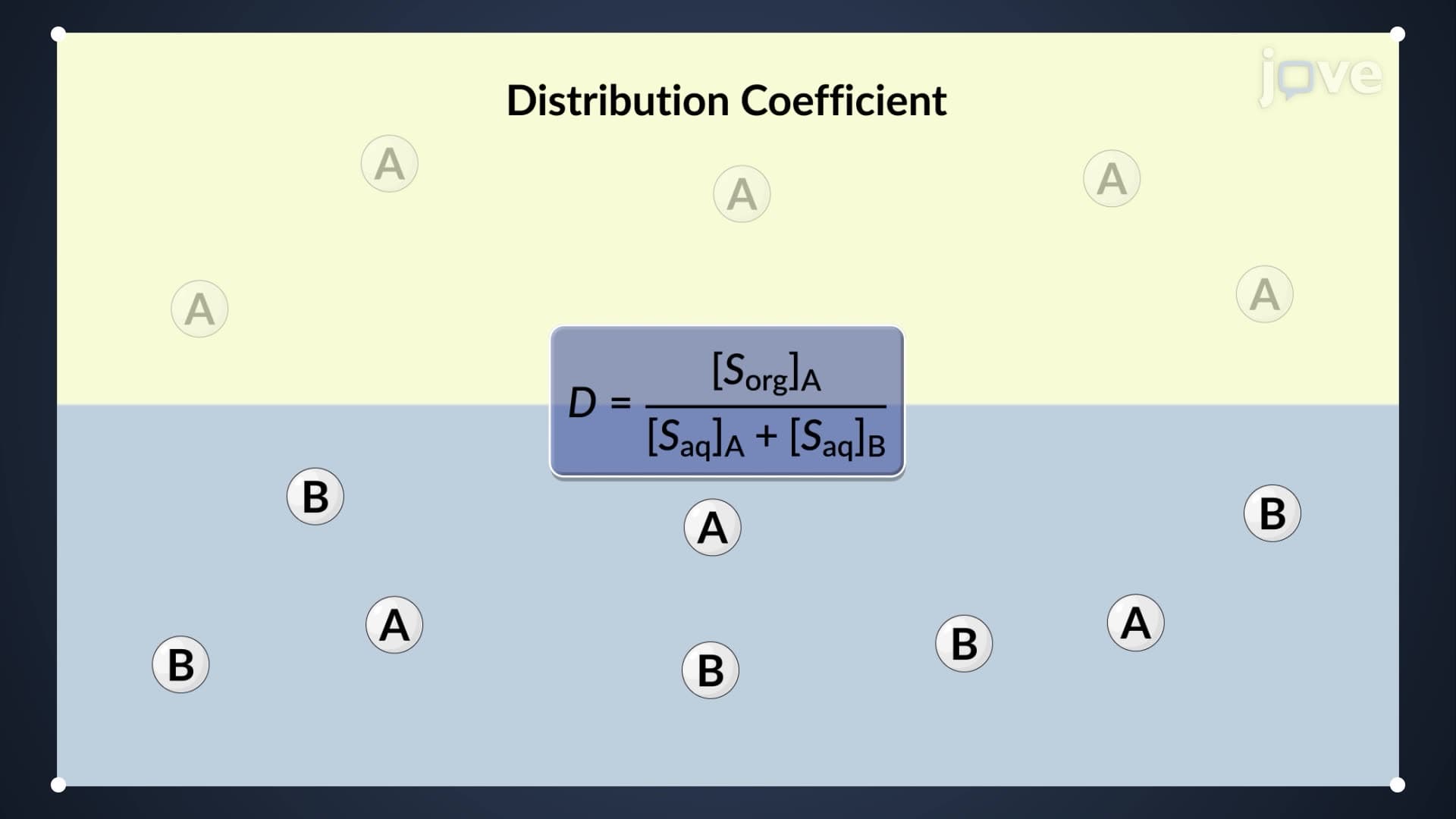
- Evaluate distribution ratios using acid dissociation constants (Ka) and partition coefficients (K) in quantitative calculations
- Apply pH manipulation techniques to predict extraction efficiency for organic bases and acids
- Recognize real-world applications in pharmaceutical purification, environmental remediation, and analytical chemistry
- Explore how pH-selective extraction enables separation of complex mixtures in industrial processes
Understanding What is Extraction Effects of pH
Extraction pH effects represent a fundamental principle where the acidity or basicity of a solution determines how efficiently target compounds transfer between immiscible phases. This concept builds on acid-base equilibrium and partition behavior, making it essential for AP Chemistry students and college-level analytical chemistry courses.
pH-Dependent Ionization and Solubility Changes
When organic bases encounter different pH environments, their molecular structure fundamentally changes. At high pH (basic conditions), weak bases like caffeine or nicotine exist predominantly in their neutral form, favoring organic solvents like chloroform or ethyl acetate. However, lowering the pH converts these bases to their protonated conjugate acids (BH+), which become highly water-soluble due to their charged nature.
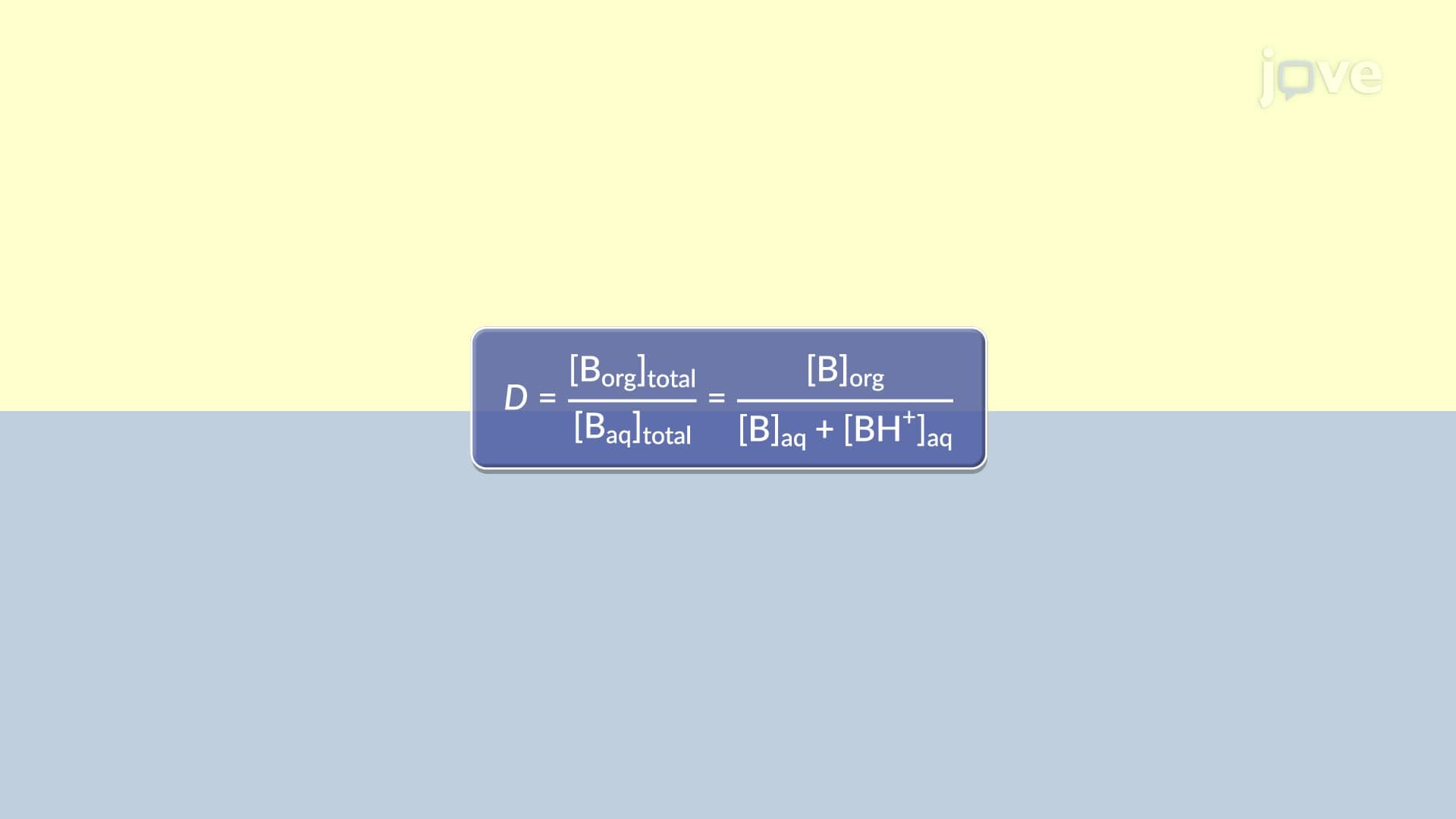
The mathematical relationship follows: D = K / (1 + [H+]/Ka), where D represents the distribution coefficient, K is the partition coefficient, and Ka is the acid dissociation constant. This equation appears frequently on MCAT practice exams and college analytical chemistry midterms.
Real-World Applications in US Industries
Pharmaceutical manufacturing exemplifies pH effect on solvent extraction through active pharmaceutical ingredient (API) purification. Companies like Pfizer and Johnson & Johnson use pH-controlled extraction to separate morphine from opium extracts, adjusting pH to 9-10 for organic extraction, then acidifying to pH 2-3 to recover the purified alkaloid in aqueous solution.
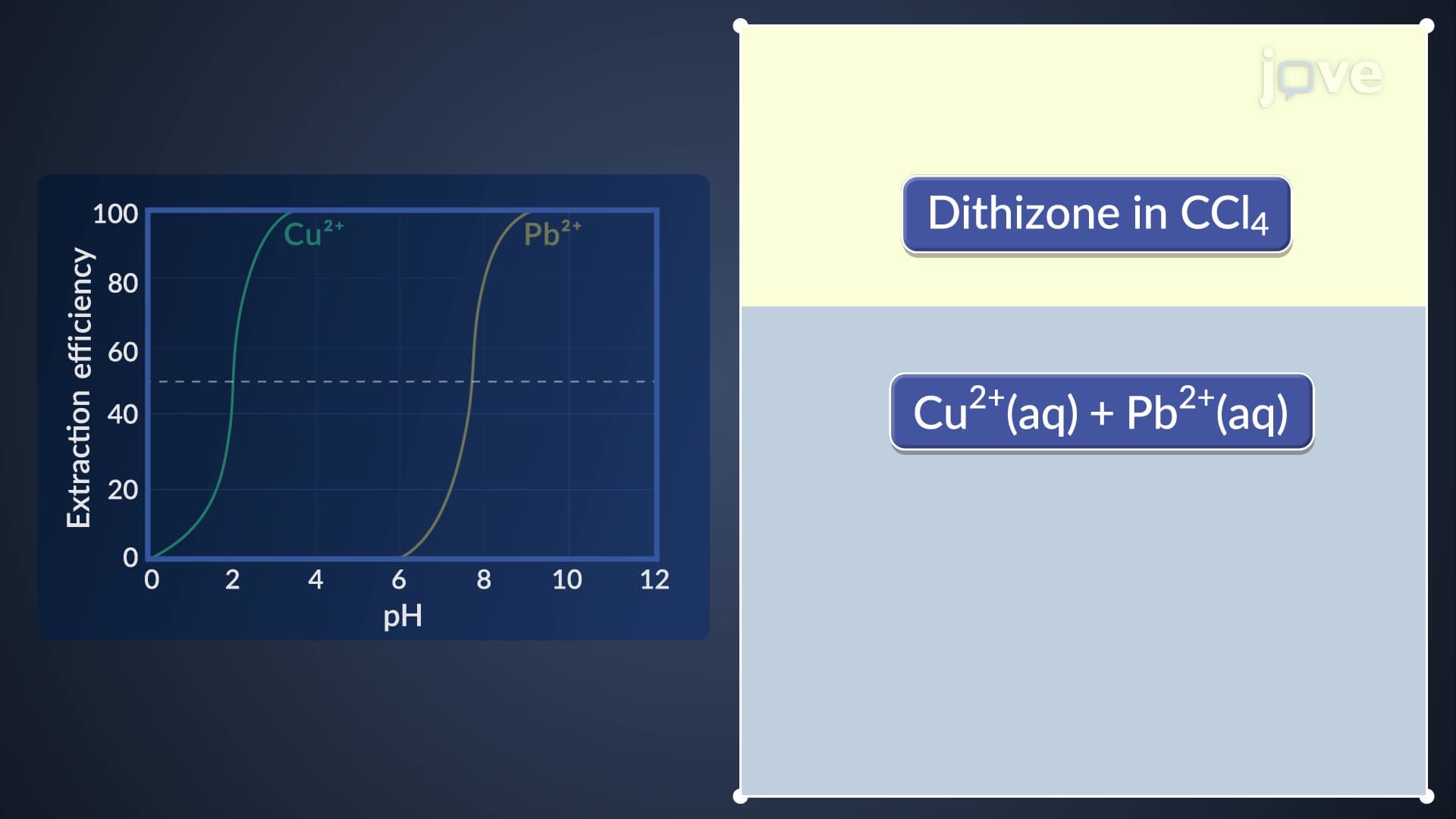
Environmental remediation projects across contaminated US Superfund sites employ pH selective extraction to remove heavy metals from contaminated groundwater. The EPA mandates specific pH ranges for metal extraction: copper extraction optimizes at pH 8-9, while lead extraction requires pH 6-7 conditions.
Quantitative Prediction of Extraction Efficiency
Understanding how pH influences extraction efficiency enables chemists to calculate optimal conditions before expensive pilot studies. The fraction of neutral base in aqueous phase equals [H+]/([H+] + Ka), providing quantitative predictions for extraction yield. Students encounter these calculations on AP Chemistry free-response questions and college organic chemistry exams, making mastery essential for academic success.
Frequently Asked Questions
Extraction pH effects describe how acid-base conditions control whether molecules dissolve in water or organic solvents by changing their electrical charge. When pH changes, molecules can switch from neutral (organic-loving) to charged (water-loving) forms. This principle enables chemists to selectively separate compounds from complex mixtures.
AP Chemistry commonly tests pH extraction through equilibrium calculations and solubility predictions. Students analyze distribution coefficients, calculate extraction efficiency using Ka values, and predict optimal pH ranges for separations. These concepts integrate acid-base equilibria with organic chemistry principles, appearing in both multiple-choice and free-response sections.
MCAT General Chemistry and Organic Chemistry sections frequently test extraction concepts through amino acid purification scenarios, pharmaceutical isolation problems, and biochemical separation techniques. Students must understand how pH affects ionizable functional groups, calculate isoelectric points, and predict solubility behavior across different pH ranges for biological molecules.
Major US pharmaceutical manufacturers like Merck and Bristol Myers Squibb use pH-controlled extraction to purify antibiotics, isolate plant-derived medications, and separate enantiomers. For example, aspirin synthesis requires pH adjustment to convert salicylic acid derivatives between water-soluble and organic-soluble forms during multi-step purification processes.
Students with solid acid-base chemistry foundations can master extraction pH effects through systematic practice. The concept builds logically on familiar equilibrium principles, requiring only additional understanding of partition behavior. Most students succeed by focusing on the ionization-solubility connection rather than memorizing complex equations.
Create systematic problem-solving flowcharts connecting pH, pKa values, and molecular charge states to solubility predictions. Practice with diverse molecule types (acids, bases, amphoteric compounds) using real pharmaceutical examples. Focus on conceptual understanding before attempting quantitative calculations, and always verify answers using limiting case analysis.
Environmental consulting firms across the US hire chemists specializing in pH-controlled metal extraction for contaminated site remediation. Understanding optimal pH ranges for different metals enables design of treatment systems for mining waste, industrial discharge, and groundwater contamination. This expertise leads to positions with companies like AECOM and CH2M Hill.
Students should investigate liquid-liquid extraction optimization, countercurrent extraction systems, and supercritical fluid extraction techniques. Advanced studies include chelation chemistry for metal separations, chiral resolution through pH control, and biotechnology applications like protein purification using pH gradients in industrial bioreactors.
Related Micro-courses

14 Concepts
13 Concepts