Loading subject page…


49,600 views

Video Summary: What are G Protein Coupled Receptors
Did you know that nearly 40% of all prescription medications in the United States target G protein coupled receptors? These remarkable cellular gatekeepers control everything from your heart rate when you take a beta-blocker like propranolol to your allergic reactions when you use antihistamines. What are G protein coupled receptors, and how do they manage to influence so many vital processes in your body? These seven-transmembrane proteins act as molecular switches, detecting signals outside cells and triggering cascades of responses inside. Watch the full video on JoVE Coach to master this concept with expert-led visuals and step-by-step explanations.
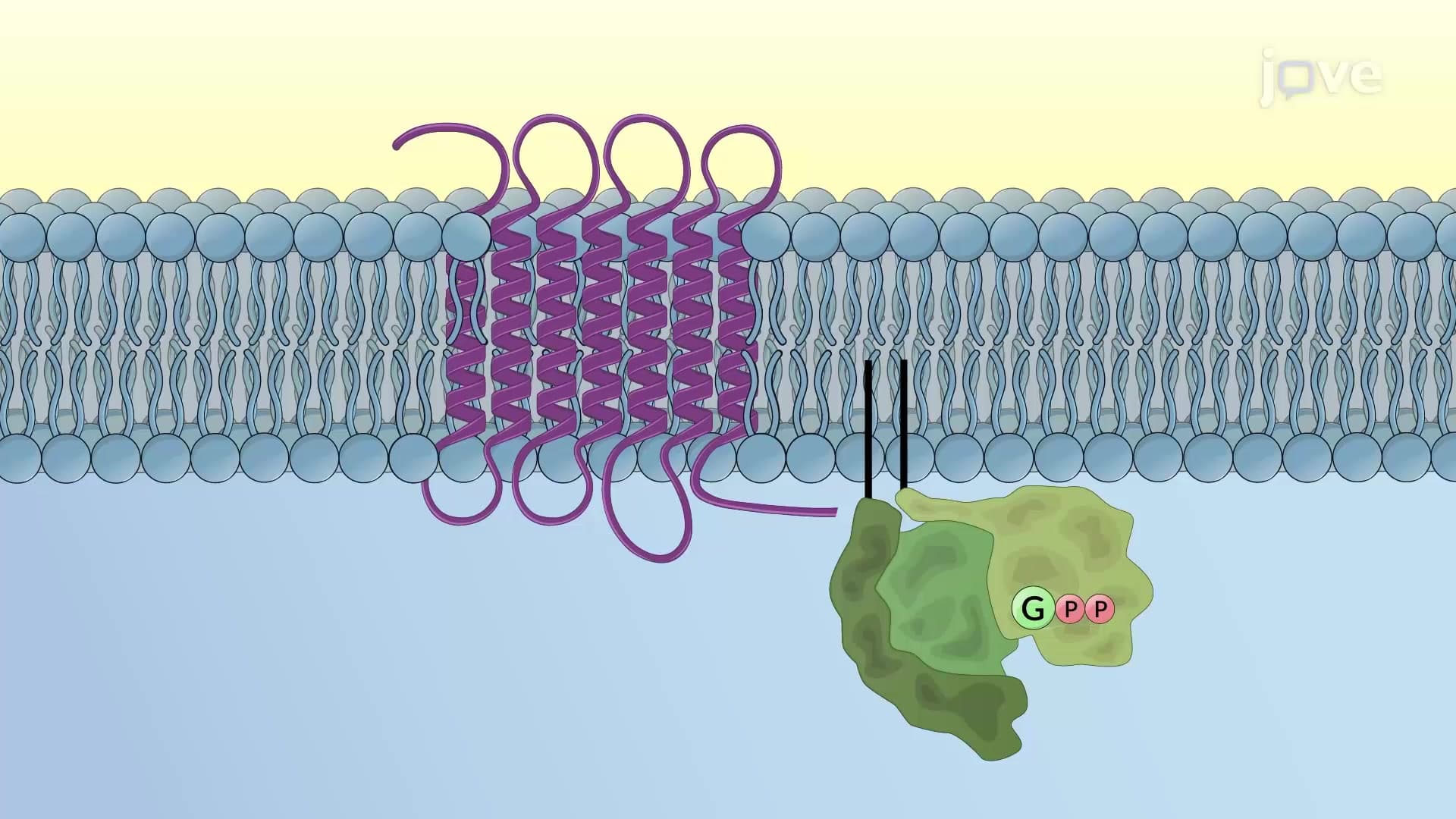
G protein coupled receptors represent one of evolution's most successful solutions to cellular communication. These proteins span cell membranes seven times, creating a snake-like structure that can detect an enormous variety of signals-from light photons hitting your retina to adrenaline surging through your bloodstream during stress. The "coupled" in their name refers to their partnership with heterotrimeric G proteins, specialized molecular machines that translate receptor activation into cellular responses.
The GPCR structure and function relationship exemplifies the principle that form follows function in biology. Each receptor contains seven alpha-helical segments that weave through the cell membrane, creating extracellular loops for ligand binding and intracellular domains for G protein interaction. When a hormone like epinephrine binds to a beta-adrenergic receptor, it causes subtle but crucial conformational changes that expose binding sites for G proteins on the receptor's intracellular surface. This structural flexibility allows GPCRs to act as biological switches, existing in "off" and "on" states.
Understanding how G protein coupled receptors work in signaling reveals nature's elegant amplification system. Upon activation, GPCRs catalyze the exchange of GDP for GTP on the G protein alpha subunit, causing it to dissociate from the beta-gamma subunits. The activated alpha subunit then modulates effector enzymes like adenylyl cyclase or phospholipase C. A single activated GPCR can activate multiple G proteins, each of which can activate multiple effector molecules, creating exponential signal amplification. This explains how trace amounts of hormones can produce dramatic physiological responses.
The pharmaceutical industry's heavy investment in GPCR research reflects these receptors' therapeutic importance. Beta-blockers like metoprolol target cardiac GPCRs to treat hypertension, while antipsychotic medications like haloperidol block dopamine receptors in the brain. Students preparing for the MCAT will encounter GPCR questions in both biological sciences passages and discrete questions, while AP Biology students should understand GPCR signaling for the cell communication unit. The 2012 Nobel Prize awarded to Americans Robert Lefkowitz and Brian Kobilka underscores GPCRs' scientific significance and their continued importance in advancing precision medicine approaches.
Related Micro-courses