Loading subject page…
- Math Fundamentals
- Trigonometry
- Trigonometry of Right Triangles
Micro-course: Trigonometry
641 views
Learn key concepts and earn your certificate.






Trigonometry of Right Triangles

00:00
01:29
Video Summary: What are Trigonometry of Right Triangles
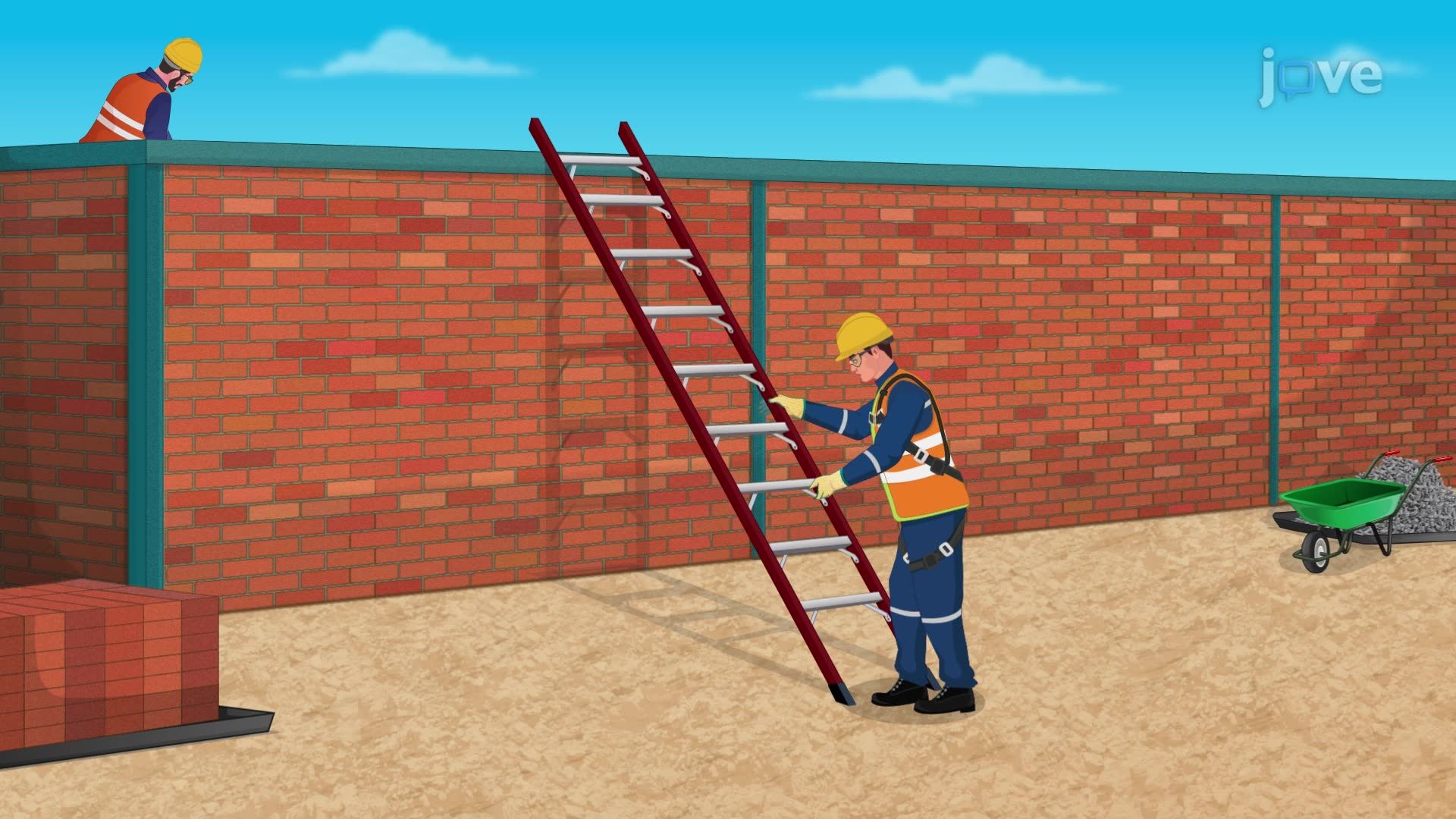
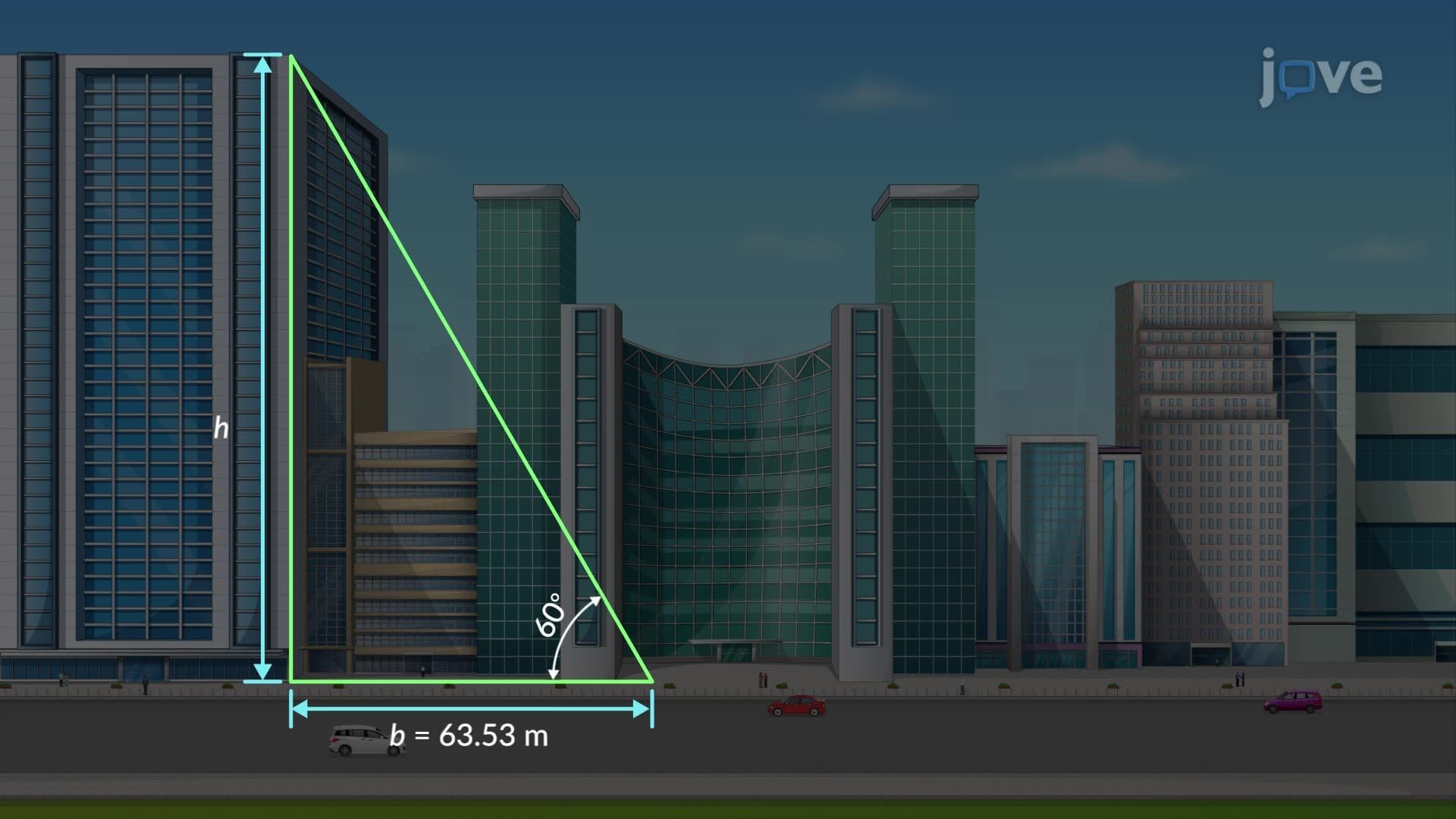
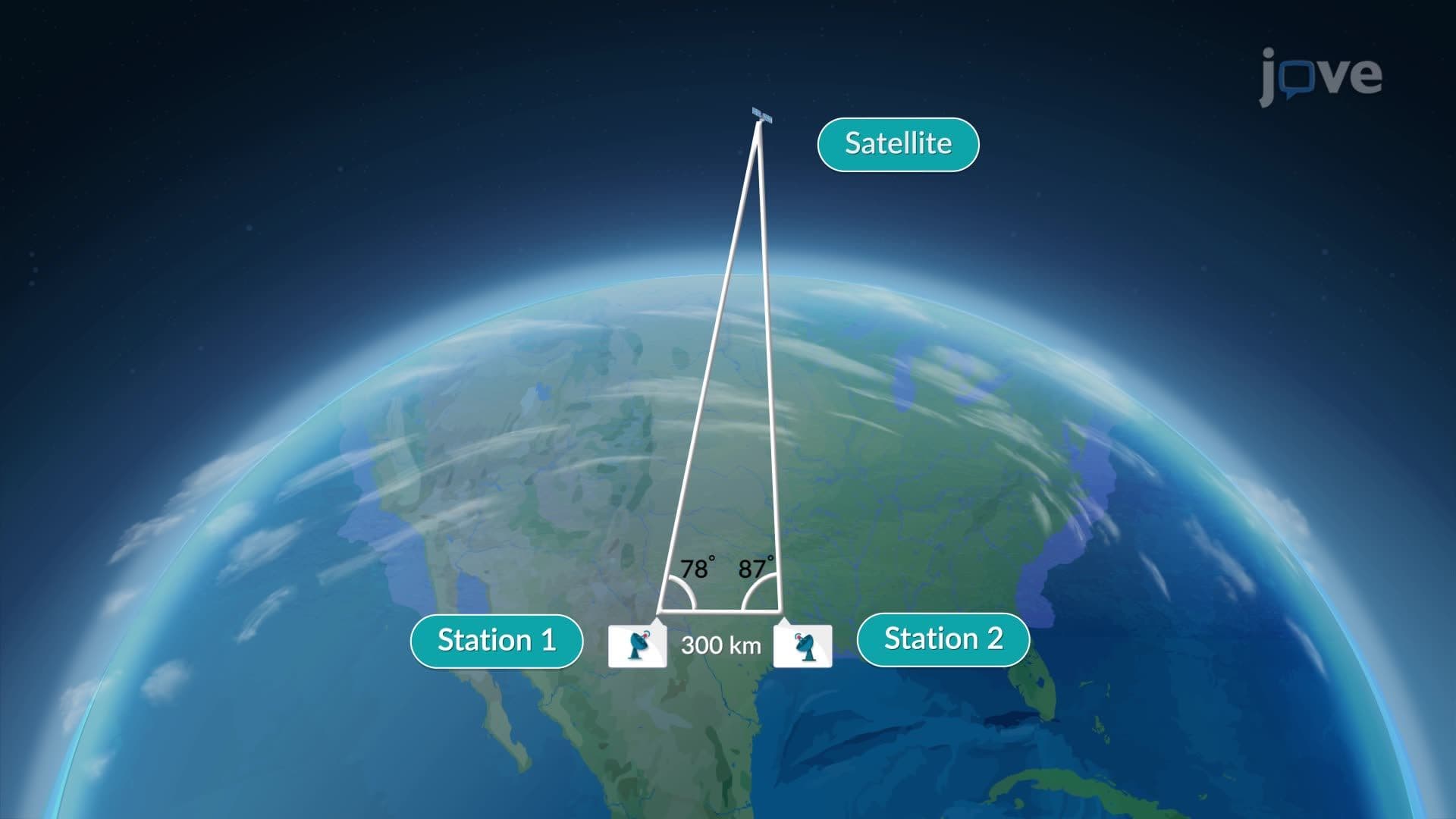
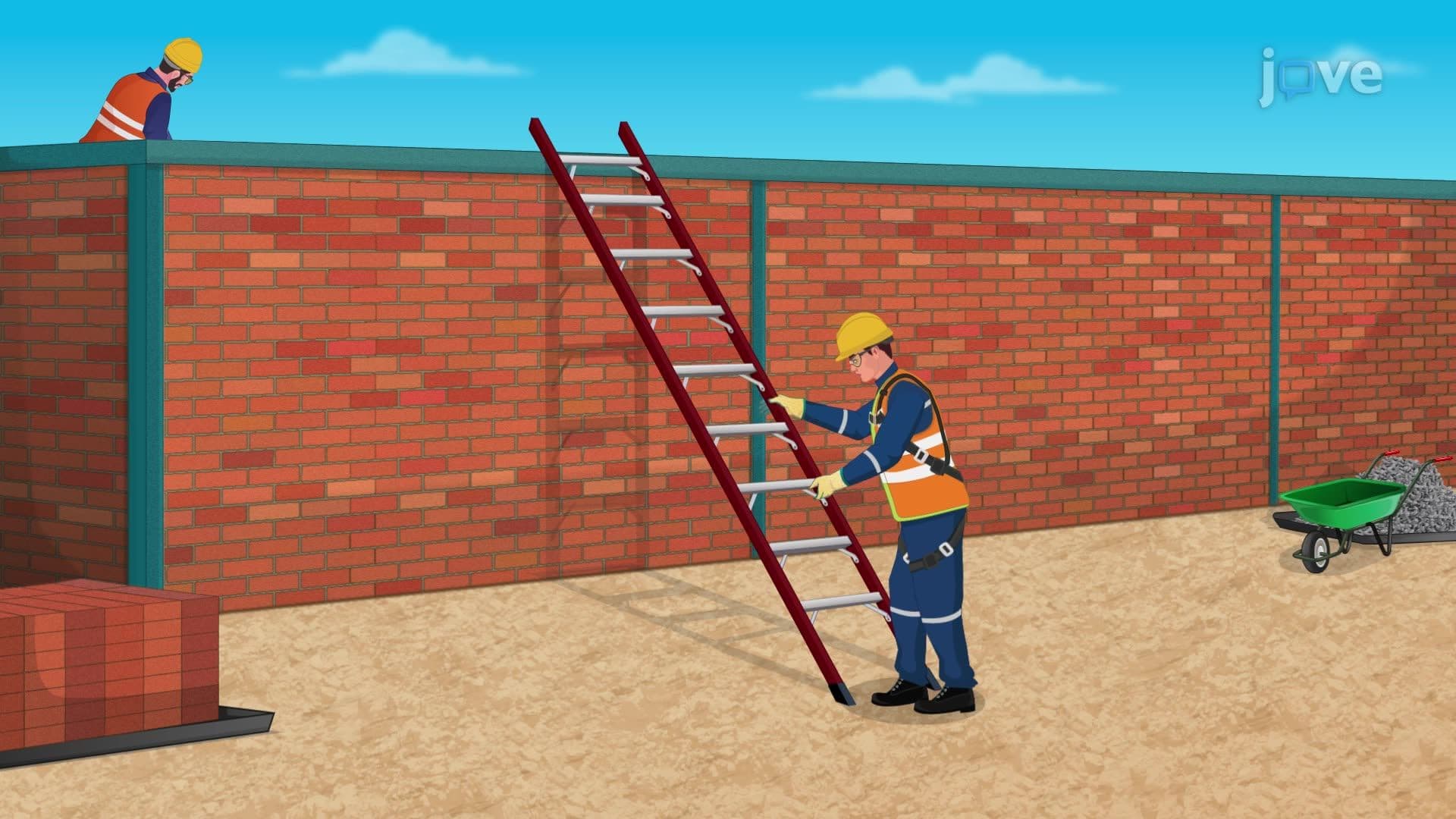
Ever wonder how construction workers ensure a ladder won't slip? The trigonometry of right triangles provides the mathematical foundation for calculating safe angles and distances in countless real-world scenarios. From determining the optimal angle for a ladder against a building in New York to calculating transmission tower heights across Texas, these fundamental relationships between sine, cosine, and tangent ratios solve practical problems daily. Watch the full video on JoVE Coach to master this concept with expert-led visuals and step-by-step explanations.
- Understand what trigonometry of right triangles means and how it defines relationships between triangle sides using sine, cosine, and tangent ratios
- Identify the three primary trigonometric ratios (sine, cosine, tangent) and their mathematical relationships to opposite, adjacent, and hypotenuse sides
- Analyze how sine relates the opposite side to the hypotenuse, cosine compares adjacent to hypotenuse, and tangent compares opposite to adjacent
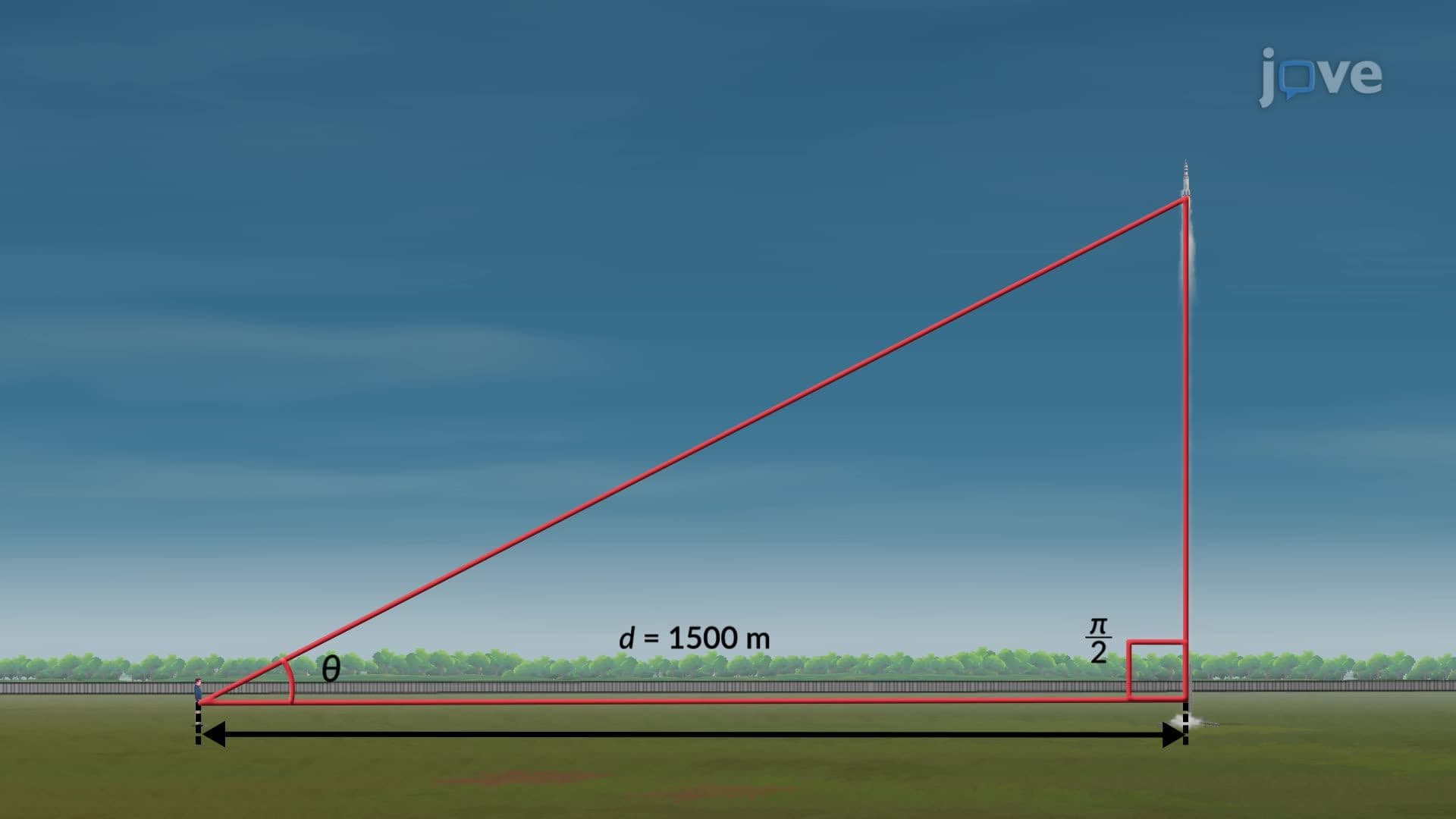
- Apply trigonometric ratios to solve real-world problems involving angles of elevation, ladder safety, and height calculations
- Recognize that trigonometric ratios remain constant for similar right triangles regardless of their actual size
- Evaluate why sine and cosine values always fall between zero and one for acute angles in right triangles
- Explore practical applications in construction, engineering, and surveying using trigonometric calculations
- Compare different trigonometric approaches to solve the same geometric problem using multiple ratios
Understanding Trigonometry of Right Triangles Fundamentals
Trigonometry of right triangles forms the cornerstone of geometric problem-solving, establishing precise mathematical relationships between angles and side lengths. Unlike general trigonometry that deals with any triangle, right triangle trigonometry focuses specifically on triangles containing one 90-degree angle, making calculations more straightforward and applicable to countless real-world situations.
The power of this mathematical approach lies in its consistency: regardless of a right triangle's size, the ratios between its sides remain identical for any given angle. This principle enables engineers designing the Golden Gate Bridge in San Francisco to use the same trigonometric relationships that a high school student uses to solve homework problems.
The Three Essential Trigonometric Ratios
The foundation rests on three primary ratios that define relationships between a right triangle's sides. Sine (sin) represents the ratio of the opposite side to the hypotenuse, providing crucial information for calculating vertical distances and angles of elevation. Cosine (cos) compares the adjacent side to the hypotenuse, essential for horizontal distance calculations. Tangent (tan) relates the opposite side to the adjacent side, particularly useful when the hypotenuse is unknown.
These ratios appear frequently on standardized tests including the SAT Math Level 2, AP Calculus exams, and college placement tests. Students preparing for the MCAT will encounter trigonometric applications in physics problems, while engineering students use these concepts throughout calculus and physics coursework.
Real-World Applications Across Industries
Construction professionals rely heavily on trigonometric calculations for structural integrity and safety compliance. When installing roofing in Denver, contractors use sine and cosine ratios to determine proper pitch angles that comply with local building codes. Surveyors mapping property boundaries in Texas employ tangent ratios to calculate distances across inaccessible terrain.
The telecommunications industry uses these principles extensively when positioning cell towers and satellite dishes. Engineers calculating optimal antenna angles for maximum signal coverage in cities like Chicago apply the same trigonometric relationships students learn in Algebra II and Pre-Calculus courses.
Mastering Problem-Solving Strategies
Successful application requires understanding which ratio to use based on known and unknown information. When given an angle and the hypotenuse, sine and cosine ratios provide direct solutions. Problems involving only the two legs of a triangle typically require tangent ratios. Advanced applications might combine multiple ratios or use inverse trigonometric functions to find unknown angles.
Frequently Asked Questions
Trigonometry of right triangles is the study of relationships between angles and sides in triangles with one 90-degree angle. It's essential because it provides practical tools for solving real-world problems in construction, engineering, navigation, and physics. These mathematical relationships appear in everything from building design to GPS technology.
The three fundamental types are sine (opposite/hypotenuse), cosine (adjacent/hypotenuse), and tangent (opposite/adjacent). Each ratio serves specific purposes: sine for vertical calculations, cosine for horizontal distances, and tangent when working without the hypotenuse. Mastering these three ratios solves most right triangle problems.
SAT Math sections typically include 2-3 trigonometry questions focusing on basic ratio applications and word problems. AP Calculus exams incorporate trigonometric functions in derivative and integral problems. Students should practice identifying which ratio to use and setting up equations from word problems for optimal test performance.
Absolutely. College algebra, pre-calculus, calculus, and physics courses extensively use trigonometric concepts. Engineering students apply these principles in statics, dynamics, and structural analysis. Even business students encounter trigonometry in statistics and economics modeling, making this foundational knowledge valuable across multiple disciplines.
Construction professionals use sine ratios to calculate roof slopes, cosine ratios for determining horizontal distances when only angles and diagonal measurements are known, and tangent ratios for setting proper ladder angles (typically 75-76 degrees for safety). Electricians use these calculations when installing conduit runs and determining wire lengths.
While basic algebra skills help, right triangle trigonometry is quite manageable with consistent practice. The key is memorizing the three basic ratios (SOH-CAH-TOA helps) and practicing word problem setup. Most students succeed by focusing on identifying known and unknown values before selecting the appropriate ratio.
Focus on memorizing the three basic ratios and practice converting word problems into mathematical equations. Create flashcards for common angle values (30°, 45°, 60°) and their corresponding ratios. Time yourself solving problems and practice using a calculator efficiently, since most standardized tests allow calculator use for trigonometric calculations.
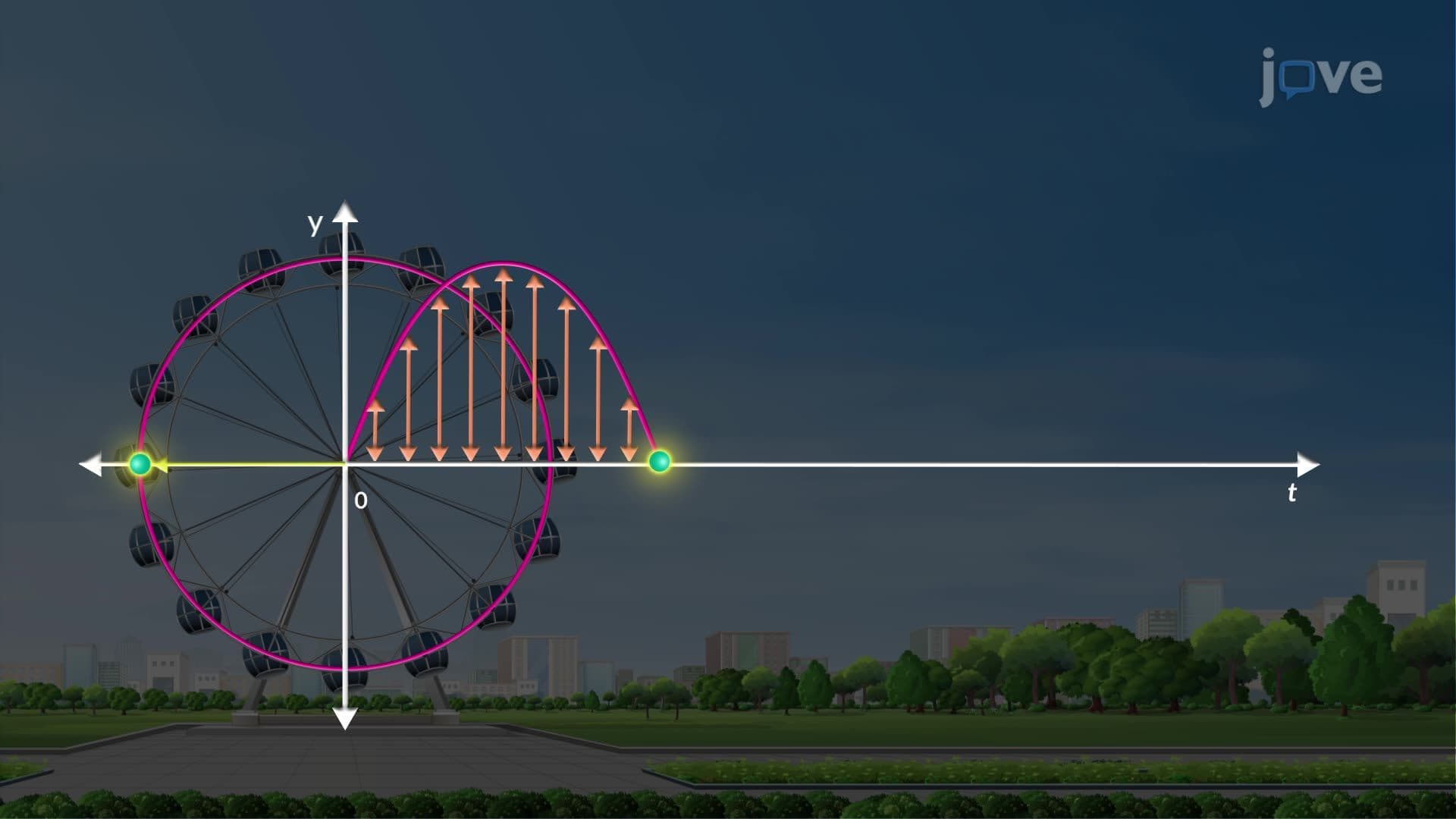
Progress to the unit circle, trigonometric identities, and the Law of Sines and Cosines for non-right triangles. These concepts build naturally from right triangle foundations and prepare students for pre-calculus and calculus courses. Understanding periodic functions and graphing trigonometric equations represents the next logical step in mathematical development.
Related Micro-courses
4 Concepts

8 Concepts
7 Concepts