Loading subject page…


18,577 views

Video Summary: What Is Hookes Law
Ever wonder why a diving board springs back after a diver jumps, or why the Golden Gate Bridge can flex in strong winds without breaking? Hooke's law explains this fascinating relationship between applied force and material deformation. This fundamental physics principle states that stress is directly proportional to strain within a material's elastic limit, with the modulus of elasticity serving as the crucial proportionality constant. From analyzing steel beams in skyscrapers to understanding composite materials in aerospace applications, What is Hooke's Law becomes essential for engineering design and safety calculations. Watch the full video on JoVE Coach to master this concept with expert-led visuals and step-by-step explanations.
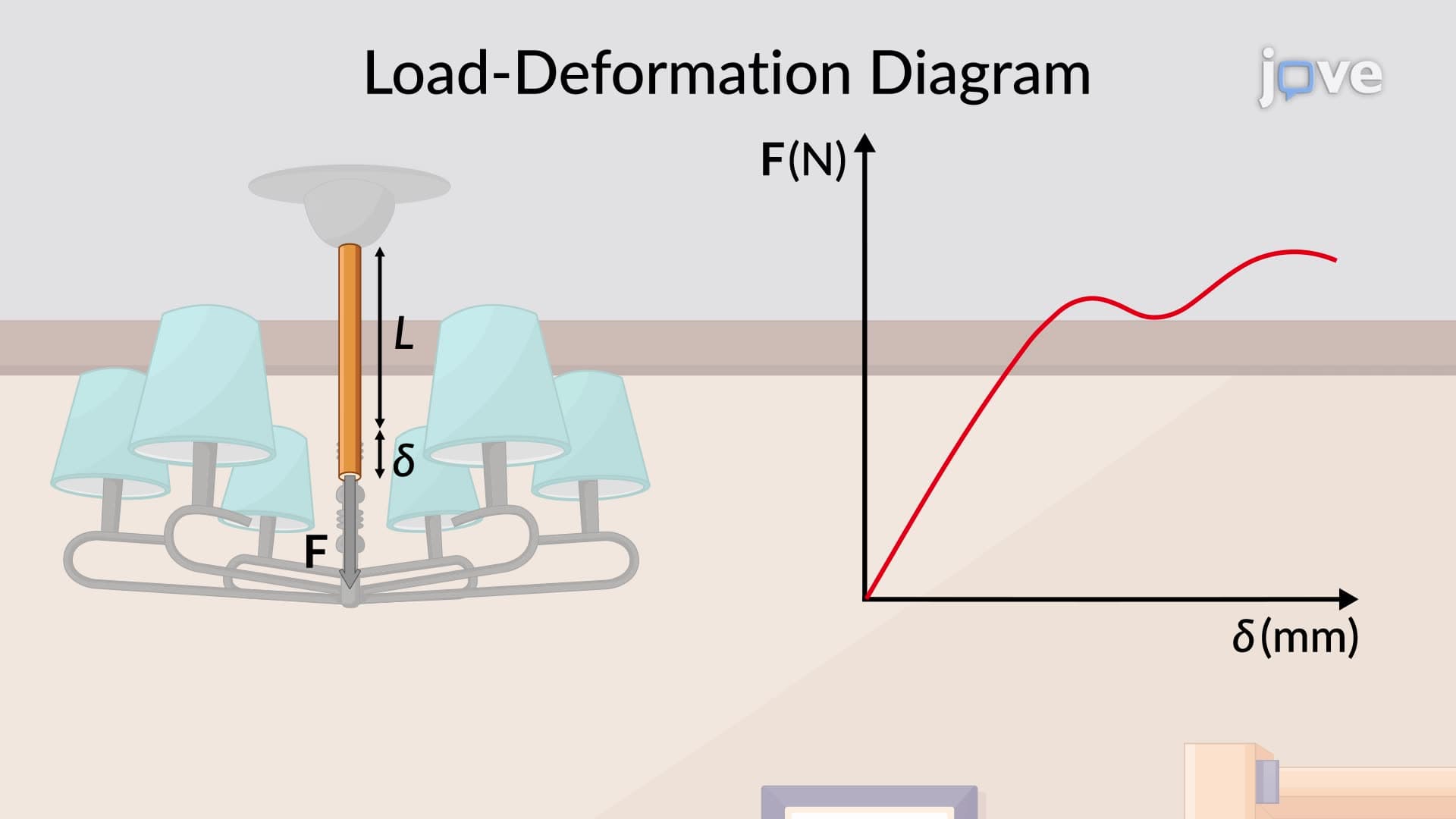
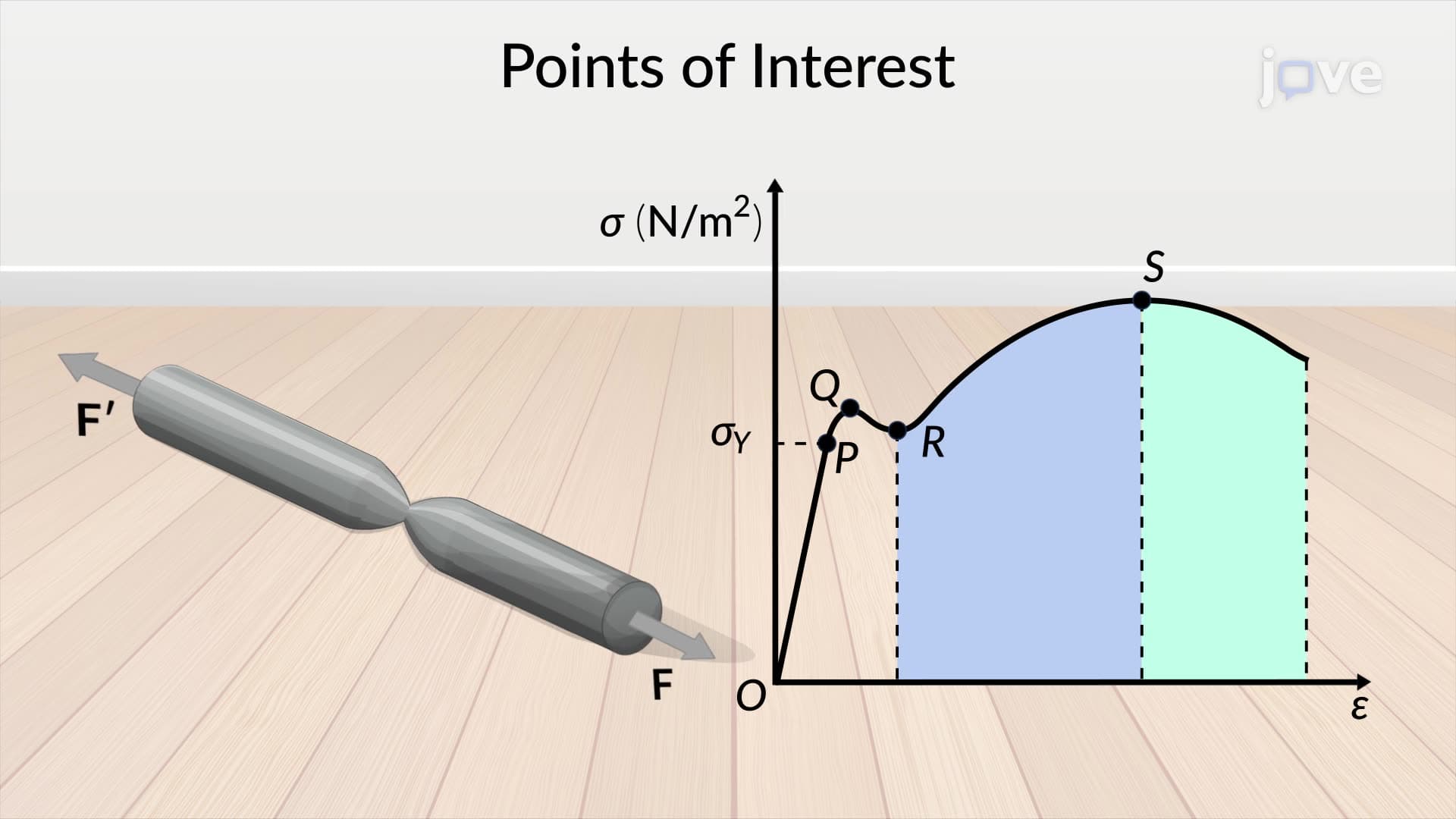
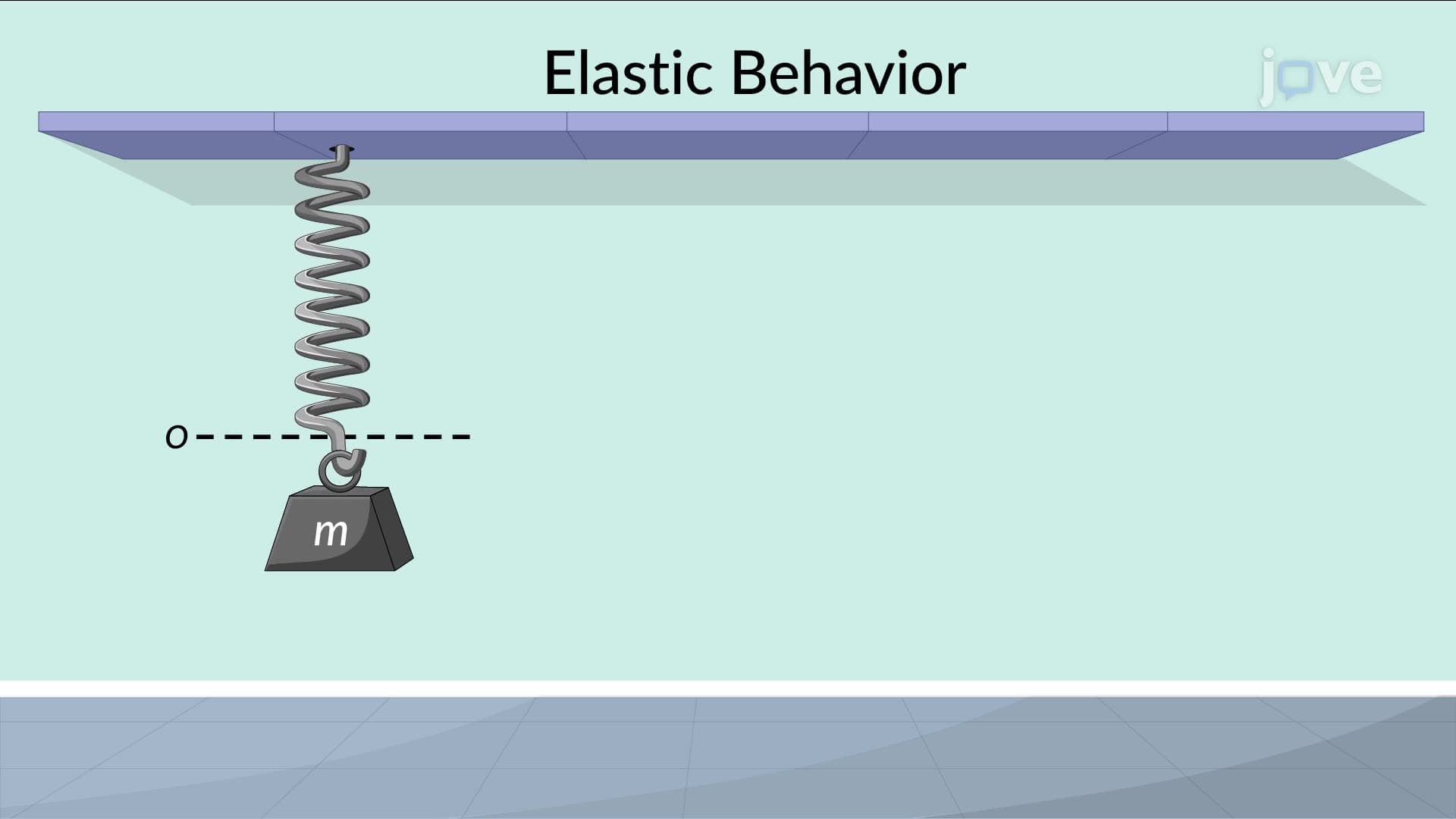
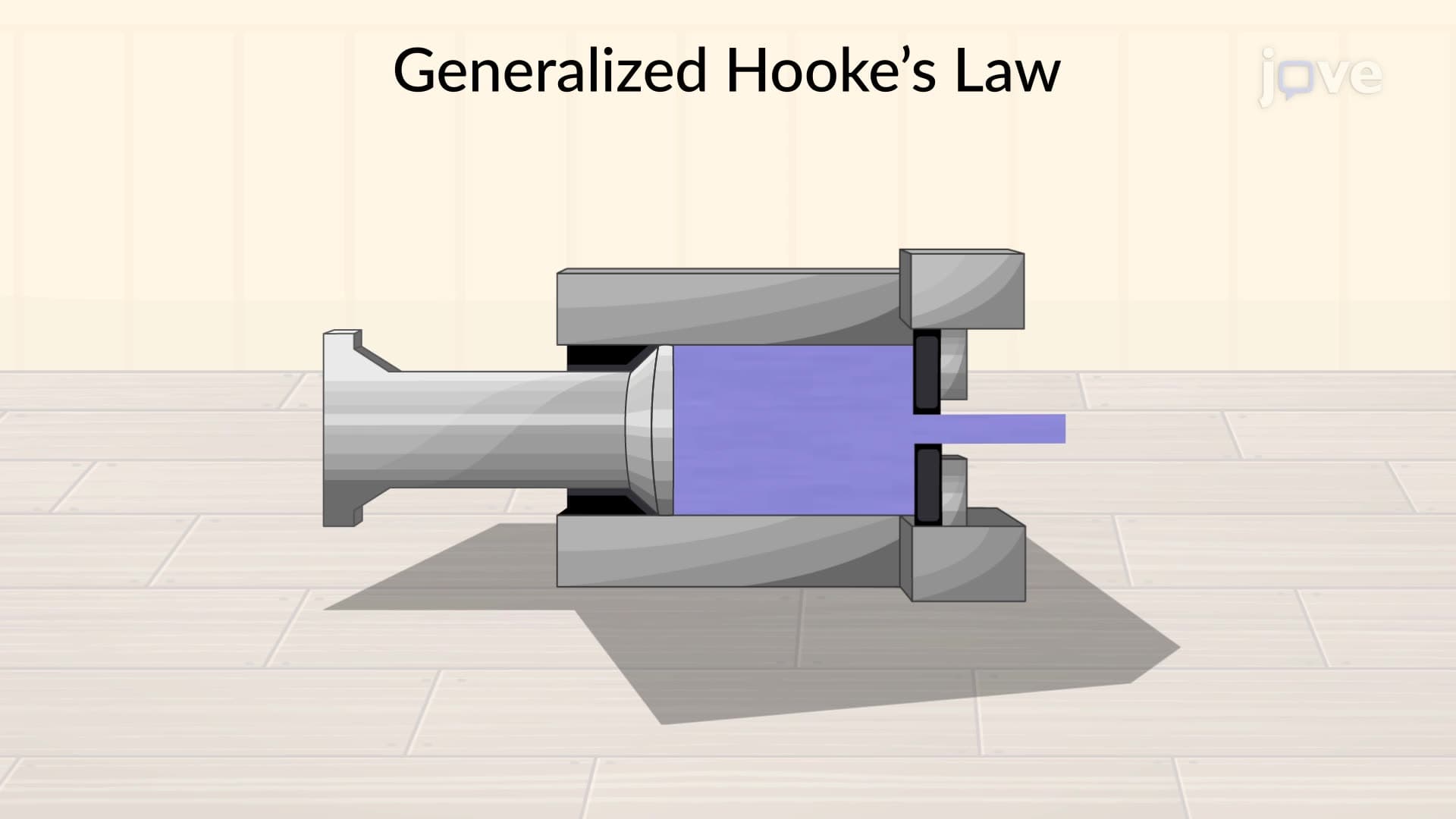
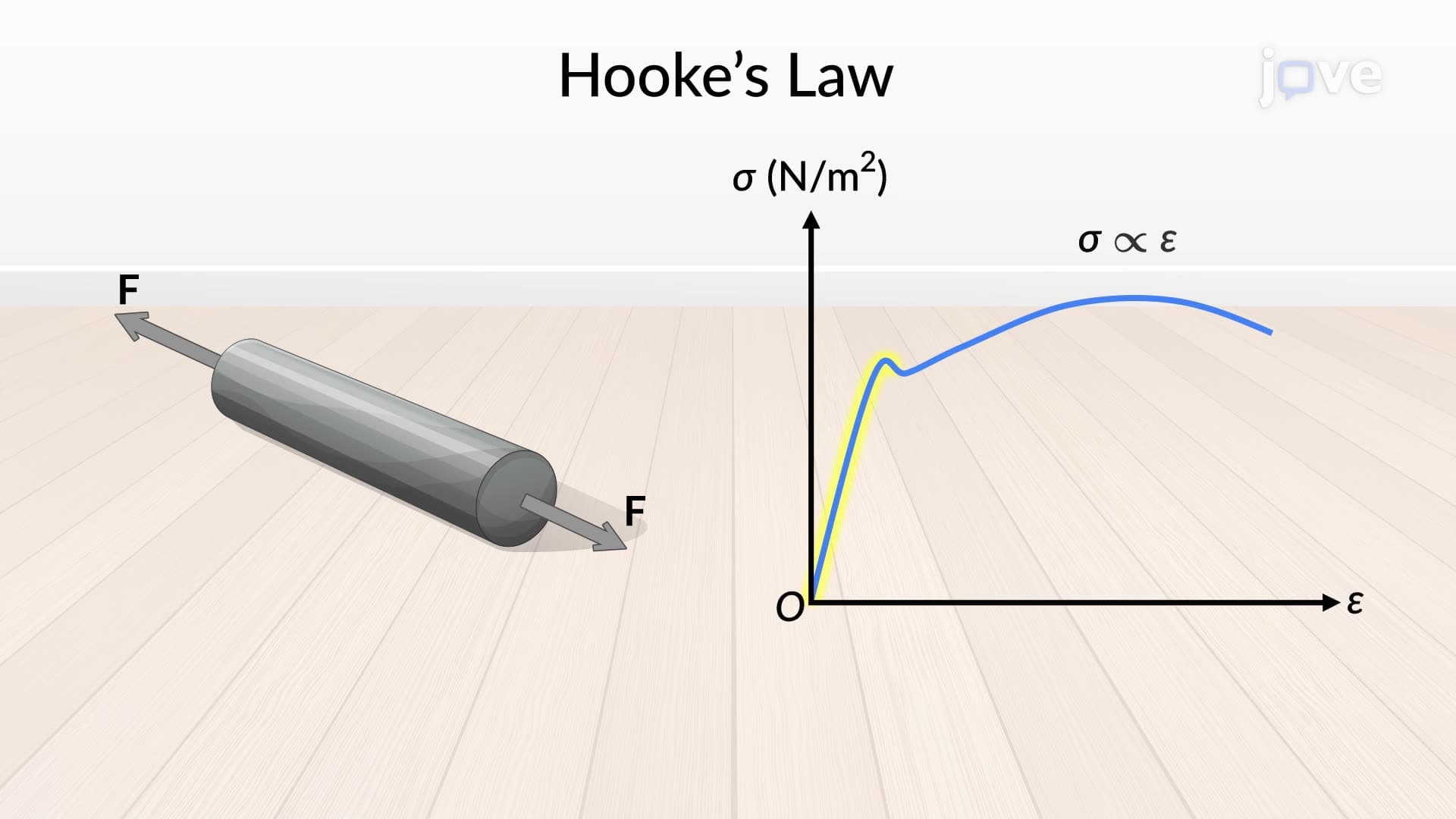
Hooke's law represents one of the most fundamental relationships in materials science and engineering mechanics. Named after 17th-century English physicist Robert Hooke, this principle establishes that within the elastic range of a material, the applied stress is directly proportional to the resulting strain. Mathematically, this relationship is expressed as σ = Eε, where σ represents stress, E is the modulus of elasticity (Young's modulus), and ε denotes strain.
The modulus of elasticity serves as the proportionality constant in Hooke's law, measuring a material's resistance to deformation under stress. Since strain is dimensionless (being the ratio of deformation to original length), the modulus of elasticity carries the same units as stress-typically measured in pascals (Pa) or pounds per square inch (psi) in the United States. This property remains remarkably consistent for a given material type, regardless of strength variations. For example, both mild steel used in residential construction and high-strength steel used in bridge construction exhibit approximately the same modulus of elasticity (29 million psi), despite vastly different yield strengths.
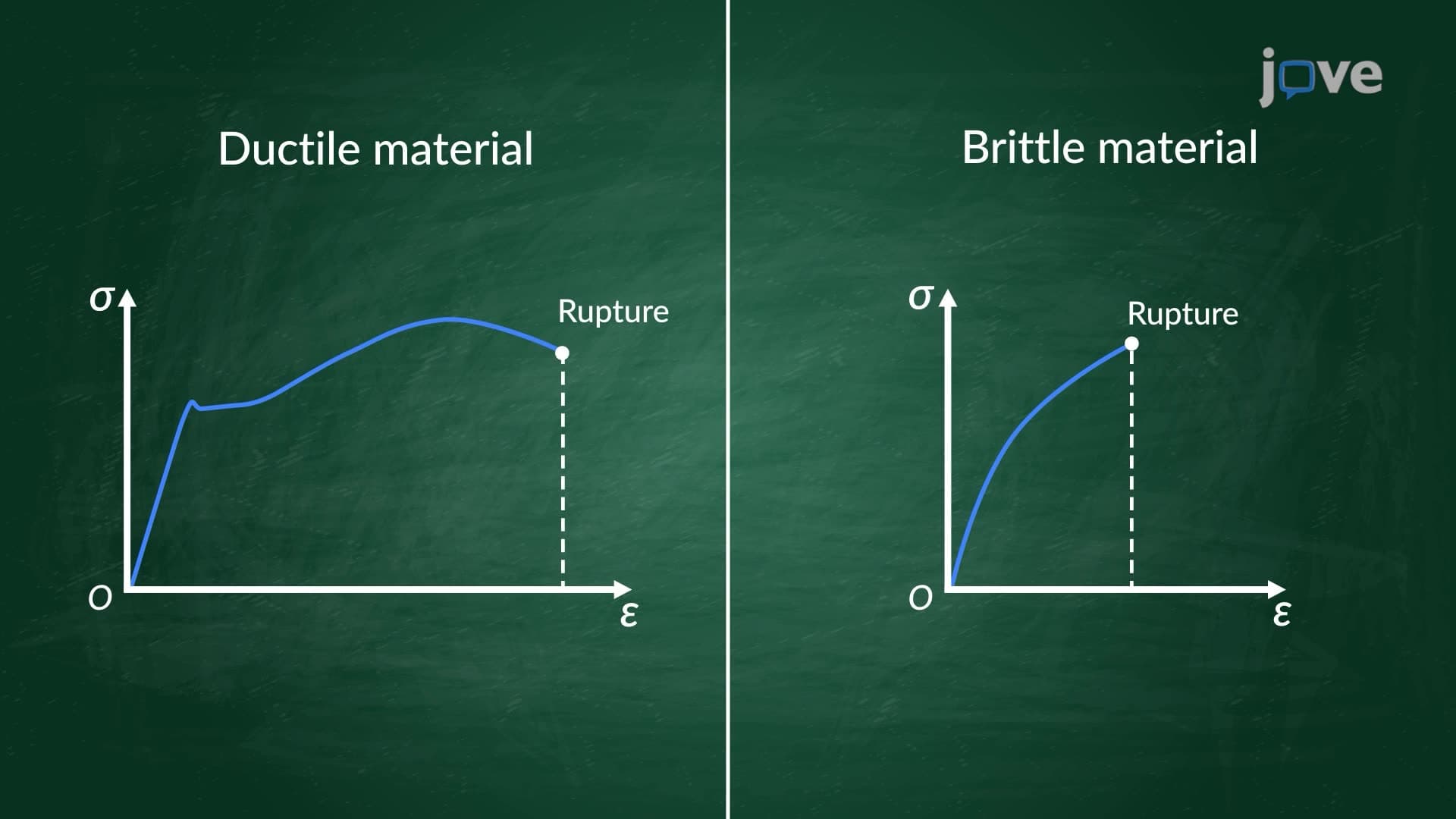
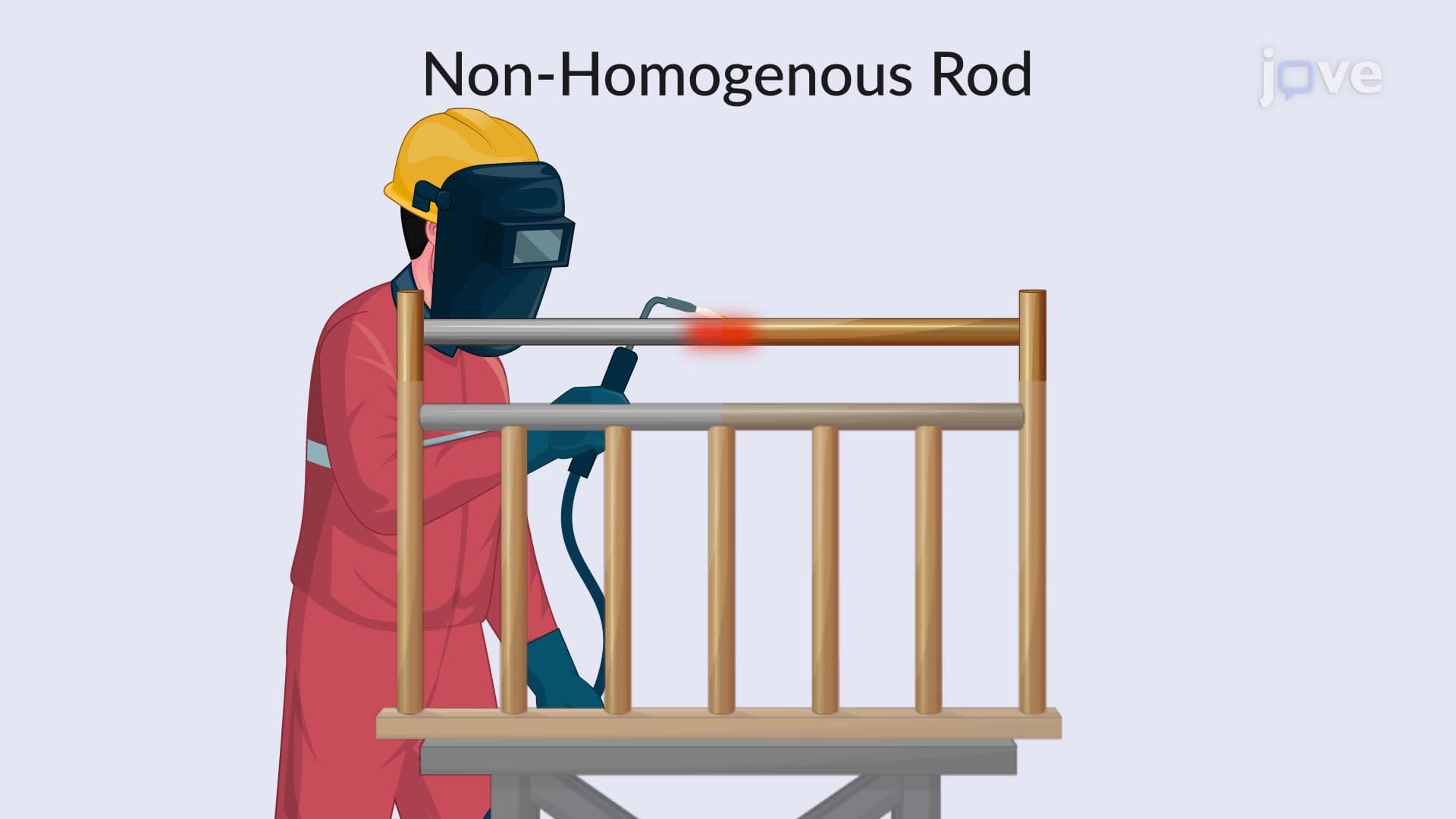
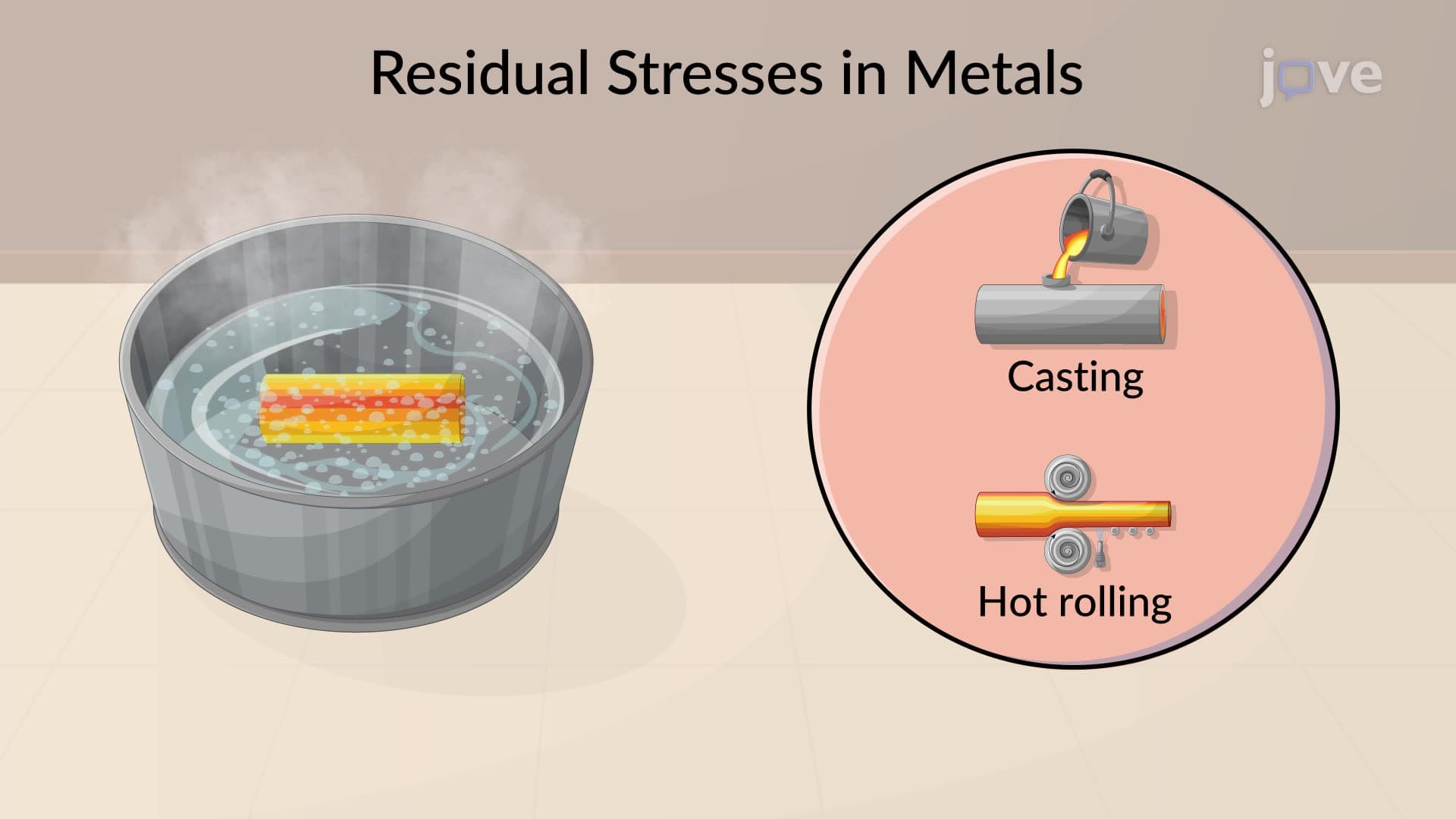
Manufacturing processes significantly influence a material's mechanical properties while leaving the elastic modulus largely unchanged. Consider structural steel used in American construction: hot-rolled steel, cold-rolled steel, and heat-treated alloy steels may exhibit yield strengths ranging from 36,000 psi to over 100,000 psi. However, their stress-strain curves show identical slopes in the elastic region, confirming the same modulus of elasticity. This principle proves crucial for structural engineers when specifying materials for projects like the renovation of the Brooklyn Bridge or designing earthquake-resistant buildings in California, where engineers can substitute higher-strength steels to increase load capacity without changing structural stiffness.
Hooke's law applies differently depending on material isotropy. Traditional structural metals like steel and aluminum exhibit isotropic behavior, meaning their elastic properties remain constant regardless of loading direction. This predictability makes them ideal for applications requiring uniform strength, such as the steel framework of the Empire State Building. Conversely, anisotropic materials like carbon fiber composites-increasingly used in aerospace applications by companies like Boeing and SpaceX-exhibit directional dependence. These materials may have elastic moduli of 20 million psi parallel to the fibers but only 1.5 million psi perpendicular to them, requiring careful consideration during design phases.
Understanding these principles becomes essential for students preparing for AP Physics exams, engineering coursework, and professional practice, where Hooke's law applications appear in everything from calculating spring constants to analyzing complex structural systems.
Related Micro-courses