Loading subject page…

- Mechanical Engineering
- Stress and Strain Axial Loading
- Shearing Strain
Micro-course: Stress and Strain - Axial Loading
18,577 views
Learn key concepts and earn your certificate.




Shearing Strain

00:00
01:20
Video Summary: What Is Shearing Strain
Ever wonder why a deck of cards can slide into a diamond shape when pushed sideways? This demonstrates shearing strain in action-the angular deformation that occurs when materials experience sideways forces. In construction, shearing strain affects everything from steel I-beams in skyscrapers to the rubber mounts in earthquake-resistant buildings across California. Understanding what is shearing strain helps explain how materials respond to these critical sideways forces without breaking. Watch the full video on JoVE Coach to master this concept with expert-led visuals and step-by-step explanations.
- Understand what is shearing strain and how it differs from normal strain in material deformation
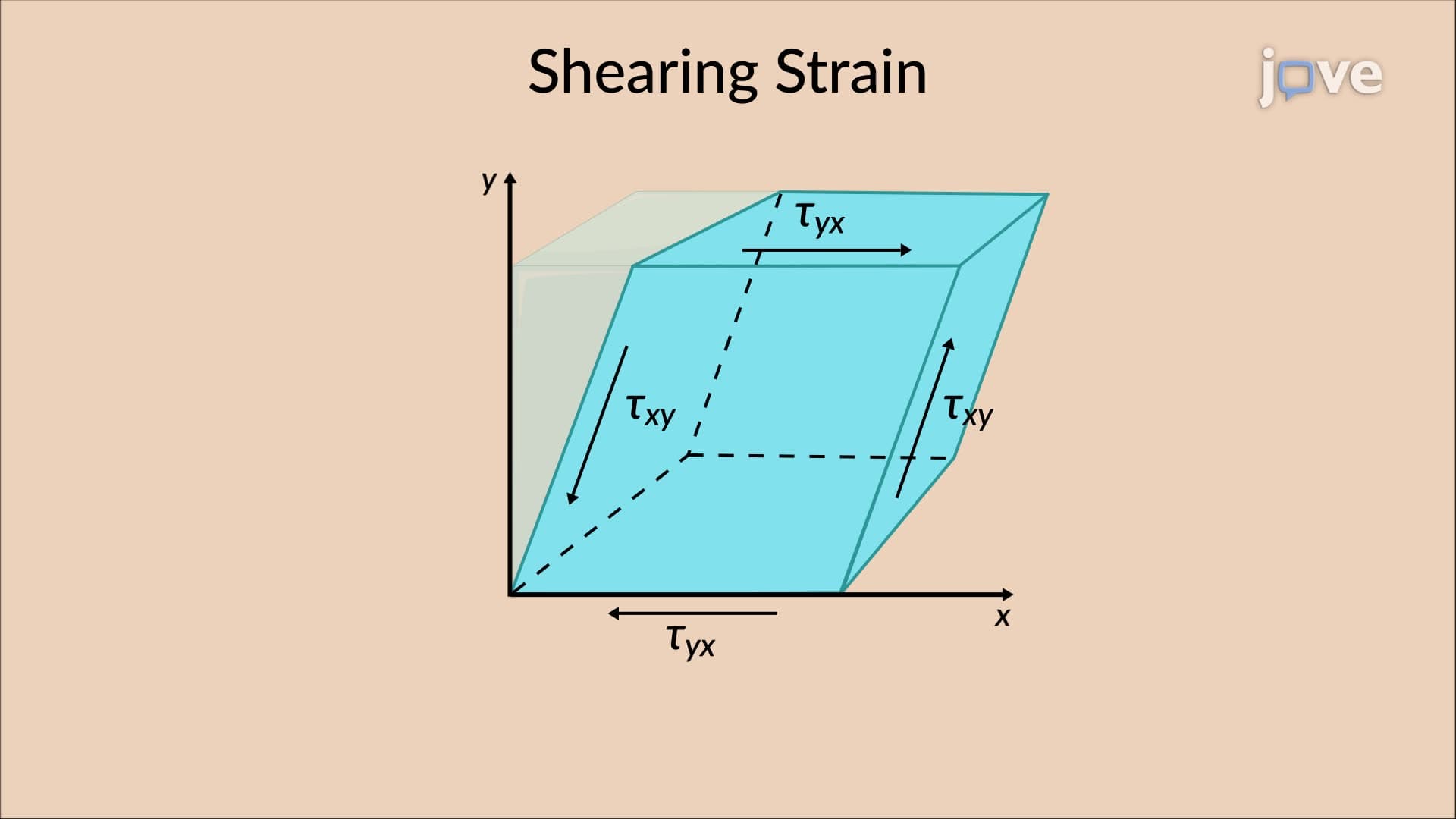
- Identify the relationship between shearing stress and angular deformation in cubic elements
- Analyze how Hooke's law applies to shearing strain with the shear modulus (G) as the proportionality constant
- Compare shear modulus values to elastic modulus, noting G ranges from one-third to one-half of E
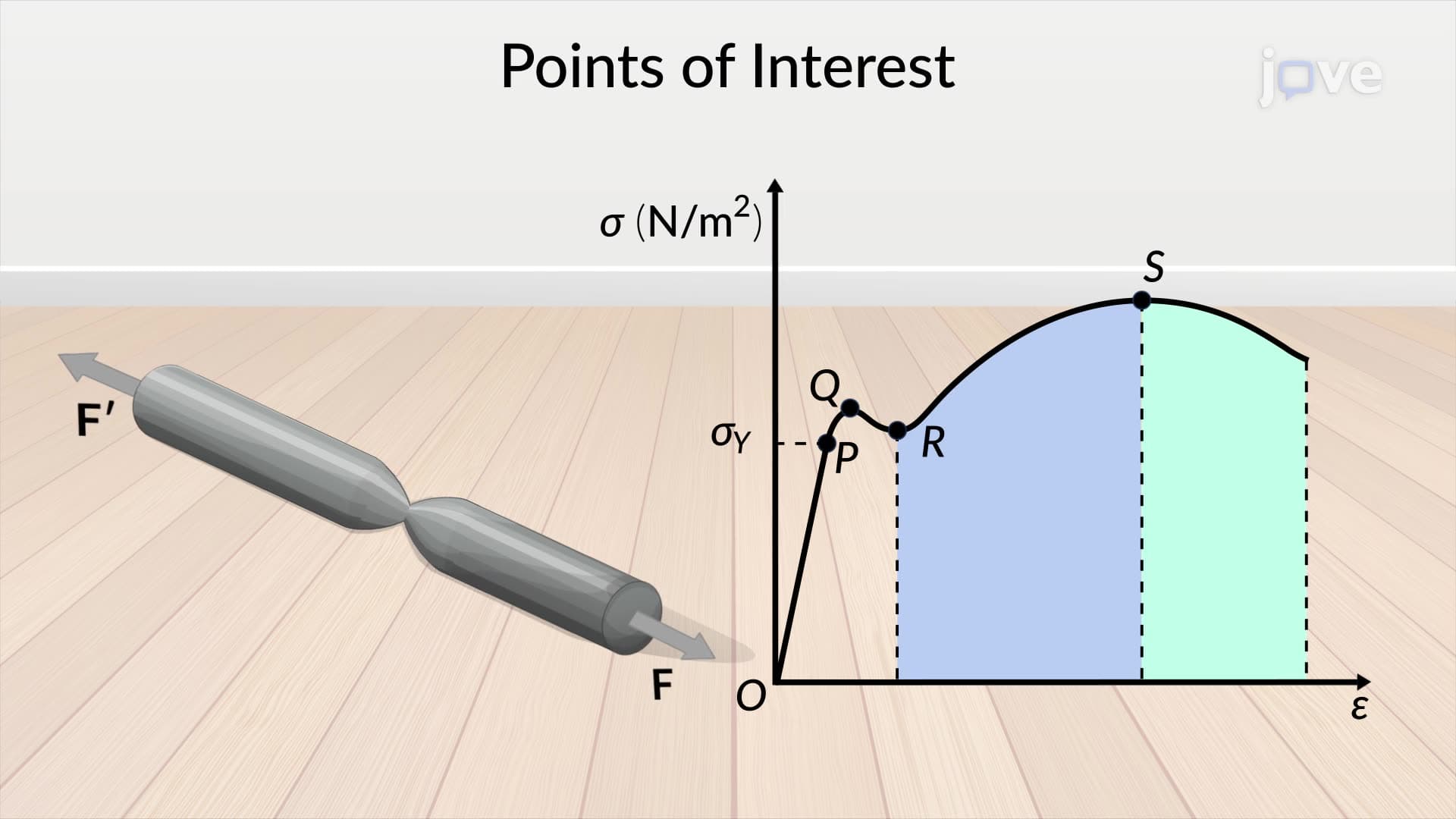
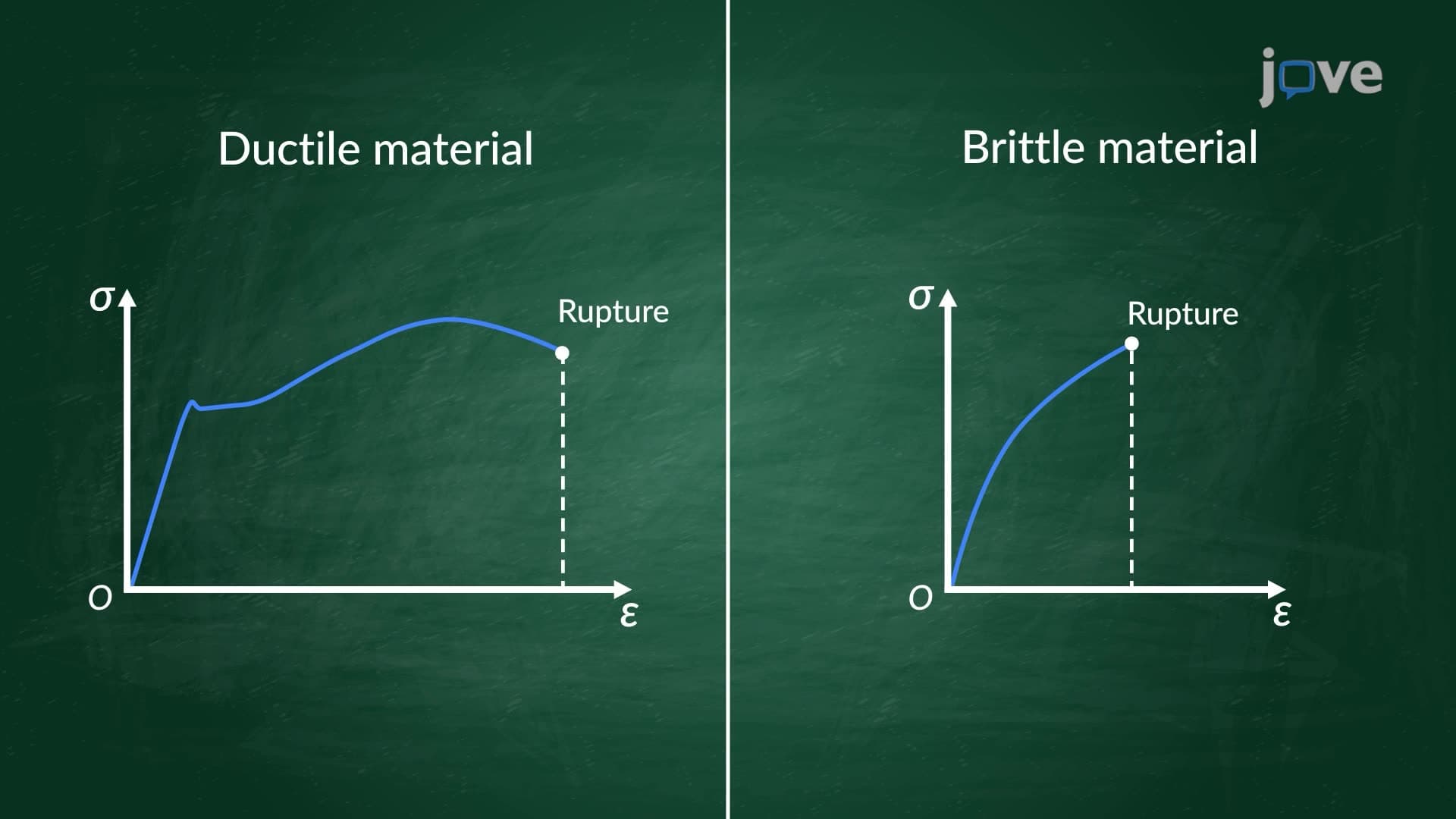
- Evaluate stress-strain diagrams to determine when materials follow linear shearing behavior
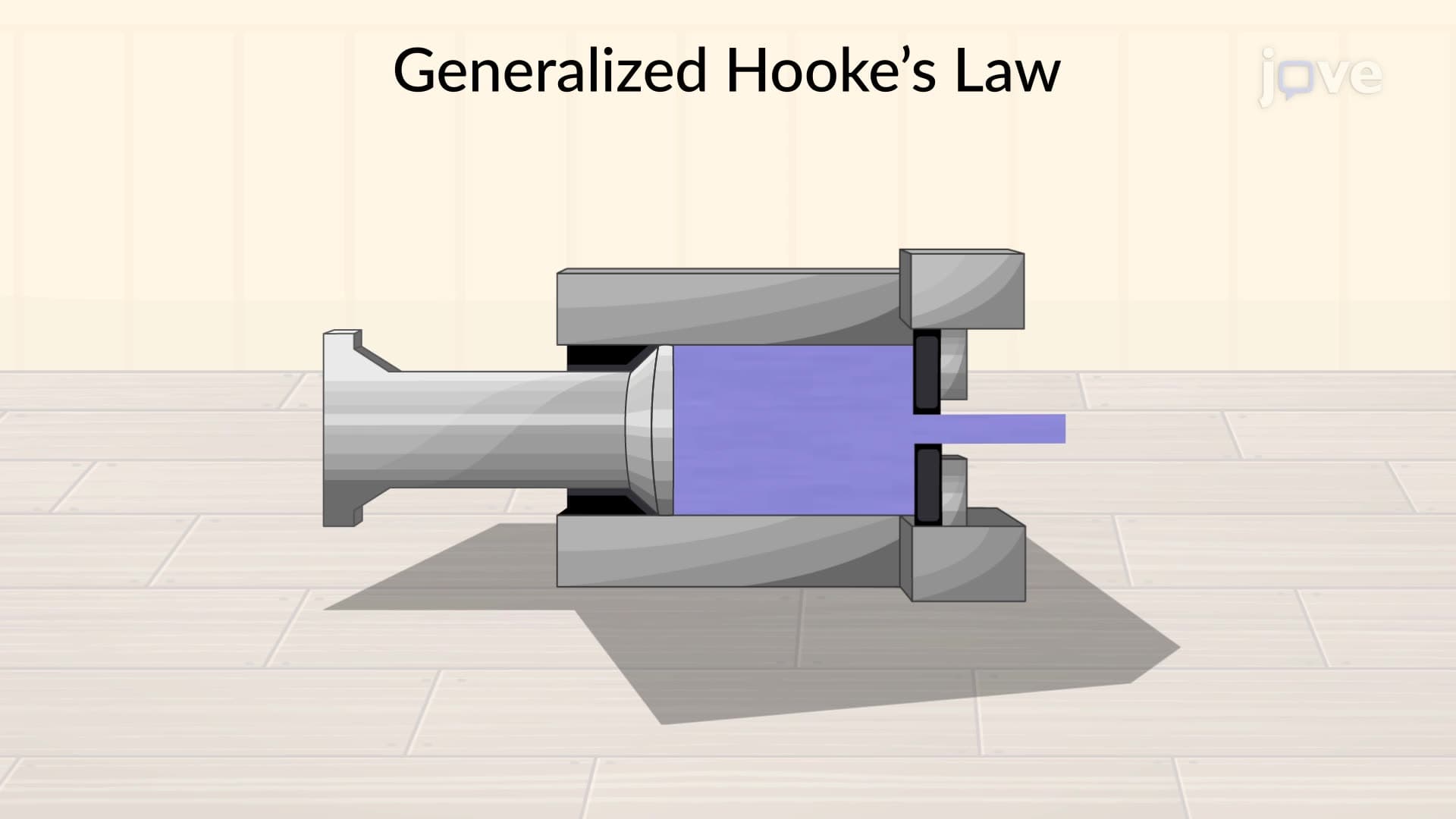
- Apply generalized Hooke's law to predict material responses under complex stress conditions
- Recognize how cubic elements transform into rhomboid shapes under pure shearing forces
- Explore experimental methods for determining shear modulus and material constants
Understanding What is Shearing Strain Fundamentally
Shearing strain represents the angular deformation that occurs when a material experiences forces parallel to its surface, causing layers to slide past each other. Unlike normal strain that involves lengthening or shortening, shearing strain measures how much the original right angles in a material change when subjected to sideways forces.
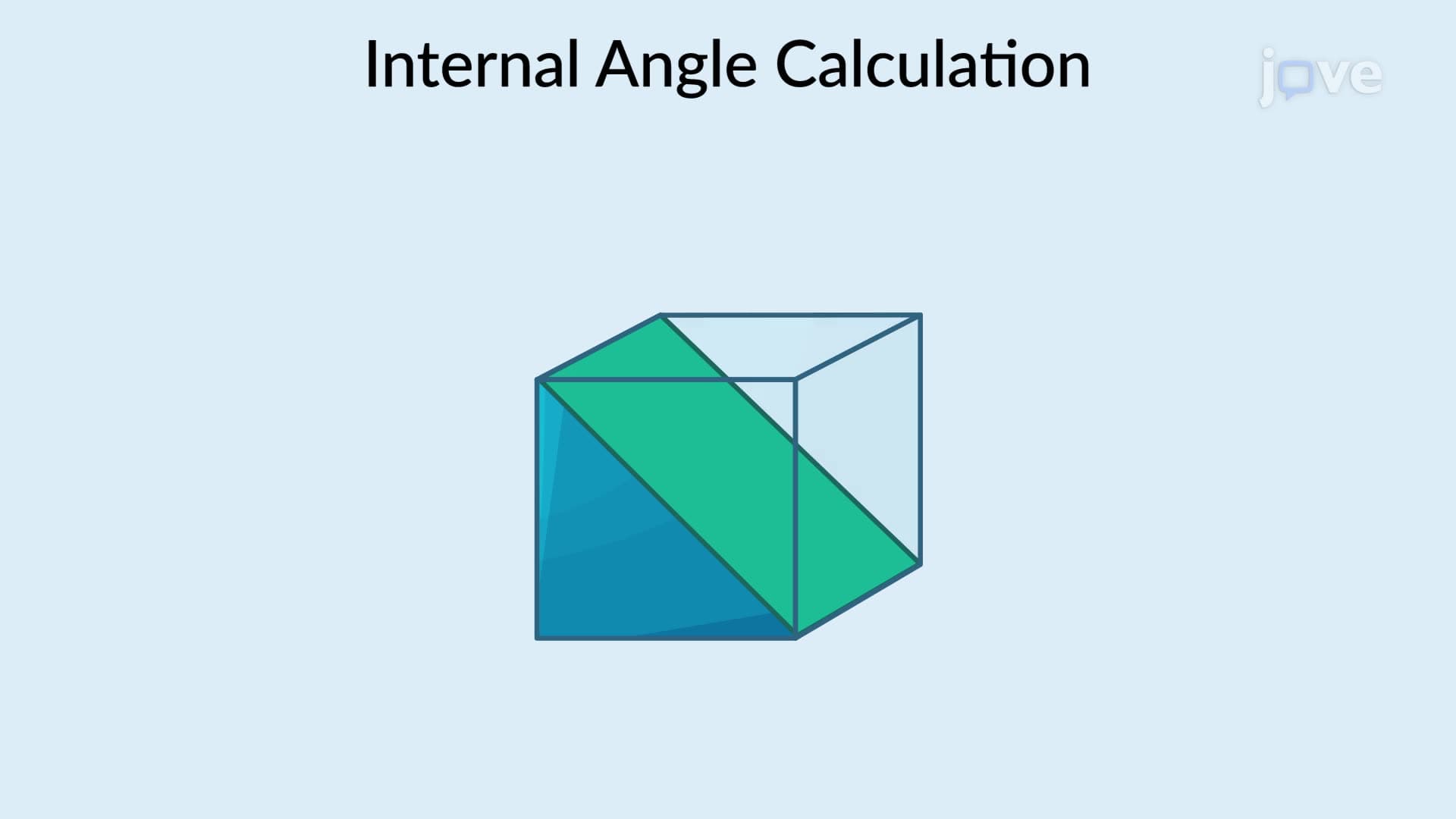
When engineers analyze structural members like the steel beams in Chicago's Willis Tower, they must account for both normal and shearing strains. A cubic element under pure shear transforms into a rhomboid-imagine pushing the top of a book while holding the bottom fixed. The angle between originally perpendicular faces decreases, and this angular change defines the shearing strain magnitude.
The Mathematics Behind Shearing Strain Relationships
The shearing strain definition involves measuring angular distortion in radians. When shearing stress (τ) acts on a material, it produces proportional shearing strain (γ) according to Hooke's law: τ = Gγ, where G represents the shear modulus or modulus of rigidity.
This relationship proves crucial for engineering students preparing for AP Physics or college-level mechanics courses. The shear modulus G typically ranges from one-third to one-half the value of Young's modulus (E), making it a distinct material property. For structural steel used in US construction, G approximately equals 80 GPa, while aluminum alloys commonly used in aerospace applications have G values around 26 GPa.
Real-World Applications in Engineering Practice
Understanding shearing strain becomes essential when analyzing earthquake-resistant building designs, particularly in seismic zones like California and Alaska. Base isolation systems use rubber bearings that undergo controlled shearing strain to protect structures during ground motion. The Golden Gate Bridge's suspension cables experience complex shearing strains due to wind loads and thermal expansion.
In manufacturing, shearing strain analysis helps optimize metal forming processes. When automotive companies like Ford or GM stamp steel panels, engineers must predict how materials will deform under the complex stress states involved in deep drawing and bending operations.
Advanced Concepts and Generalized Hooke's Law
For materials under combined loading conditions, engineers apply generalized Hooke's law, which incorporates both normal and shearing strain relationships. This becomes particularly relevant in finite element analysis software used throughout US engineering firms. Students encountering this concept in college-level solid mechanics courses learn to solve problems involving multiple stress components acting simultaneously.
The experimental determination of shear modulus typically involves torsion testing of cylindrical specimens or direct shear testing of rectangular samples, procedures standardized by ASTM International for consistent material property characterization across American industries.
Frequently Asked Questions
Shearing strain measures how much the angles in a material change when subjected to sideways forces. Think of pushing a deck of cards sideways-the angular distortion from rectangle to rhomboid represents shearing strain. It's expressed in radians and indicates how layers of material slide relative to each other.
Shearing strain represents the angular deformation (γ) caused by shearing stress, following the relationship τ = Gγ where G is the shear modulus. Unlike normal strain that changes length, shearing strain changes angles between originally perpendicular faces. Engineers use this concept to analyze everything from building foundations to aircraft wing structures under various loading conditions.
AP Physics C: Mechanics often includes problems involving shear deformation in materials and structures. Students typically encounter stress-strain relationships, calculations involving shear modulus, and applications to real engineering scenarios. Practice problems frequently involve determining angular deformation in structural elements or analyzing combined loading situations using Hooke's law.
Mechanics of Materials (typically taken in sophomore year) provides the most comprehensive coverage of shearing strain concepts. Structural Analysis, Machine Design, and Finite Element Methods courses build upon these fundamentals. Students in mechanical, civil, and aerospace engineering programs encounter increasingly complex applications throughout their curriculum.
While the MCAT doesn't directly test shearing strain, the underlying physics principles appear in passages about material properties and biomechanics. Understanding stress-strain relationships helps with questions about bone mechanics, tissue elasticity, and medical device functionality that may appear in the Physical Sciences section.
Buildings experience shearing strain during earthquakes, wind loading, and thermal expansion. Engineers design shear walls, base isolators, and flexible connections to manage these deformations. The 2011 earthquake damage assessment in Washington DC demonstrated how understanding shearing strain helps predict and prevent structural failures in both historic and modern buildings.
Basic shearing strain concepts require only algebra and trigonometry, making them accessible to high school students in physics or pre-engineering courses. The fundamental relationship τ = Gγ uses simple proportionality. More advanced applications involving combined stresses require calculus and differential equations, typically introduced in college-level engineering courses.
Focus on visualizing the physical deformation first-sketch how shapes change under shear forces before applying mathematical relationships. Practice identifying whether problems involve pure shear or combined loading conditions. Work through progressively complex examples, starting with simple rectangular elements before tackling real structural members.
Finite element analysis, composite material mechanics, and nonlinear material behavior all extend basic shearing strain concepts. Students interested in research or advanced engineering practice often study anisotropic materials, viscoelastic behavior, and failure criteria that incorporate complex shearing strain states.
Related Micro-courses