Loading subject page…

- Mechanical Engineering
- Stress and Strain Axial Loading
- Temperature Dependent Deformation
Micro-course: Stress and Strain - Axial Loading
18,577 views
Learn key concepts and earn your certificate.






Temperature Dependent Deformation

00:00
01:12
Video Summary: What Is Temperature Dependent Deformation
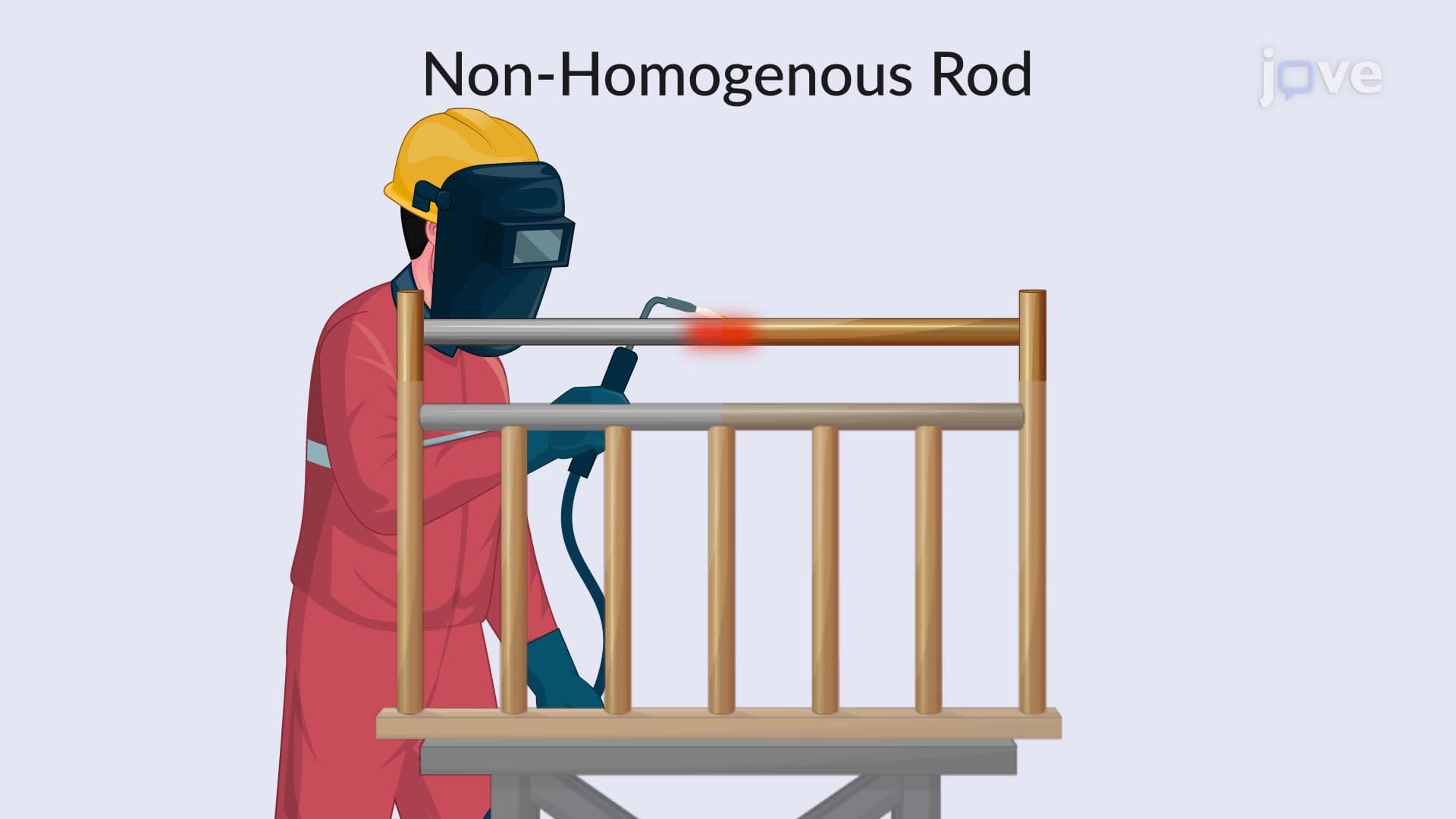
Have you ever wondered why concrete highways have expansion joints every few hundred feet? Temperature dependent deformation explains how materials expand and contract with temperature changes, creating internal stresses that engineers must carefully manage. Consider a steel-brass composite rod fixed at both ends-as temperatures rise, different expansion rates create complex stress patterns that can lead to structural failure if not properly calculated. This fundamental concept appears in everything from bridge design to smartphone manufacturing across the United States. Watch the full video on JoVE Coach to master this concept with expert-led visuals and step-by-step explanations.
- Understand what is temperature dependent deformation and how thermal expansion creates internal stresses in constrained materials
- Identify the relationship between material properties, temperature changes, and resulting deformations in composite structures
- Analyze force equilibrium conditions in thermally loaded systems with multiple materials having different expansion coefficients
- Apply superposition principles to calculate unknown forces in statically indeterminate thermal problems
- Evaluate stress distributions in multi-material systems subjected to temperature variations
- Recognize how constraint conditions affect the total deformation of thermally loaded structures
- Compare deformation behavior between different materials (steel vs. brass) under identical thermal loading
- Explore practical applications in engineering design where thermal stresses must be managed
Understanding Temperature Dependent Deformation Fundamentals
What is temperature dependent deformation is a critical question in materials science and structural engineering. Temperature dependent deformation occurs when materials change dimensions due to temperature variations while being subjected to external constraints. Unlike free thermal expansion, constrained materials develop internal stresses because their natural tendency to expand or contract is restricted by supports, connections, or adjoining materials with different thermal properties.
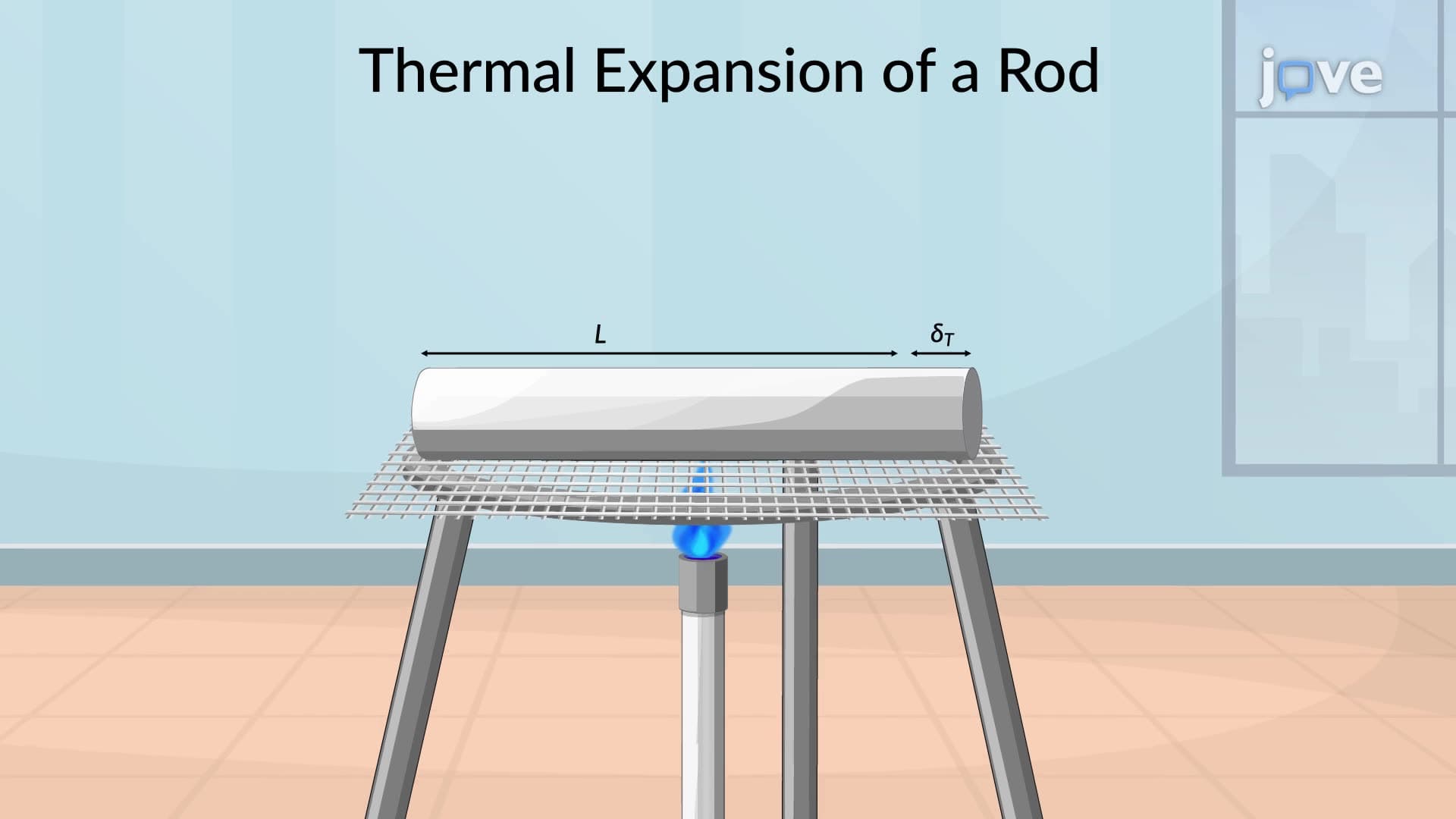
The temperature dependent deformation definition encompasses both the physical dimension changes and the associated stress development. When a material experiences a temperature change ΔT, it naturally wants to change length by δ = α × L × ΔT, where α is the coefficient of thermal expansion and L is the original length. However, when this expansion is prevented by constraints, internal forces develop to maintain equilibrium.
Multi-Material Systems and Thermal Stress Analysis
Understanding temperature dependent deformation becomes more complex in composite systems like steel-brass rods. These materials have different thermal expansion coefficients-steel typically expands at 12 × 10^-6 per °C while brass expands at 19 × 10^-6 per °C. When both materials are bonded together and constrained, the faster-expanding brass creates compression forces while the slower-expanding steel experiences tension.
Engineers use the temperature dependent deformation concept to solve statically indeterminate problems through force equilibrium. The process involves: (1) removing one constraint to allow free expansion, (2) calculating the force needed to restore the original length, and (3) determining individual material stresses and strains. This methodology appears frequently in AP Physics C mechanics problems and college-level statics courses.
Real-World Applications and Engineering Significance
The temperature dependent deformation overview reveals critical applications across US infrastructure. Railroad tracks use expansion joints to prevent buckling during summer heat, while the Golden Gate Bridge's main cables adjust for thermal expansion through carefully engineered anchor points. In aerospace applications, NASA engineers must account for extreme temperature variations when designing spacecraft components that experience -250°F in space shadows and +250°F in direct sunlight.
Modern building codes require thermal expansion considerations in high-rise construction. The Willis Tower in Chicago, for example, can expand up to 6 inches taller on hot summer days compared to frigid winter conditions. Understanding these principles helps engineers design structures that accommodate thermal movement without developing dangerous stress concentrations.
This concept regularly appears on the MCAT physics section, particularly in passages involving material properties and structural analysis. College engineering students encounter these problems in mechanics of materials courses, where thermal stress analysis forms the foundation for advanced topics like fatigue analysis and failure prediction.
Frequently Asked Questions
Temperature dependent deformation is the change in size and internal stress that occurs when materials are heated or cooled while being constrained by supports or connections. Unlike free expansion, constrained materials develop internal forces because they cannot expand or contract naturally. This concept explains why bridges have expansion joints and why buildings account for seasonal temperature changes.
In detailed engineering terms, temperature dependent deformation involves calculating internal forces, stresses, and strains in constrained systems subjected to temperature changes. Engineers use equilibrium equations and material properties to determine how thermal loading affects structural integrity. The analysis considers compatibility conditions, force equilibrium, and material stress-strain relationships to predict system behavior under varying temperatures.
AP Physics C mechanics frequently includes thermal stress problems involving constrained rods or beams with temperature changes. Students must apply equilibrium principles, calculate thermal expansion coefficients, and determine resulting forces and stresses. These problems often combine multiple physics concepts including Newton's laws, material properties, and mathematical analysis techniques.
MCAT physics passages often present scenarios involving biological materials or medical devices experiencing temperature changes under constraint. Questions typically ask about stress calculations, material failure predictions, or comparative analysis between different materials. Students must understand both the conceptual framework and quantitative problem-solving approaches.
Major US infrastructure projects like the Bay Bridge retrofit and Interstate highway systems incorporate thermal expansion design principles to prevent structural failure. Engineers design expansion joints, flexible connections, and materials selection based on expected temperature ranges in specific geographic locations. This ensures long-term structural integrity and public safety.
The fundamental concepts require only algebra and basic physics principles taught in high school. While advanced applications involve calculus and differential equations, the core temperature dependent deformation definition and basic calculations use straightforward mathematical relationships. Most introductory problems focus on conceptual understanding rather than complex mathematical manipulation.
Focus on understanding the step-by-step problem-solving methodology: identify constraints, apply equilibrium conditions, and calculate material responses systematically. Practice with varied scenarios including single materials, composite systems, and different constraint conditions. Create concept maps connecting thermal expansion, stress analysis, and equilibrium principles for comprehensive understanding.
Advanced studies include thermal fatigue analysis, creep behavior under sustained thermal loading, and multi-axial thermal stress states in complex geometries. These concepts lead to failure analysis, advanced materials design, and thermal management in electronics and aerospace applications. Graduate-level courses explore computational methods for solving complex thermal-structural interaction problems.
Related Micro-courses