Loading…
Loading video…

21,804 views
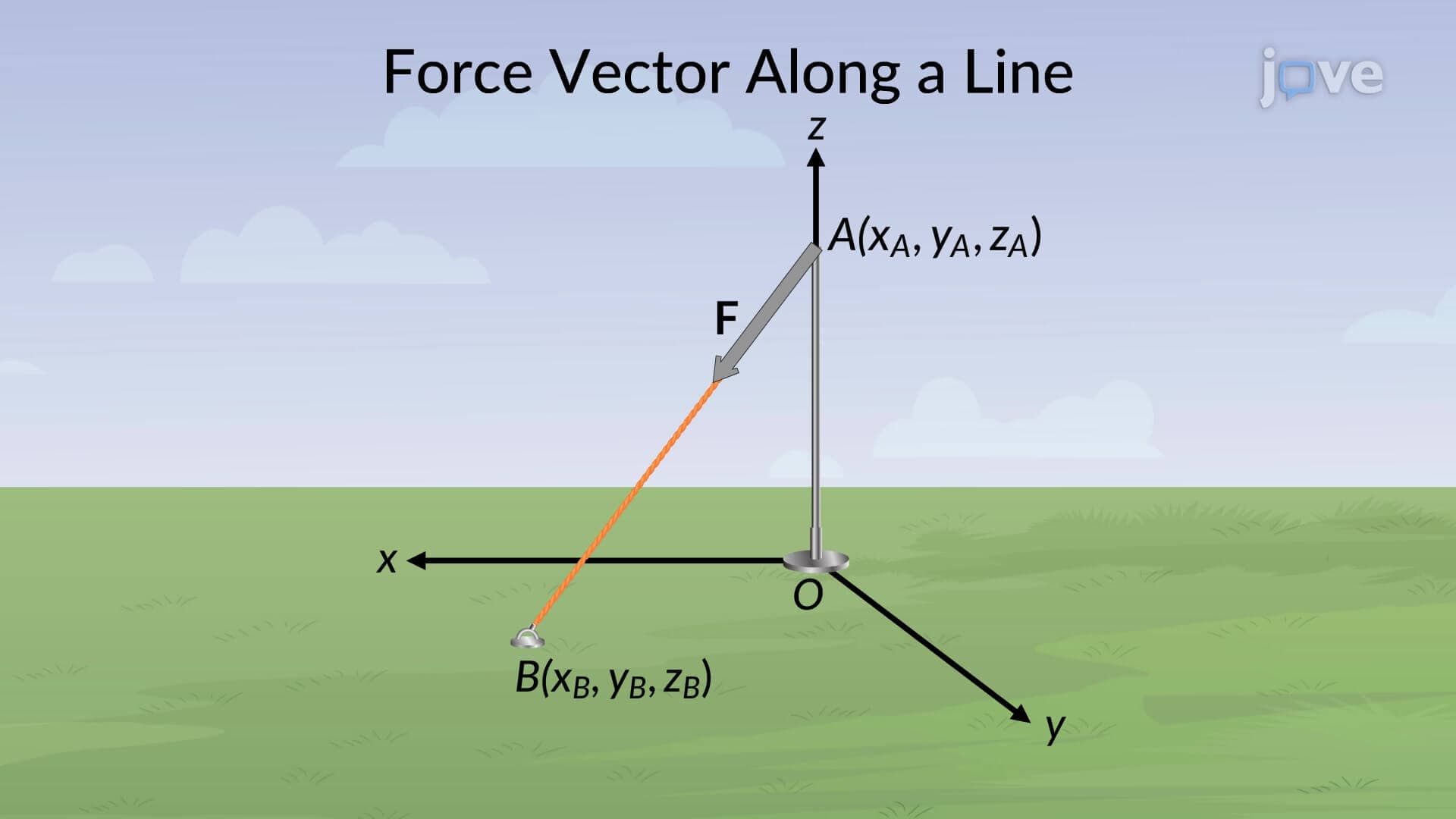
Ever wondered how engineers calculate the exact tension in suspension bridge cables or transmission lines? A force vector along a line represents the fundamental principle behind these critical calculations. Consider the massive cables supporting San Francisco's Golden Gate Bridge – each cable experiences tension forces that must be precisely calculated using vector mathematics. Understanding Force Vector Along A Line Explained becomes essential when analyzing any structural system where forces act along specific directions, from construction cranes to power transmission towers. Watch the full video on JoVE Coach to master this concept with expert-led visuals and step-by-step explanations.
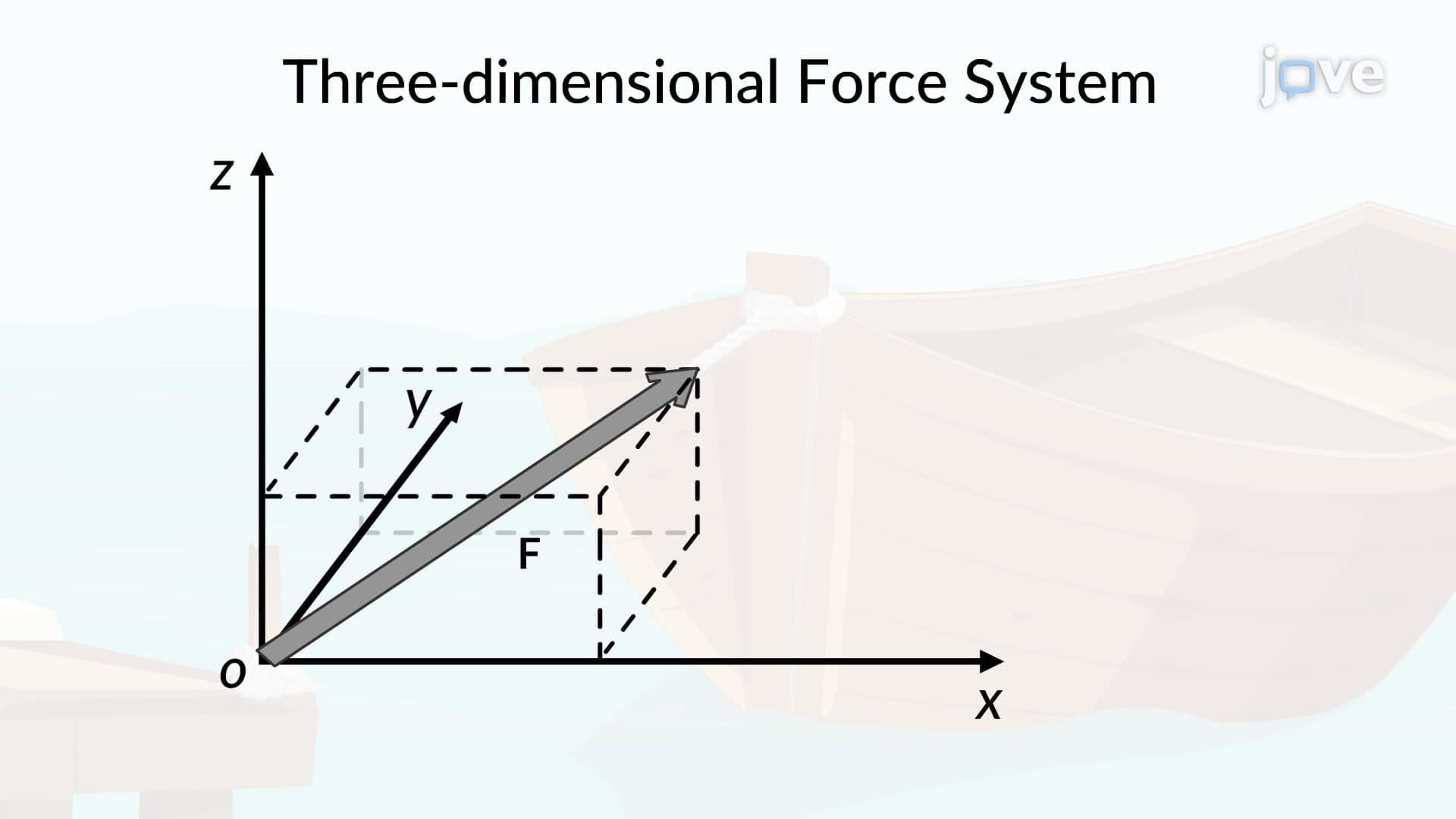
When forces act along straight paths – whether in cables, rods, or structural members – engineers must represent these forces as vectors with both magnitude and direction. A force vector along a line captures this essential relationship by expressing the force in terms of its spatial orientation and strength. This concept forms the foundation for analyzing everything from elevator cables to bridge supports across American infrastructure.
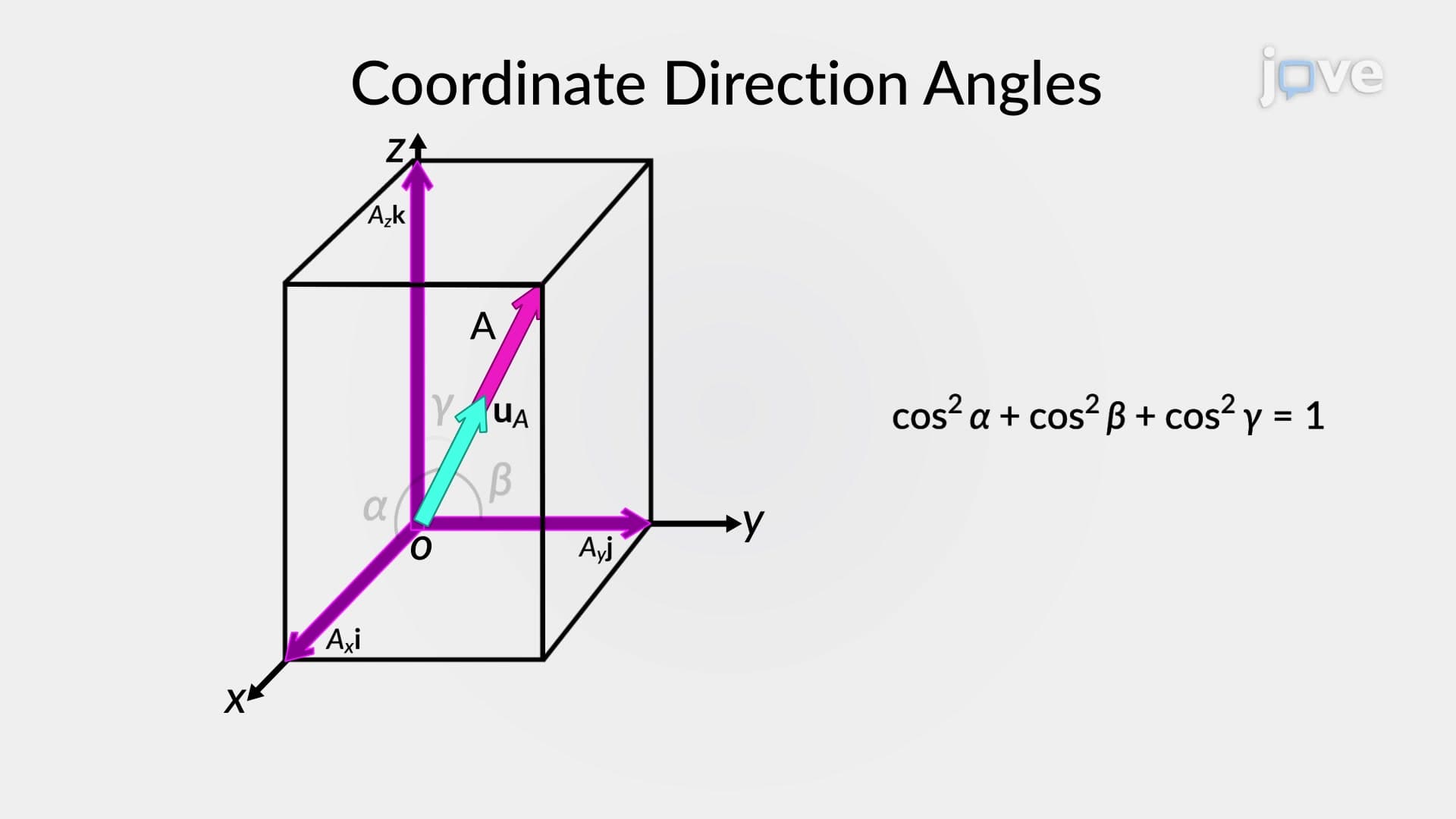
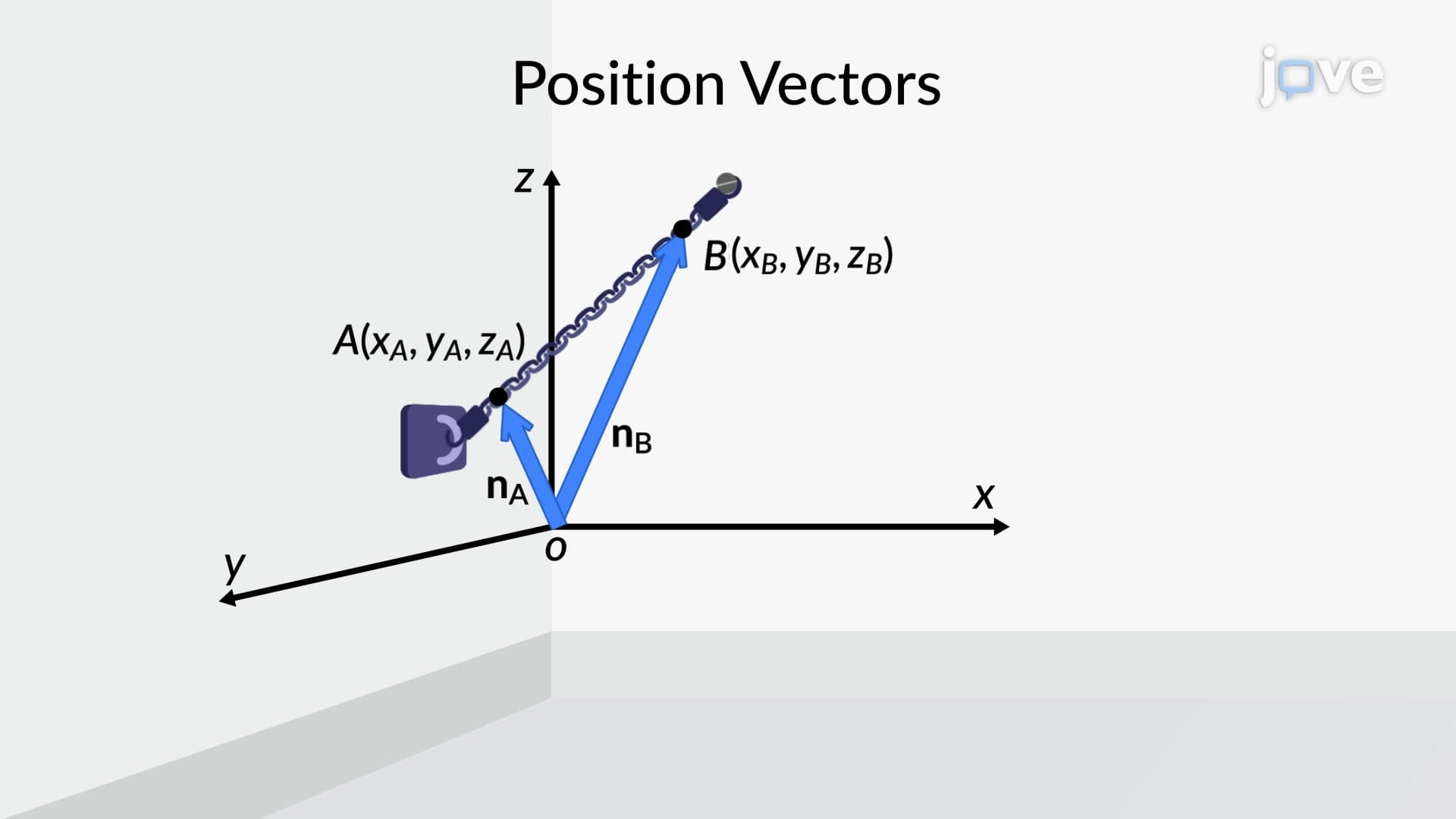
The mathematical framework begins with establishing position vectors for the endpoints of the force-carrying member. In a three-dimensional Cartesian coordinate system, points A and B represent the cable or member's endpoints. The position vector P(AB) – calculated as P(B) minus P(A) – defines the spatial relationship between these points. This vector subtraction follows standard vector arithmetic rules and provides the geometric foundation for determining force direction.
Converting the position vector into a unit vector requires dividing by the vector's magnitude. The magnitude calculation uses the Pythagorean theorem extended to three dimensions: the square root of the sum of squared components. This normalization process – dividing each component by the magnitude – yields a dimensionless unit vector that purely represents direction. Students preparing for AP Physics C or college-level statics courses encounter this concept frequently in mechanics problems.
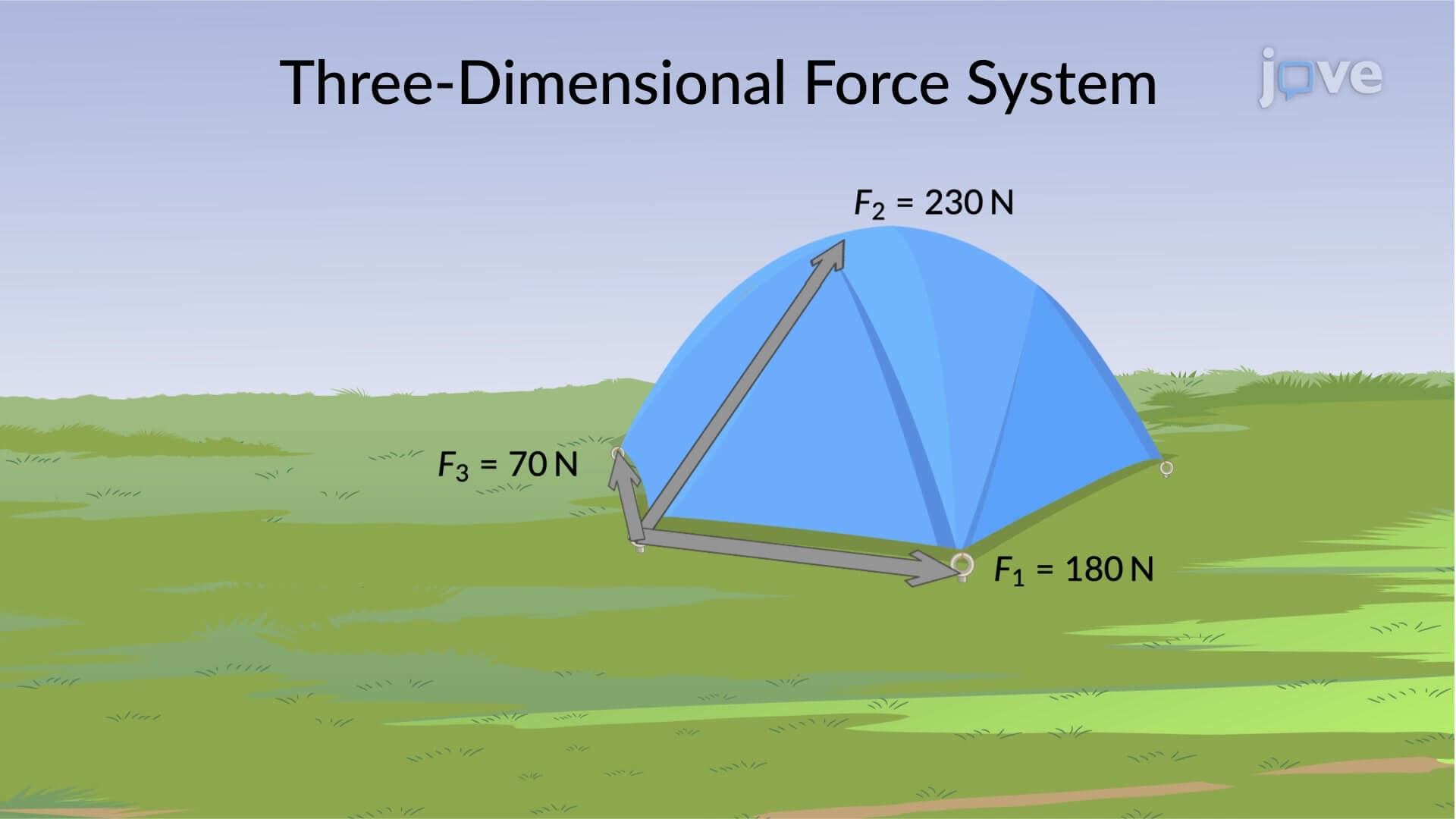
The final step multiplies the unit vector by the force magnitude, producing the complete Cartesian force vector. This representation – F = F(magnitude) × u(unit vector) – allows engineers to analyze forces in complex three-dimensional structures. For example, analyzing tension in the cables of Seattle's Space Needle or calculating loads in construction crane booms requires this mathematical approach.
This methodology proves invaluable in engineering statics courses, AP Physics mechanics, and professional structural analysis. Understanding these principles prepares students for advanced coursework in mechanical engineering, civil engineering, and physics programs at universities like MIT, Stanford, and UC Berkeley.
Frequently Asked Questions
A force vector along a line represents both the magnitude and direction of a force acting along a straight path, such as tension in a cable or compression in a rod. This concept is crucial for analyzing structural systems, mechanical devices, and solving equilibrium problems in engineering and physics coursework.
AP Physics C Mechanics frequently tests this concept through problems involving cables, pulleys, and inclined planes where students must resolve forces into components. Expect questions requiring unit vector calculations, force magnitude determination, and equilibrium analysis using Cartesian coordinates.
Force vectors along a line are constrained to act in a specific direction determined by the physical geometry, while general force vectors can point in any direction. College exams like those in introductory physics or engineering statics often test your ability to distinguish when forces are constrained versus free to vary in direction.
Consider the cables in San Francisco's Bay Bridge, guy-wires supporting radio towers, or tension rods in stadium roofs. Engineers use these calculations to ensure structural safety, with each cable or rod analyzed as a force vector along its specific line of action.
You only need basic algebra, trigonometry, and introductory vector concepts typically covered in high school Algebra II and Physics. The mathematical operations involve vector addition, magnitude calculations using the Pythagorean theorem, and simple division for normalization.
Focus on visualizing the physical setup first, then systematically identify position vectors, calculate unit vectors, and apply force magnitudes. Practice with diverse scenarios like pulleys, inclined planes, and cable systems to build pattern recognition for test day.
This foundation leads directly to structural analysis, fluid mechanics, and dynamics coursework in engineering programs. Advanced topics like finite element analysis, robotics kinematics, and aerospace engineering all build upon these fundamental vector principles.
Related Micro-courses

Related Subjects
 Civil Engineering 30 micro-courses›Electrical Engineering 33 micro-courses›