Loading…
Loading video…

21,804 views
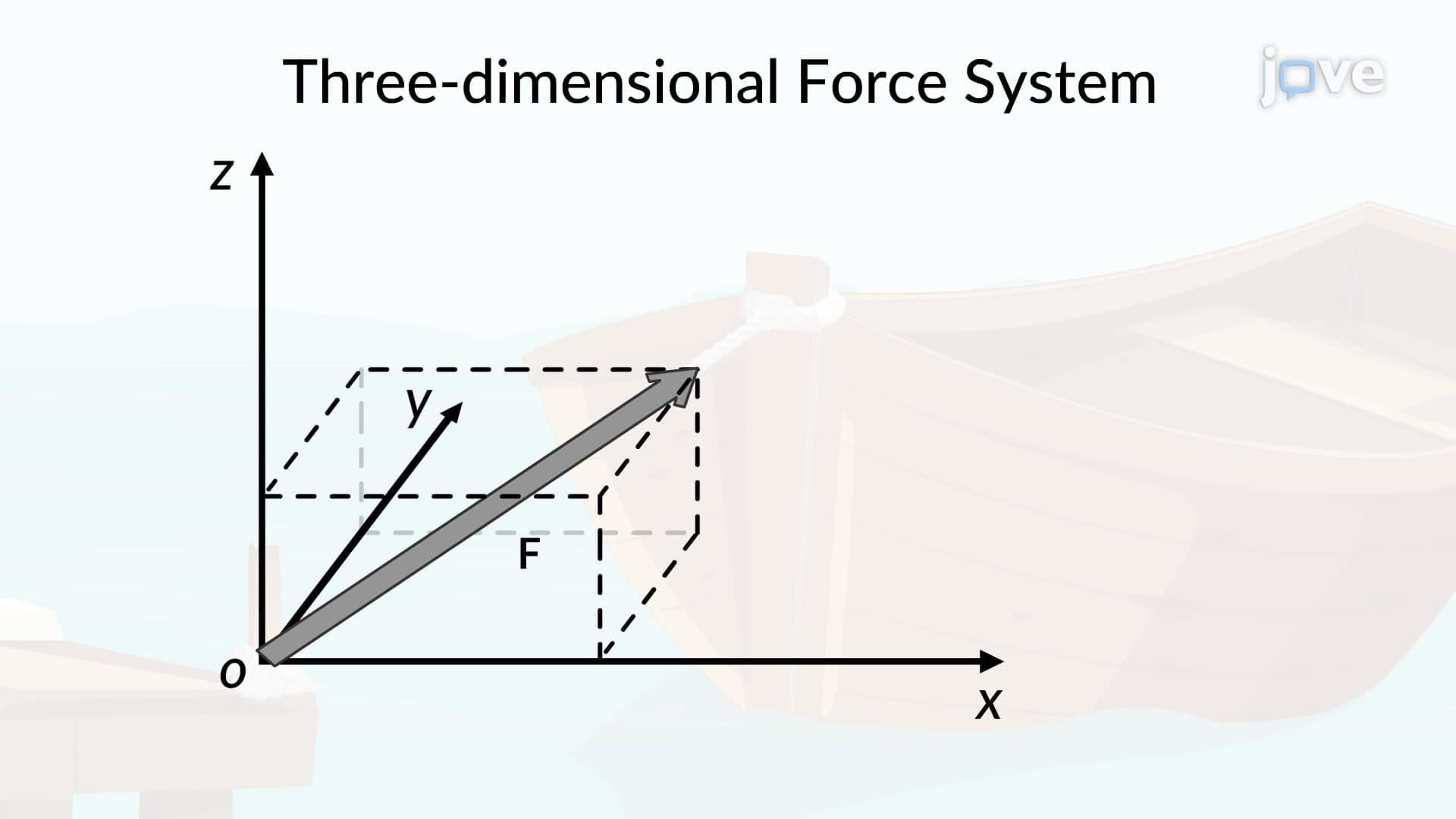
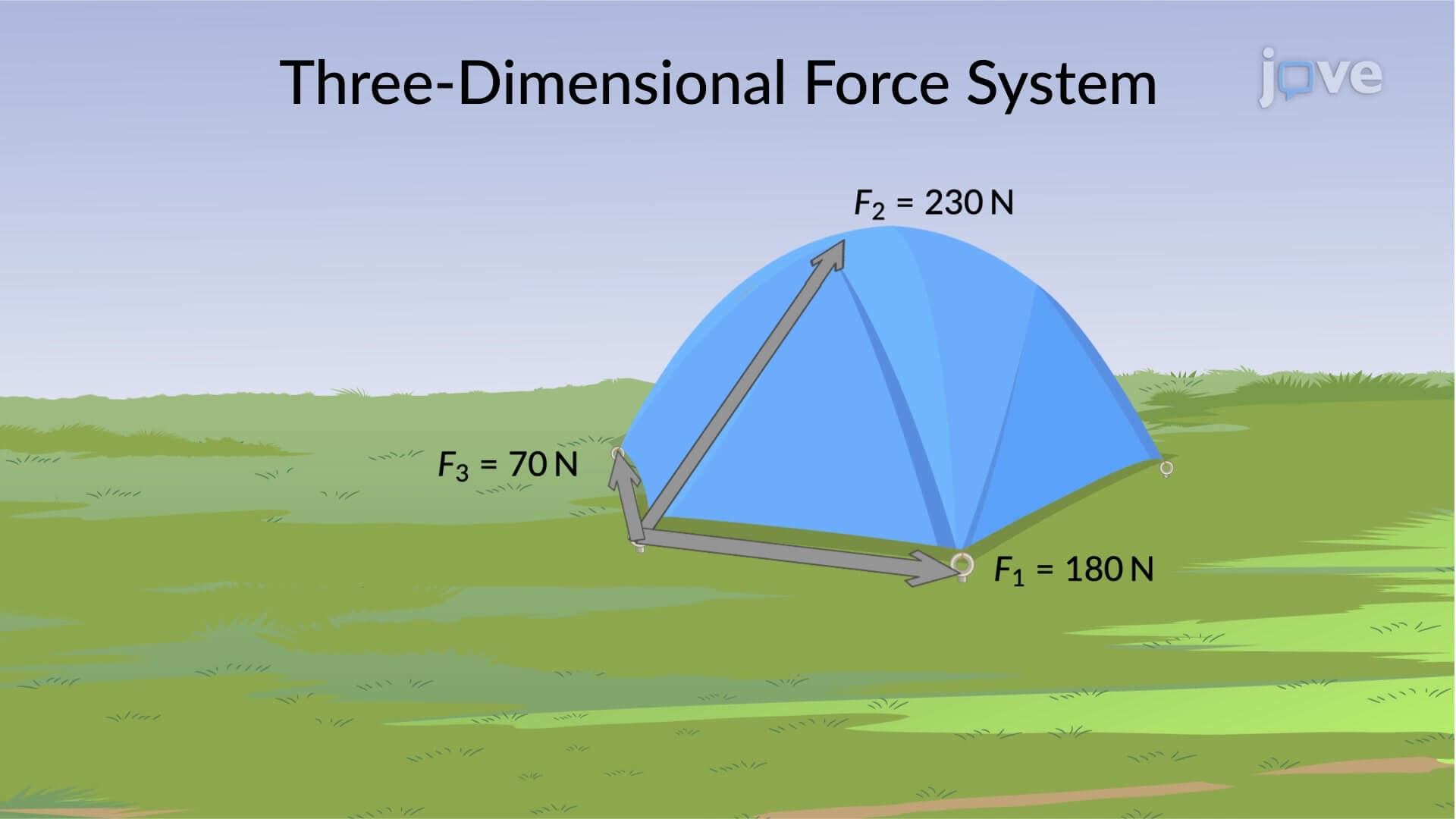
When engineers design skyscrapers or bridges, they must account for forces acting in all directions simultaneously. A three dimensional force system involves forces that don't lie in a single plane, requiring analysis along x, y, and z axes to determine their true effects. Consider a construction crane lifting materials at a job site in Chicago—the cable tension creates forces in multiple directions that must be resolved into components. Understanding what is three dimensional force system concepts becomes crucial for structural safety and engineering success. Watch the full video on JoVE Coach to master this concept with expert-led visuals and step-by-step explanations.
A three dimensional force system represents the most comprehensive approach to force analysis in engineering and physics. Unlike planar systems where forces act within a single plane, three-dimensional systems account for forces acting along three mutually perpendicular axes: x, y, and z. This concept becomes essential when analyzing real-world structures like the Golden Gate Bridge in San Francisco, where wind, traffic, and gravitational forces create complex three-dimensional loading patterns.
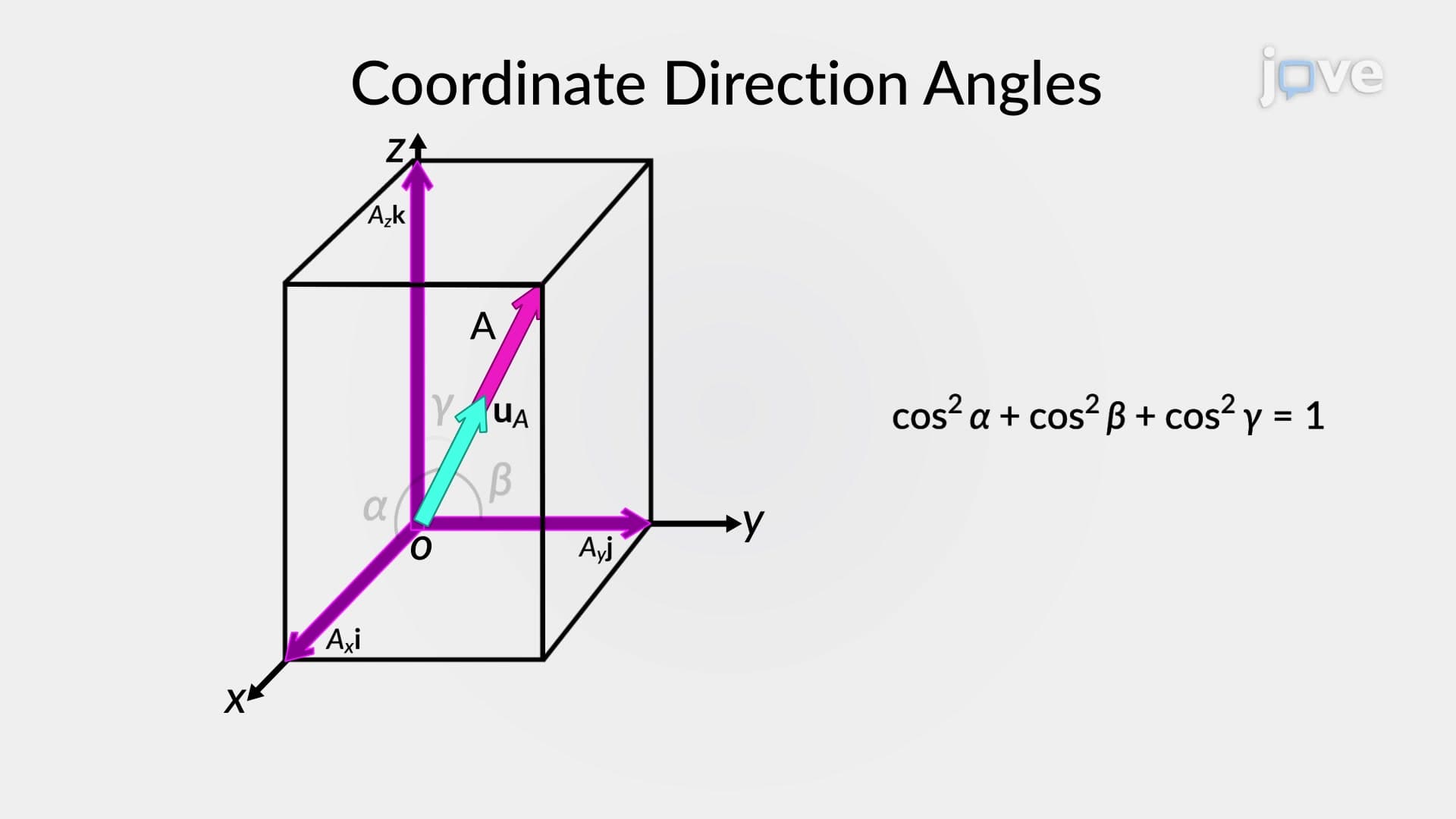
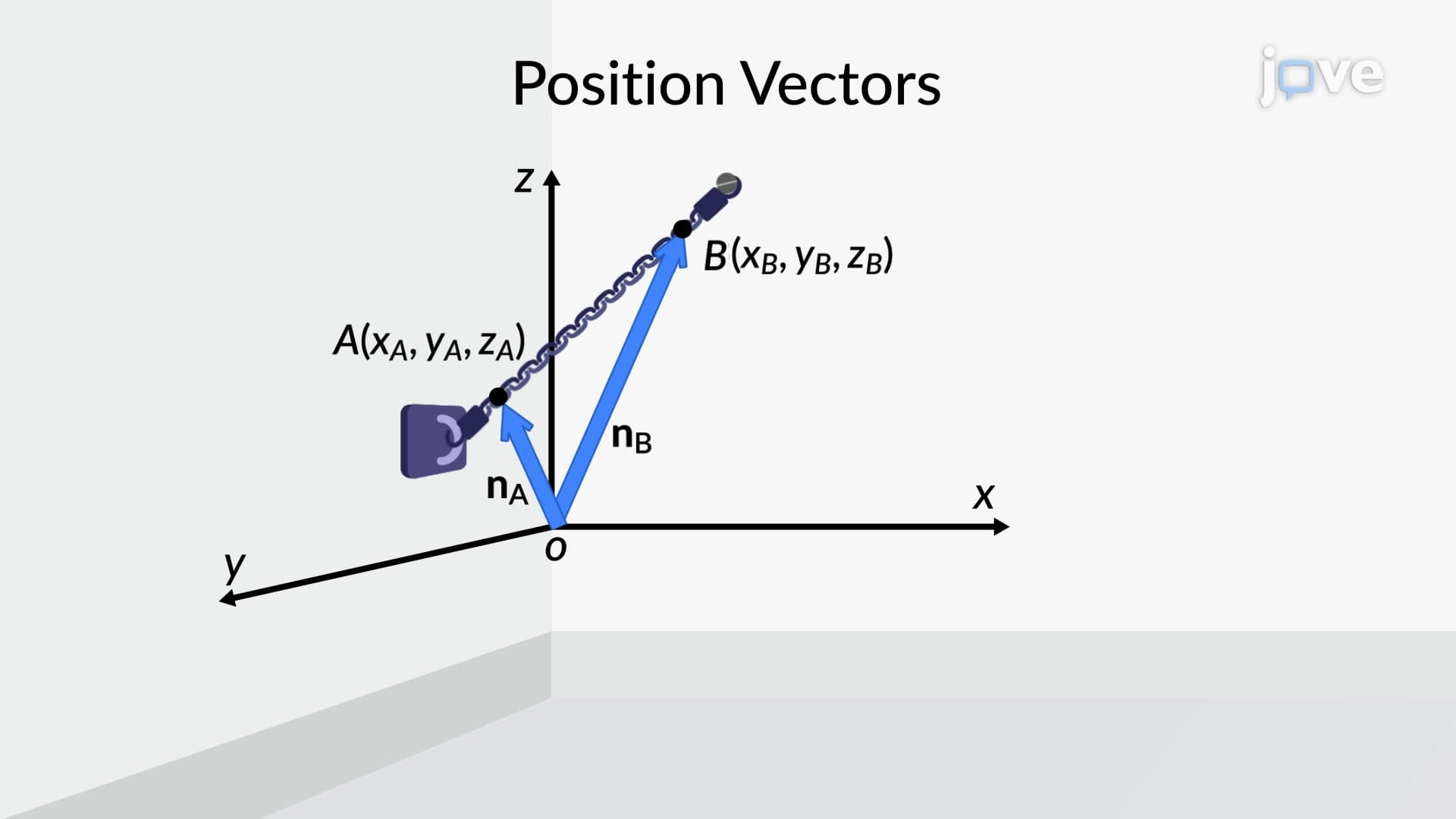
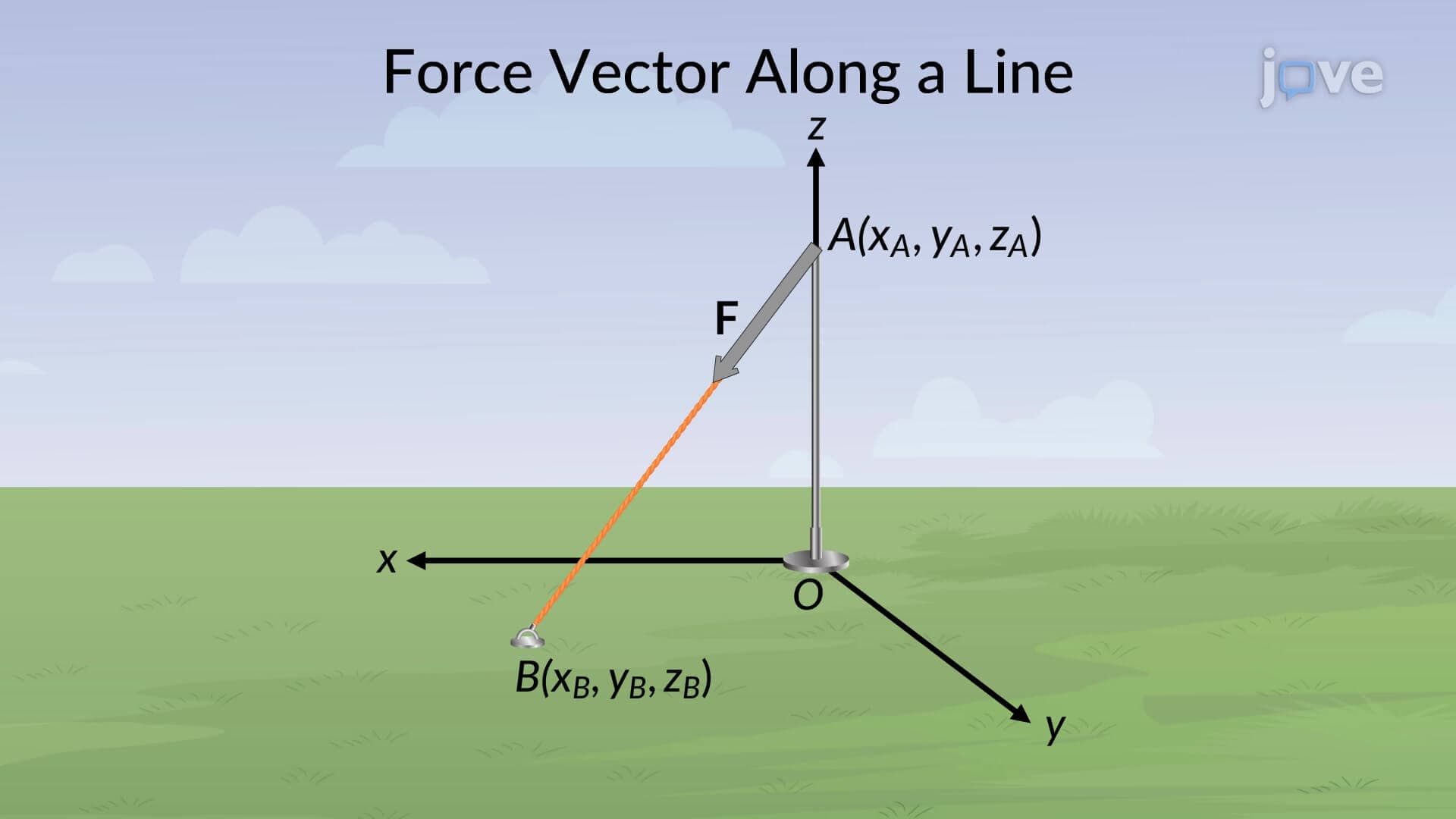
The foundation of three dimensional force system analysis lies in resolving any spatial force into its rectangular components. When a force vector F acts in space, it can be decomposed into components F(x), F(y), and F(z) along the coordinate axes. This process utilizes spherical coordinates, where angle theta (θ) represents the angle between the force and the vertical z-axis, while angle phi (φ) describes the orientation of the force's horizontal projection relative to the x-axis.
The mathematical relationships governing this resolution follow trigonometric principles:
Understanding three dimensional force system concepts proves crucial for various engineering disciplines. Aerospace engineers analyzing forces on aircraft during flight must consider lift, drag, thrust, and weight acting in three-dimensional space. Similarly, civil engineers designing earthquake-resistant buildings in California must account for seismic forces that can act in any direction.
Students preparing for AP Physics exams or college-level statics courses encounter three dimensional force system problems regularly. The College Board's AP Physics C: Mechanics exam frequently includes questions requiring three-dimensional vector analysis. Similarly, engineering students taking statics courses at institutions like MIT or Stanford must master these concepts for success in structural analysis and machine design applications.
The key to mastering three-dimensional force analysis lies in visualizing the geometric relationships and systematically applying trigonometric principles. Practice problems involving cables, struts, and support structures help students develop intuition for spatial force behavior that proves invaluable in advanced engineering coursework and professional practice.
Frequently Asked Questions
A three dimensional force system involves forces acting along three perpendicular axes (x, y, z) rather than within a single plane. Unlike 2D systems that use only two components, 3D systems require three force components and more complex trigonometric relationships. This approach provides complete analysis for real-world engineering problems where forces don't conveniently align in single planes.
A three dimensional force system is a collection of forces acting on a body where the forces do not all lie in the same plane, requiring analysis in three-dimensional space using x, y, and z components. For AP Physics or college exams, remember that any spatial force can be resolved into three rectangular components using spherical coordinate angles theta and phi.
MCAT physics sections may include 3D force problems in biomechanics contexts, such as joint forces during movement. Engineering exams typically feature cable tension, structural support, or equilibrium problems requiring three-dimensional analysis. Focus on vector resolution, equilibrium equations (ΣF(x)=0, ΣF(y)=0, ΣF(z)=0), and resultant magnitude calculations.
Engineering Statics, Physics I (mechanics), and Dynamics courses extensively cover 3D force systems. Students at universities like UC Berkeley, Georgia Tech, or Purdue encounter these concepts in freshman engineering curricula. Advanced courses in structural analysis, machine design, and aerospace engineering build heavily on these foundational principles.
The Space Needle in Seattle experiences wind forces from multiple directions simultaneously, requiring 3D analysis for structural safety. Similarly, oil drilling rigs in the Gulf of Mexico must withstand complex wave and wind forces acting in three-dimensional space. Even suspension bridge cables like those on the Verrazano-Narrows Bridge involve three-dimensional force resolution.
Basic trigonometry and algebra suffice for most introductory 3D force problems. You'll primarily use sine, cosine, and the Pythagorean theorem extended to three dimensions: F = √[F(x)² + F(y)² + F(z)²]. Vector concepts help, but most high school students can master these problems with consistent practice and good spatial visualization skills.
Start by drawing clear free-body diagrams and establishing coordinate systems consistently. Practice visualizing 3D scenarios using physical models or online simulators. Work through cable and support problems systematically, always resolving forces into components before applying equilibrium equations. Focus on understanding geometric relationships rather than memorizing formulas.
Advanced statics covers distributed loads and centroids in 3D space, while dynamics extends to three-dimensional motion analysis. Finite element analysis (FEA) used in engineering design relies heavily on 3D force concepts. Students interested in aerospace, structural, or mechanical engineering will encounter increasingly sophisticated applications throughout their academic and professional careers.
Related Micro-courses

Related Subjects
 Civil Engineering 30 micro-courses›Electrical Engineering 33 micro-courses›