Loading video…

- Mechanical Engineering
- Force Vectors
- Dot Product: Problem Solving
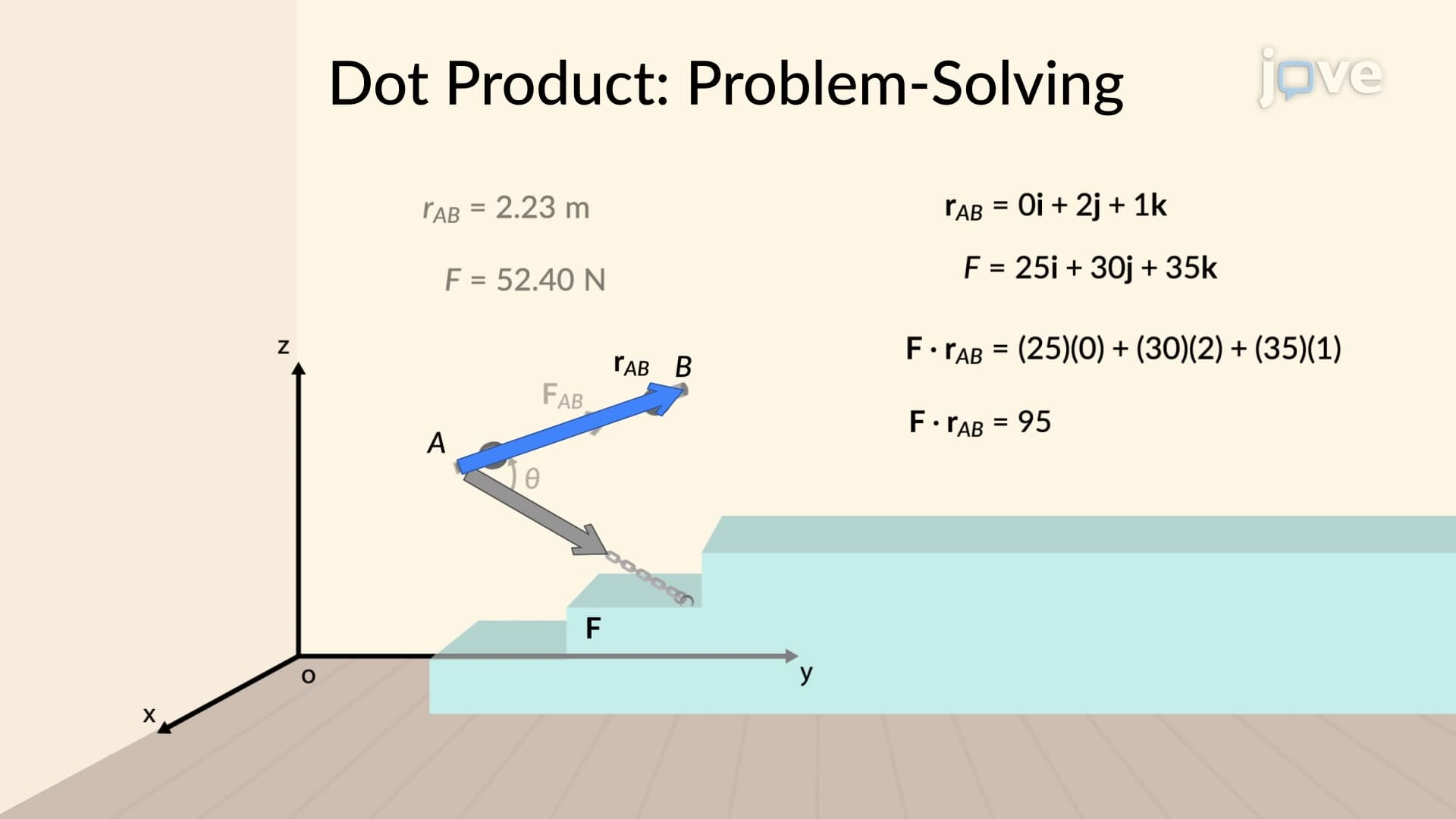



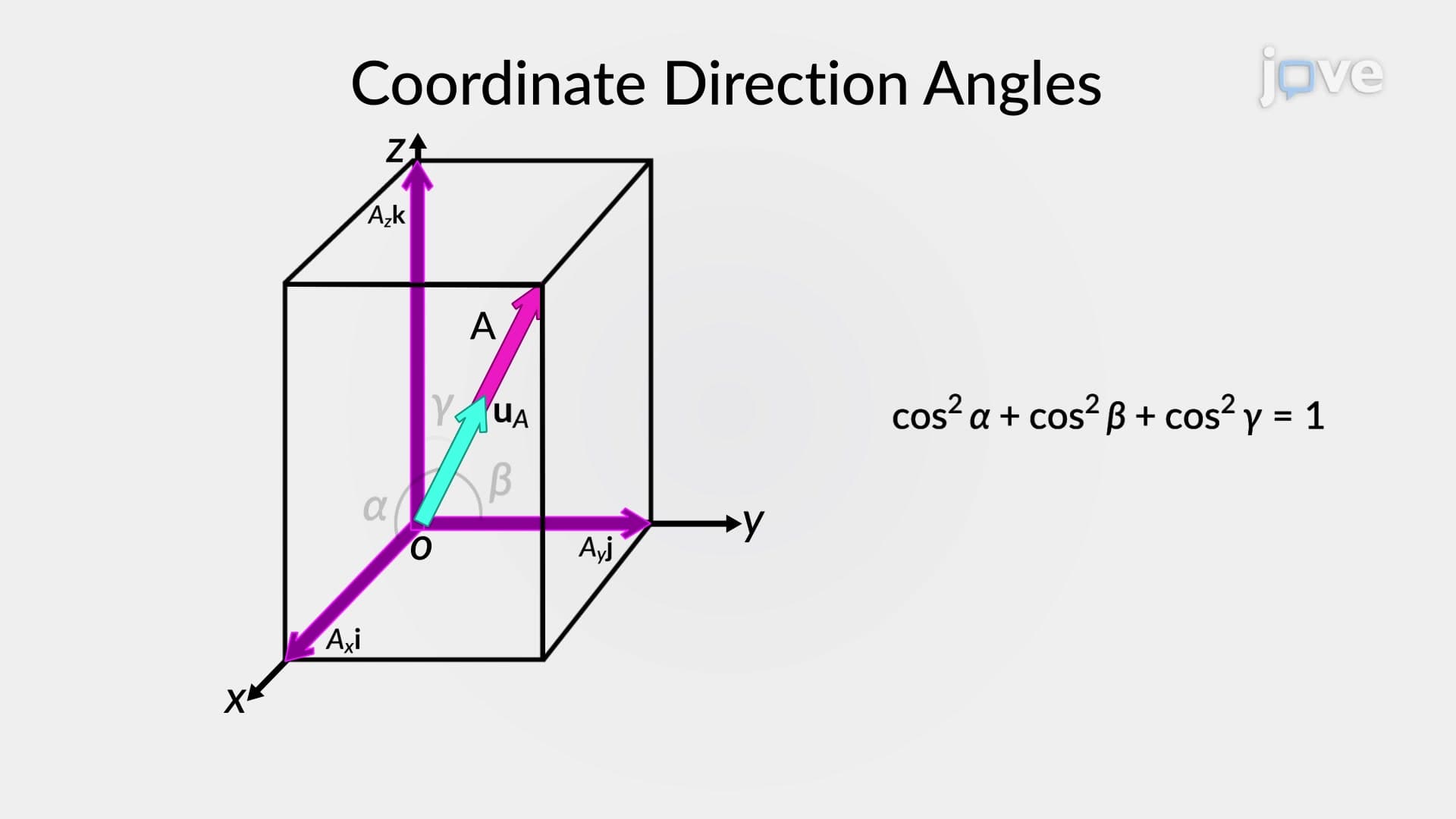
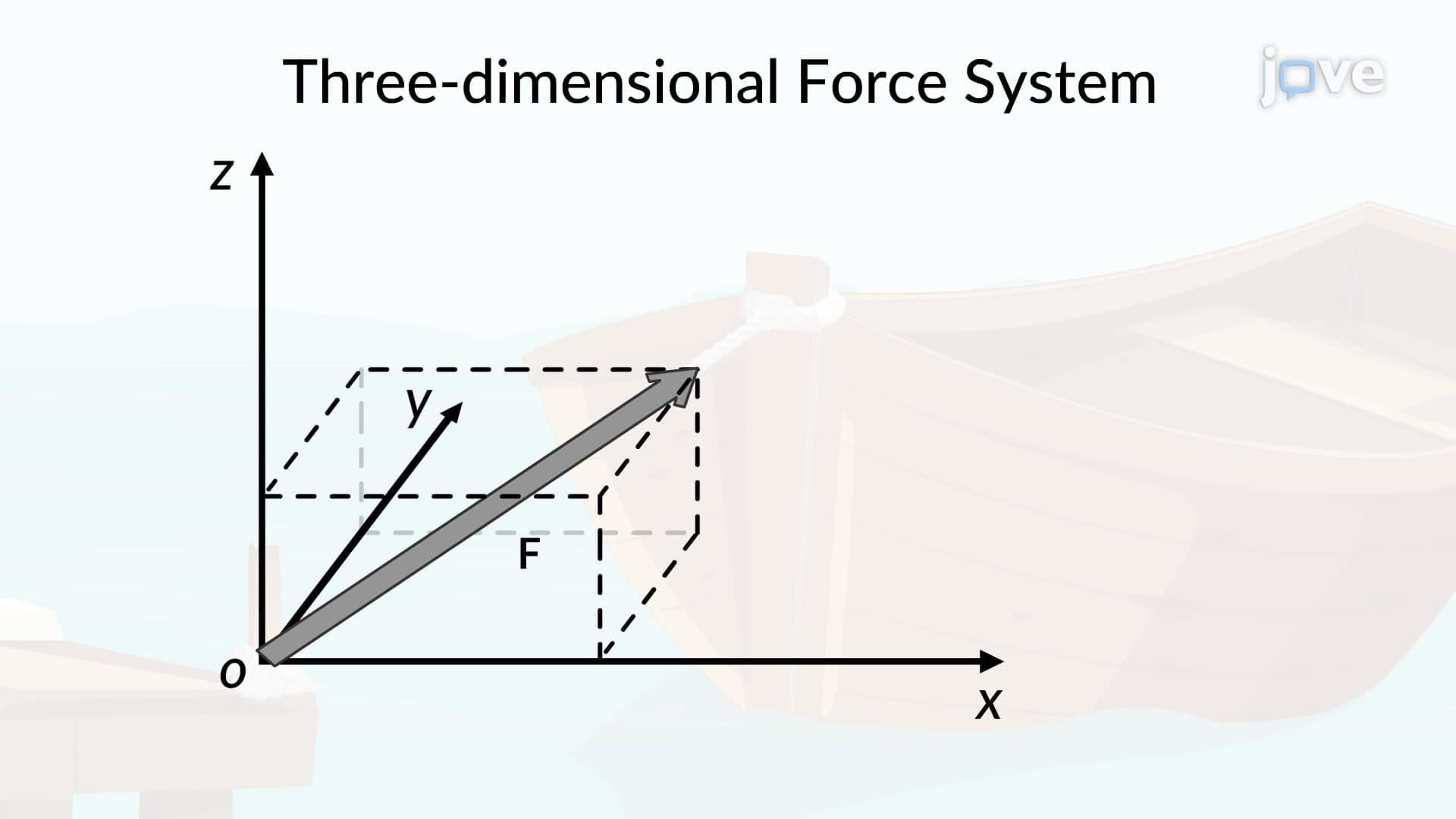
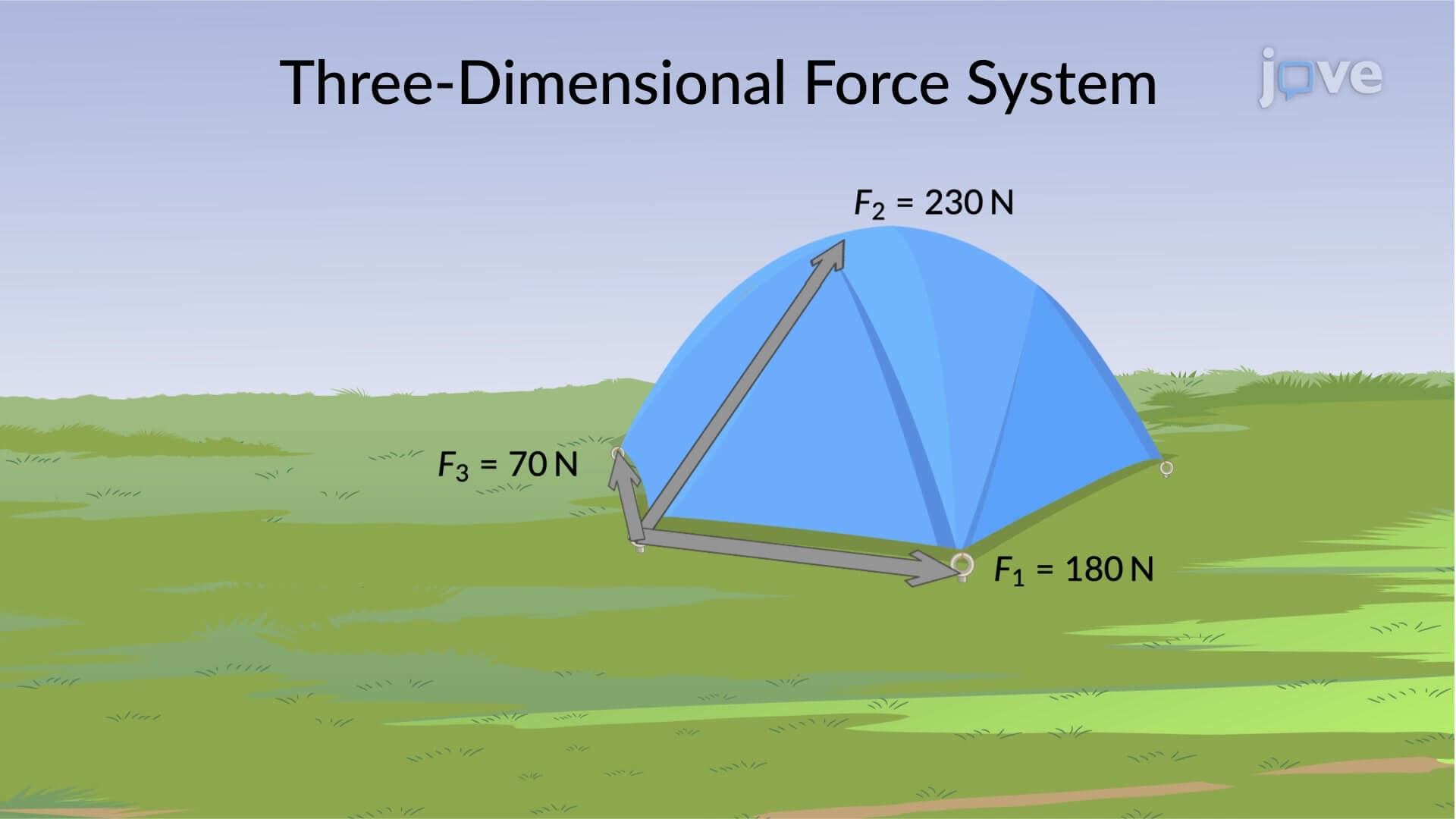
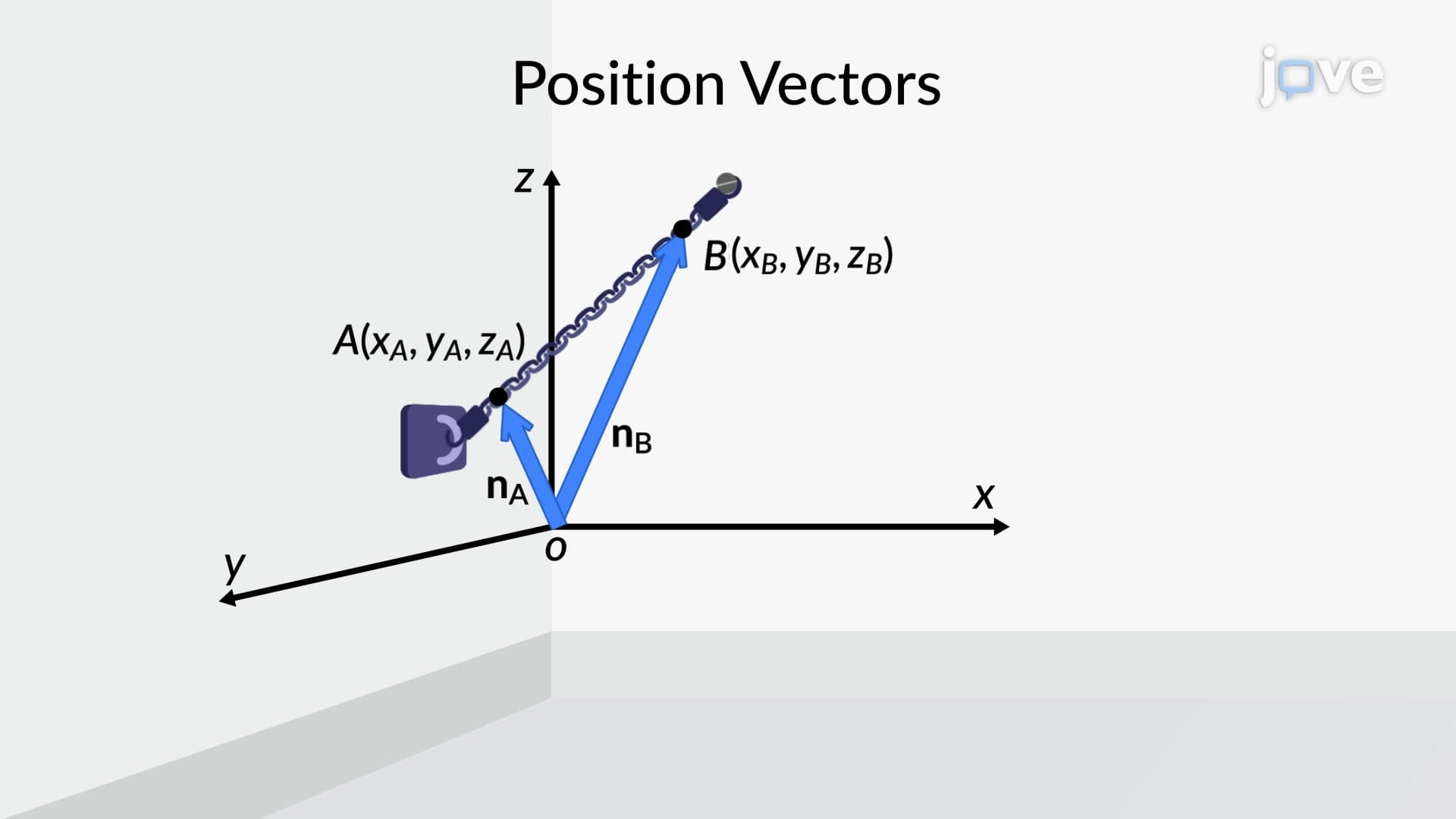
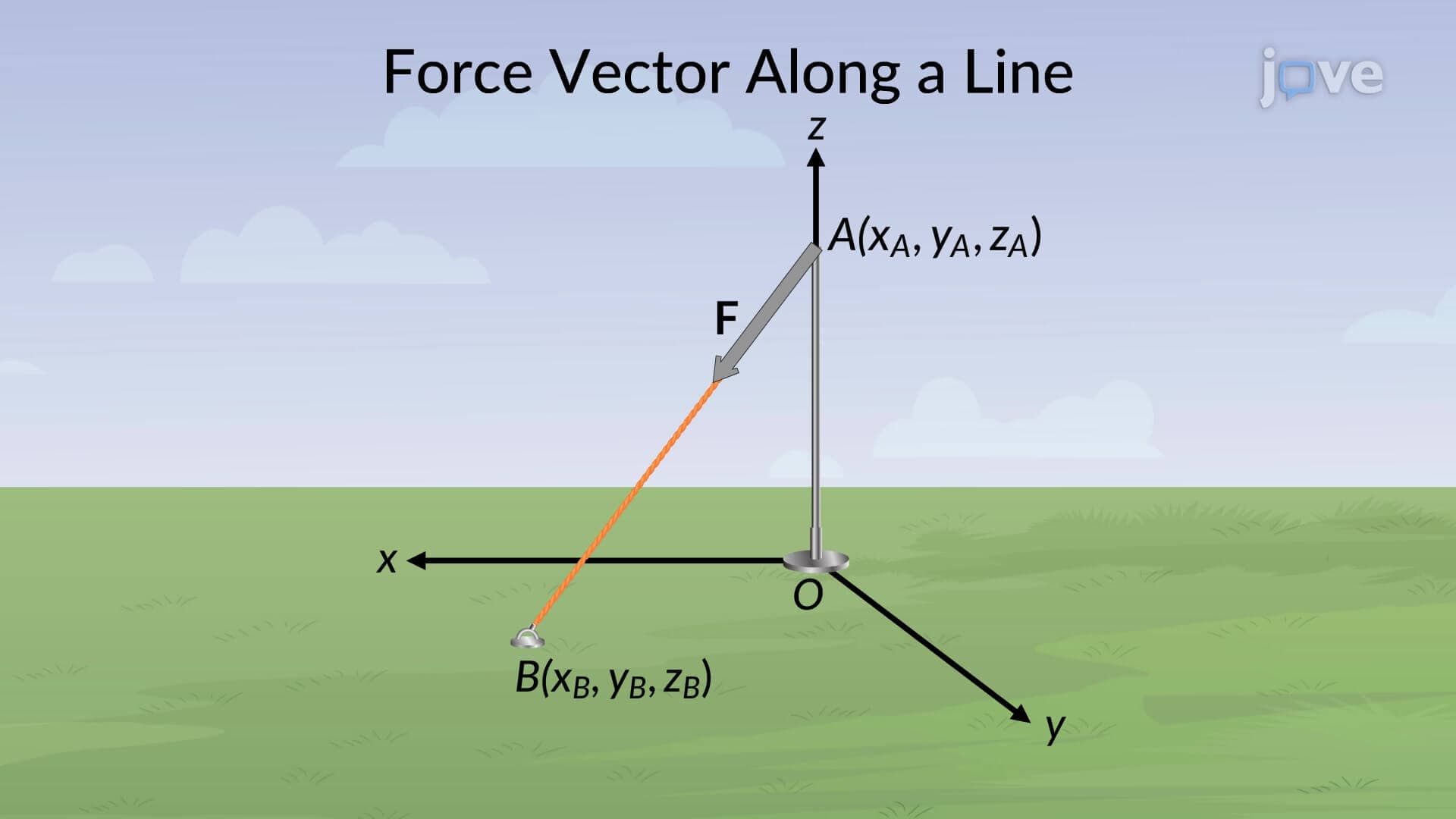
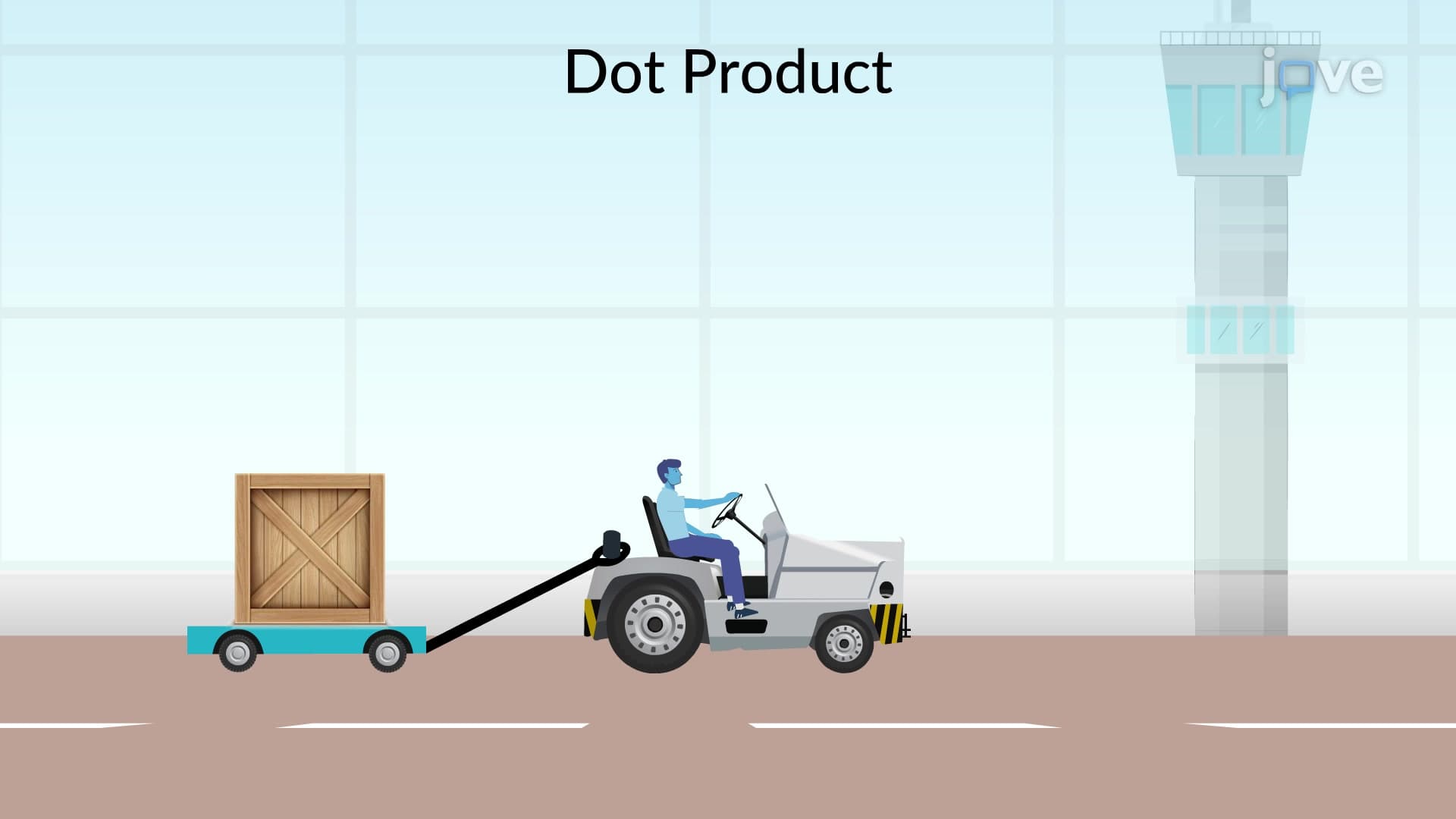
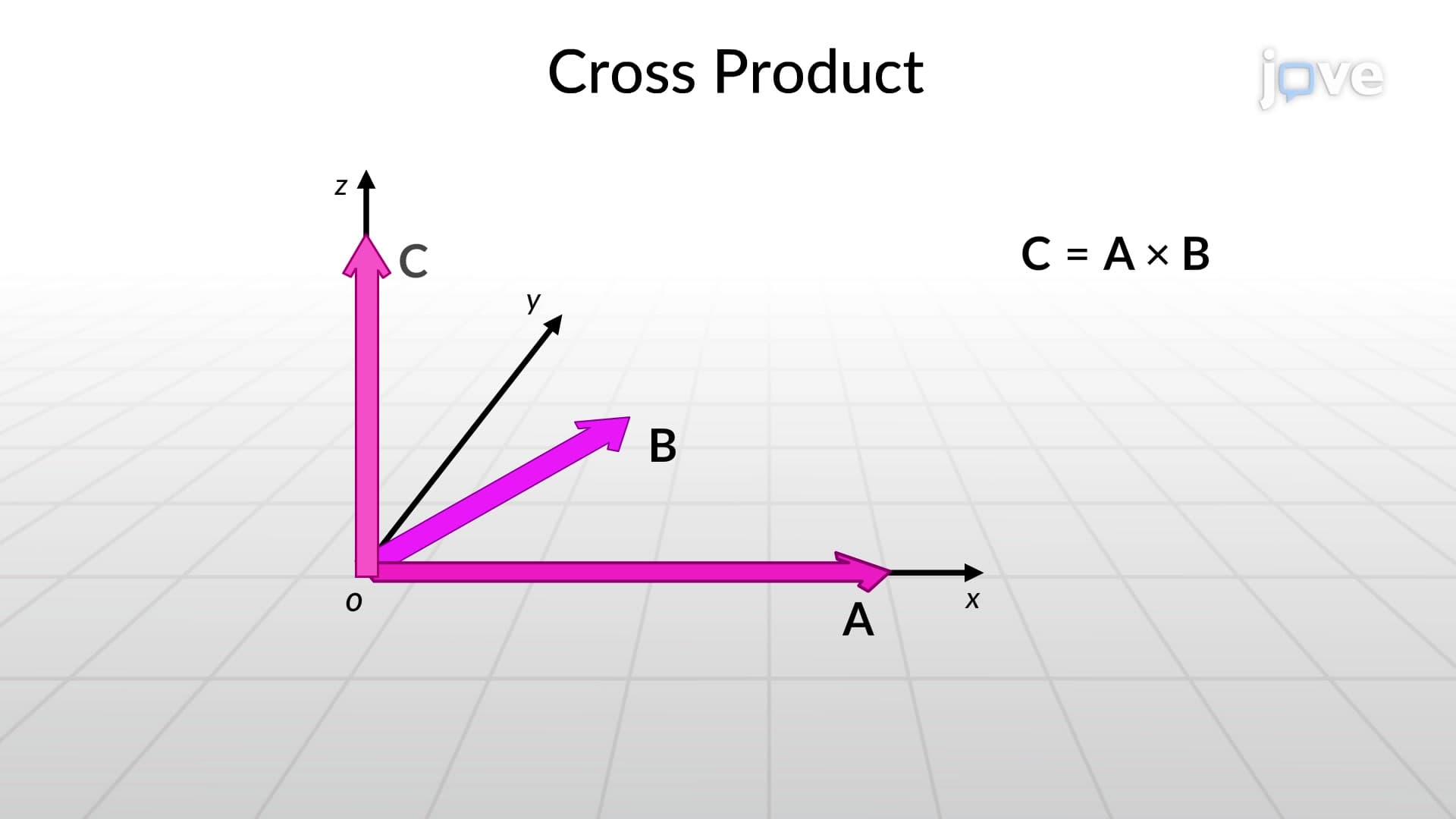
Ever wonder how NASA engineers calculate the exact force needed to position a satellite's solar panels? Dot product problem solving is the mathematical technique that makes these precise calculations possible. From determining forces in bridge construction to analyzing tensions in suspension cables on the Golden Gate Bridge, what is dot product problem solving becomes essential for engineering applications across America. This fundamental vector operation helps us find projections, angles, and force components in three-dimensional space. Watch the full video on JoVE Coach to master this concept with expert-led visuals and step-by-step explanations.
- Understand what is dot product problem solving and its role in vector analysis for engineering and physics applications
- Identify the components needed to calculate dot products between position vectors and force vectors in three-dimensional coordinate systems
- Apply the dot product formula to determine angles between vectors using the inverse cosine relationship
- Analyze force projections along specific directions by combining dot product results with vector magnitudes
- Evaluate real-world scenarios where dot product calculations determine structural forces and mechanical advantages
- Recognize the mathematical relationship between dot products, vector magnitudes, and trigonometric functions
- Explore how dot product problem solving connects to concepts in statics, dynamics, and engineering mechanics
- Compare different approaches to solving vector projection problems in both two and three dimensions
Understanding Dot Product Problem Solving Fundamentals
Dot product problem solving represents one of the most practical applications of vector mathematics in engineering and physics. This mathematical technique allows us to quantify relationships between vectors, particularly when determining how much of one vector acts in the direction of another. The process involves multiplying corresponding components of two vectors and summing the results, creating a scalar value that reveals important geometric and physical relationships.
The Mathematical Foundation of Dot Product Problem Solving
The dot product problem solving definition centers on the formula: A · B = |A||B|cos(θ), where θ represents the angle between vectors A and B. This relationship proves invaluable when analyzing forces, velocities, or any vector quantities in engineering contexts. For students preparing for AP Physics or college-level mechanics courses, mastering this concept becomes crucial for success on exams and practical problem-solving scenarios.
In coordinate form, if vector A has components (Ax, Ay, Az) and vector B has components (Bx, By, Bz), then A · B = AxBx + AyBy + AzBz. This computational approach makes dot product problem solving accessible even in complex three-dimensional scenarios.
Real-World Applications and Engineering Context
What is dot product problem solving in detail becomes clearer through practical examples. Consider aerospace engineers at Boeing designing aircraft wing supports. They use dot products to calculate how wind forces project onto structural elements, ensuring adequate strength in critical directions. Similarly, civil engineers working on the Hoover Dam used these principles to analyze water pressure forces against the dam face.
The dot product problem solving concept also appears in robotics, where engineers calculate joint torques by projecting force vectors along specific axes. Students studying mechanical engineering at institutions like MIT or Stanford encounter these applications in their statics and dynamics coursework.
Problem-Solving Strategy and Exam Applications
A systematic dot product problem solving study guide approach involves: first, identifying the vectors involved; second, determining their components or magnitudes and included angle; third, applying the appropriate dot product formula; and fourth, interpreting the physical meaning of the result. This methodology proves essential for SAT Subject Tests, AP Physics exams, and college engineering assessments.
Understanding dot product problem solving also connects to energy calculations, since work equals the dot product of force and displacement vectors. This relationship frequently appears on MCAT physics sections and engineering licensure examinations.
Frequently Asked Questions
Dot product problem solving is a vector operation technique that calculates scalar values representing the projection of one vector onto another. It's essential for determining angles between vectors, calculating work done by forces, and solving engineering problems involving force components. This concept forms the foundation for advanced topics in physics, engineering mechanics, and calculus-based mathematics courses.
AP Physics C exams frequently include dot product calculations in mechanics problems involving work, energy, and force analysis. College placement tests and SAT Subject Tests may feature these concepts in vector geometry questions. Students typically encounter problems requiring force projections, angle calculations between vectors, and work-energy relationships using dot product formulations.
MCAT physics sections include dot product applications in biomechanics problems, such as calculating muscle force components or determining work done during physical motion. These problems often involve analyzing forces in human movement, medical device mechanics, or physiological systems where vector projections determine effectiveness of applied forces.
Consider the design of wind turbines in Texas wind farms, where engineers calculate how wind velocity vectors project onto turbine blade orientations. By using dot products, they determine optimal blade angles for maximum energy capture throughout different wind conditions, directly impacting power generation efficiency and economic viability of renewable energy projects.
Not at all! Students who understand basic trigonometry and coordinate geometry can master dot product problem solving with proper practice. The concept builds naturally on familiar ideas like finding distances and angles, making it accessible to students in Algebra 2 or Precalculus courses before advancing to AP Physics or college-level mathematics.
Focus on understanding the geometric interpretation first, then practice the computational methods. Work through problems involving both magnitude-angle form and component form calculations. Create a systematic approach: identify given information, choose the appropriate formula, perform calculations carefully, and always check that your answer makes physical sense in the problem context.
Build on this foundation by exploring cross products, vector calculus, and applications in differential equations. These concepts lead naturally into advanced physics topics like electromagnetism, fluid dynamics, and quantum mechanics. Engineering students should also investigate tensor operations and their applications in materials science and structural analysis.
This topic serves as prerequisite knowledge for calculus-based physics, linear algebra, differential equations, and engineering statics courses. Students at universities like Caltech, Georgia Tech, and Purdue rely heavily on these vector operations throughout their STEM curricula, particularly in mechanical, aerospace, and civil engineering programs where force analysis remains fundamental.
Related Micro-courses
6 Concepts

20 Concepts
9 Concepts
Related Subjects
 Civil Engineering 30 micro-courses›Electrical Engineering 33 micro-courses›