Loading…
Loading video…

21,804 views
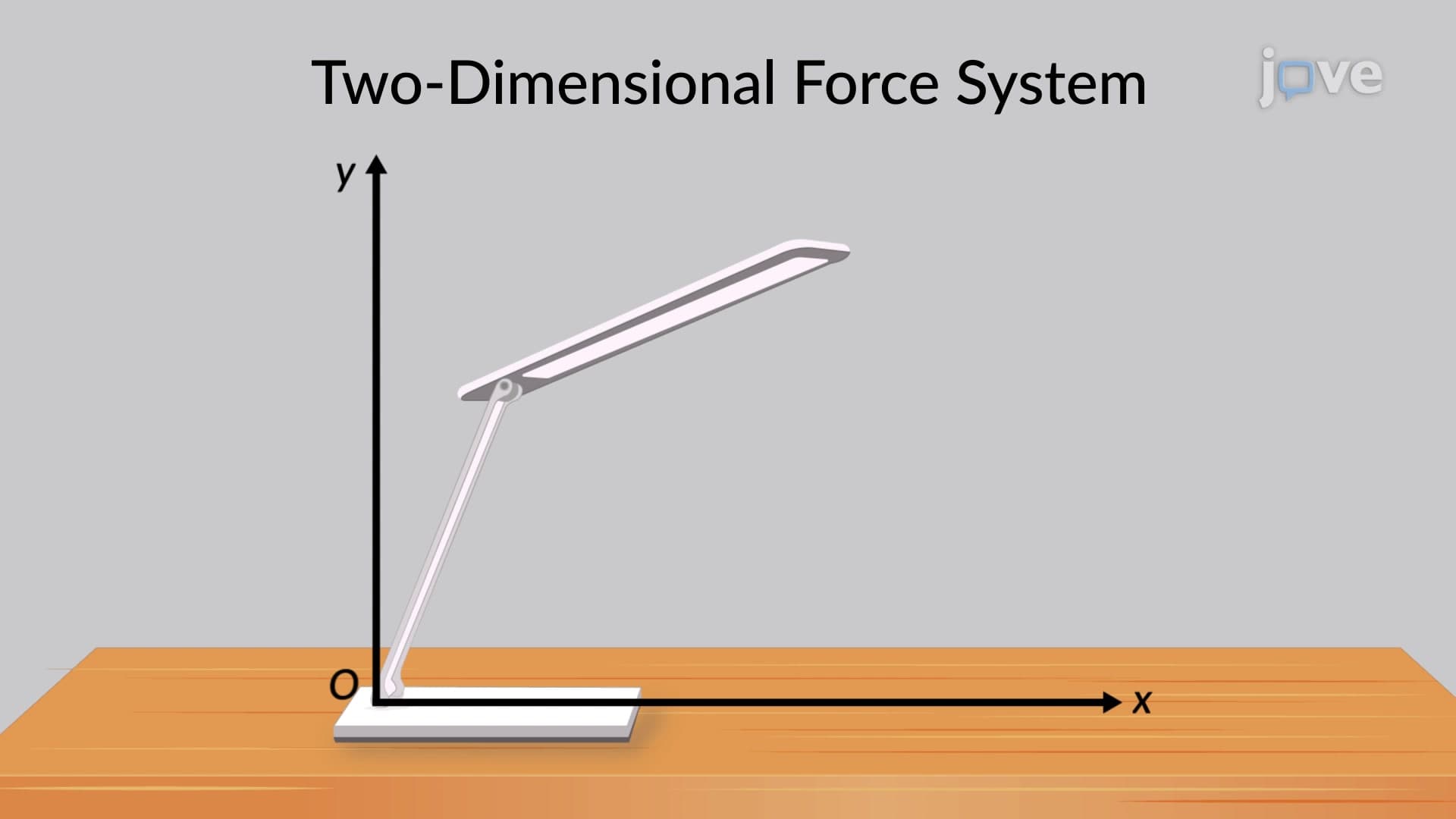
Ever wonder how engineers calculate the forces acting on a bridge cable or how NASA determines rocket thrust directions? A two dimensional force system involves forces acting in a single plane, where each force can be broken down into perpendicular components along x and y axes. Consider the Golden Gate Bridge in San Francisco – engineers must analyze the complex two-dimensional forces acting on each cable and beam to ensure structural integrity. Understanding what is two dimensional force system allows us to solve real-world problems from building design to spacecraft navigation. Watch the full video on JoVE Coach to master this concept with expert-led visuals and step-by-step explanations.
A two dimensional force system represents one of the fundamental concepts in statics and mechanics, where all forces act within a single plane. This system forms the backbone of structural analysis, from designing skyscrapers in Manhattan to analyzing the forces on aircraft wings. In engineering applications, most real-world problems can be simplified into two-dimensional analysis, making this concept essential for students preparing for AP Physics, engineering courses, and professional practice.
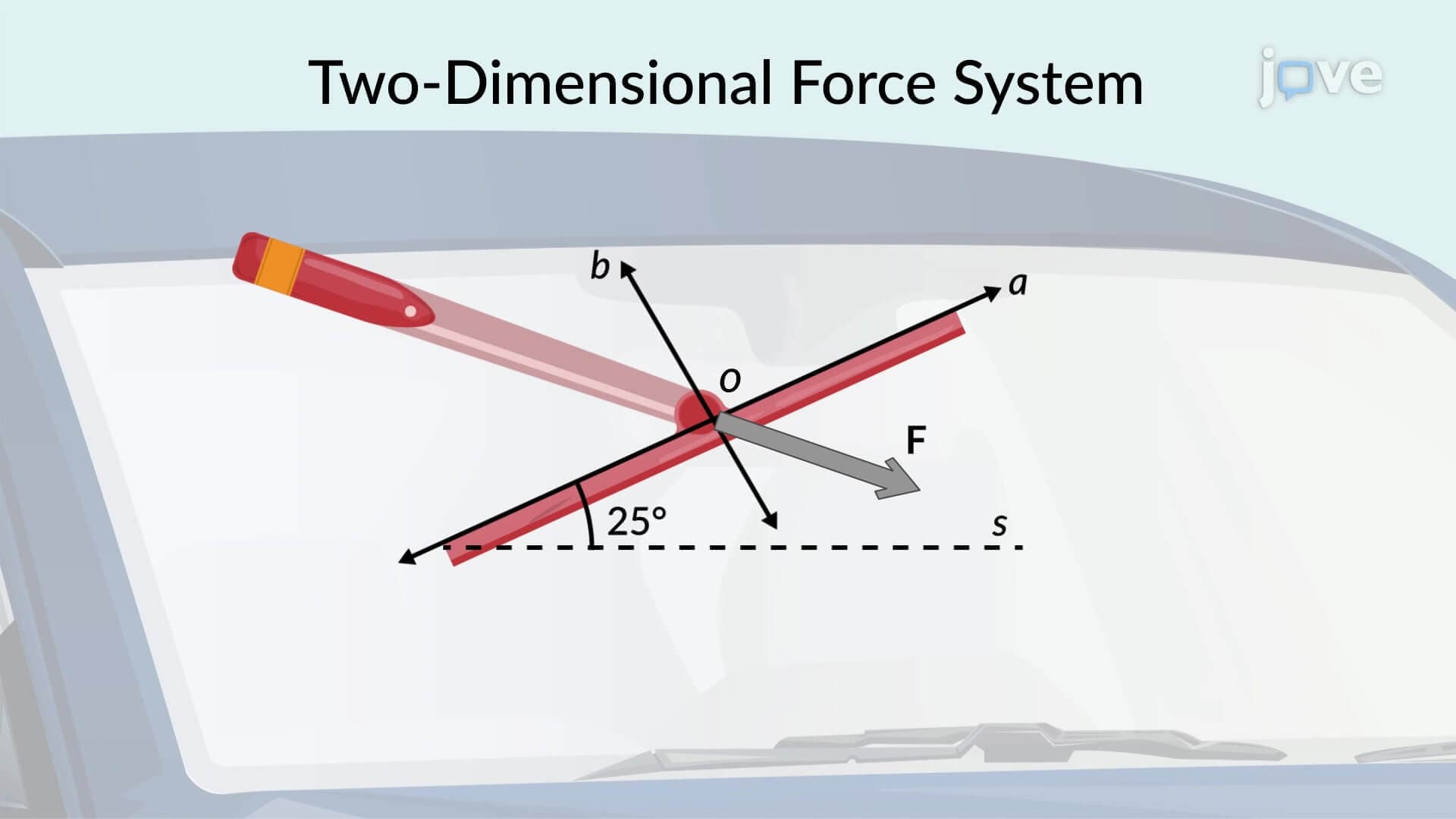
The power of two dimensional force system definition lies in component resolution. Any force acting at angle θ can be decomposed into perpendicular components: F(x) = F cos(θ) and F(y) = F sin(θ). This mathematical relationship allows engineers to analyze complex loading conditions systematically. For instance, when analyzing the forces on a cell phone tower during wind loading, engineers resolve wind forces into horizontal and vertical components to determine foundation requirements and structural stability.
Understanding two dimensional force system requires mastering coordinate system applications. Whether the force's line of action passes through the coordinate origin doesn't affect the component calculation – only the point of application changes. Sign conventions become crucial: forces pointing in positive x and y directions receive positive signs, while those in negative directions receive negative signs. This standardization ensures consistency across engineering calculations and prevents errors in structural design.
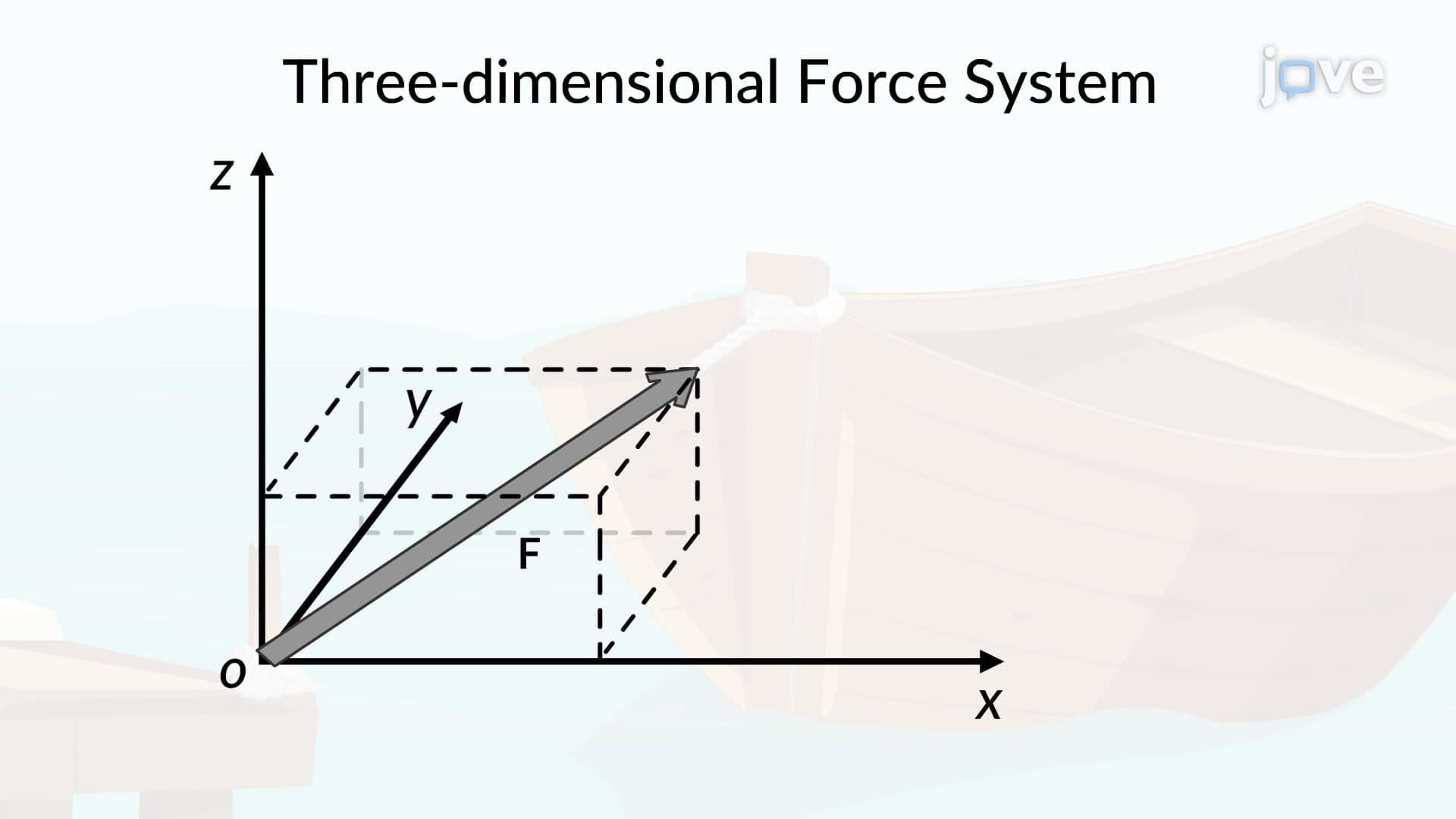
The two dimensional force system concept appears frequently in college-level physics courses and engineering programs. Students encounter these problems in statics classes, where they analyze trusses, beams, and mechanical systems. AP Physics students will recognize these principles in equilibrium problems, while pre-engineering students use them as stepping stones toward three-dimensional force analysis. Major universities like MIT and Stanford emphasize this concept in their introductory mechanics courses, as it bridges theoretical physics with practical engineering applications.
Frequently Asked Questions
A two dimensional force system is a collection of forces that all act within the same plane, typically analyzed using x and y coordinate axes. These systems are fundamental in engineering and physics, allowing us to break complex forces into manageable perpendicular components. You'll encounter this concept in AP Physics, college statics courses, and throughout engineering programs.
AP Physics commonly tests two dimensional force systems through equilibrium problems, projectile motion, and inclined plane scenarios. Students must resolve forces into components, apply Newton's laws, and solve for unknown forces or angles. Practice with free-body diagrams and component resolution is essential for success.
You need basic trigonometry (sine, cosine, tangent), algebra, and coordinate geometry – typically covered by Algebra 2 and Trigonometry. The math isn't advanced, making this concept accessible to high school students. Most calculations involve resolving components and applying equilibrium equations.
Civil engineers analyze bridge loads, mechanical engineers design machine components, and aerospace engineers calculate aircraft forces. For example, analyzing forces on the cables of the Brooklyn Bridge or determining load distributions in building frameworks. These applications directly impact public safety and infrastructure design.
Yes, the MCAT Physics section includes mechanics problems involving force analysis and equilibrium. While not heavily emphasized, understanding force components helps with biomechanics questions and physics reasoning. Focus on conceptual understanding rather than complex calculations.
Start with free-body diagrams, practice component resolution systematically, and work through equilibrium problems progressively. Use online physics simulators to visualize force interactions, and always check your answers using sum of forces equals zero for equilibrium problems.
Next topics typically include three-dimensional force systems, moments and torques, and structural analysis methods like method of joints and method of sections. These concepts build directly on two-dimensional force analysis, expanding into more complex engineering applications and advanced mechanics principles.
Related Micro-courses

Related Subjects
 Civil Engineering 30 micro-courses›Electrical Engineering 33 micro-courses›