Loading subject page…

- Microeconomics
- Consumer Behavior
- Income and Substitution Effects
Micro-course: Consumer Behavior
9,930 views
Learn key concepts and earn your certificate.








Income and Substitution Effects

00:00
01:17
Video Summary: What Is Income and Substitution Effects
Ever wonder why you buy more pizza when it goes on sale, even if your allowance stays the same? The income substitution effects explain this everyday economic behavior through two distinct mechanisms. When Apple dropped iPhone prices by 20% in 2018, consumers didn't just buy more phones because they were cheaper relative to Samsung-they also felt richer and could afford additional purchases. Understanding what is income and substitution effects helps decode these consumer responses to price changes. Watch the full video on JoVE Coach to master this concept with expert-led visuals and step-by-step explanations.
- Understand what is income and substitution effects and how they combine to create total price effects in consumer behavior
- Identify the substitution effect as changes in consumption due to relative price shifts between goods
- Analyze the income effect as consumption changes resulting from altered purchasing power
- Compare how substitution and income effects work together versus independently in market scenarios
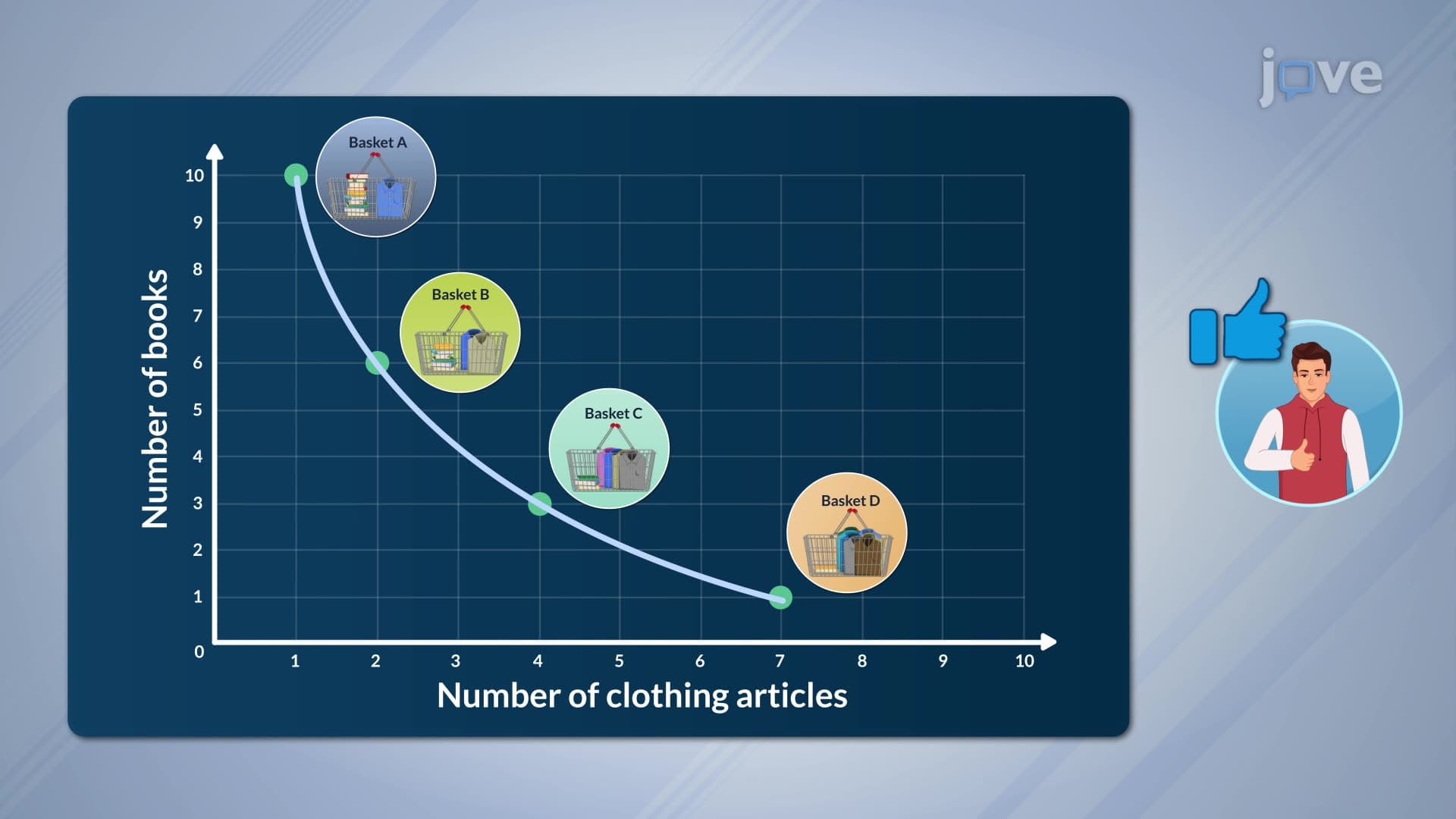
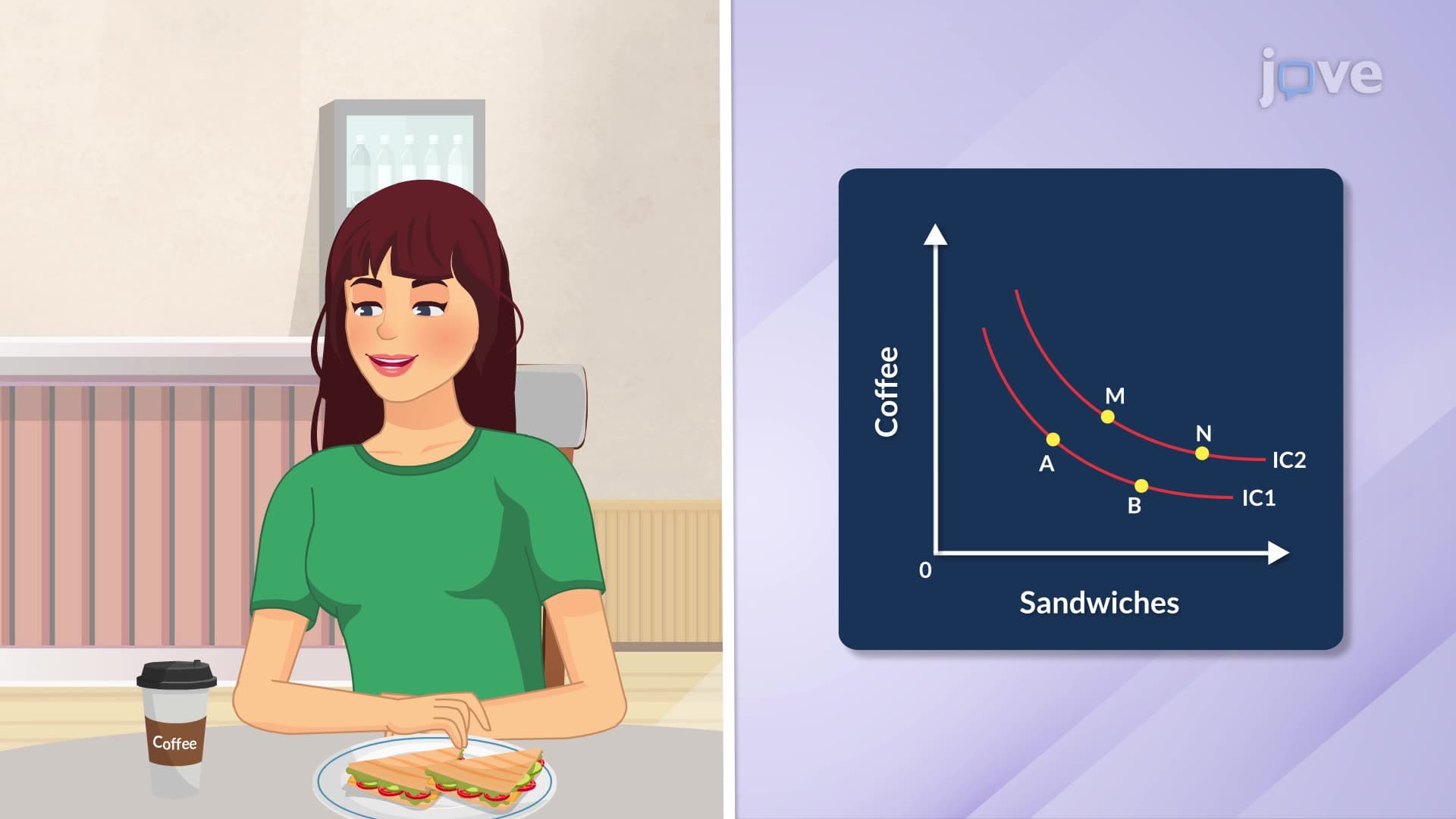
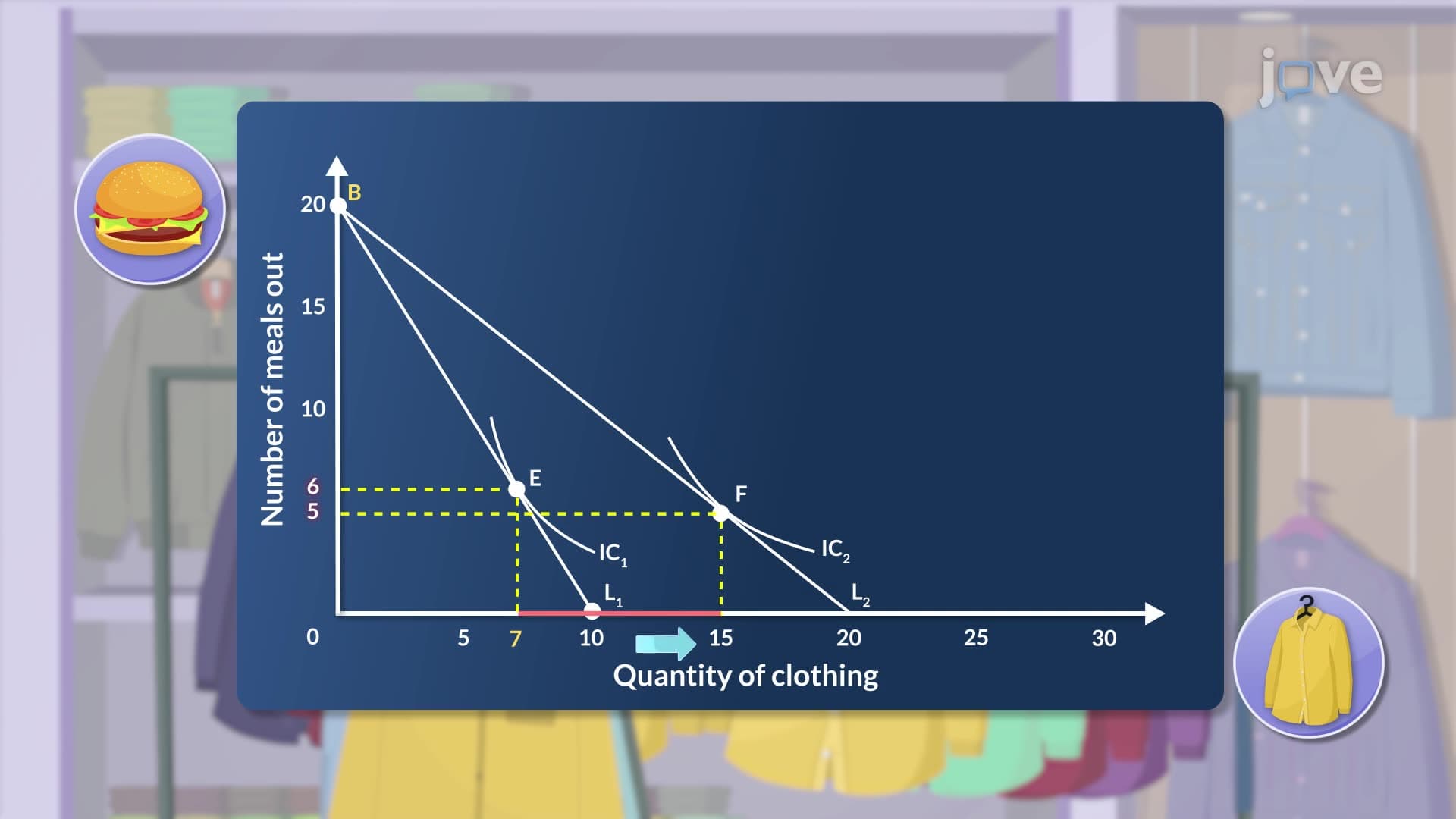
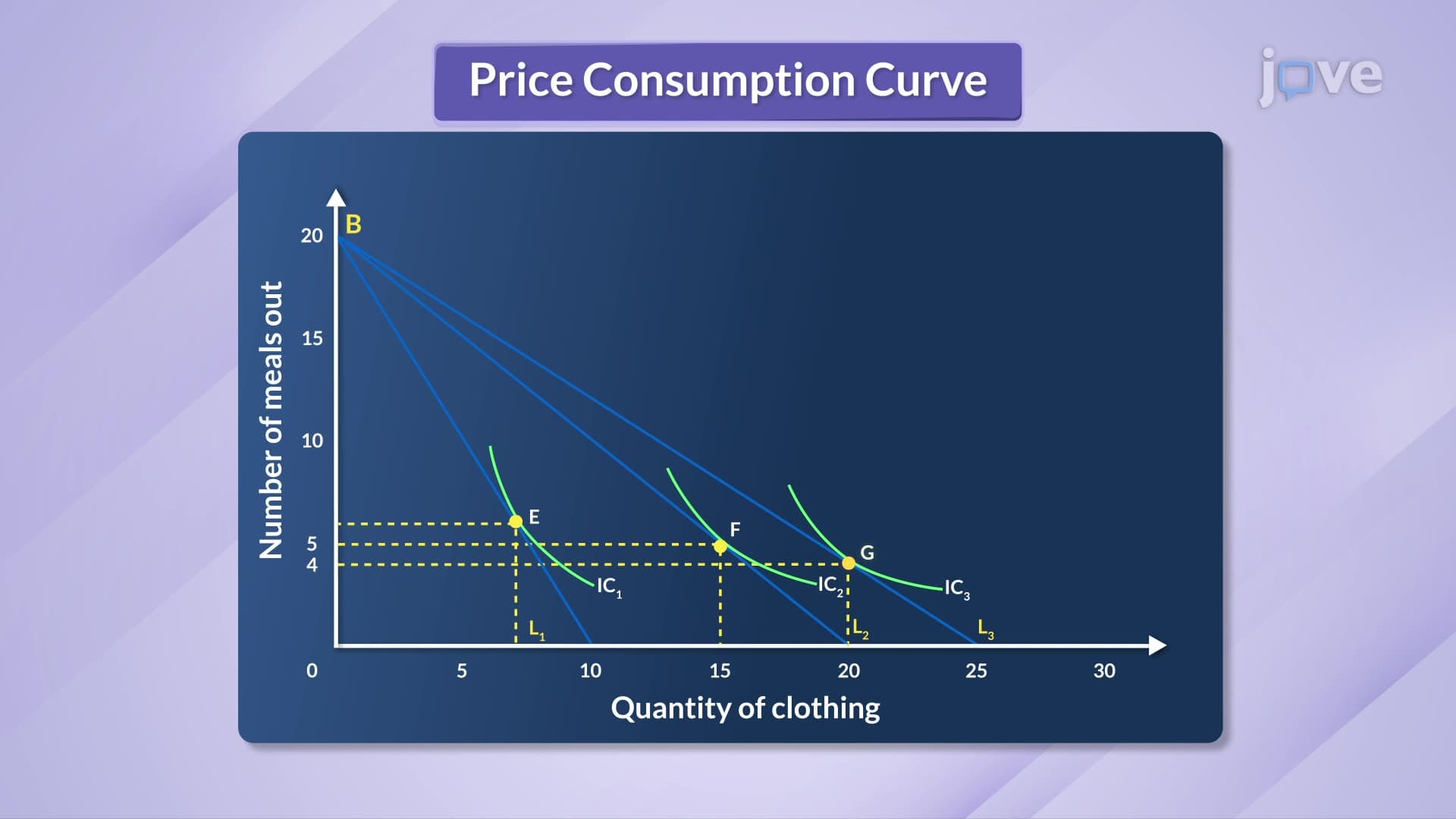
- Evaluate consumer equilibrium points using indifference curves and budget constraint analysis
- Apply income substitution effects concepts to predict consumer responses in real market situations
- Recognize the graphical representation of both effects using budget lines and indifference curves
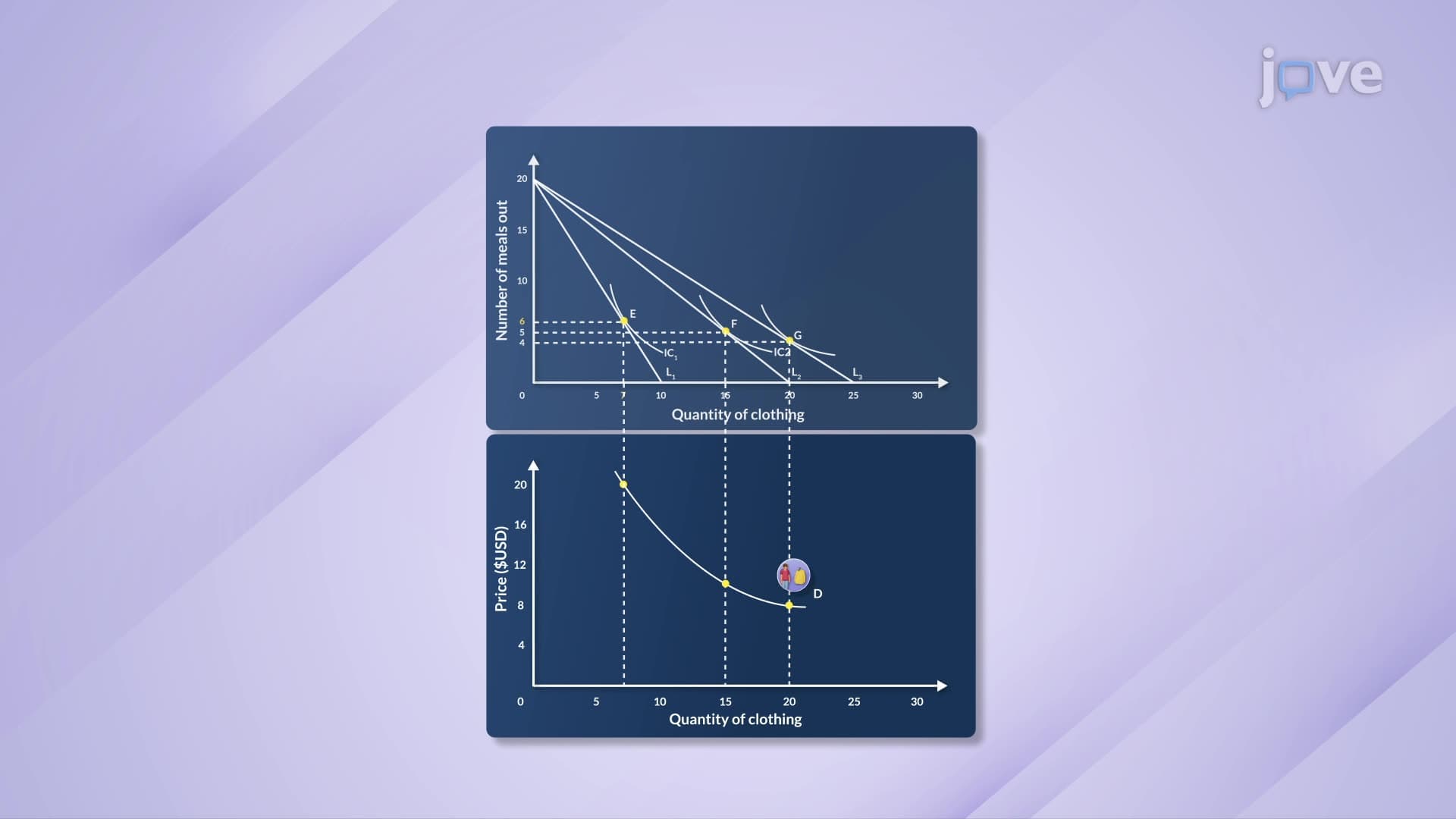
- Explore how these effects influence demand curves and market elasticity calculations
Understanding What is Income and Substitution Effects
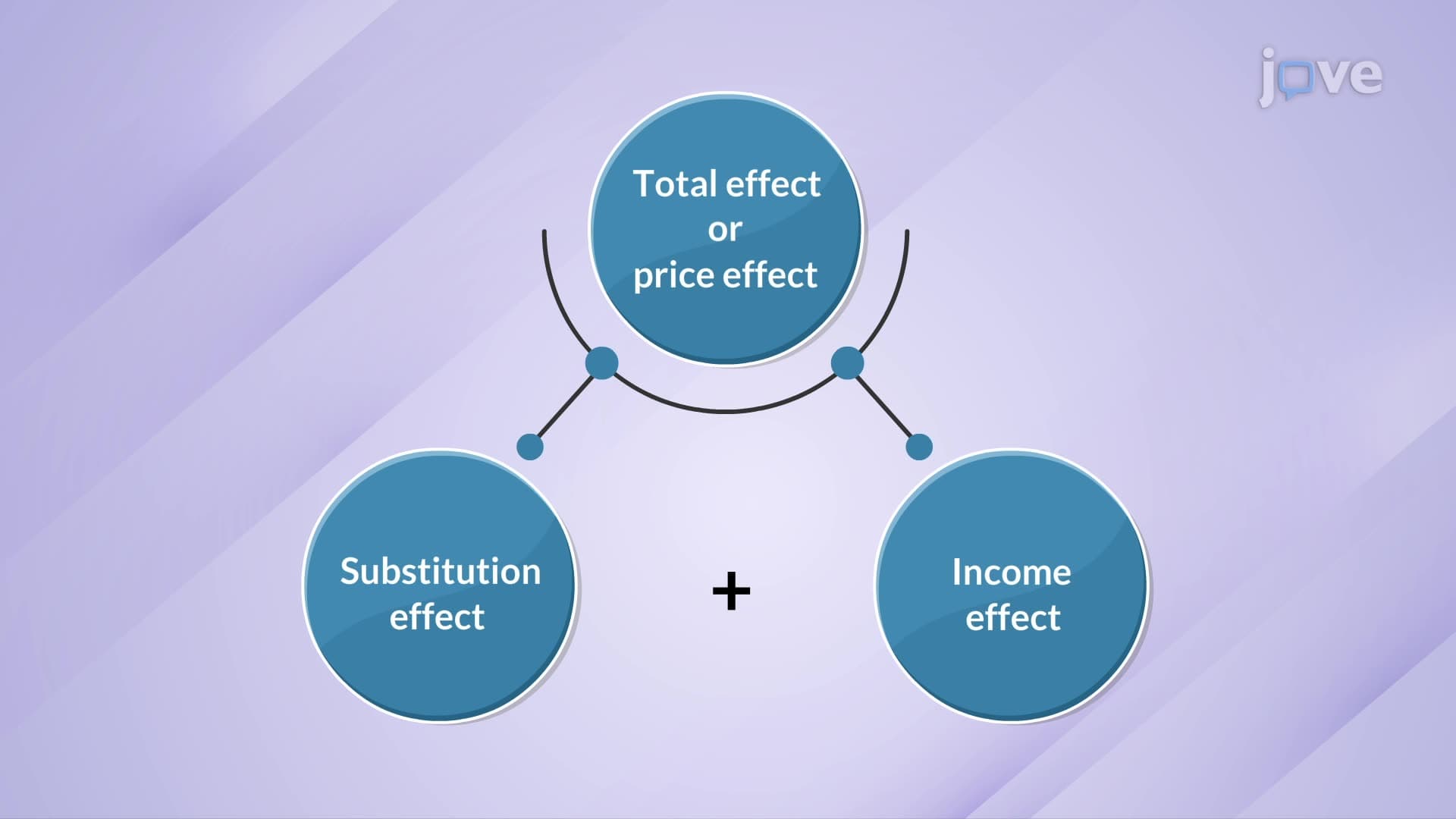
Income and substitution effects represent two fundamental forces that drive consumer behavior when prices change. These effects work simultaneously but through different mechanisms, helping economists predict and explain how consumers adjust their purchasing decisions. The total price effect equals the sum of both effects, providing a complete picture of consumer response to market changes.
The Substitution Effect Explained
The substitution effect occurs when consumers shift their purchases toward relatively cheaper goods. When Starbucks coffee becomes more expensive compared to Dunkin' Donuts, consumers substitute away from Starbucks-not because they're poorer, but because the relative price ratio changed. This effect isolates pure preference shifts by holding utility (satisfaction) constant while allowing relative prices to vary.
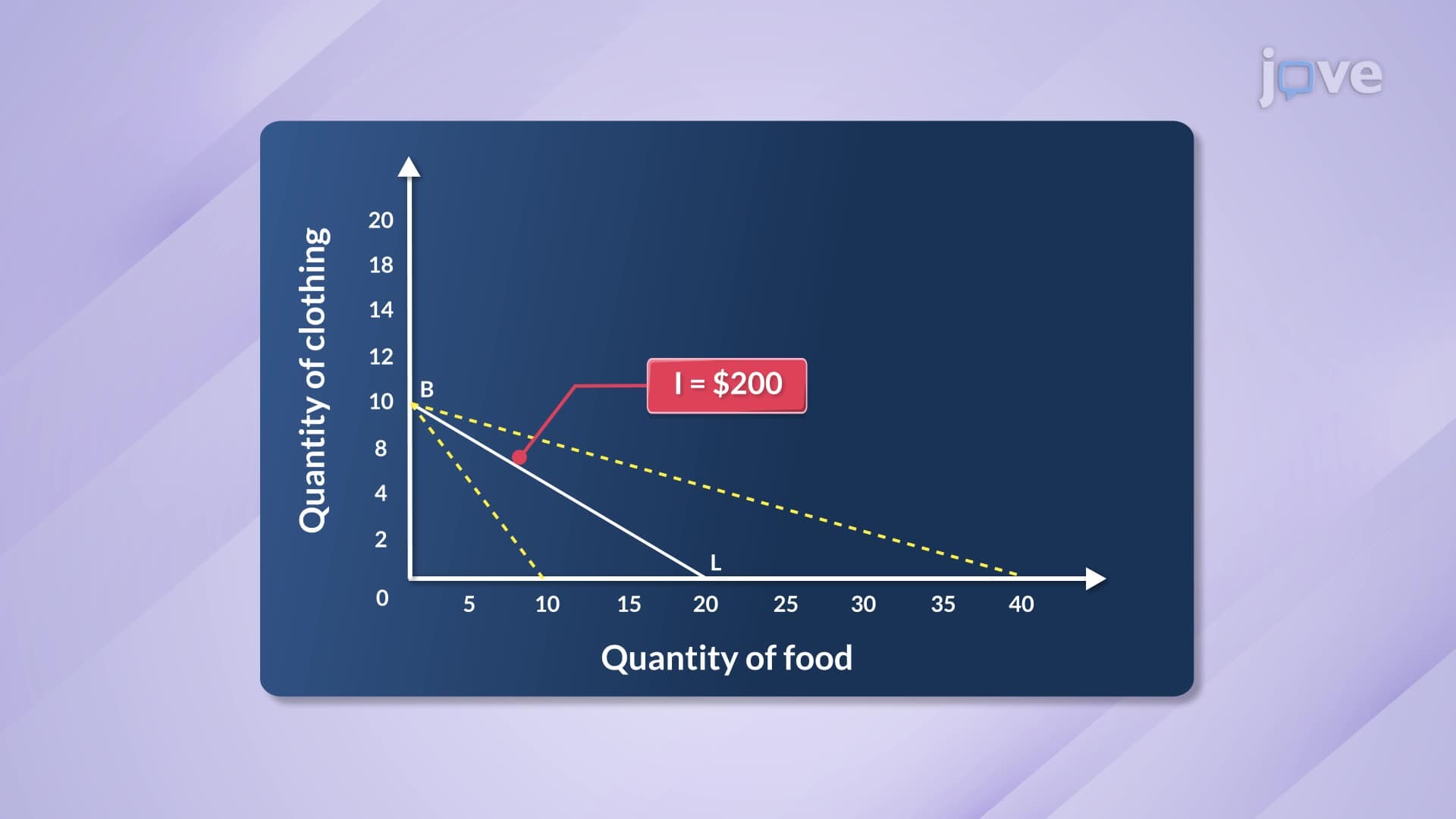
In graphical analysis, economists use parallel budget lines tangent to the original indifference curve to measure this effect. The substitution effect always moves in the opposite direction of price changes-when prices fall, quantity demanded increases through substitution alone.
The Income Effect in Action
The income effect captures how purchasing power changes affect consumption. When gasoline prices drop from $4.00 to $3.00 per gallon, American consumers don't just substitute toward driving more-they effectively become richer, with extra money to spend on all goods. This additional purchasing power represents the income effect.
For normal goods like restaurant meals or clothing, the income effect reinforces the substitution effect. However, for inferior goods like generic cereals or bus transportation, higher purchasing power might actually reduce consumption as people upgrade to premium alternatives.
Applications in Academic and Professional Settings
These concepts appear extensively in AP Economics exams, college microeconomics courses, and MCAT behavioral sciences sections. Students must graphically analyze consumer equilibrium changes and mathematically separate total effects into component parts. Business schools use these principles in marketing strategy courses, while policy analysts apply them to predict tax policy impacts.
Understanding income substitution effects definition proves essential for demand forecasting, price optimization, and welfare analysis. Companies like Amazon use these principles in dynamic pricing algorithms, while government agencies apply them to evaluate subsidy programs and tax policy effectiveness.
Frequently Asked Questions
Income and substitution effects explain why people change their buying habits when prices change. The substitution effect happens when you switch to cheaper alternatives, while the income effect occurs because price changes make you feel richer or poorer. Together, they determine your total response to price changes in the marketplace.
AP Economics frequently tests these concepts through graph analysis problems requiring students to separate total price effects into components. Expect questions asking you to draw parallel budget lines, identify equilibrium points, and explain whether goods are normal or inferior based on income effect directions. Practice with indifference curve diagrams is essential for success.
For normal goods like smartphones or restaurant meals, both effects work in the same direction-lower prices increase consumption through both substitution and higher purchasing power. For inferior goods like instant ramen or used cars, the effects work opposite directions, with income effects potentially reducing consumption even as substitution effects increase it.
When Netflix reduced subscription prices in 2019, subscribers experienced both effects simultaneously. The substitution effect led people to choose Netflix over Hulu due to relative price advantages, while the income effect meant families had extra money to potentially add more streaming services or upgrade their internet plans.
No advanced math is required for basic understanding. High school algebra and graph interpretation skills suffice for most applications. While graduate economics uses calculus for precise optimization, introductory courses focus on graphical analysis and conceptual understanding that builds naturally from supply and demand principles.
Focus on drawing accurate graphs showing budget constraints, indifference curves, and equilibrium points. Practice separating total effects by drawing parallel budget lines and identifying substitution versus income components. Create flashcards for key definitions and work through multiple examples with both normal and inferior goods scenarios.
Build toward consumer surplus analysis, demand elasticity calculations, and welfare economics applications. These concepts directly extend income and substitution effects to policy analysis and market efficiency studies. Consider exploring behavioral economics to understand how psychological factors modify traditional economic predictions.
Companies use these principles for optimal pricing decisions and market positioning. Understanding how consumers respond to price changes through both substitution and income channels helps predict demand shifts, design promotional strategies, and anticipate competitive responses in dynamic markets.
Related Micro-courses