Loading video…


 22 Concepts
 9.9K views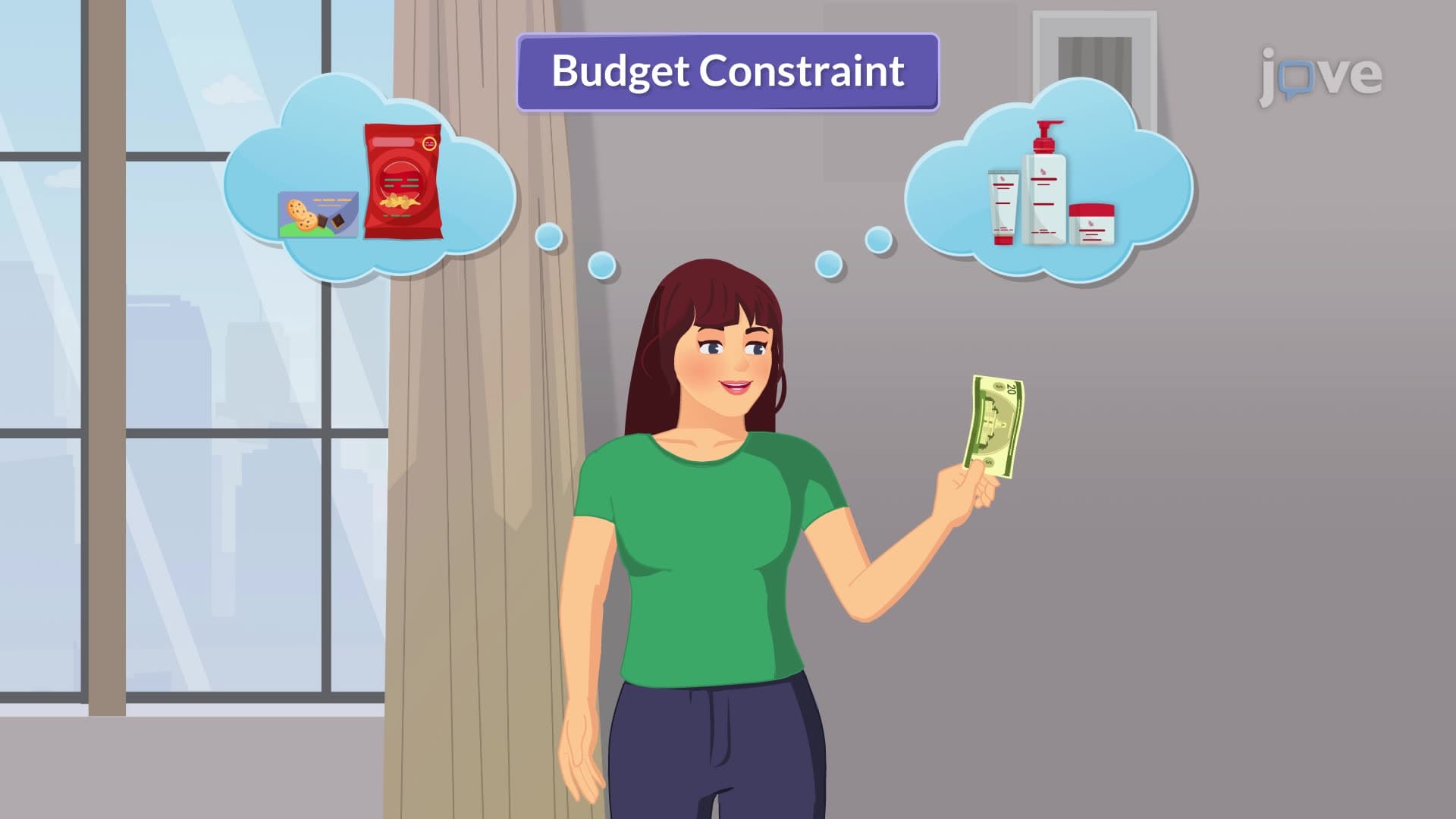

Video Summary: What Is Budget Constraint I
Ever wondered why you can't buy everything you want at Target with your weekly allowance? A budget constraint defines the maximum combinations of goods a consumer can purchase given their income and current market prices. For instance, a college student with $100 monthly for textbooks and coffee must choose between buying fewer expensive textbooks or more affordable coffee drinks, illustrating the fundamental economic trade-offs we face daily. Watch the full video on JoVE Coach to master this concept with expert-led visuals and step-by-step explanations.
A budget constraint represents the fundamental economic reality that consumers cannot purchase unlimited quantities of goods due to limited income. This concept serves as the cornerstone of microeconomic theory and appears frequently in AP Economics, college-level economics courses, and standardized tests like the SAT Subject Tests.
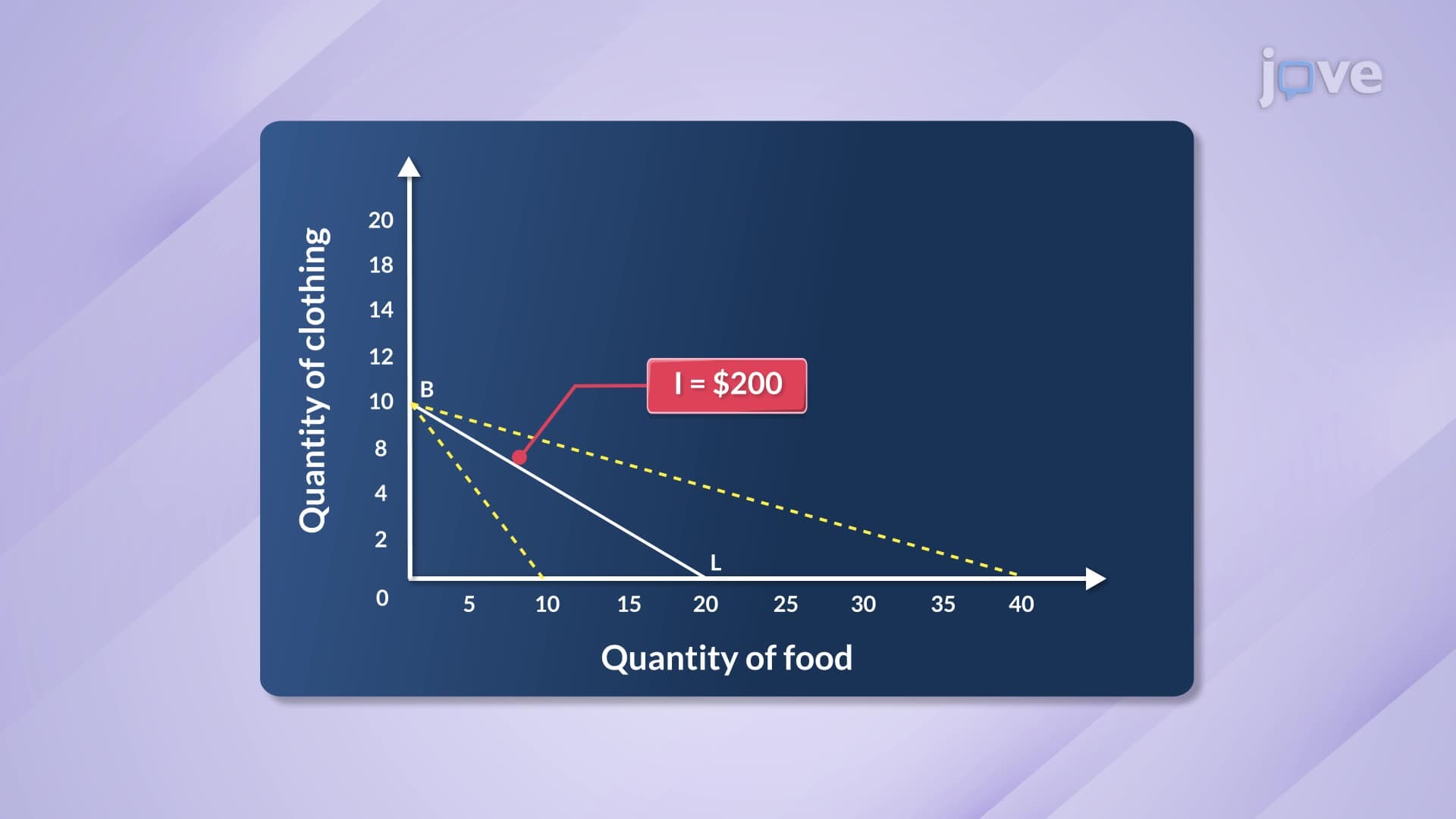
The budget constraint equation follows the format: P1 × Q1 + P2 × Q2 = Income, where P represents price and Q represents quantity. When graphed, this creates the budget line-a straight line showing all possible combinations of two goods that exhaust the consumer's entire budget.
Consider Sarah, a high school student with a $50 monthly budget for streaming services and movie tickets. Netflix costs $15/month, while movie tickets cost $12 each. Her budget constraint shows she can afford either 3.33 streaming services (unrealistic) or approximately 4 movie tickets, or various combinations like 1 streaming service plus 2 movie tickets.
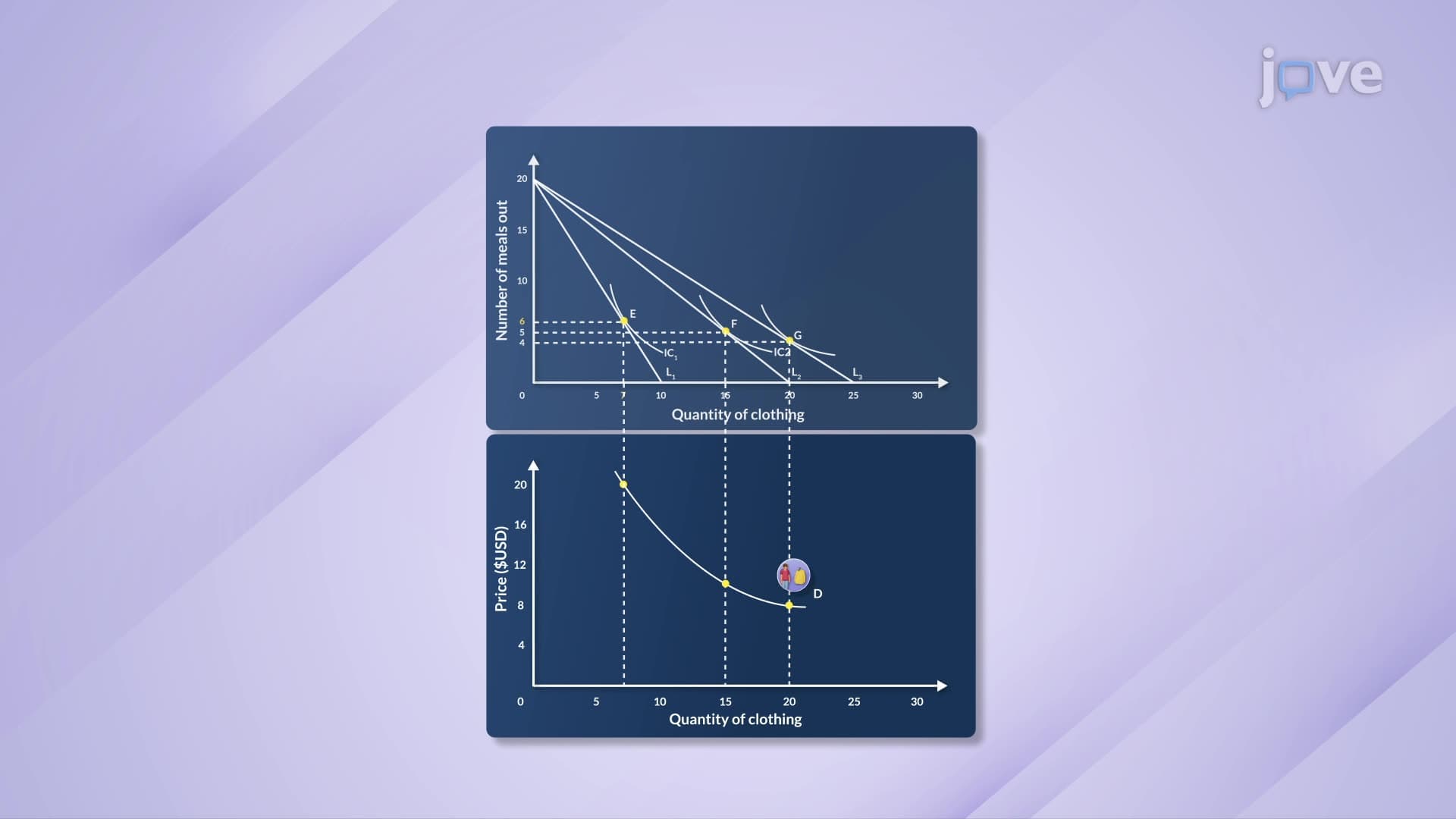
The slope of the budget line equals the negative ratio of the two goods' prices (Price of X-axis good ÷ Price of Y-axis good). This slope represents the opportunity cost-how much of one good must be sacrificed to obtain one more unit of the other good. In economic terms, this creates the "rate of transformation" between goods.
For college students preparing for economics exams, understanding that budget constraints assume perfect divisibility of goods, constant prices, and complete income utilization is crucial. These assumptions simplify real-world complexity but provide essential analytical frameworks.
Budget constraint analysis appears extensively in AP Microeconomics free-response questions, college intermediate microeconomics courses, and graduate school entrance exams. Students encounter problems requiring calculation of intercepts, determination of affordable combinations, and analysis of constraint shifts due to income or price changes.
Modern applications include analyzing student loan allocation between tuition and living expenses, household budget decisions between housing and transportation, or business resource allocation between marketing and research and development. Understanding these foundational concepts prepares students for advanced topics like indifference curves, utility maximization, and consumer equilibrium-essential components of economic theory that appear in both academic coursework and professional economic analysis.
Related Micro-courses