Loading video…


 22 Concepts
 9.9K views

Video Summary: Factors Affecting Budget Constraint Ii Explained
Ever wondered how a sudden raise or job loss completely changes what you can afford at Target or the grocery store? The factors affecting budget constraint directly determine your purchasing power and available choices. When a college student's monthly allowance increases from $300 to $600, they can suddenly afford both textbooks AND weekend entertainment that seemed impossible before. This demonstrates how income changes create new budget possibilities and limitations. Watch the full video on JoVE Coach to master this concept with expert-led visuals and step-by-step explanations.
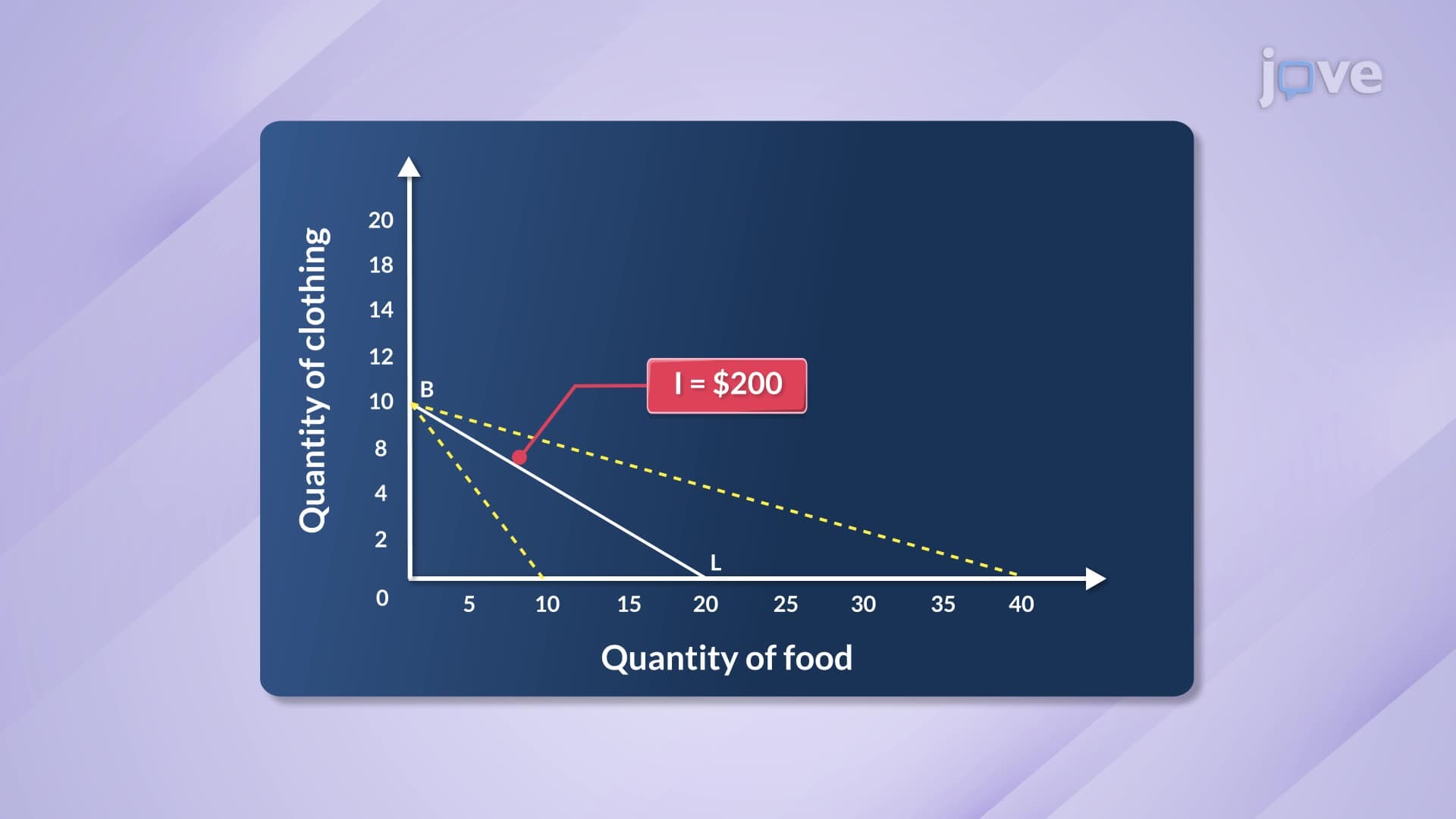
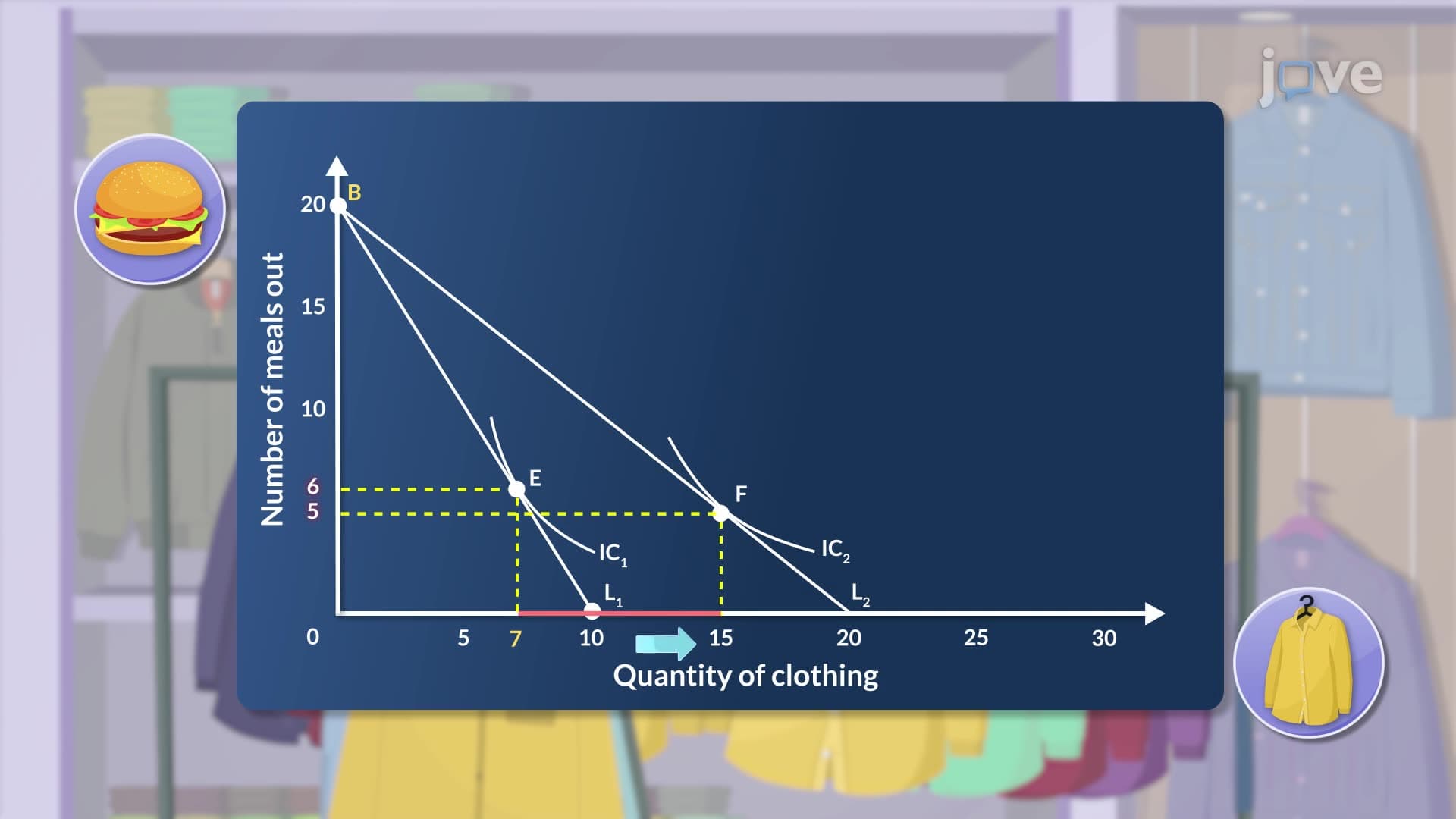
Income represents the most fundamental factor affecting budget constraints in consumer economics. When analyzing factors affecting budget constraint, income changes create predictable, measurable shifts in what consumers can purchase. Unlike price changes that create pivoting movements, income adjustments cause parallel shifts in the entire budget line, maintaining the same slope while expanding or contracting the feasible consumption set.
The budget constraint equation I = Px(X) + Py(Y) reveals how income (I) directly determines the maximum quantities of goods X and Y that consumers can afford. When income doubles from $200 to $400 weekly, both intercepts double proportionally. If food costs $10 per unit and clothing costs $20 per unit, the original budget allows either 20 food units or 10 clothing units. Doubling income permits either 40 food units or 20 clothing units, creating a parallel outward shift.
This mathematical relationship appears frequently in AP Economics exams and college microeconomics courses. Students must demonstrate understanding of how proportional income changes affect budget line positioning while maintaining identical slopes, representing unchanged relative prices.
Consider a typical American household earning $50,000 annually. If their income increases to $75,000 due to a promotion, their budget constraint expands proportionally across all spending categories - from housing and transportation to entertainment and savings. Conversely, during economic downturns like the 2008 financial crisis or COVID-19 pandemic, reduced incomes forced millions of families to shift to lower budget lines, making previously affordable combinations of goods and services unattainable.
These income effects explain consumer behavior patterns observed by the Bureau of Labor Statistics. Higher-income households don't just buy more expensive versions of the same goods; they access entirely new consumption bundles that were previously beyond their budget constraints.
Understanding income effects on budget constraints helps predict consumer responses to policy changes like tax cuts, stimulus payments, or minimum wage adjustments. When the federal government distributed stimulus checks during COVID-19, millions of households experienced temporary budget line shifts outward, enabling increased spending on goods and services that had been financially out of reach.
Related Micro-courses