Loading video…


 22 Concepts
 9.9K views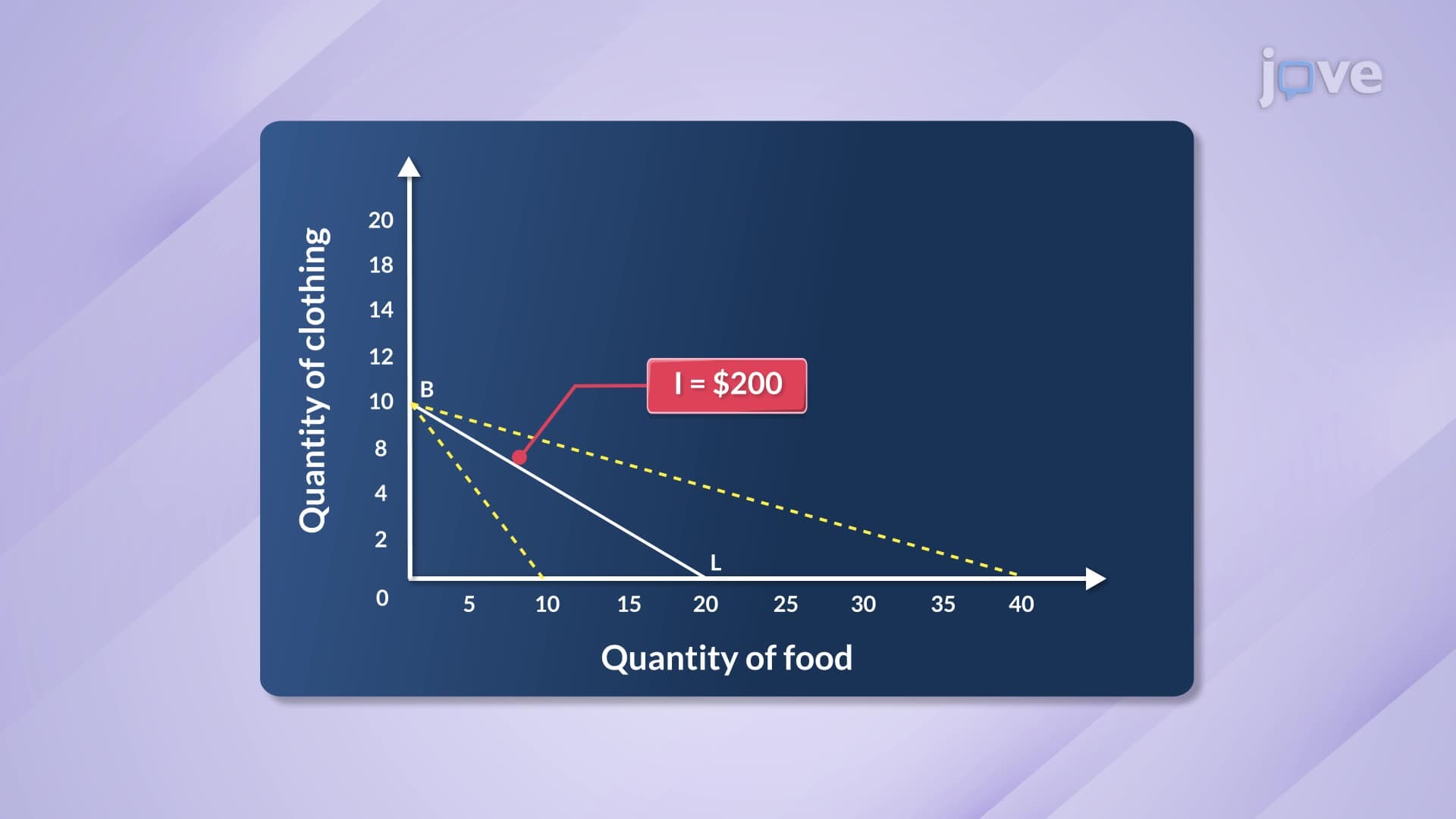

Video Summary: Factors Affecting Budget Constraint I Explained
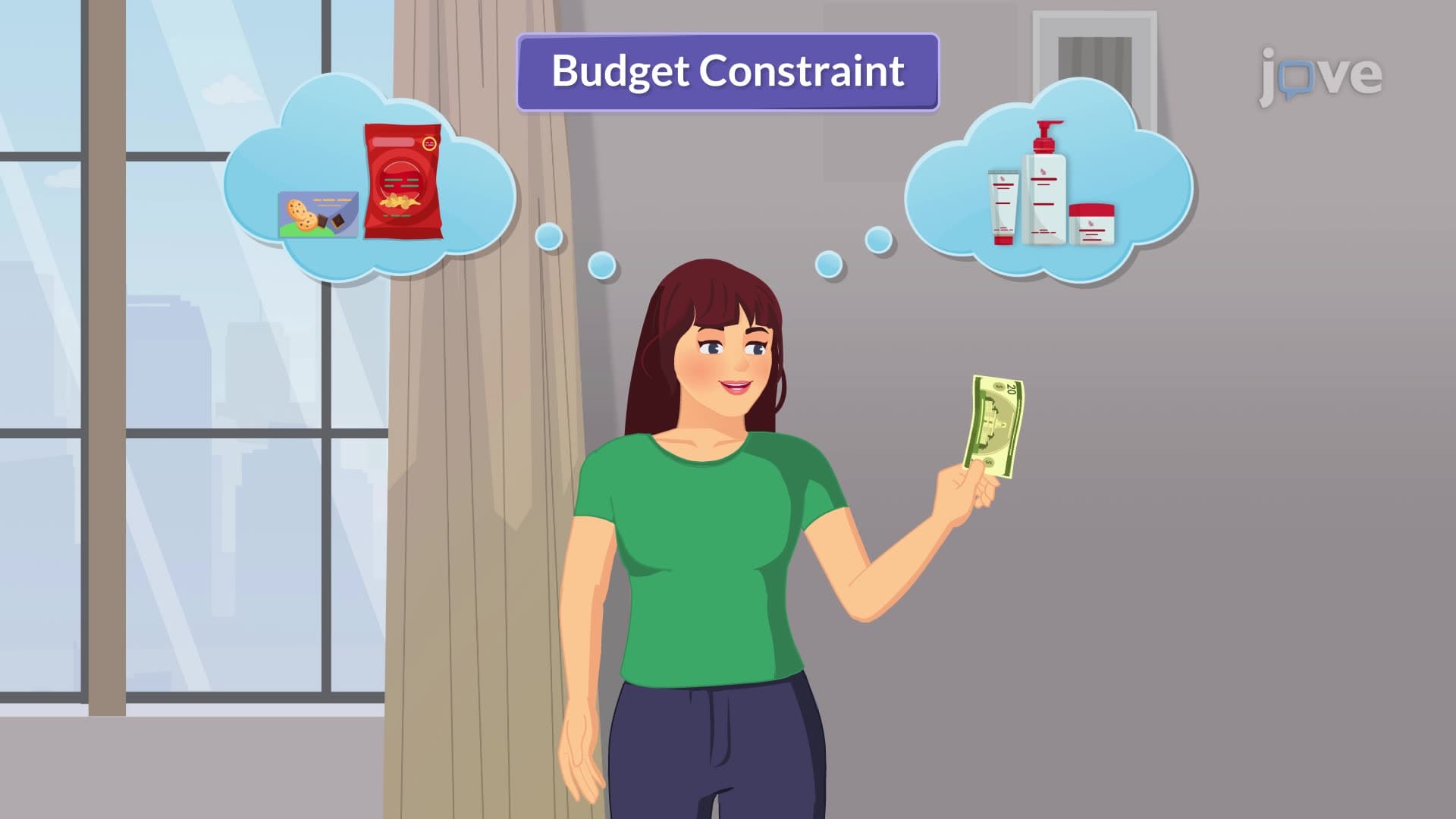
Ever wonder why your $50 weekly allowance buys fewer movie tickets when theater prices rise? Factors affecting budget constraint determine how price changes reshape your purchasing power and spending choices. When Netflix subscription costs drop from $15 to $10 monthly, students can suddenly afford both Netflix and Spotify with their limited budget. This demonstrates how Factors Affecting Budget Constraint I Explained reveals the mathematical relationship between prices, income, and consumer options. Watch the full video on JoVE Coach to master this concept with expert-led visuals and step-by-step explanations.
Factors affecting budget constraint represent the key variables that determine a consumer's purchasing possibilities within their income limitations. These factors primarily include changes in product prices and income levels, which directly impact the budget line's position and slope on economic graphs. When analyzing consumer behavior, economists focus on how these constraints shape decision-making processes and optimal consumption bundles.
The budget constraint equation follows the format: Income = (Price of Good X × Quantity of Good X) + (Price of Good Y × Quantity of Good Y). This mathematical relationship demonstrates how any change in prices or income shifts the entire feasible consumption set available to consumers.
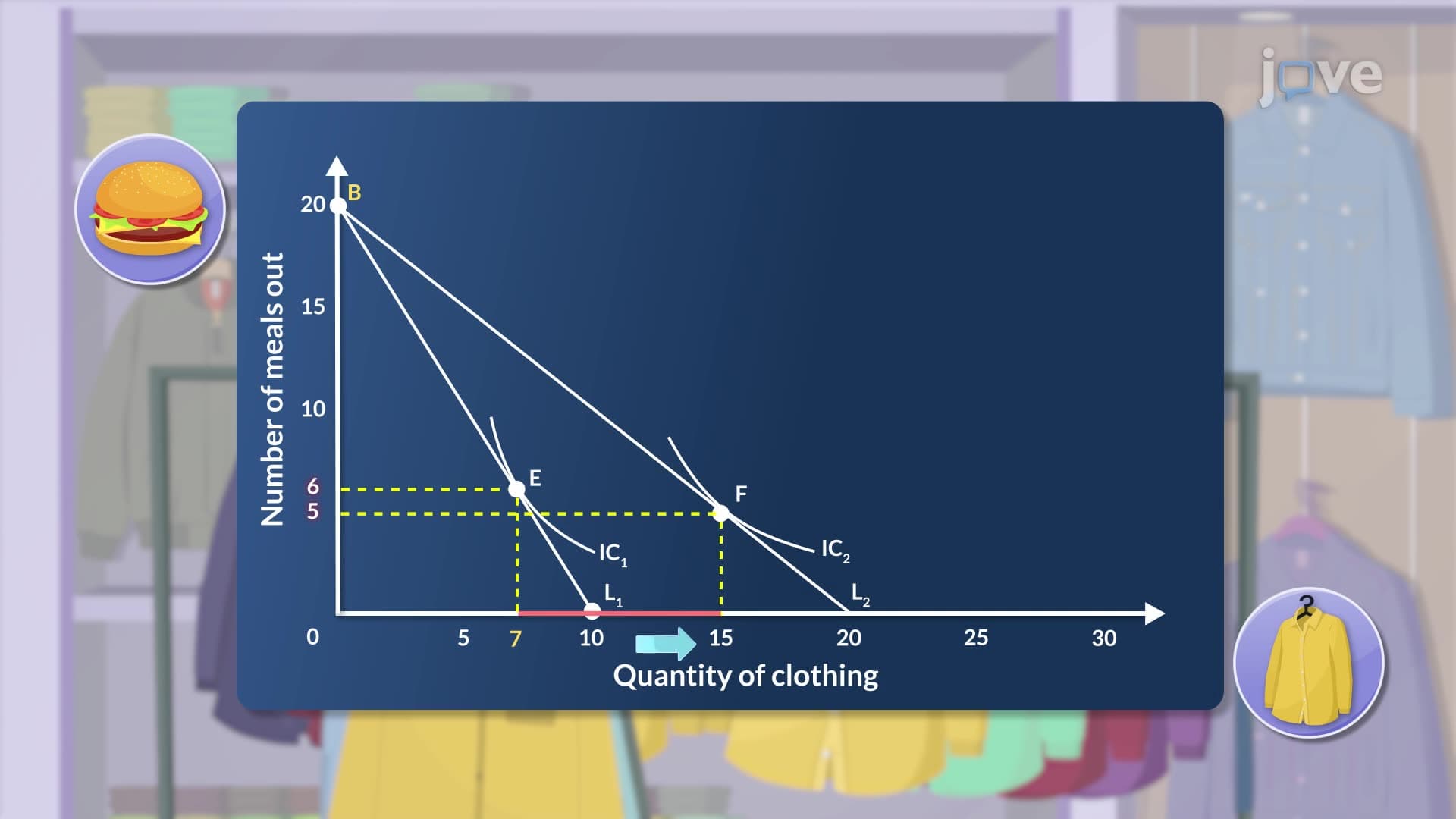
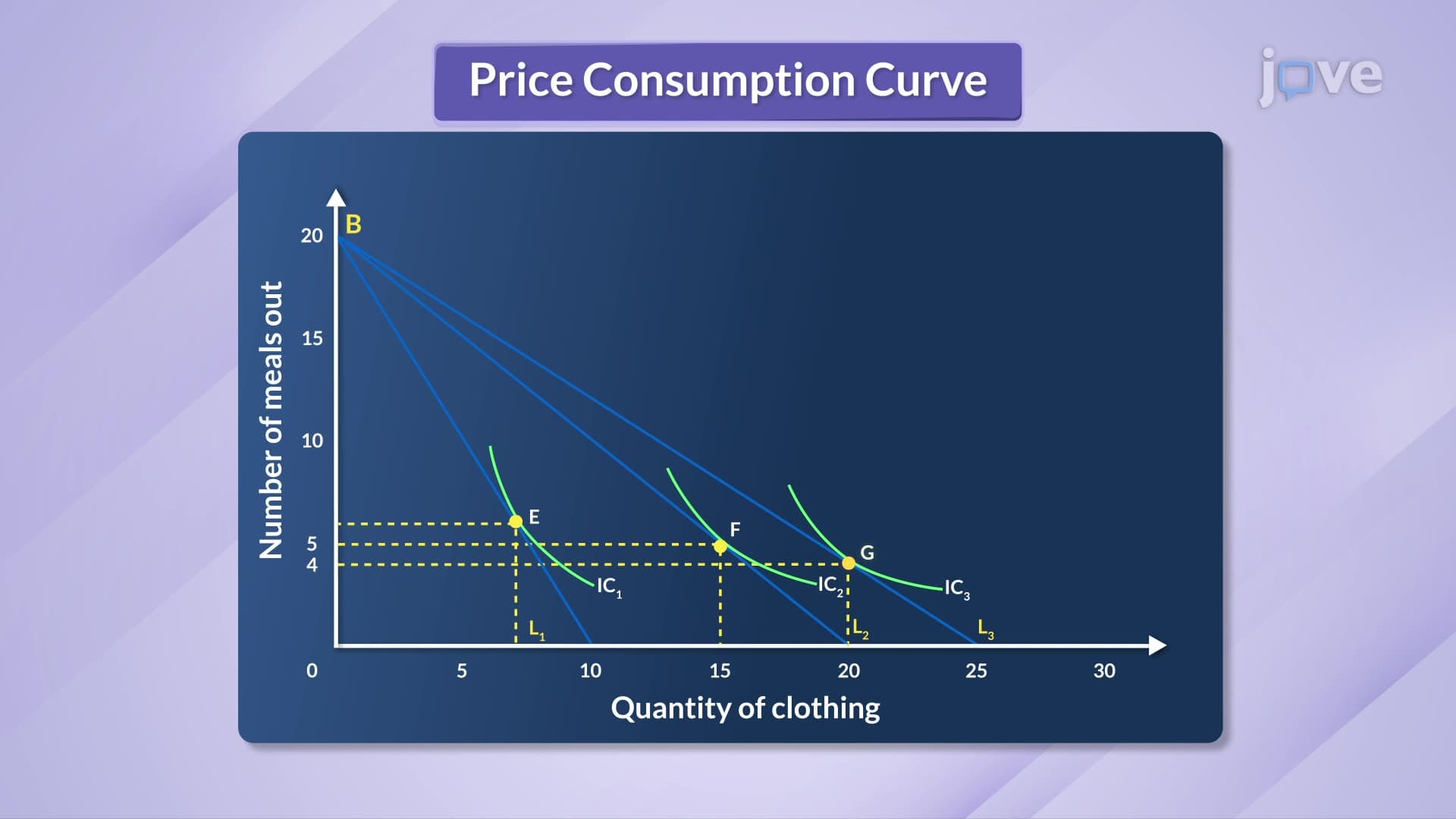
Price fluctuations create the most visible effects on budget constraints through budget line rotation. When food prices decrease from $10 to $5 per unit while clothing prices remain constant, the budget line rotates outward from the food axis. This rotation increases the maximum food quantity purchasable while keeping the clothing intercept unchanged.
For students preparing for AP Economics or college microeconomics courses, understanding this rotation pattern proves essential for graphical analysis questions. The slope of the budget line equals the negative ratio of prices (Price of X / Price of Y), meaning price changes directly alter this slope value. US retailers like Walmart and Target frequently demonstrate these principles when seasonal sales affect consumer purchasing patterns.
Budget constraint analysis appears frequently in standardized tests including AP Microeconomics, SAT Subject Tests, and college economics midterms. Students must master both computational and graphical approaches to solve optimization problems effectively. Real-world applications include analyzing how gas price changes affect household transportation budgets, or how college tuition increases impact students' spending on textbooks and meals.
Investment firms use similar constraint analysis when advising clients about portfolio allocation under different market conditions. Healthcare economics also applies these principles when examining how insurance coverage changes affect patient treatment choices within budget limitations.
Beyond basic price effects, factors affecting budget constraint include income elasticity, substitute goods relationships, and temporal considerations. Students studying for MCAT economics sections or business school applications should understand how budget constraints interact with utility maximization theory and demand curve derivations. These concepts form the foundation for more advanced topics like consumer surplus, welfare analysis, and market efficiency calculations.
Related Micro-courses