Loading subject page…


9,931 views


Video Summary: What Is Marginal Rate of Substitution
Did you know that choosing to work extra hours instead of taking vacation days reveals your personal trade-off preferences? The marginal rate of substitution measures exactly how much of one good you're willing to give up to gain another while maintaining the same satisfaction level. Consider a college student deciding between study hours and social activities-this economic principle explains their decision-making process. Understanding What is Marginal Rate of Substitution helps analyze consumer behavior in everything from housing choices to career decisions. Watch the full video on JoVE Coach to master this concept with expert-led visuals and step-by-explanations.
The marginal rate of substitution (MRS) represents the rate at which a consumer is willing to trade one good for another while maintaining constant utility or satisfaction. This fundamental microeconomic concept appears throughout AP Economics courses and college-level economic analysis. The MRS equals the negative ratio of marginal utilities: MRS = -MU(x)/MU(y), where MU represents marginal utility.
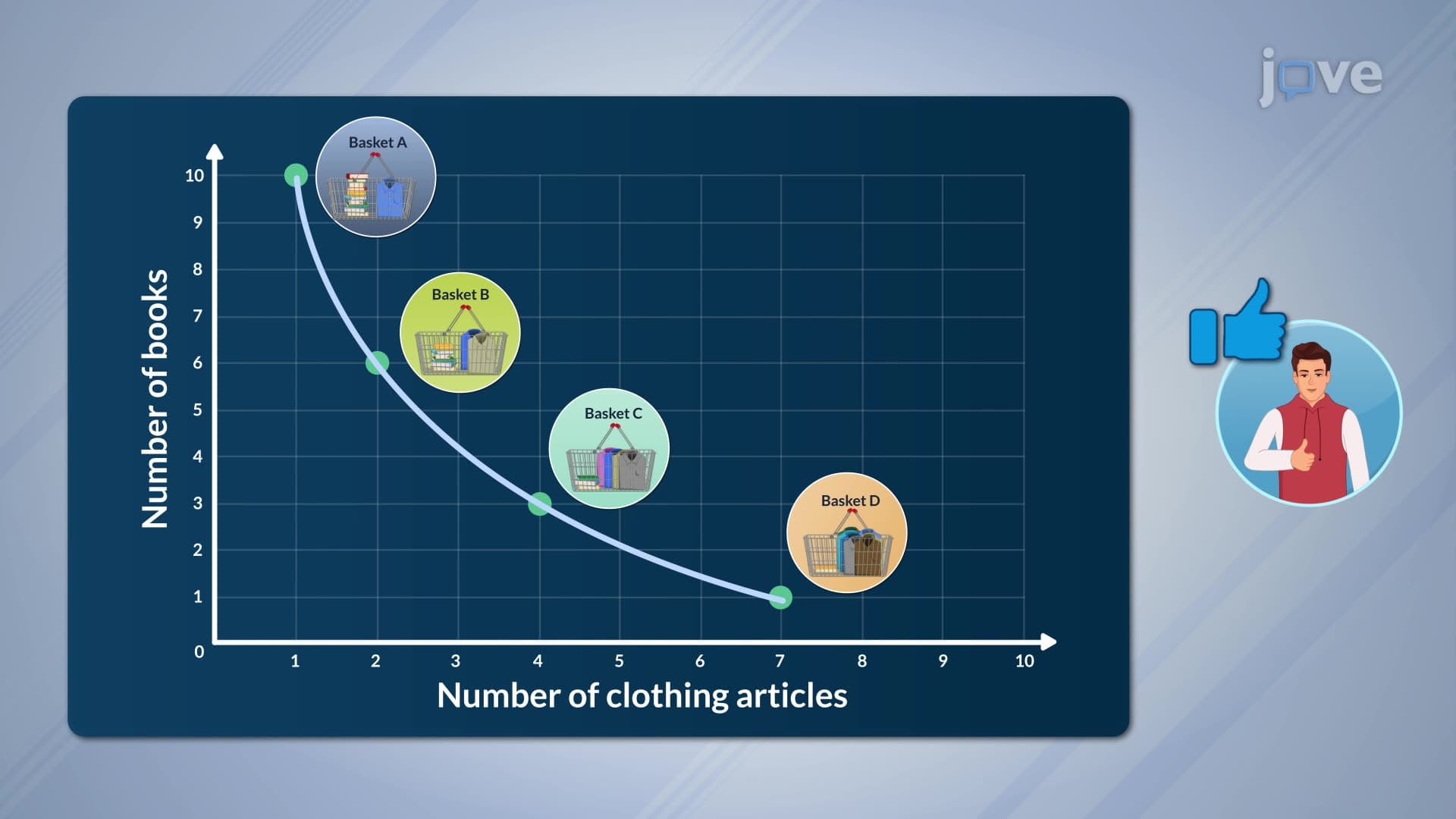
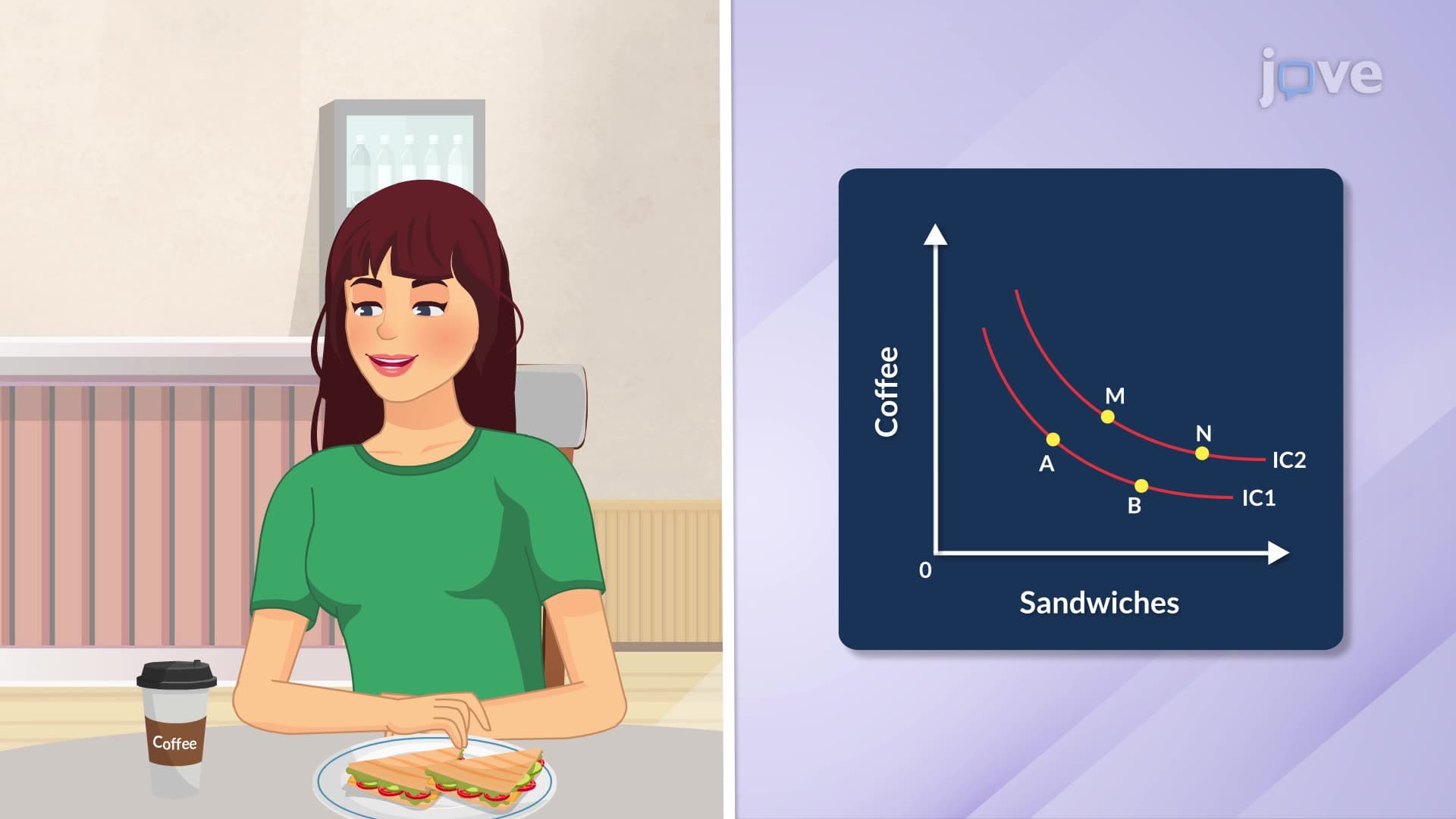
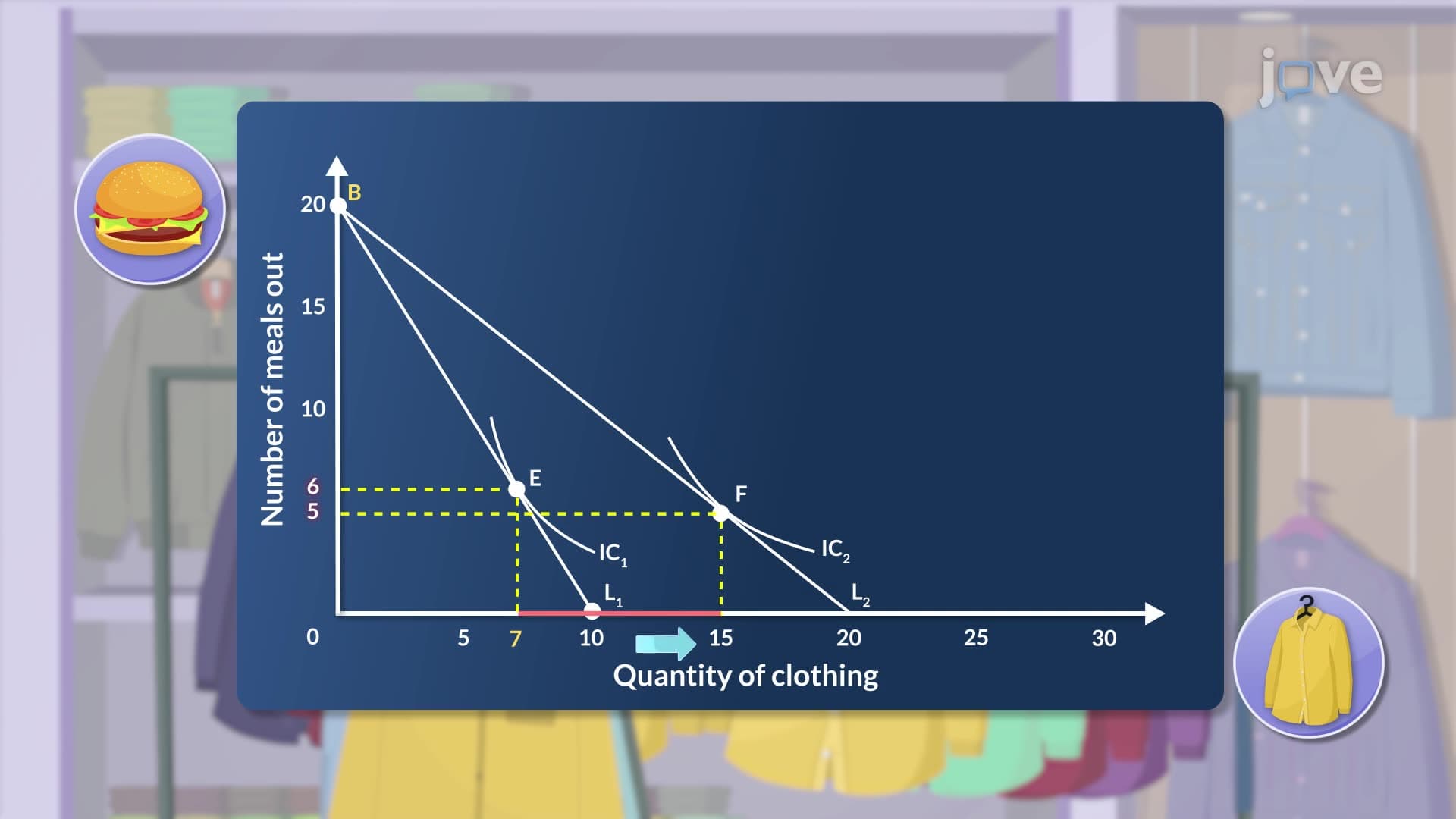
Mathematically, the marginal rate of substitution equals the slope of the indifference curve at any given point. As you move along the curve, this slope changes, reflecting how your willingness to substitute varies with different quantities. For instance, when analyzing a Stanford University student's choice between textbooks and meal plans, the MRS shows how many meal swipes they'd sacrifice for one additional textbook while maintaining the same satisfaction level.
The principle of diminishing MRS explains why indifference curves are convex to the origin. As consumers have less of one good, each unit becomes more valuable, making them less willing to give it up. Consider a Netflix subscriber choosing between streaming hours and coffee purchases: initially, they might trade five coffee drinks for ten extra streaming hours, but as coffee becomes scarcer, they'd only trade two coffees for the same streaming benefit.
Understanding MRS proves essential for AP Microeconomics exams and college economics courses at institutions like UCLA or University of Michigan. Students encounter this concept in consumer choice theory, budget constraint problems, and utility maximization questions. The concept also appears in MCAT economics sections and business school entrance exams, where test-takers analyze consumer behavior scenarios and calculate optimal consumption bundles using MRS principles.
Related Micro-courses