Loading subject page…


6,668 views

Video Summary: What are Types of Isoquants
Ever wondered why Amazon can't simply hire more warehouse workers to replace their automated sorting machines? The answer lies in understanding types of isoquants, curves that show different ways businesses combine labor and capital to produce the same output. From Uber's driver-to-car ratios to Starbucks' barista-versus-machine decisions, what are types of isoquants reveals three distinct patterns: convex curves for most production scenarios, right-angled shapes for fixed input ratios, and straight lines for perfect substitutes. Watch the full video on JoVE Coach to master this concept with expert-led visuals and step-by-step explanations.
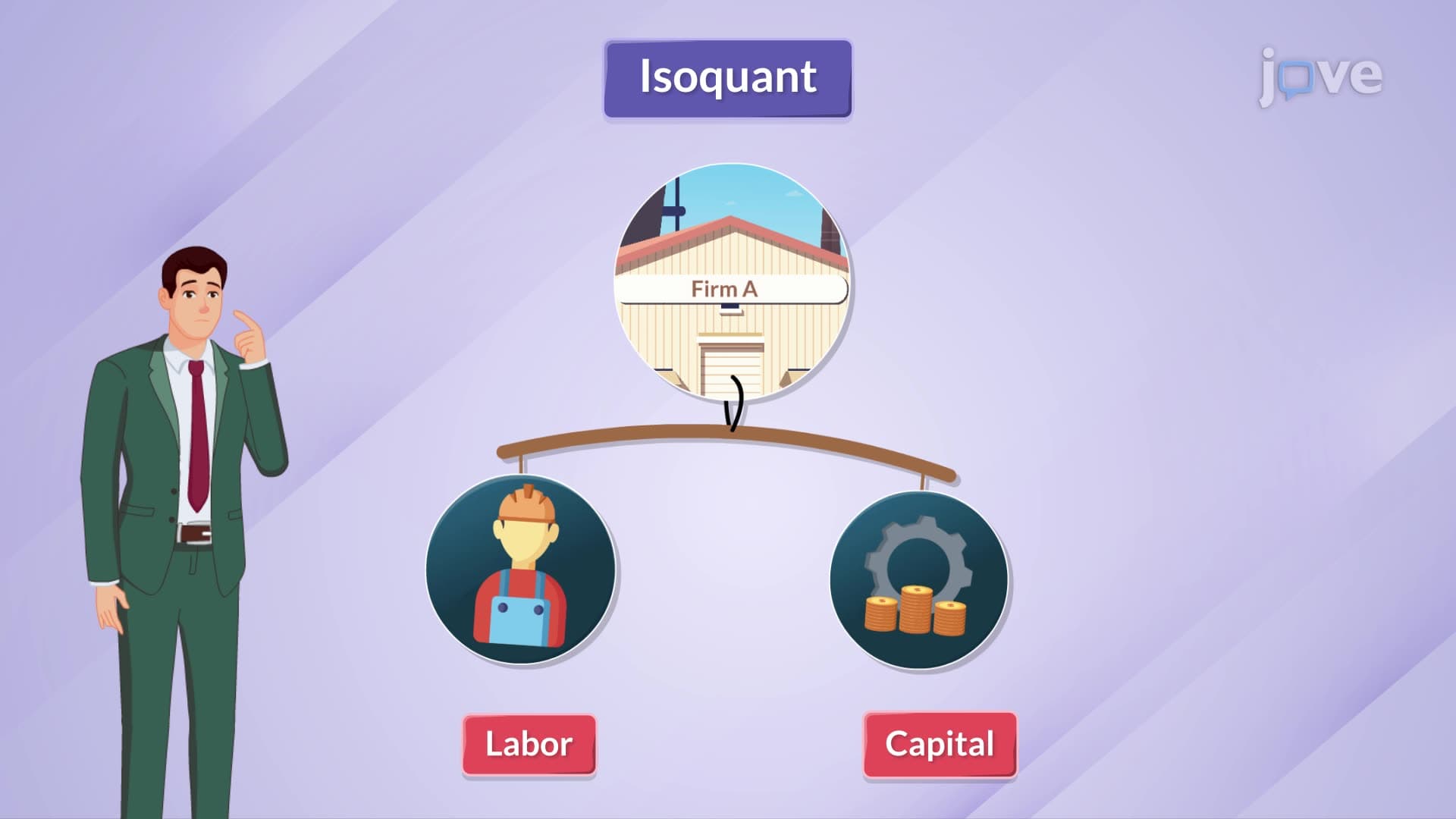
Types of isoquants represent three fundamental ways that inputs can be combined in production processes. An isoquant (from "iso" meaning equal and "quant" meaning quantity) shows all possible combinations of two inputs that produce the same level of output. Understanding these types is crucial for AP Economics students and college microeconomics courses, as they form the basis for analyzing production efficiency and cost minimization.
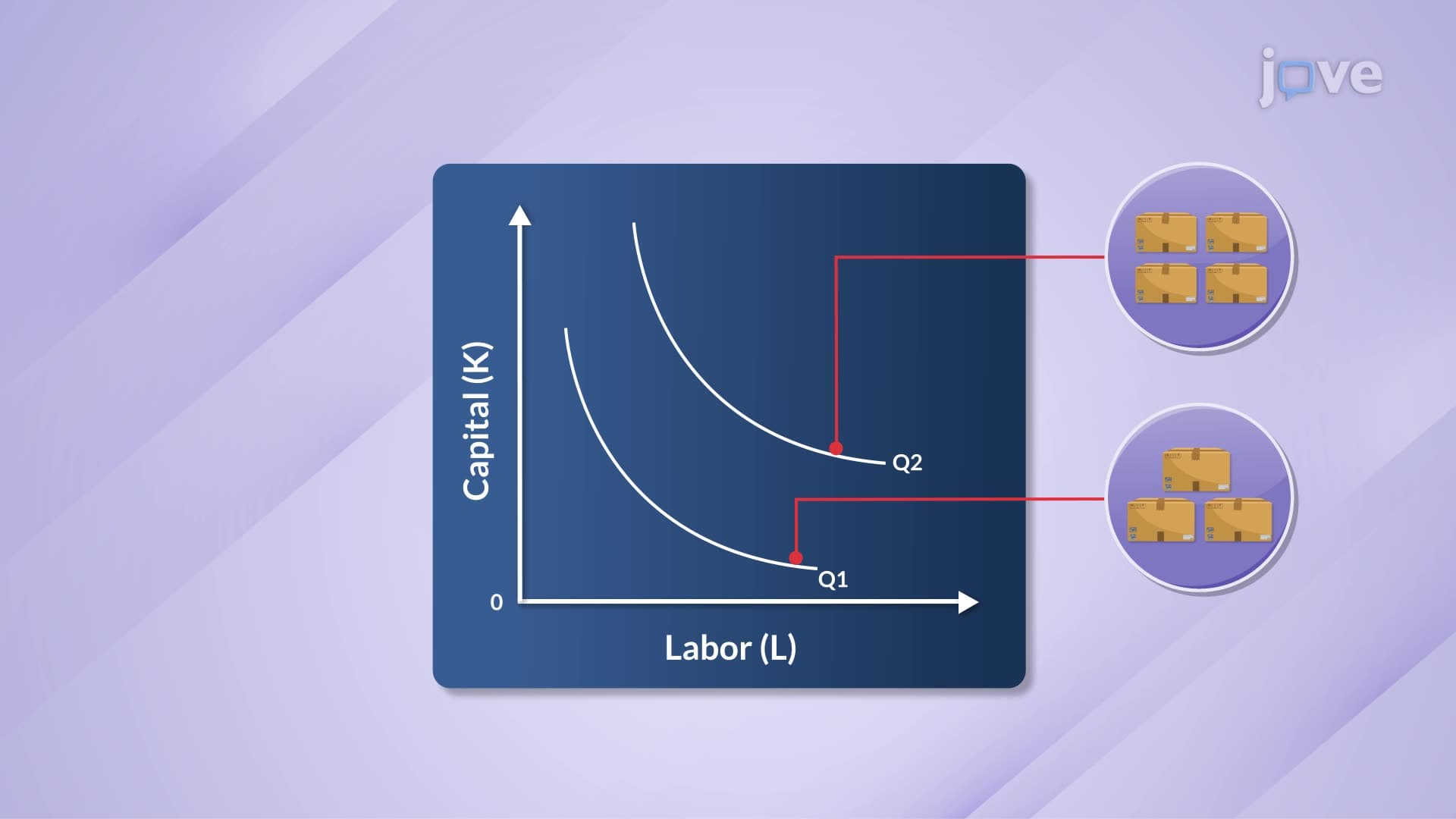
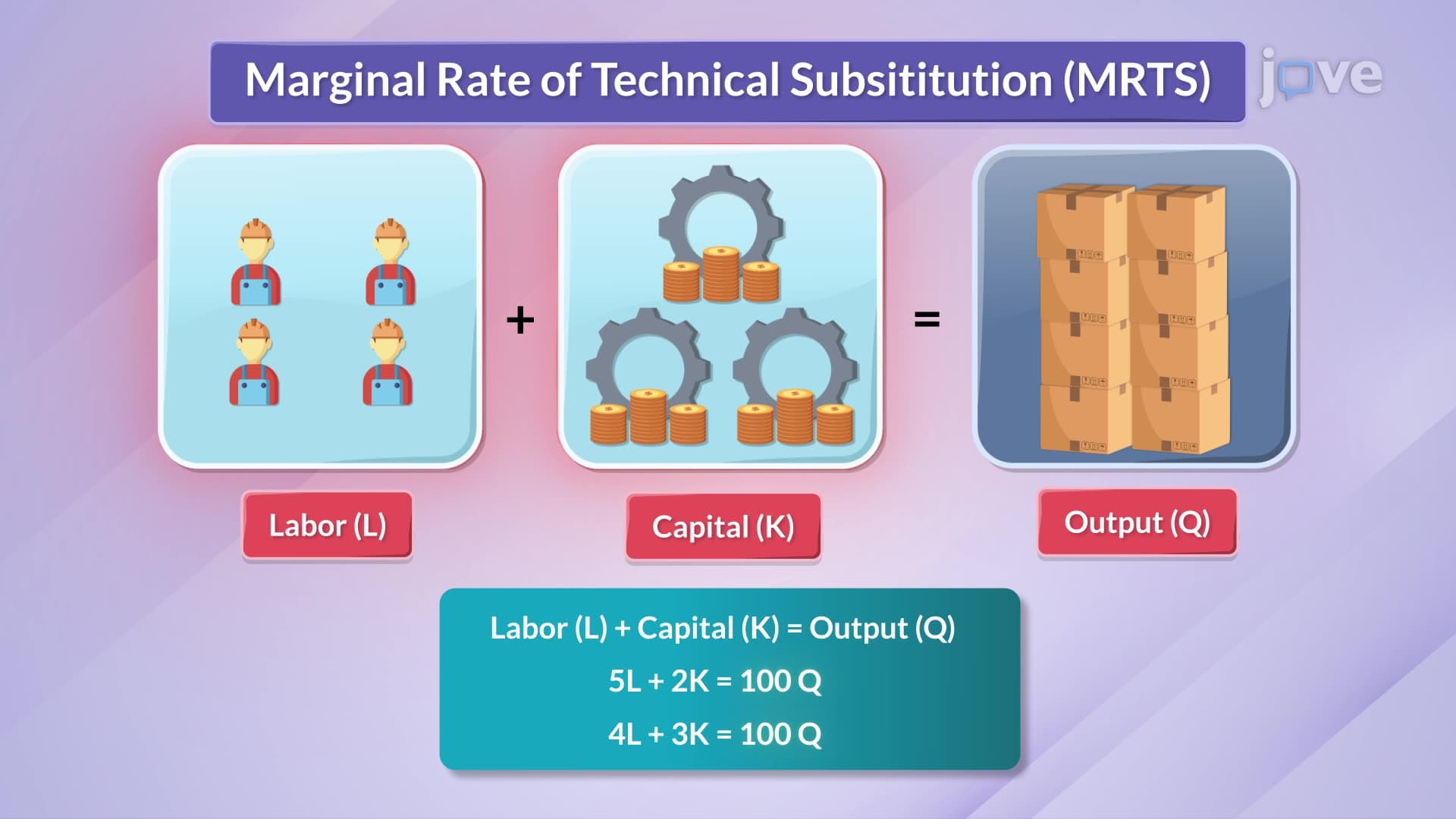
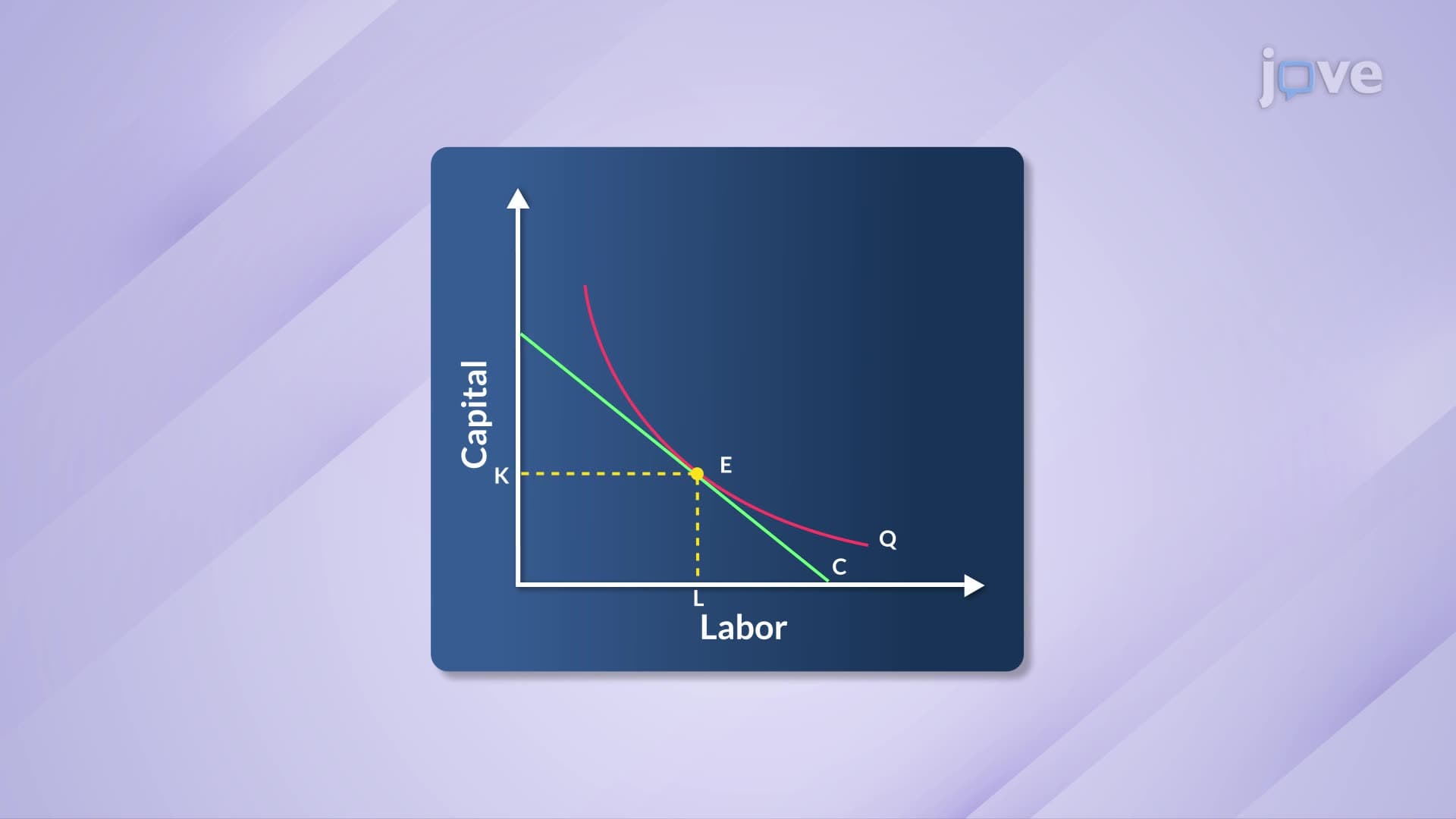
The most common types of isoquants feature a convex shape, curving inward toward the origin. This shape reflects the diminishing marginal rate of technical substitution (MRTS), meaning that as you substitute more of one input for another, each additional unit of substitution becomes less effective.
Consider Tesla's manufacturing process: initially, replacing one assembly robot with human workers might require just two additional employees. However, as more robots are replaced, you might need four, then six workers to maintain the same production level. This diminishing substitutability creates the characteristic convex curve that economics students encounter on AP exams and college midterms.
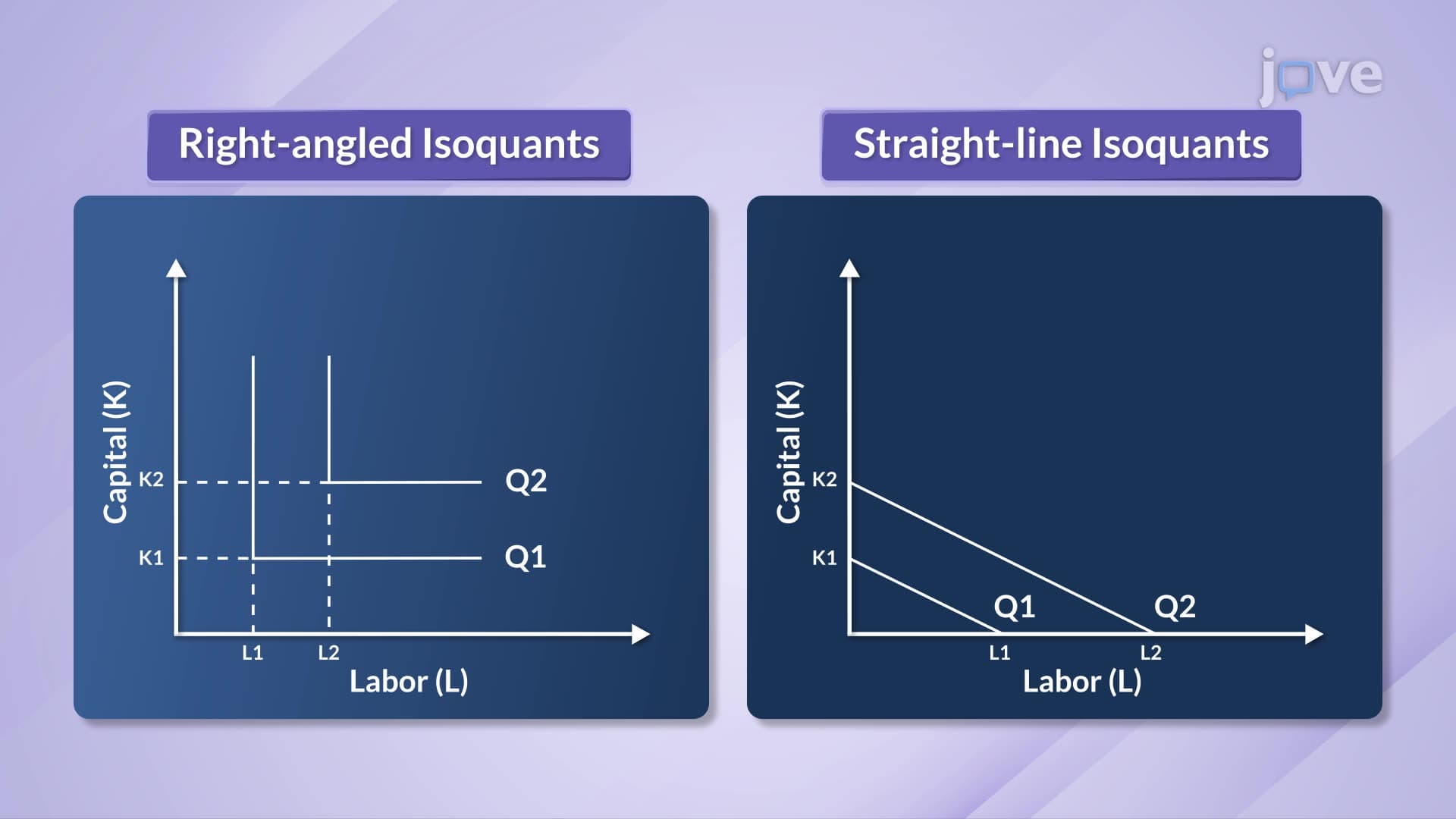
Right-angled types of isoquants represent perfect complements, where inputs must be used in fixed proportions. The classic example involves FedEx or UPS delivery operations: one driver per delivery truck creates an inflexible ratio. Adding more drivers without trucks doesn't increase deliveries, nor do additional trucks without drivers.
This concept frequently appears in MCAT economics sections and college business courses when analyzing production bottlenecks. Students should recognize that the right angle occurs because substitution is impossible, you literally cannot replace one input with another beyond the fixed ratio.
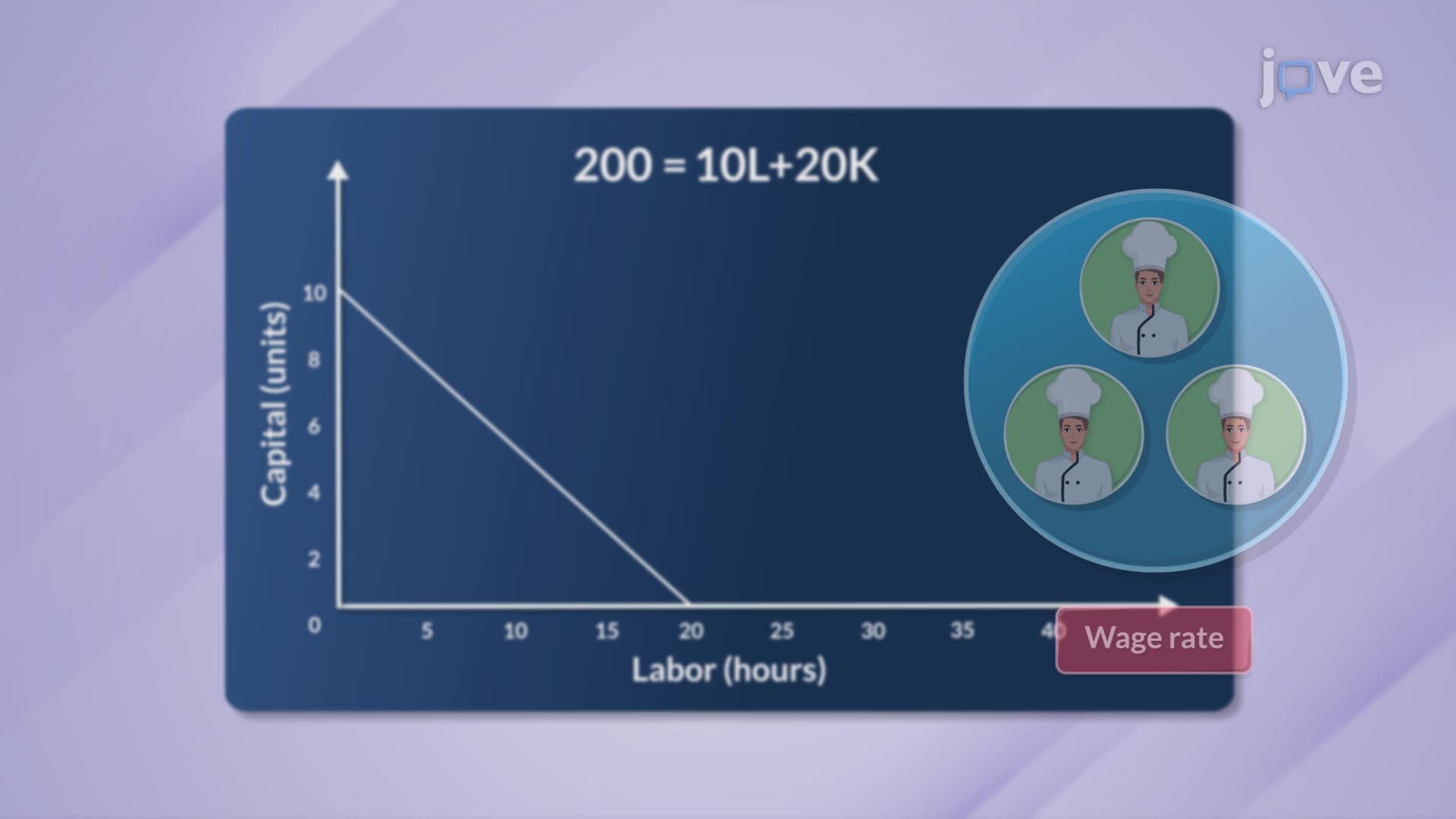
Linear types of isoquants with constant negative slopes represent perfect substitutes. McDonald's provides an excellent example: self-service kiosks can replace human cashiers at a constant rate. If one kiosk equals two human cashiers in processing speed, this ratio remains constant regardless of scale.
For AP Economics students, understanding that perfect substitutes maintain constant marginal rates of technical substitution is essential for exam success. The straight-line shape reflects this mathematical relationship, making it a favorite topic for multiple-choice questions about production theory.
Related Micro-courses