Loading video…


 20 Concepts
 6.7K views

Video Summary: Relation Between Total Product Marginal Explained
Why does McDonald's stop hiring workers after a certain point, even during rush hour? The relation between total product and marginal product reveals this economic puzzle. When Starbucks adds baristas, output initially rises rapidly, then levels off, and eventually may even decrease due to overcrowding. Understanding the relation between total product marginal explained helps predict optimal staffing decisions across all industries. Watch the full video on JoVE Coach to master this concept with expert-led visuals and step-by-step explanations.
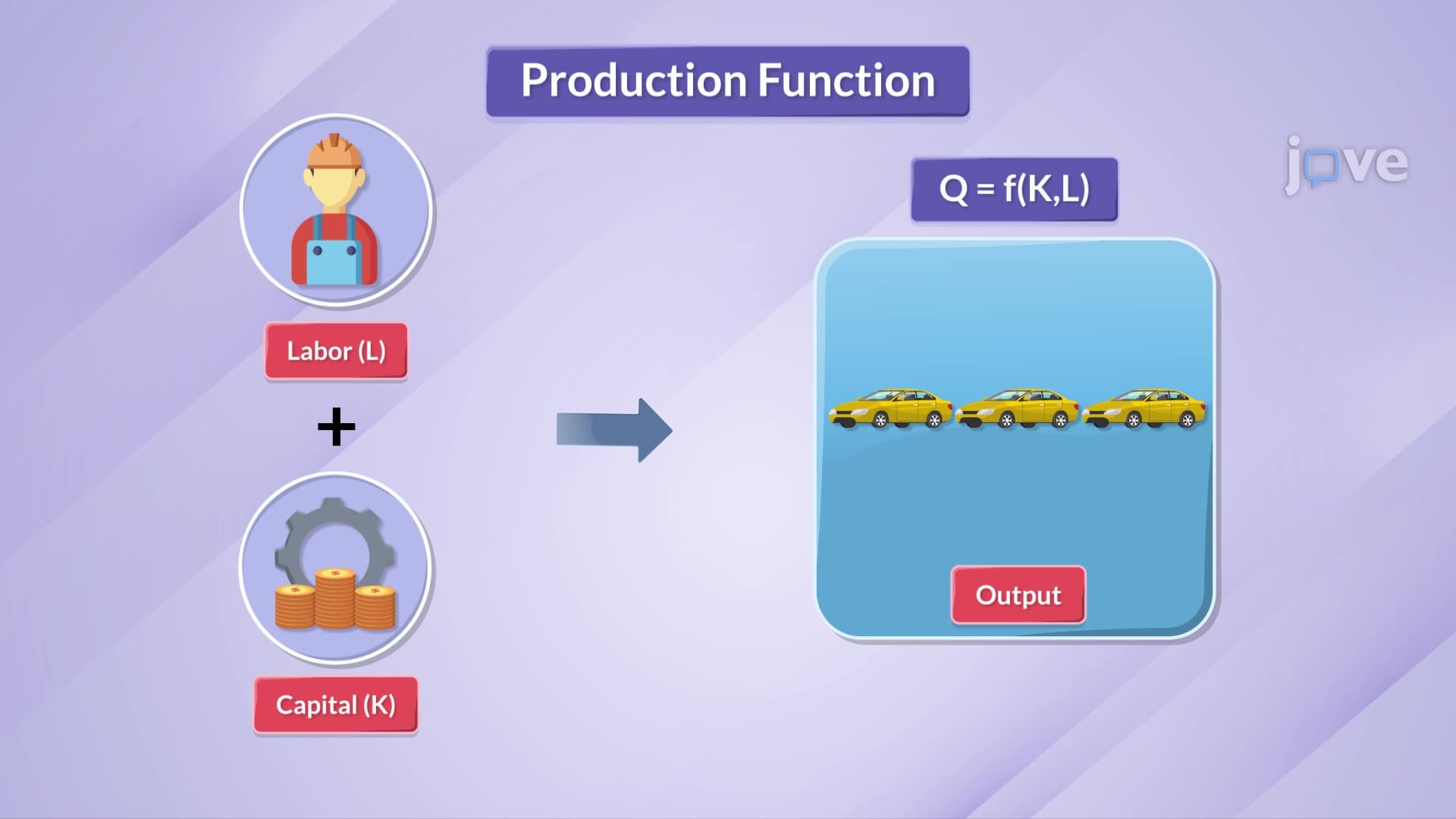
The relation between total product marginal explained forms the foundation of production theory in economics. This relationship demonstrates how adding workers (or any variable input) affects overall output in predictable patterns. Total product represents the cumulative output from all workers, while marginal product measures the additional output from hiring one more worker.
During the first stage, each additional worker contributes more to total output than the previous worker. Picture a small restaurant kitchen where the first cook handles everything slowly, the second cook allows specialization in prep work and cooking, and the third enables assembly-line efficiency. Here, total product rises at an increasing rate while marginal product climbs toward its peak. Average product also increases but remains below marginal product-a mathematical necessity since the marginal pulls the average upward.
The second stage reveals the most critical business insights. Total product continues growing but at a decreasing rate, like adding more cashiers at Target during Black Friday. Each new cashier still helps, but their contribution diminishes as checkout lanes become crowded. Marginal product declines from its peak toward zero, eventually intersecting with average product at AP's maximum point. This intersection occurs because when marginal product equals average product, the average reaches its highest value-a principle tested frequently on AP Economics exams.
The third stage demonstrates production inefficiency. Adding more workers actually reduces total output, similar to cramming too many employees into a small retail space where they interfere with each other. Marginal product turns negative while average product continues declining. Smart businesses avoid this stage entirely, as it represents pure waste of resources.
These concepts appear regularly on standardized tests, from AP Microeconomics to college intermediate microeconomics courses. Students must graph these relationships, calculate marginal and average products from given data, and identify optimal production points. In practice, companies like Amazon use these principles for warehouse staffing, while restaurants apply them for kitchen and service personnel decisions during different times of day.
Related Micro-courses