Loading subject page…


6,668 views

Video Summary: What Is Cost Minimization Point
Why does McDonald's use automated kiosks instead of hiring more cashiers? The cost minimization point represents the optimal combination of inputs-like labor and technology-that allows companies to produce their desired output at the lowest possible cost. In manufacturing, Ford Motor Company strategically balances assembly line workers with robotic automation to minimize production costs while maintaining quality vehicle output. This fundamental economic principle helps businesses maximize efficiency and profitability in competitive markets. Watch the full video on JoVE Coach to master this concept with expert-led visuals and step-by-step explanations.
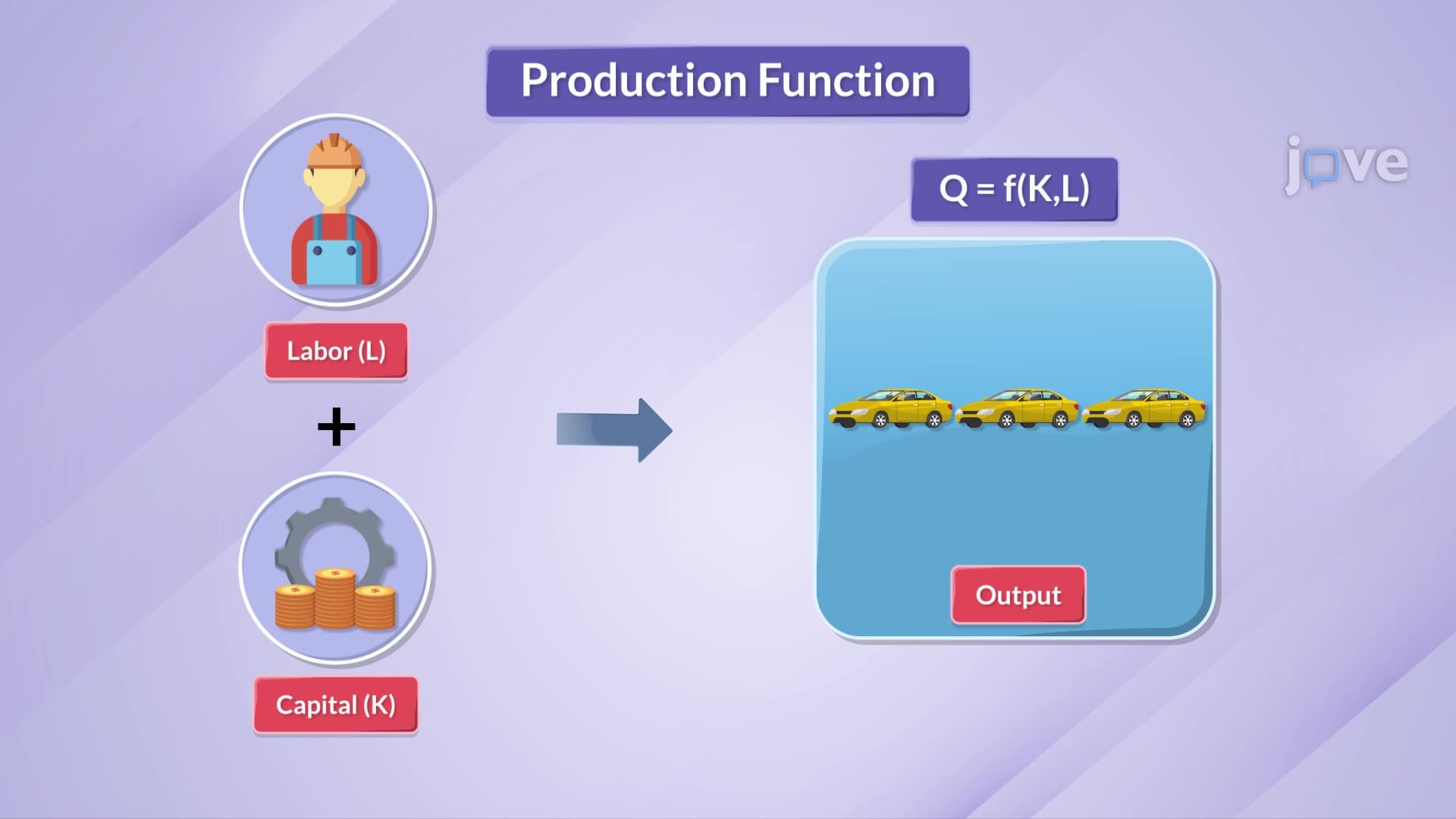
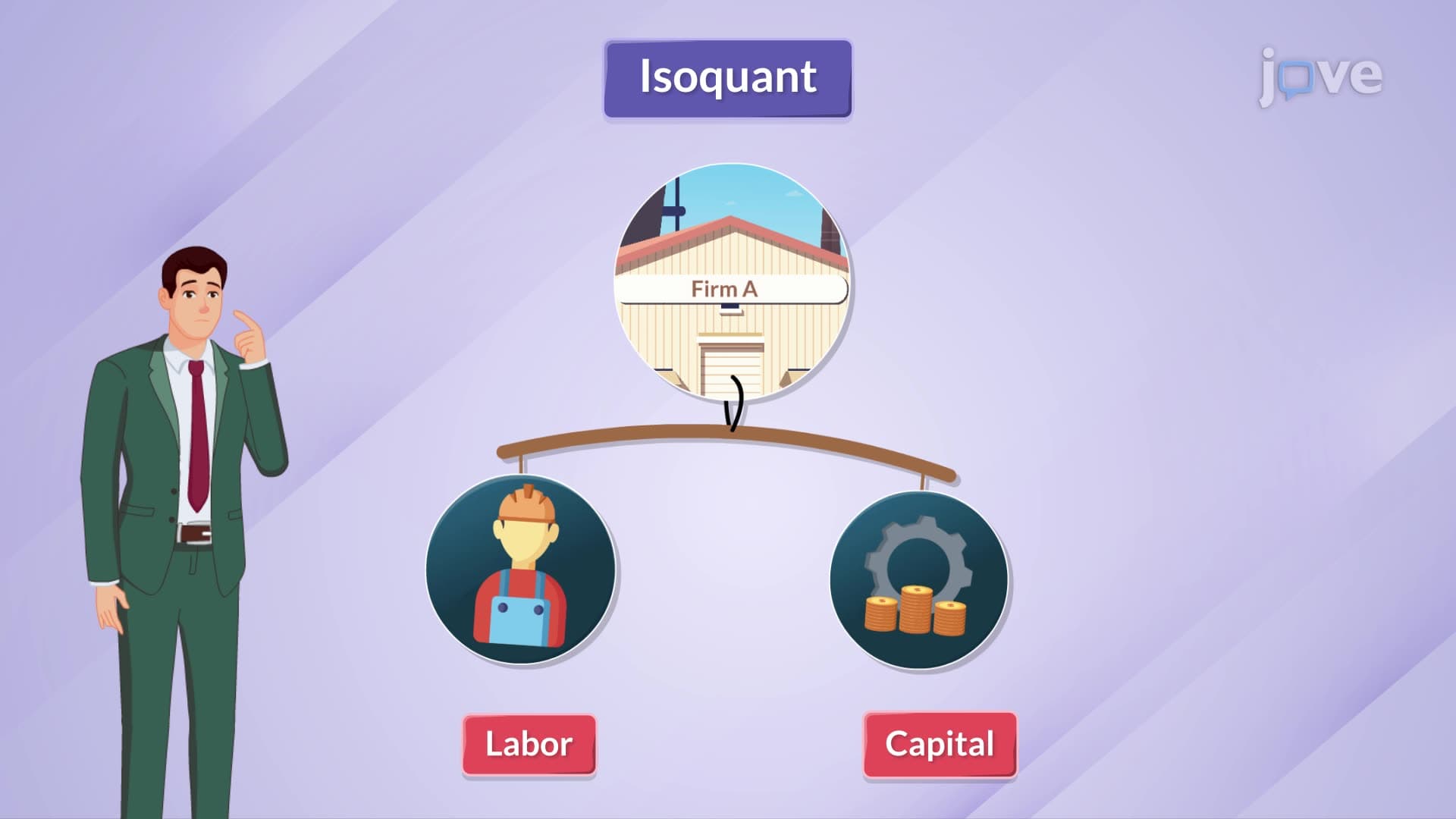
The cost minimization point serves as a cornerstone concept in microeconomics and business strategy, representing the sweet spot where companies achieve maximum efficiency. This principle becomes crucial when businesses face the fundamental challenge of producing goods or services while controlling expenses. In economic terms, it's the point where a firm uses the optimal combination of inputs-typically labor and capital-to produce a specific quantity of output at the lowest possible total cost.
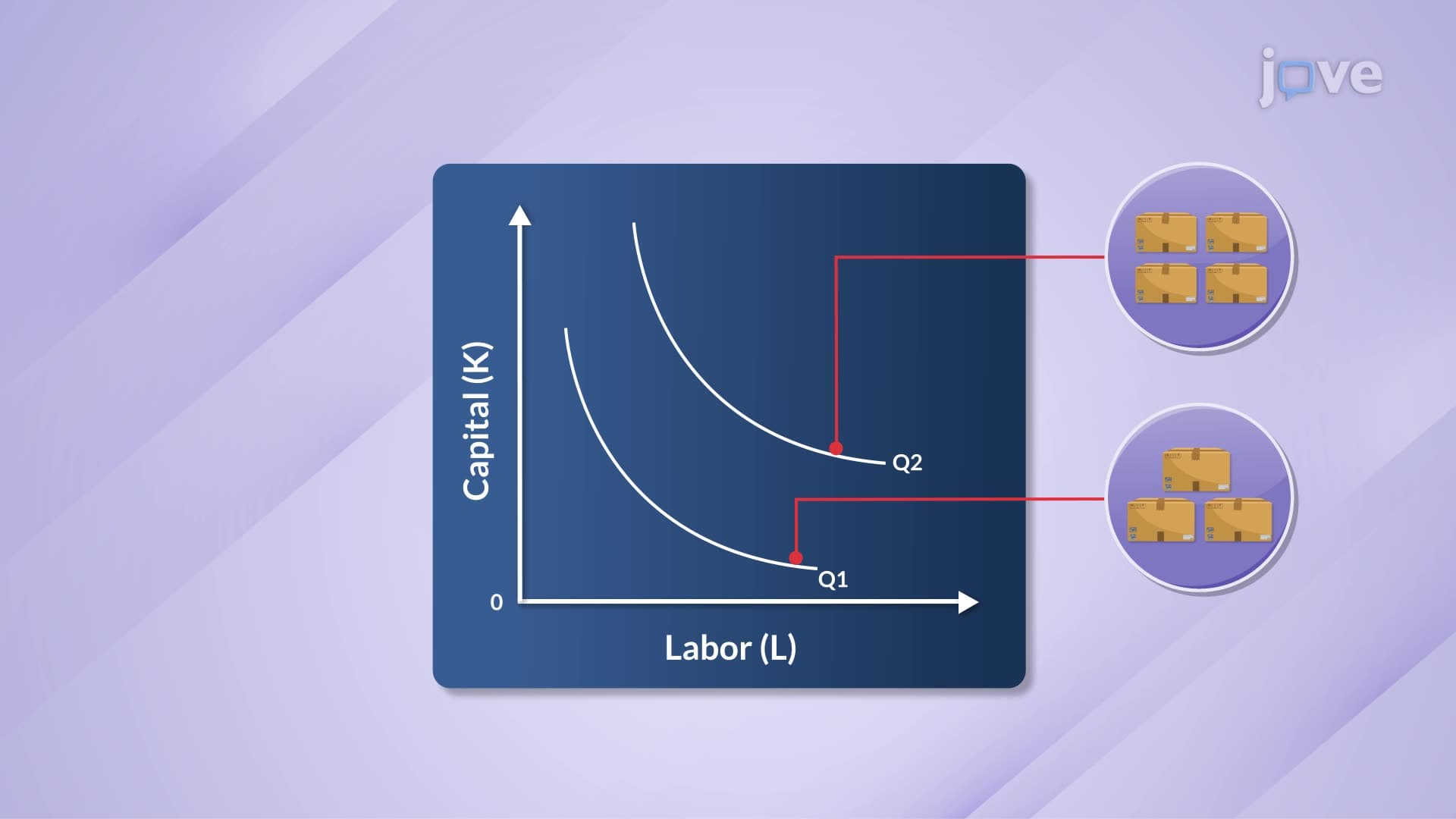
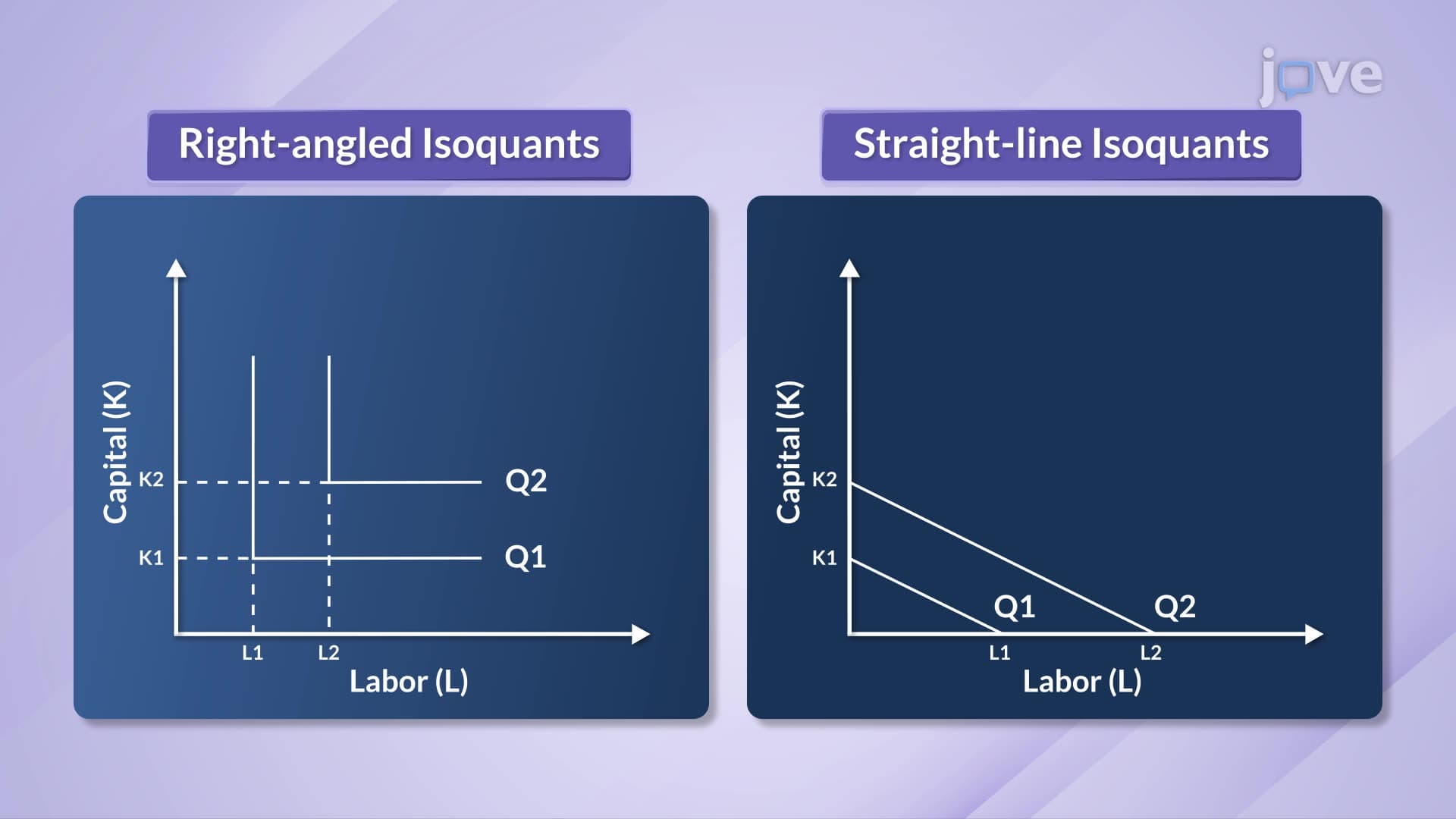
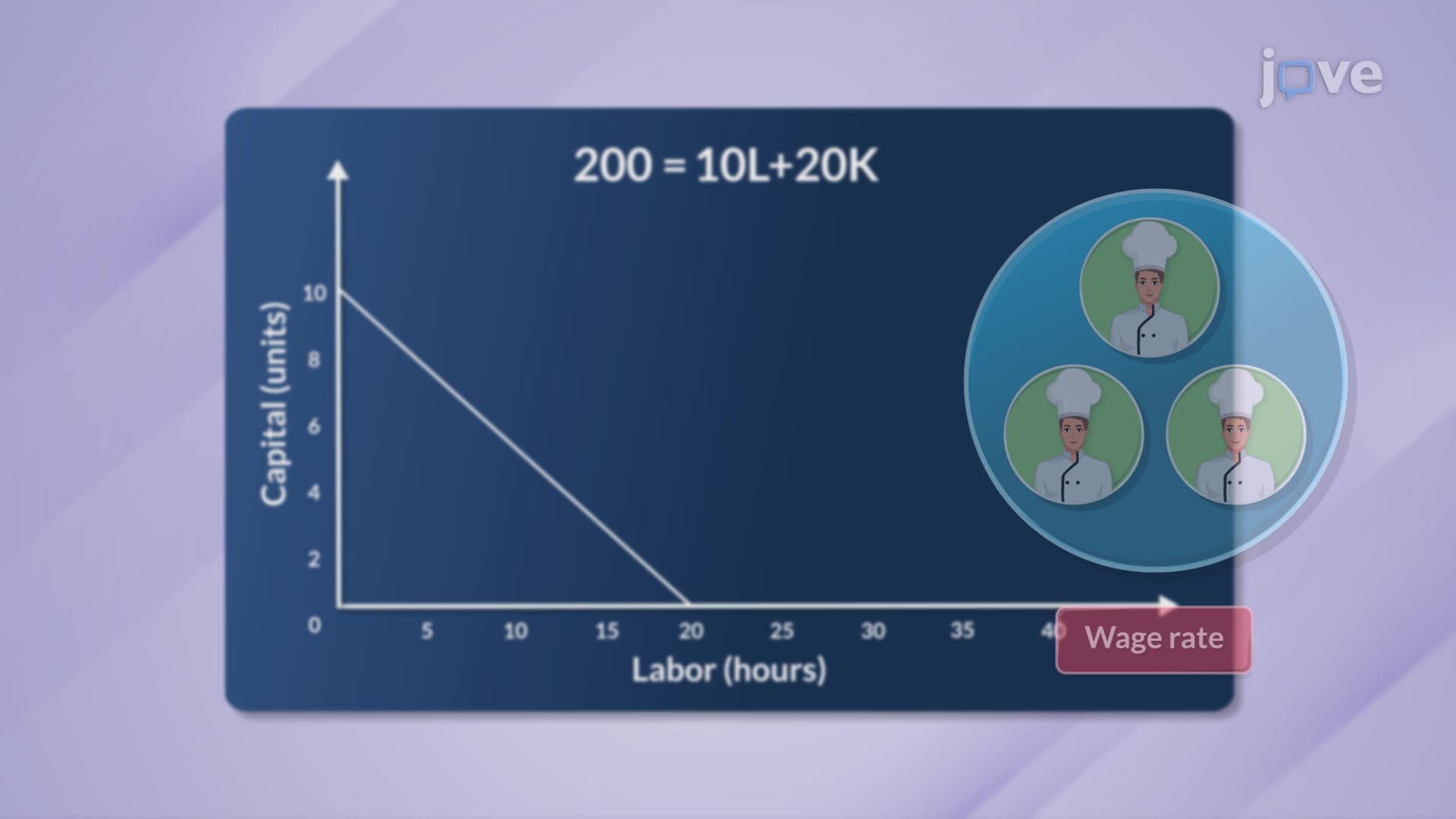
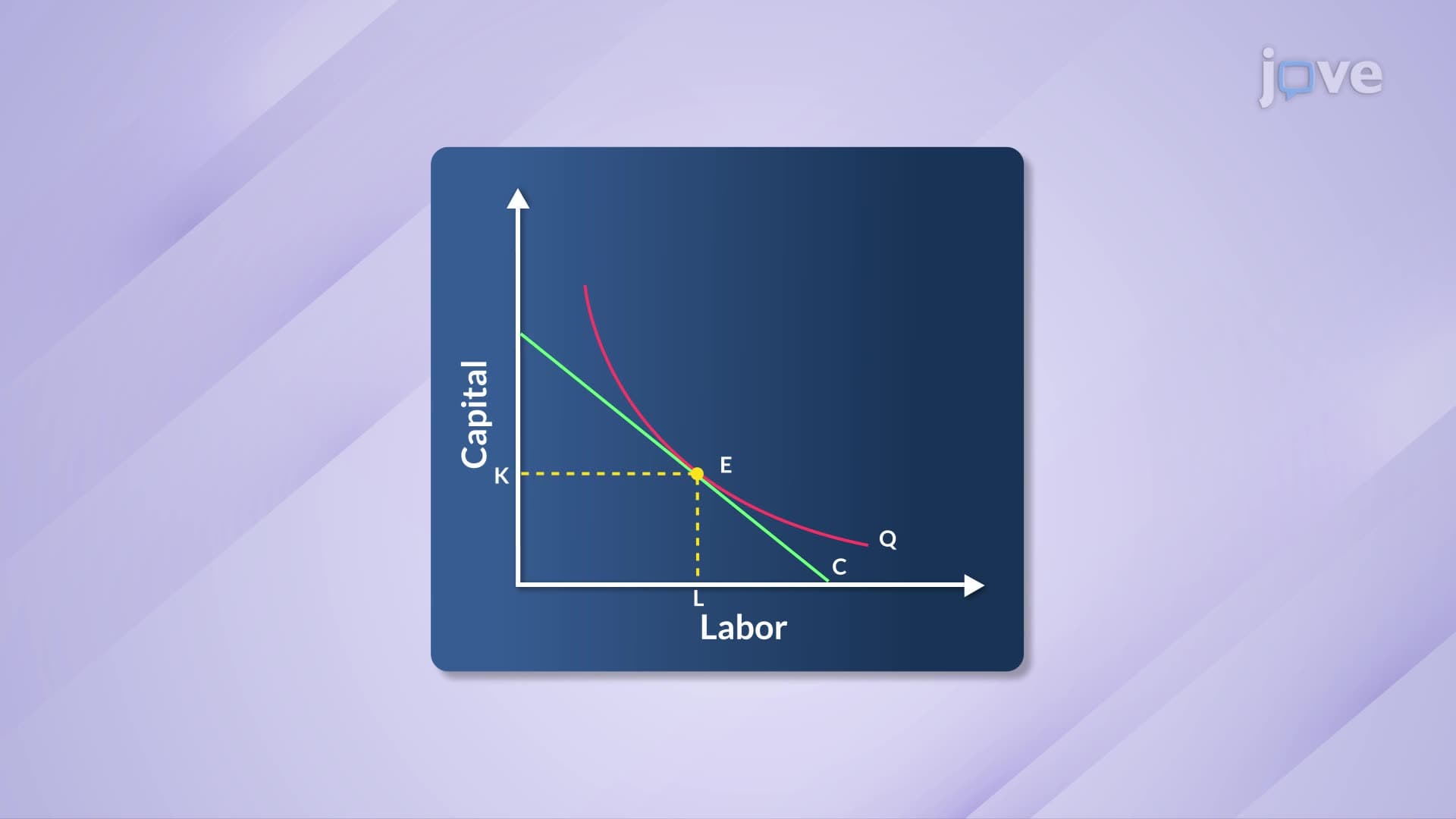
The visual representation of cost minimization relies on two essential curves. Isoquant curves map all possible combinations of inputs that yield identical output levels, similar to how a topographic map shows elevation contours. For instance, Tesla might produce 1,000 vehicles per month using various combinations of assembly workers and automated machinery. The isocost line, conversely, represents all input combinations available at a specific budget level, like a $2 million monthly production budget constraint.
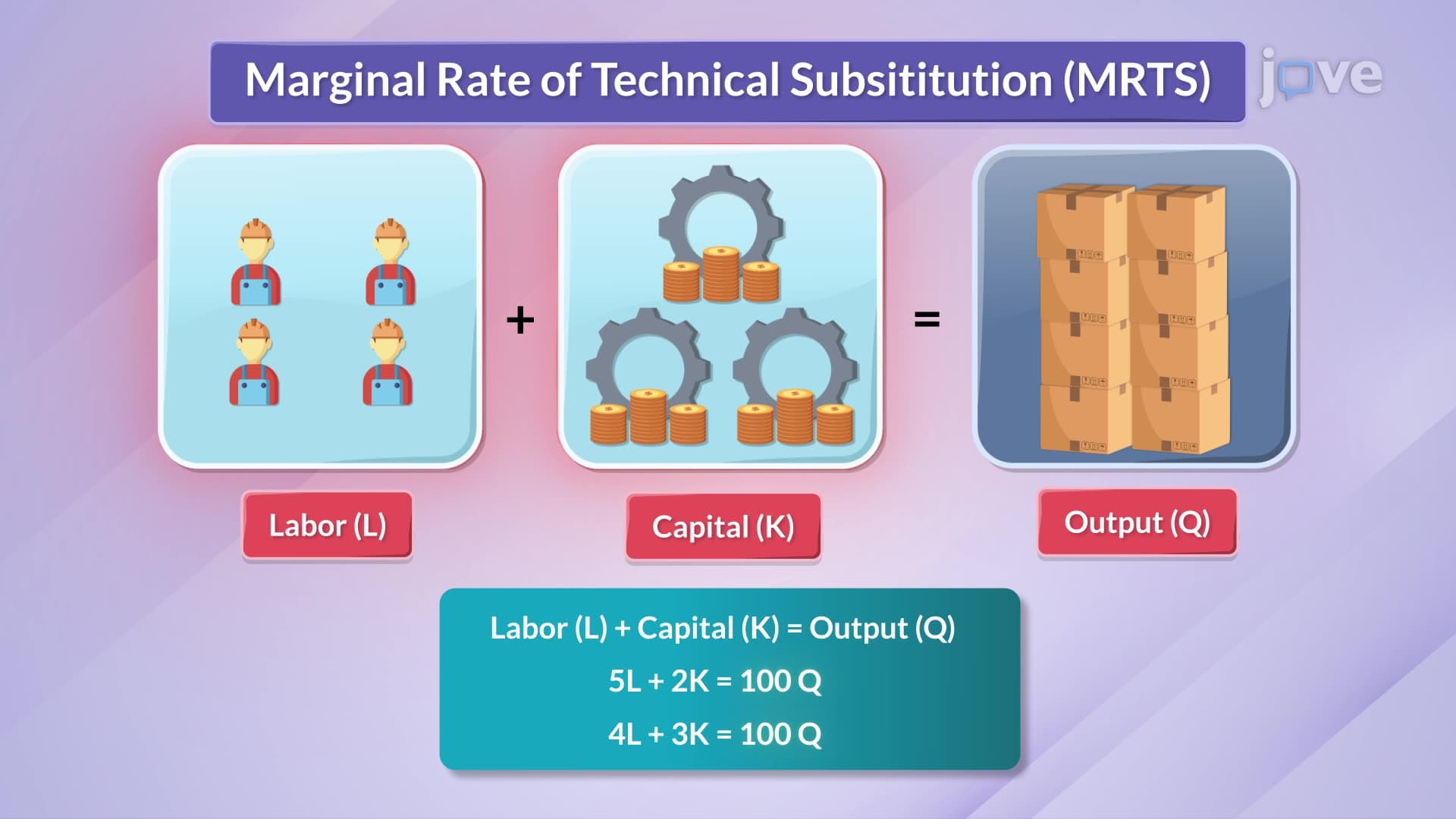
The magic happens where these lines meet tangentially. At this cost minimization point, the slope of the isocost line equals the slope of the isoquant curve. Mathematically, this translates to the Marginal Rate of Technical Substitution (MRTS) equaling the ratio of input prices. The MRTS shows how many units of one input can substitute for another while maintaining constant output.
This concept crystallizes into the equal marginal principle: at the cost minimization point, the marginal product per dollar spent must be identical across all inputs. The formula appears as: (Marginal Product of Labor / Price of Labor) = (Marginal Product of Capital / Price of Capital).
Consider Amazon's warehouse operations. If hiring one additional worker increases output by 20 packages per hour at $15/hour, while leasing one more sorting machine increases output by 40 packages per hour at $30/hour, both provide 1.33 packages per dollar spent. This equality indicates optimal resource allocation.
Understanding cost minimization proves invaluable for AP Economics students and college microeconomics courses. Common exam scenarios involve calculating optimal input combinations given production functions and input prices. Business schools frequently use this concept in operations management and strategic planning courses.
Major corporations apply these principles daily. Netflix balances content creation costs between original programming and licensed content acquisition. Starbucks optimizes between automated espresso machines and skilled baristas based on location-specific labor costs and customer volume patterns.
Related Micro-courses