Loading subject page…

- Organic Chemistry
- Amines
- 2° Amines to N-Nitrosamines: Reaction with NaNO2
Micro-course: Amines
119,800 views
Learn key concepts and earn your certificate.

2° Amines to N-Nitrosamines: Reaction with NaNO2

00:00
01:20
Video Summary: 2 Amines to N Nitrosamines Explained
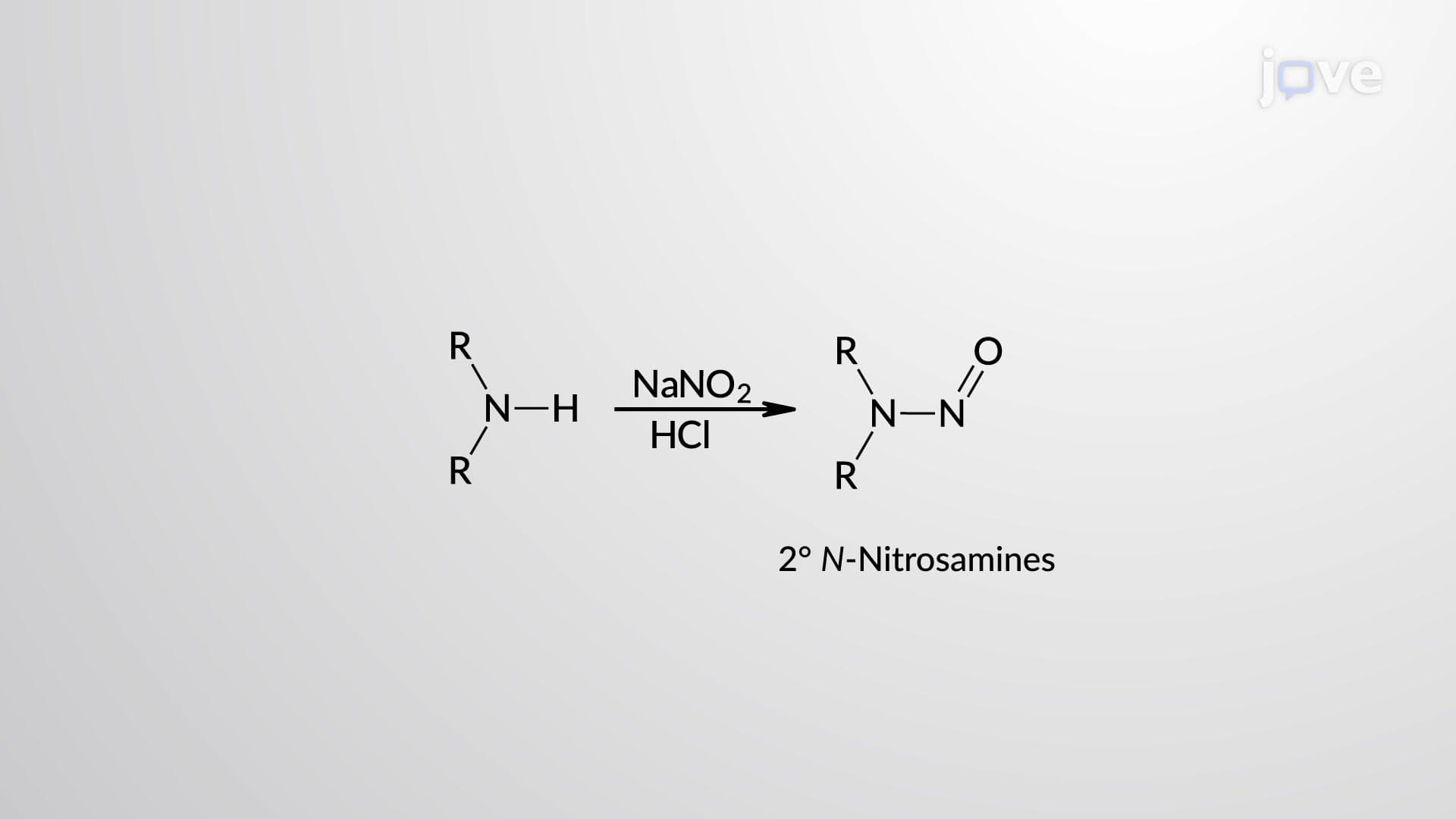
Did you know that the bacon you eat for breakfast contains compounds formed through the same reaction that creates potent carcinogens? 2° amines to n-nitrosamines reactions occur when secondary amines react with sodium nitrite and strong acids, producing stable N-nitrosamines that are commonly found in processed meats like hot dogs and deli turkey sold across US grocery stores. This 2° amines to n-nitrosamines explained process involves the formation of a nitrosonium ion electrophile that attacks nucleophilic secondary amines. Watch the full video on JoVE Coach to master this concept with expert-led visuals and step-by-step explanations.
- Understand how 2° amines to n-nitrosamines reactions proceed through nitrosonium ion formation and nucleophilic attack mechanisms
- Identify the key reagents required: sodium nitrite (NaNO₂) and strong acids to generate the electrophilic nitrosonium cation
- Analyze why secondary N-nitrosamines are stable compared to primary N-nitrosamines due to the absence of N-H protons
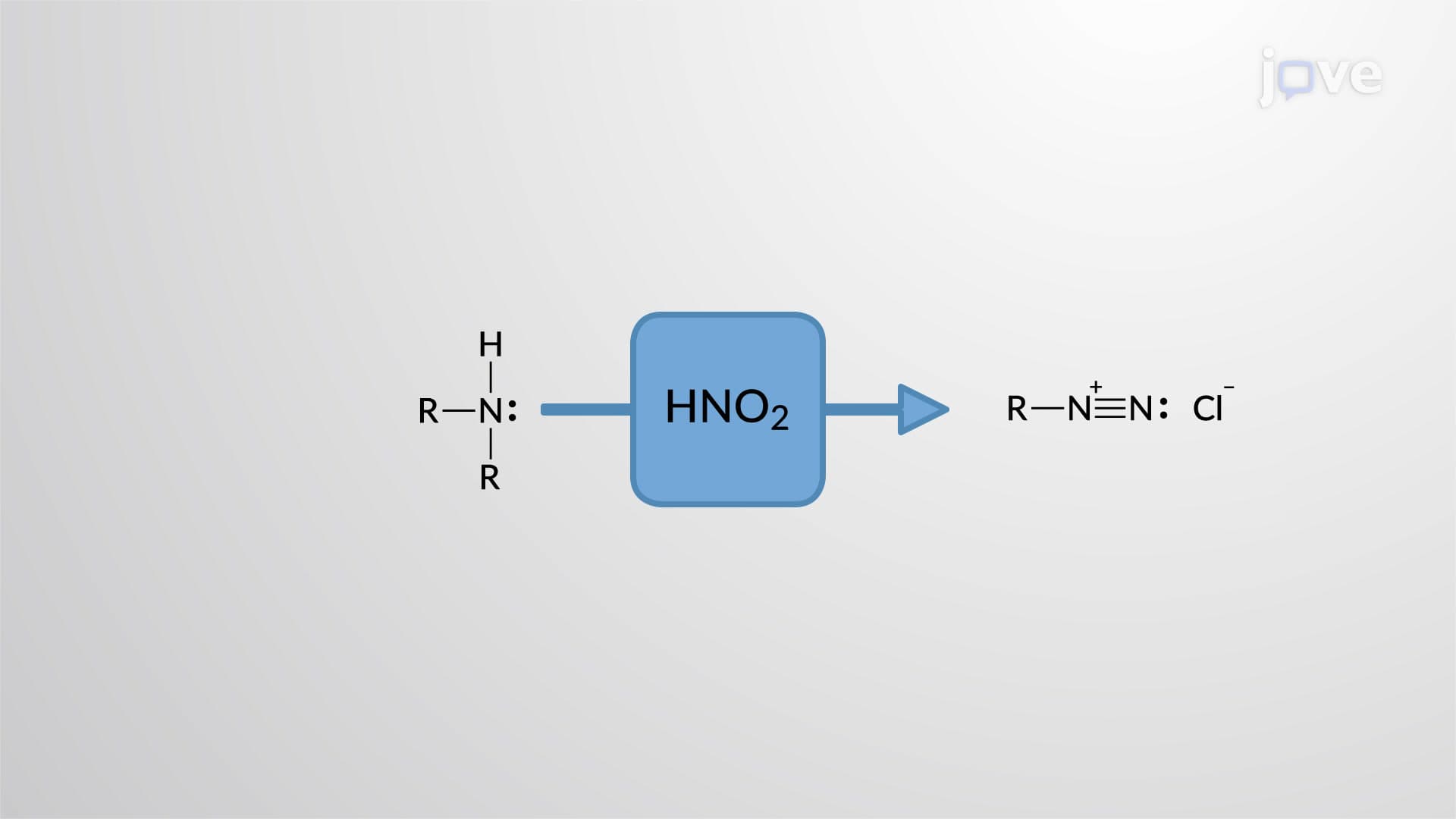
- Compare the reaction pathways of primary versus secondary amines with nitrous acid and explain the different products formed
- Recognize the health implications of N-nitrosamines as known carcinogens found in processed foods and tobacco products
- Apply knowledge of this reaction to predict products when given specific secondary amine starting materials
- Evaluate the synthetic utility limitations of N-nitrosamines in organic chemistry applications
- Explore the mechanistic details including protonation, dehydration, and deprotonation steps in the overall transformation
Understanding 2° Amines To N-Nitrosamines Formation
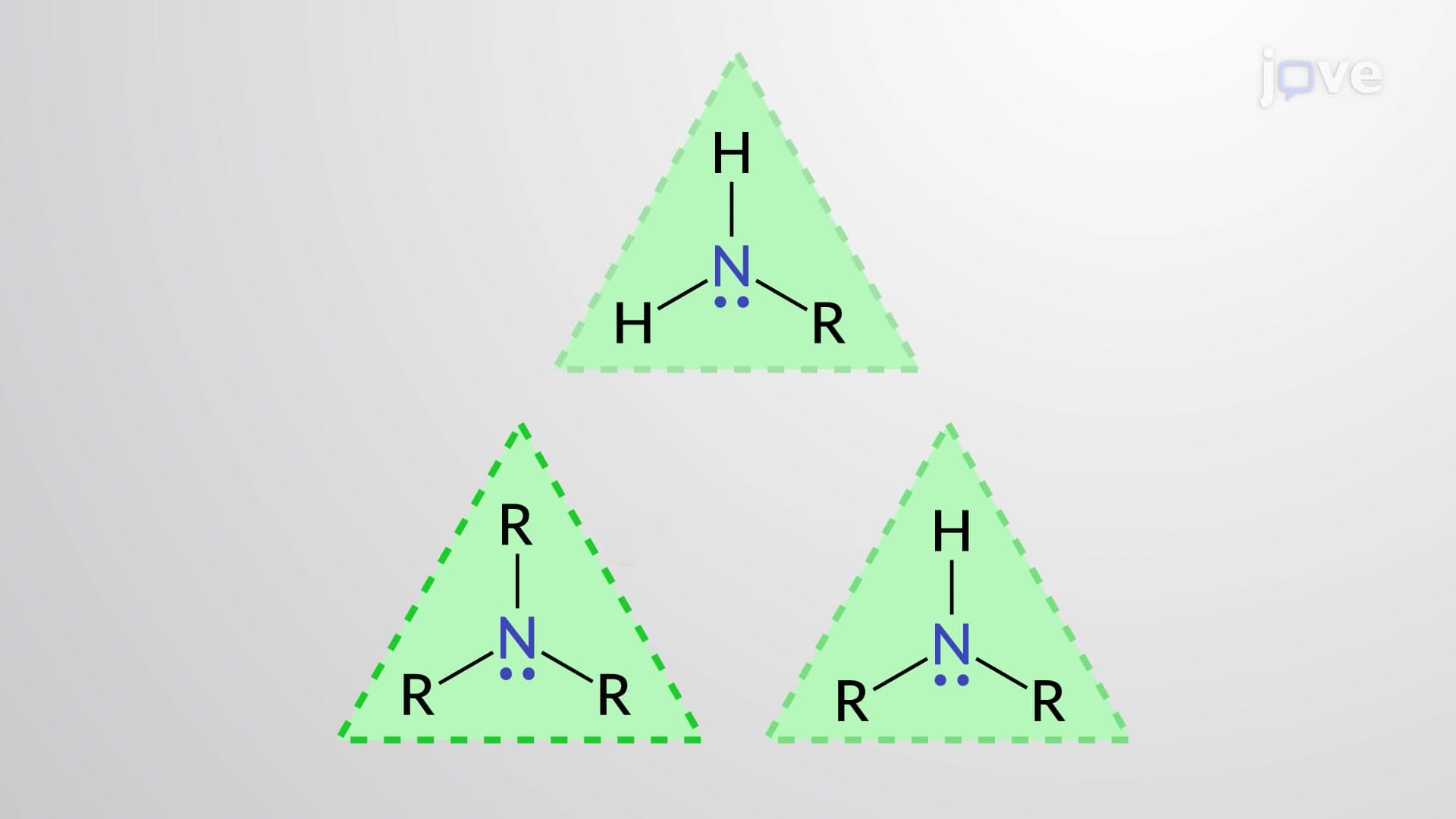
The conversion of secondary amines to N-nitrosamines represents a fundamental organic chemistry reaction with significant real-world implications. This transformation occurs when secondary amines-whether alkyl or aryl substituted-encounter sodium nitrite in acidic conditions. Students preparing for the MCAT or AP Chemistry exams frequently encounter this reaction type as it demonstrates key principles of nucleophilic attack and electrophile formation.
Mechanistic Pathway and Nitrosonium Ion Chemistry
The reaction begins when sodium nitrite (NaNO₂) combines with strong acids like hydrochloric acid to generate nitrous acid (HNO₂) in situ. This unstable intermediate undergoes protonation followed by dehydration, forming the crucial nitrosonium ion (NO⁺)-a powerful electrophile. The secondary amine, acting as a nucleophile due to its lone pair of electrons, attacks this nitrosonium cation. This nucleophilic attack creates an N-nitrosammonium ion intermediate, which subsequently loses a proton to solvent molecules, yielding the final N-nitrosamine product.
Stability Factors and Product Characteristics
Unlike their primary amine counterparts, secondary N-nitrosamines exhibit remarkable stability. This stability stems from the absence of N-H protons that would otherwise enable tautomerization to unstable diazonium compounds. The products typically separate as oily liquids from reaction mixtures, making them easily identifiable in laboratory settings. College organic chemistry students often observe this physical property during synthesis experiments.
Health and Environmental Significance
The practical importance of this reaction extends far beyond academic study. N-nitrosamines formed through these reactions are prevalent in processed meats, beer, and tobacco products throughout the United States. The FDA monitors nitrite levels in foods specifically because of concerns about N-nitrosamine formation. Students studying biochemistry or pursuing pre-med tracks should understand that many N-nitrosamines are classified as probable human carcinogens by the EPA, making this reaction relevant to public health discussions and regulatory chemistry.
Frequently Asked Questions
The 2° amines to n-nitrosamines reaction converts secondary amines into N-nitrosamines using sodium nitrite and acid. This reaction is crucial because it produces compounds commonly found in processed foods and represents a key mechanism in organic chemistry. Students encounter this reaction in AP Chemistry, MCAT preparation, and college organic chemistry courses as it demonstrates nucleophilic attack mechanisms.
MCAT questions typically focus on the mechanism, asking students to identify intermediates like the nitrosonium ion or predict products from given starting materials. AP Chemistry exams may test understanding of the reagents needed and the stability differences between primary and secondary N-nitrosamine products. College organic chemistry exams often include mechanism arrows and electron movement.
The key distinction tested on exams is product stability-secondary N-nitrosamines are stable and isolable, while primary amines form unstable diazonium ions that decompose further. This difference appears frequently on MCAT passages and college midterms. Students must recognize that secondary amines lack the N-H proton necessary for diazonium formation.
N-nitrosamines are commonly found in processed meats like bacon, hot dogs, and deli meats sold in US supermarkets, formed when nitrite preservatives react with naturally occurring amines. They're also present in beer and tobacco products. The FDA regulates nitrite levels in food products specifically to minimize N-nitrosamine formation and associated health risks.
Not at all-this reaction builds on basic concepts like nucleophiles, electrophiles, and acid-base chemistry that students learn in AP Chemistry or honors chemistry. The mechanism involves familiar arrow-pushing patterns, making it accessible to students who understand Lewis structures and electron movement. Breaking it into steps makes the overall transformation manageable.
Focus on drawing the complete mechanism with electron-pushing arrows, memorize the reagents (NaNO₂ + strong acid), and practice predicting products from different secondary amine starting materials. Create flashcards comparing primary vs. secondary amine reactions with nitrous acid. Work through practice problems that ask you to identify the nitrosonium ion intermediate.
This reaction introduces key concepts like in situ reagent generation and electrophilic intermediates that appear throughout organic chemistry. Students will see similar patterns in other nitrosation reactions, electrophilic aromatic substitution, and medicinal chemistry. The stability principles learned here apply to drug metabolism and chemical carcinogenesis studies in advanced courses.
While secondary N-nitrosamines are stable, their known carcinogenic properties make them undesirable synthetic targets for most applications. Additionally, they don't readily participate in further useful transformations, limiting their synthetic utility. Organic chemists typically avoid reactions that produce known carcinogens unless specifically studying these compounds for research purposes.
Related Micro-courses