Loading video…


 12 Concepts
 70.9K views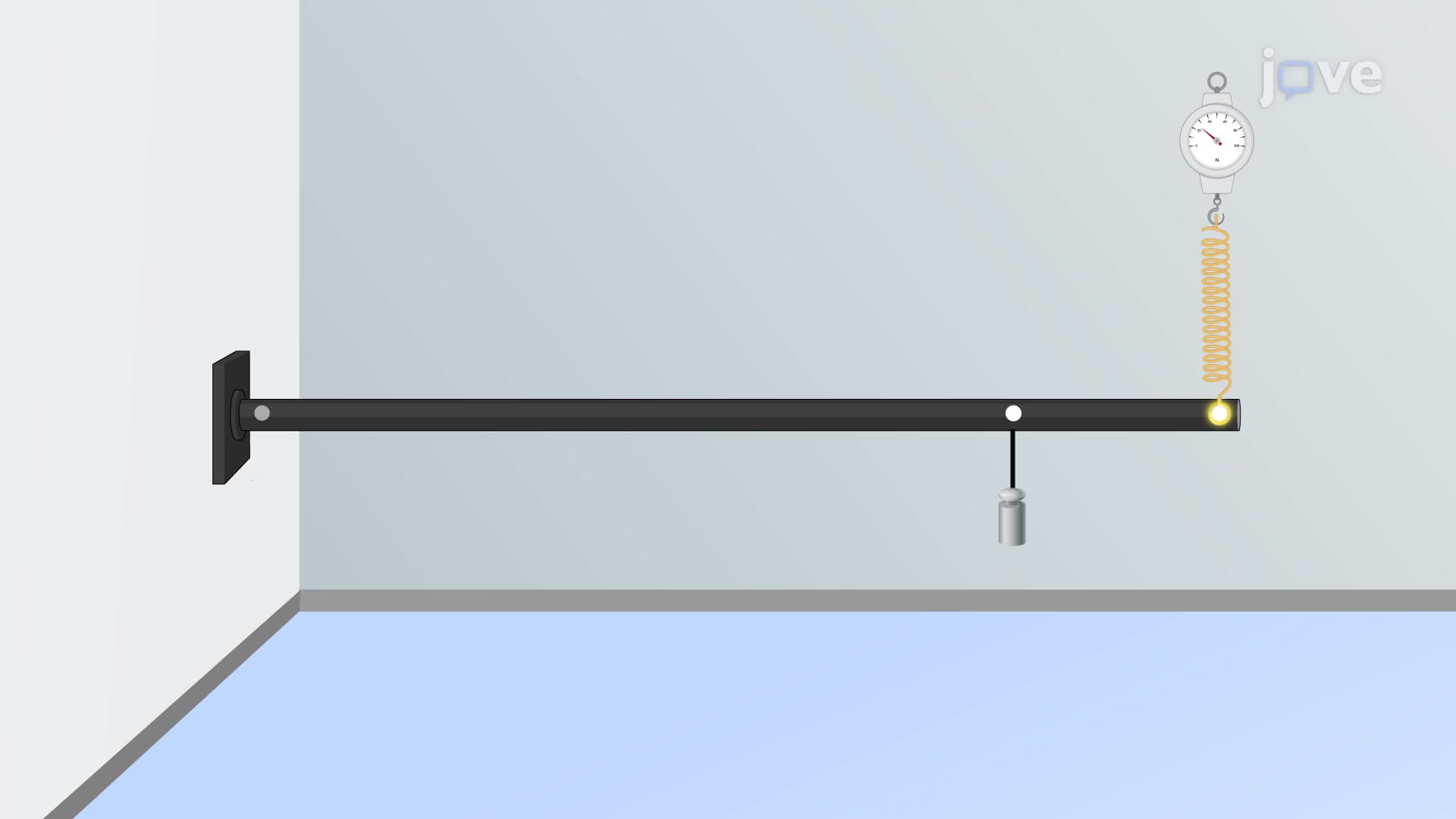

Video Summary: Rigid Body Equilibrium Problems Ii Explained
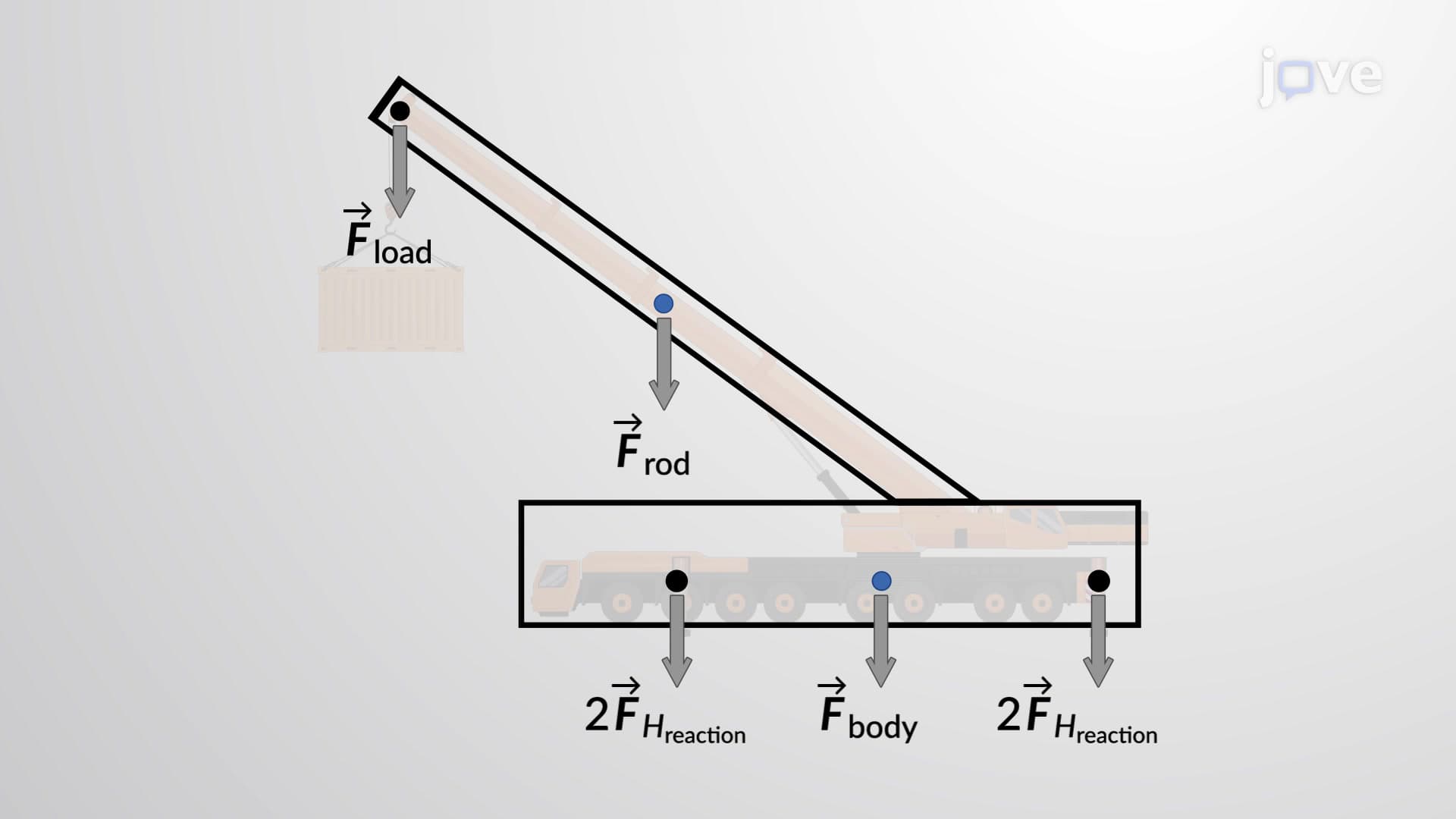
Ever wonder how engineers ensure that a 100-foot crane arm won't tip over when lifting heavy loads? Rigid body equilibrium problems II tackle exactly these complex multi-force scenarios that keep structures stable. Consider a construction crane in New York City-multiple forces act simultaneously: the crane's weight, lifted materials, and counterweights must all balance perfectly around pivot points. This Rigid Body Equilibrium Problems II Explained concept demonstrates how to analyze systems with multiple forces and torques acting on extended objects like rods, beams, and levers. Watch the full video on JoVE Coach to master this concept with expert-led visuals and step-by-step explanations.
Rigid body equilibrium problems II represent a significant step up from basic equilibrium scenarios. Unlike point particles, rigid bodies have physical dimensions, meaning forces can act at different locations and create rotational effects called torques. These problems are fundamental to engineering design and appear frequently on AP Physics exams and college engineering coursework.
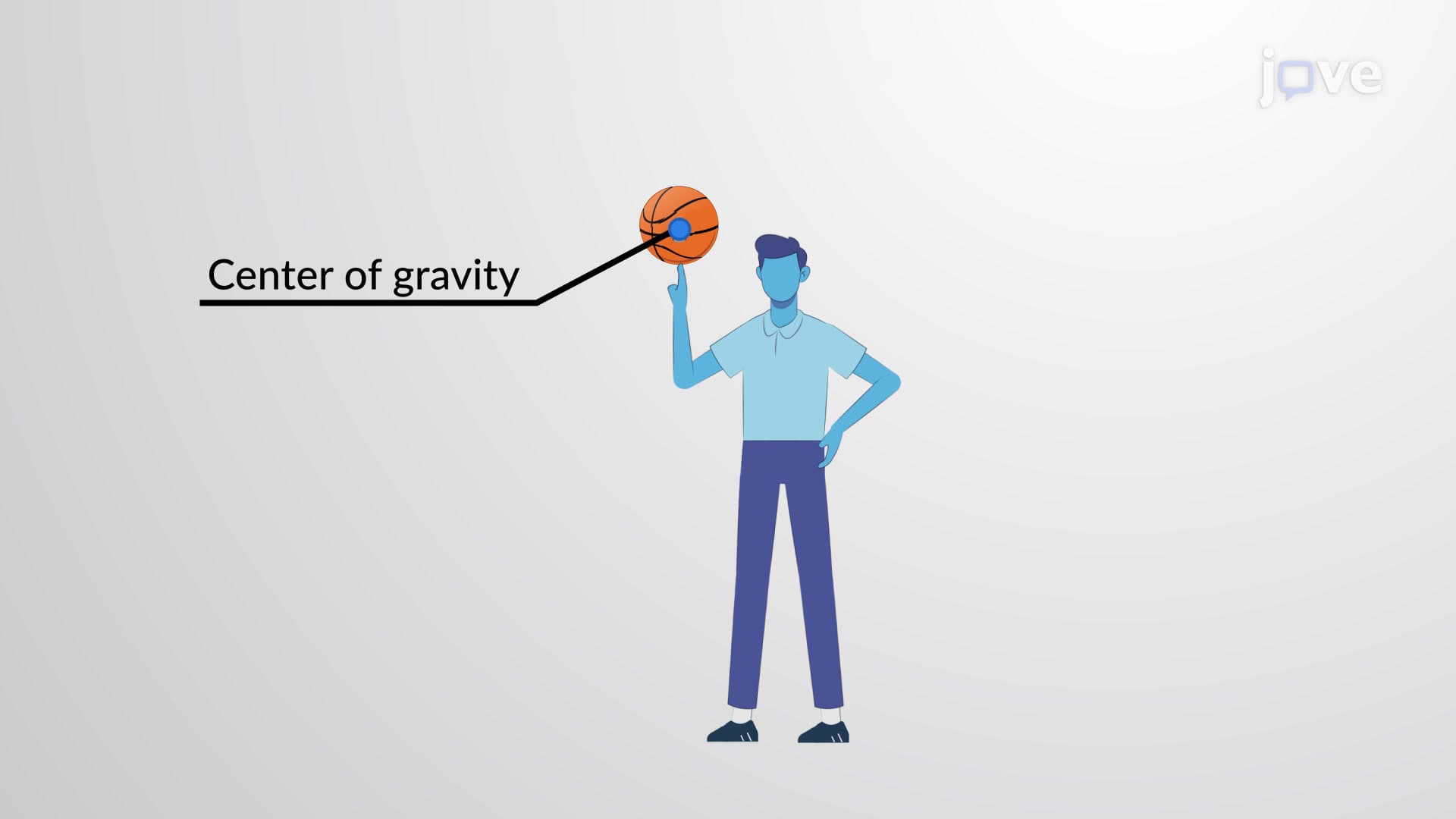
The key to solving these problems lies in constructing accurate free-body diagrams. For a rod pivoted at one end, you must identify all forces: the object's weight acting at its center of gravity, external loads at specific positions, support reactions at pivot points, and applied forces from springs or cables. Each force creates a moment (torque) about the pivot point, calculated as force multiplied by perpendicular distance.
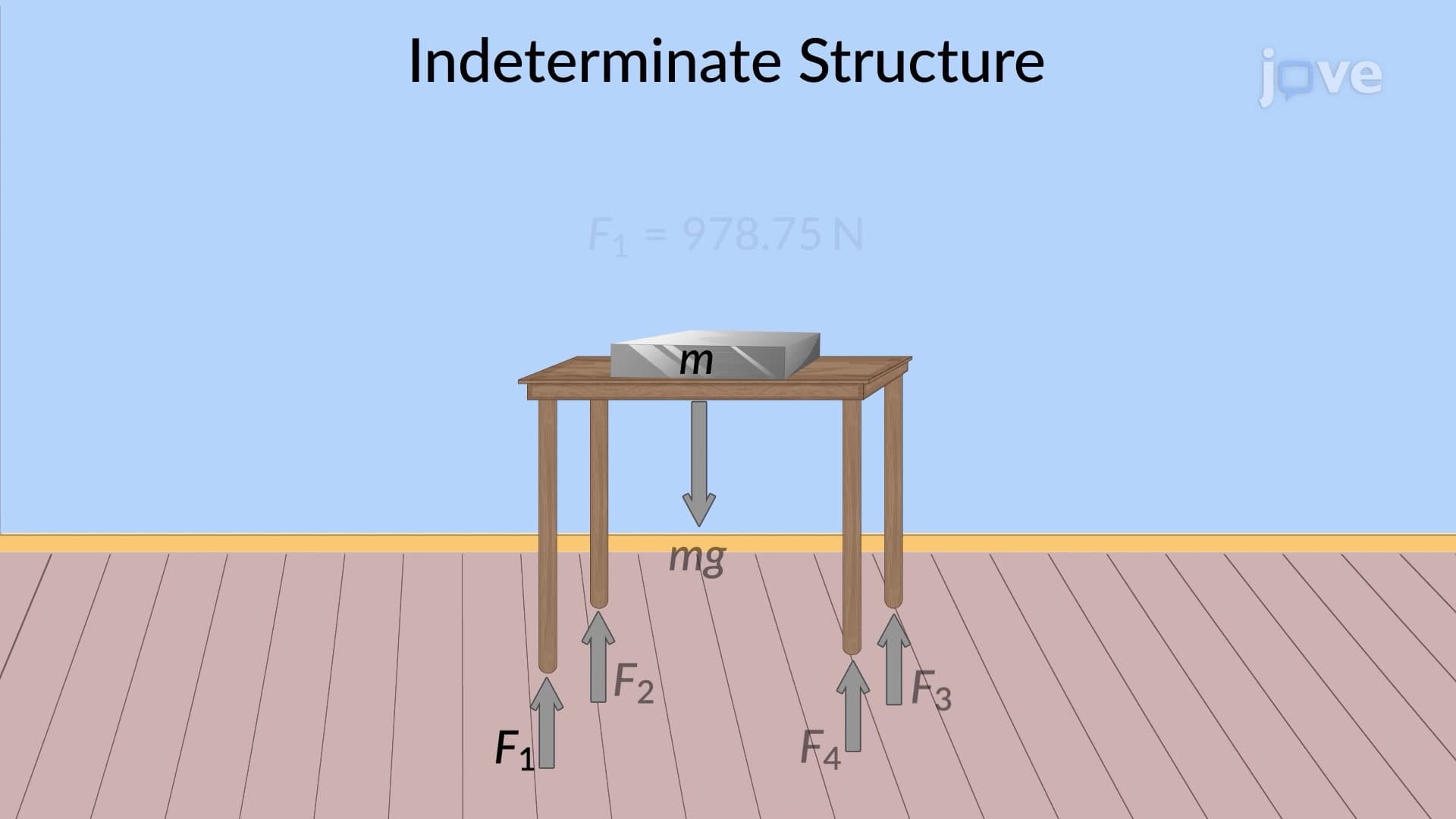
For static equilibrium, two conditions must be satisfied simultaneously: the sum of all forces equals zero (preventing translation), and the sum of all moments about any point equals zero (preventing rotation). In practice, engineers often choose the pivot point as their moment reference because reaction forces there create zero torque, simplifying calculations significantly.
Consider the example of a 100-meter rod weighing 10 N, pivoted at point A. When a 70-meter positioned weight and a 26 N upward force at the end create equilibrium, the moment equation becomes: (10 N × 50 m) + (w × 70 m) = (26 N × 100 m). This yields w = 2.86 N.
These principles govern countless structures across America. The Golden Gate Bridge's suspension cables, oil derrick stability in Texas, and even playground seesaws all rely on equilibrium calculations. Civil engineers use these concepts when designing building frameworks, while mechanical engineers apply them to robotic arms and manufacturing equipment. Understanding these problems prepares students for advanced courses in statics, dynamics, and structural analysis that form the foundation of engineering curricula at universities like MIT, Stanford, and Georgia Tech.
Related Micro-courses