Loading video…


 15 Concepts
 96.9K views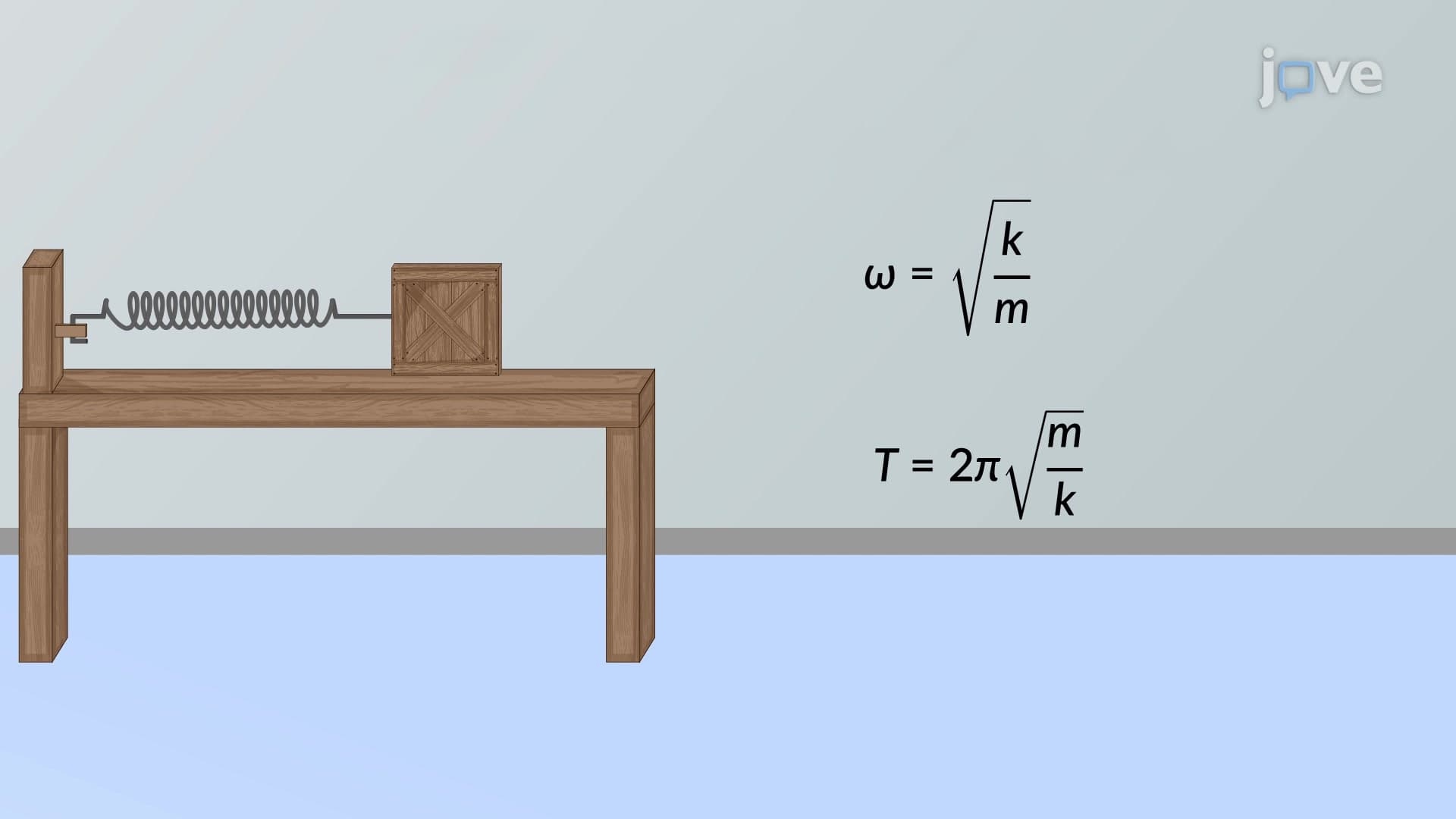

Video Summary: Frequency of Spring Mass System Explained
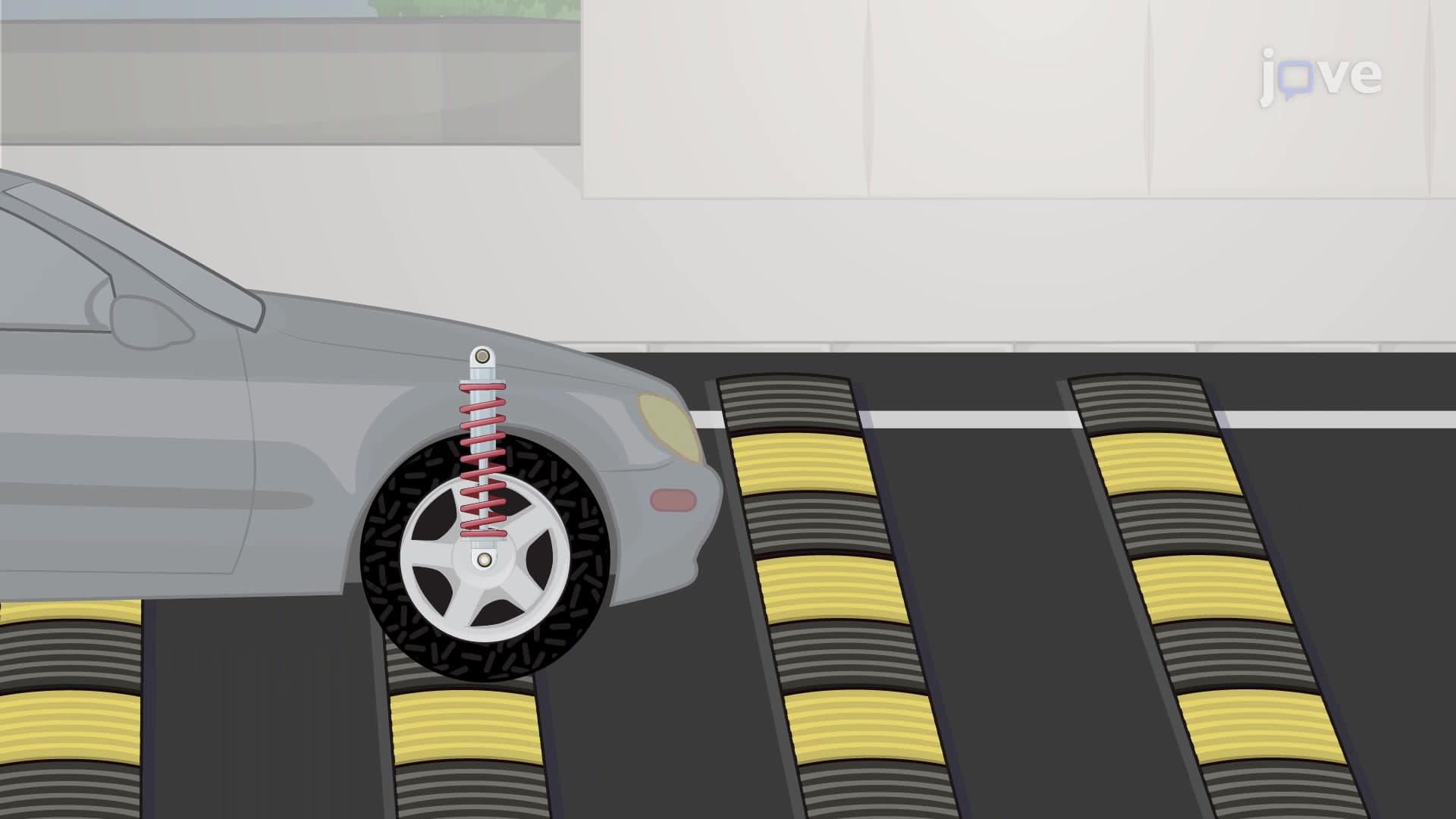
Ever wonder why a car's shock absorbers bounce at specific rates or how a metronome keeps perfect time? The frequency of spring mass system determines these oscillation patterns through fundamental physics principles. Consider a smartphone's vibration motor-it relies on precise spring-mass frequency calculations to create consistent alerts. This Frequency of Spring Mass System Explained concept reveals how mass and spring stiffness control oscillation timing in countless devices around us. Watch the full video on JoVE Coach to master this concept with expert-led visuals and step-by-step explanations.
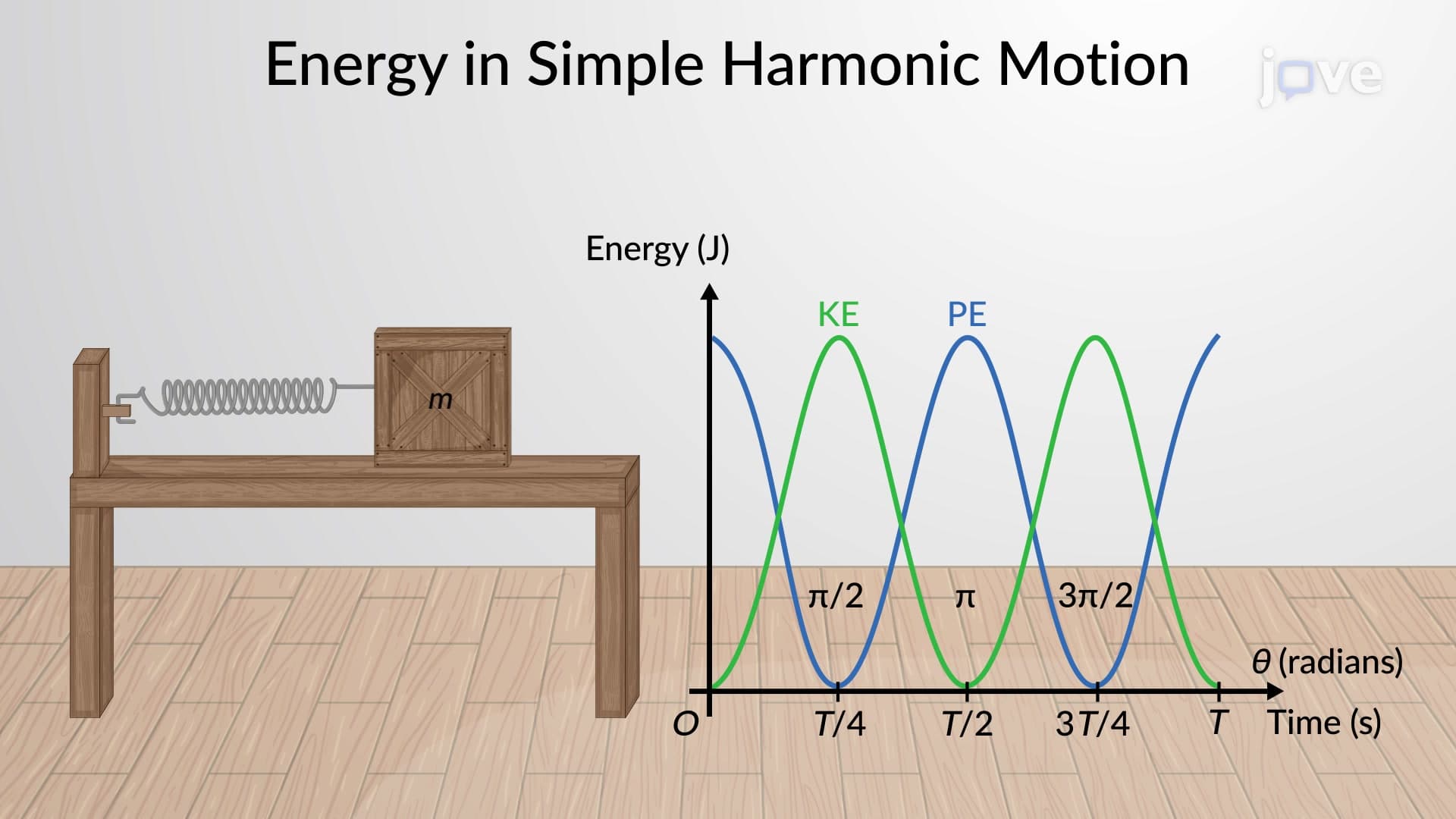
The frequency of spring mass system represents one of physics' most elegant examples of simple harmonic motion. When a mass attached to a spring oscillates on a frictionless surface, it creates a perfect mathematical model for understanding periodic motion. This system appears everywhere-from car suspensions absorbing road bumps to the quartz crystals in digital watches maintaining precise timekeeping.
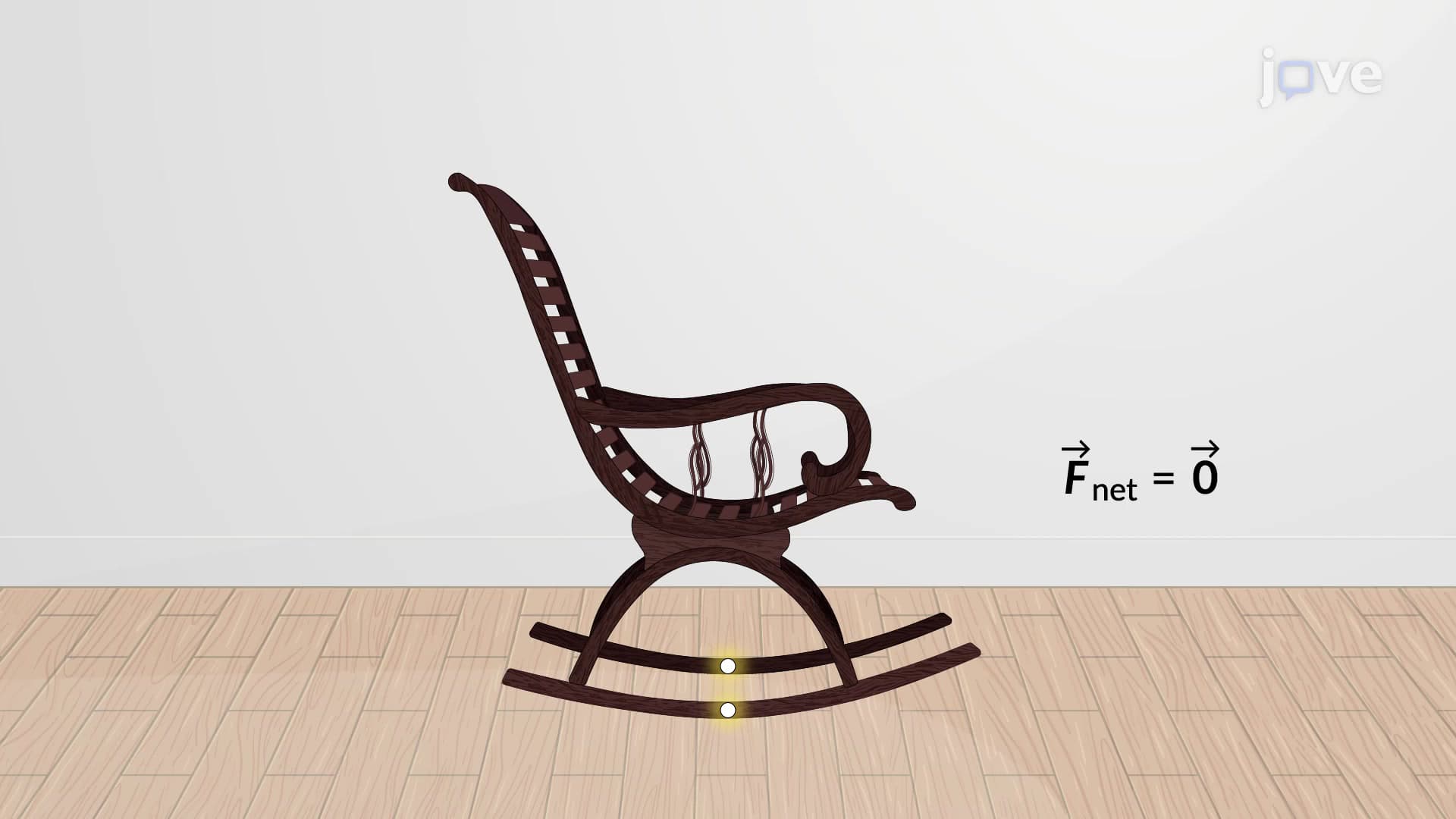
In a horizontal spring-mass system, three forces act on the mass: gravitational weight (downward), normal force from the surface (upward), and spring force (horizontal). Since weight and normal force cancel perfectly, the net force equals the spring force alone: F = -kx, where k represents spring stiffness and x is displacement from equilibrium.
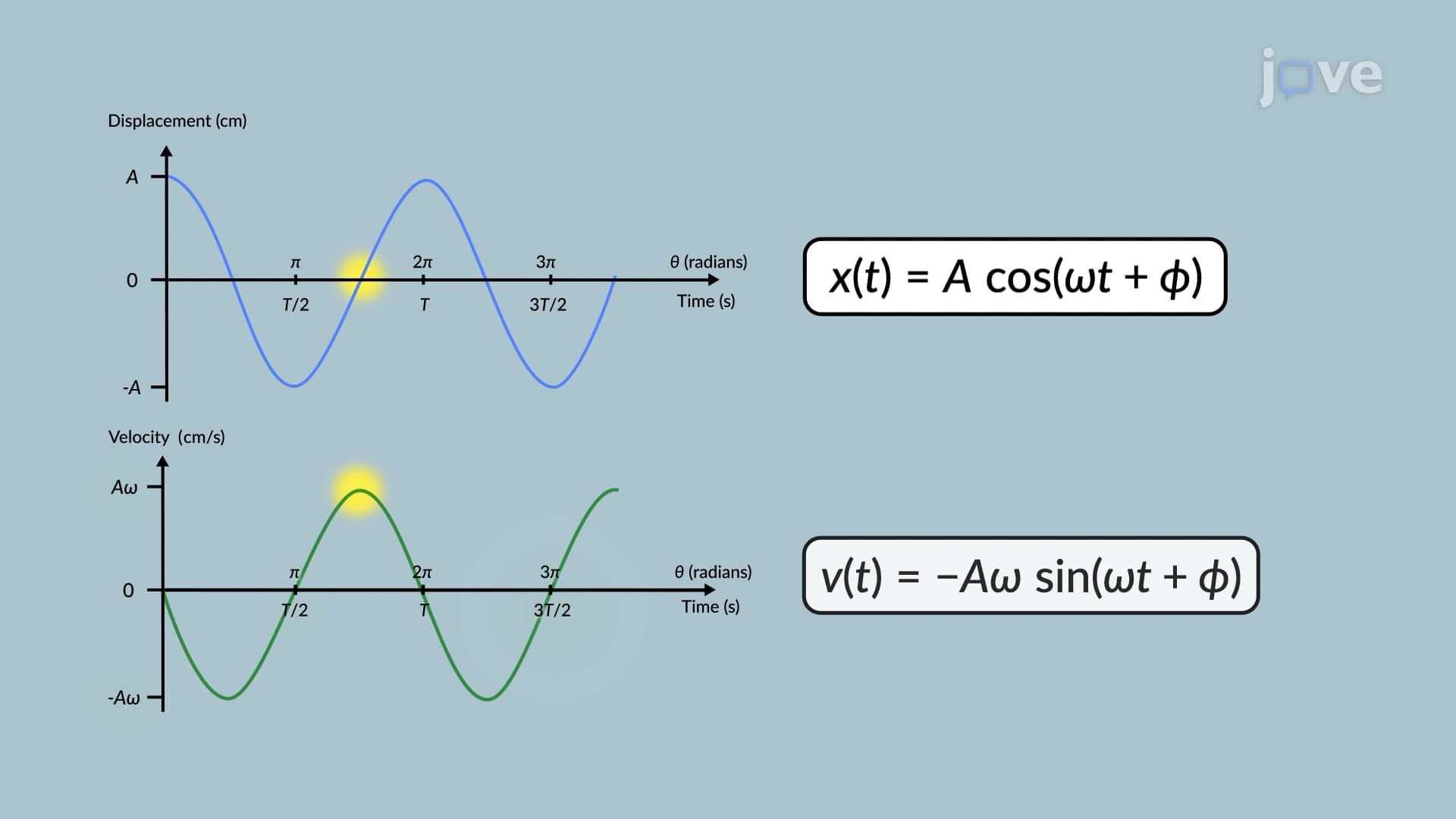
Applying Newton's second law (F = ma) and substituting harmonic motion equations reveals the angular frequency: ω = √(k/m). This fundamental relationship shows that frequency depends only on spring constant and mass-not on amplitude or initial conditions. Students preparing for AP Physics or college mechanics courses must master this derivation, as it appears frequently on exams.
The frequency of spring mass system concept drives numerous American innovations. Tesla's Model S suspension system uses computer-controlled springs with calculated frequencies to optimize ride comfort. Medical devices like MRI machines rely on precisely tuned spring-mass systems to isolate vibrations. Even NASA's Mars rovers use spring-based landing systems designed with these frequency calculations.
Angular frequency (ω) connects directly to period (T) and frequency (f) through the relationships: T = 2π/ω and f = 1/T = ω/(2π). A stiff spring (large k) creates rapid oscillations and short periods-like a guitar string's high notes. Conversely, heavy masses (large m) produce slow, long-period oscillations-similar to a grandfather clock's pendulum motion.
Understanding these relationships helps students excel on standardized tests like the SAT Physics Subject Test and college physics midterms, where spring-mass problems appear regularly.
Related Micro-courses