Loading video…


 15 Concepts
 96.9K views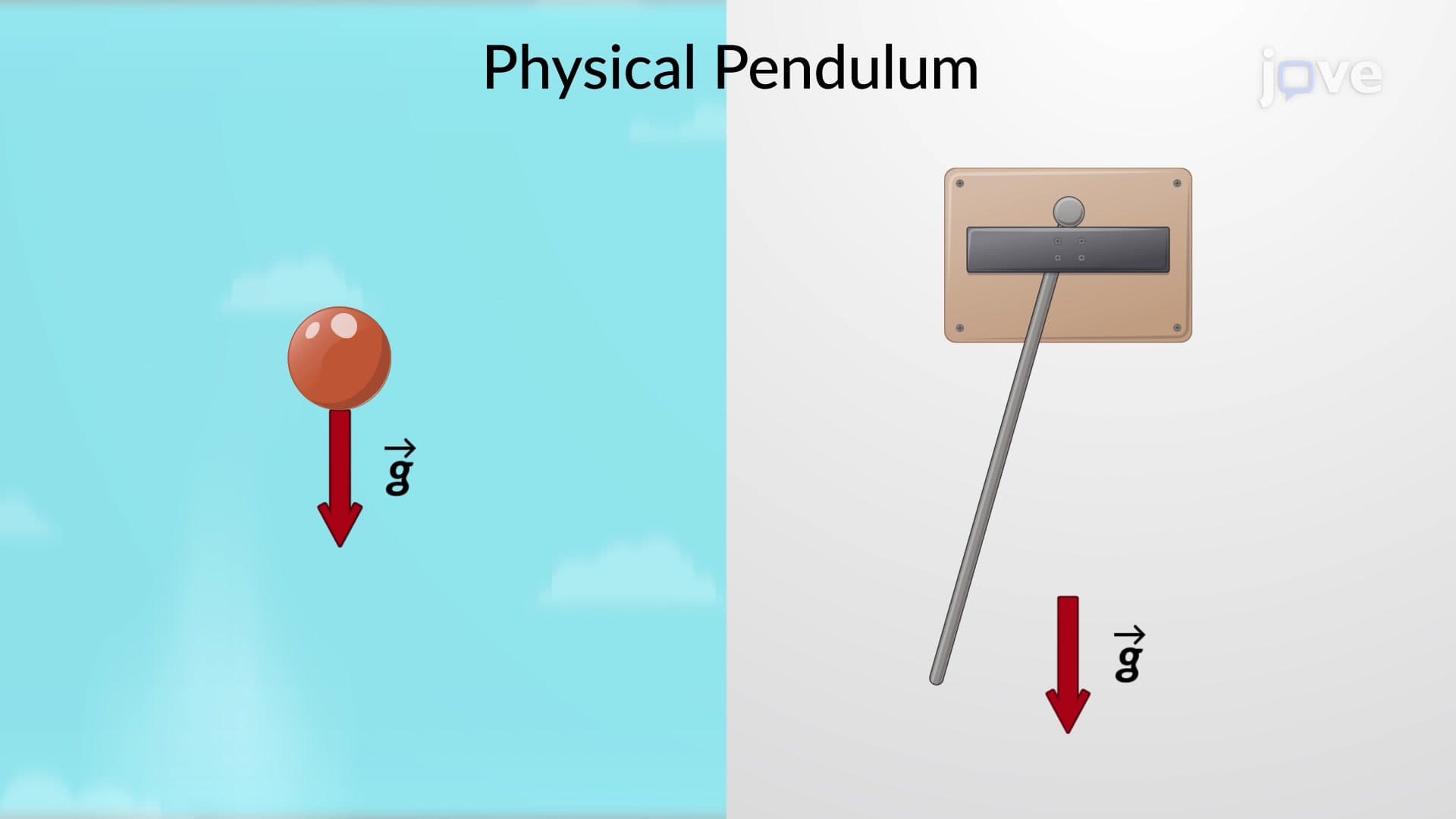

Video Summary: Measuring Acceleration Due to Gravity Explained
Ever wonder why NASA engineers must calculate gravitational acceleration with extreme precision before launching rockets? Measuring acceleration due to gravity using laboratory equipment like physical pendulums provides the foundation for understanding gravitational forces that affect everything from satellite orbits to structural engineering projects across the United States. This measuring acceleration due to gravity explained demonstration shows how a simple rod pendulum can determine Earth's gravitational constant with remarkable accuracy, yielding the familiar 9.8 m/s² value that appears throughout physics coursework. Watch the full video on JoVE Coach to master this concept with expert-led visuals and step-by-step explanations.
Measuring acceleration due to gravity through pendulum experiments represents one of the most elegant demonstrations of classical mechanics principles. This method combines rotational dynamics, gravitational theory, and experimental physics to determine Earth's gravitational acceleration with impressive accuracy. The physical pendulum approach differs significantly from simple pendulum experiments because it accounts for the distributed mass of real objects rather than assuming all mass concentrates at a single point.
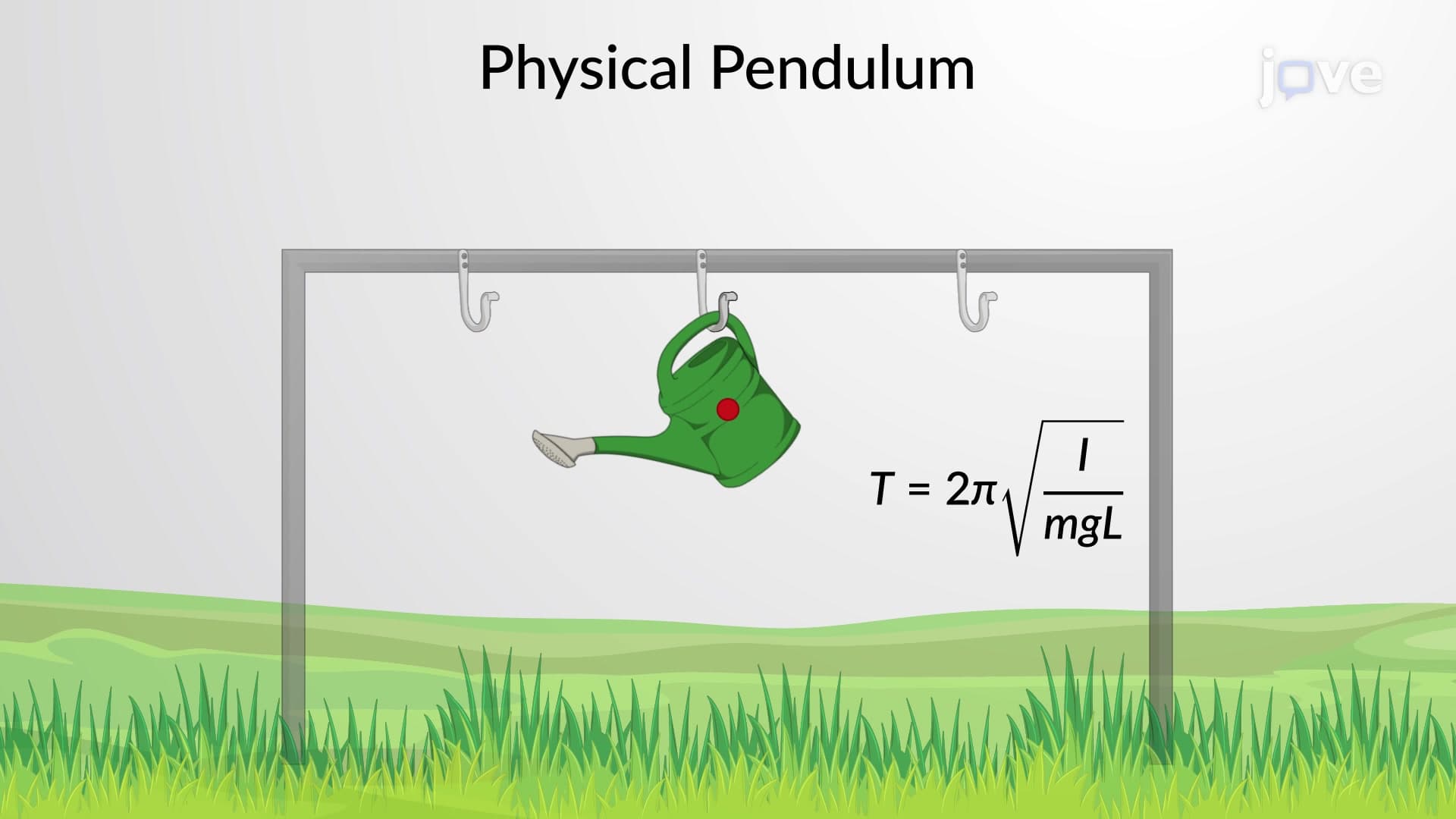
The physical pendulum method relies on understanding how extended objects behave under gravitational influence. When a uniform rod swings from one end, its motion depends on both the gravitational torque and the rod's rotational inertia about the pivot point. The period equation T = 2π√(I/mgd) governs this motion, where I represents rotational inertia, m is mass, g is gravitational acceleration, and d is the distance from pivot to center of mass.
For a uniform rod of length L pivoting at one end, the center of mass lies at L/2 from the pivot. Using the parallel-axis theorem, we calculate the rotational inertia as I = (1/12)mL² + m(L/2)² = (1/3)mL². This mathematical relationship appears frequently in AP Physics C examinations and college-level mechanics courses, making mastery essential for academic success.
The derivation yields g = (4π²L)/(3T²) when substituting known values. For a 1-meter rod with period T = 1.64 seconds, this formula produces g = 9.8 m/s², matching the accepted gravitational acceleration value. This agreement validates both the theoretical framework and experimental methodology.
Real-world applications extend beyond classroom demonstrations. The National Institute of Standards and Technology (NIST) employs sophisticated pendulum systems for precision gravitational measurements. Geophysicists use similar principles in gravimeters to detect underground oil deposits, mineral formations, and geological structures across the continental United States. Engineering firms rely on accurate gravity values for calculating structural loads in skyscrapers, bridges, and industrial facilities.
Successful gravity measurements require careful attention to experimental variables. Air resistance, friction at the pivot point, and rod flexibility can introduce systematic errors. Temperature changes affect rod dimensions, while electromagnetic interference may influence electronic timing equipment. Students preparing for standardized tests like the MCAT or AP Physics examinations should understand how these factors impact measurement precision and accuracy.
Related Micro-courses