Loading video…


 14 Concepts
 224.2K views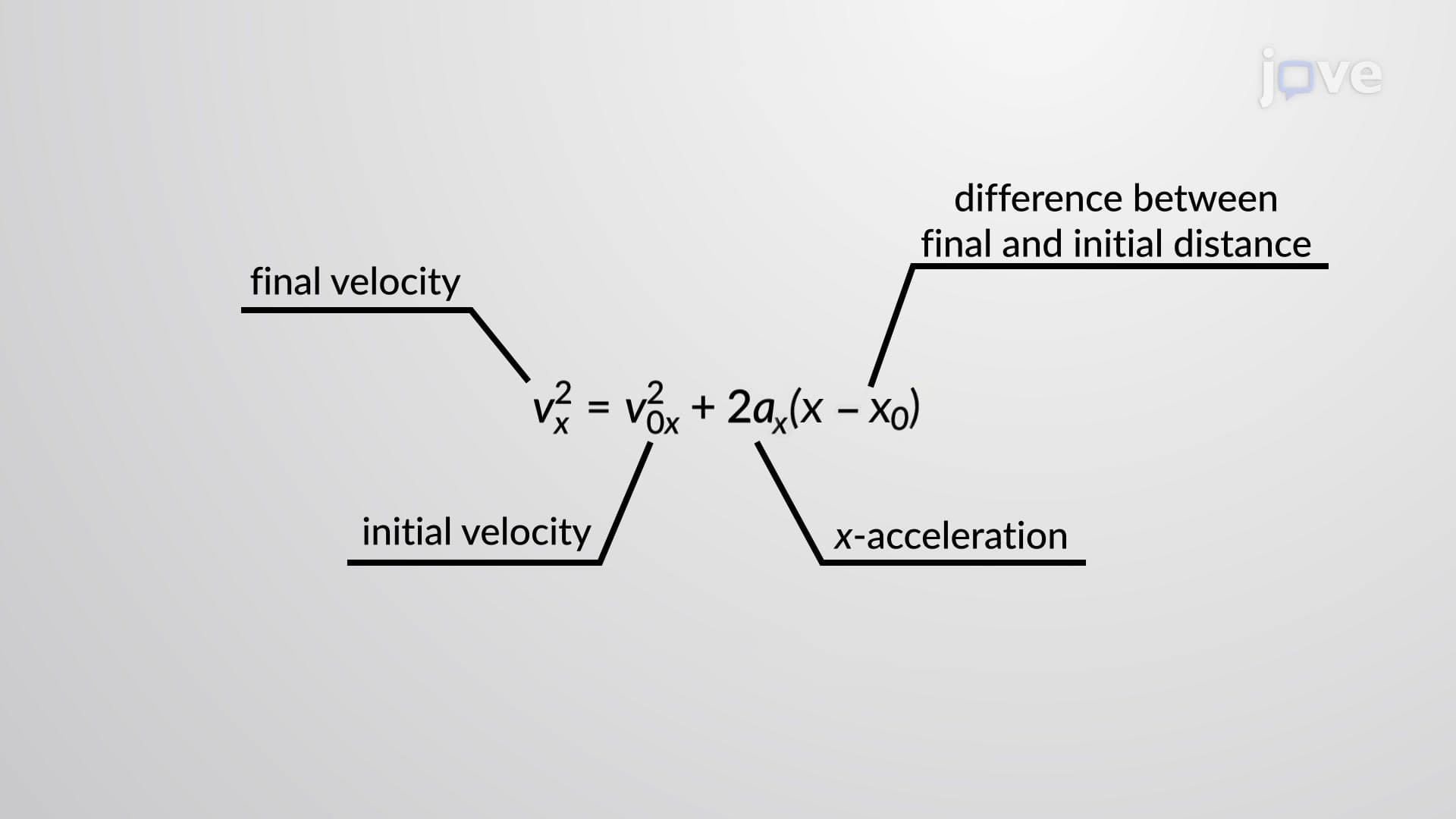

Video Summary: What Is Kinematic Equations Iii
Ever wondered how NASA calculates the exact velocity needed for a spacecraft to reach orbit without knowing the flight time? Kinematic equations III provides the mathematical foundation for solving motion problems where time is unknown but displacement, velocity, and acceleration are key variables. This time-independent equation enables engineers at SpaceX to determine launch parameters and helps physics students tackle complex projectile motion scenarios on AP exams. Watch the full video on JoVE Coach to master this concept with expert-led visuals and step-by-step explanations.
Kinematic equations III represents the third fundamental equation of motion in classical mechanics, distinguished by its independence from time variables. Unlike the first two kinematic equations that require time as a known quantity, this equation establishes a direct relationship between velocity, acceleration, and displacement. The mathematical expression v² = v₀² + 2a(x - x₀) becomes invaluable when analyzing motion scenarios where time cannot be easily measured or is irrelevant to the solution.
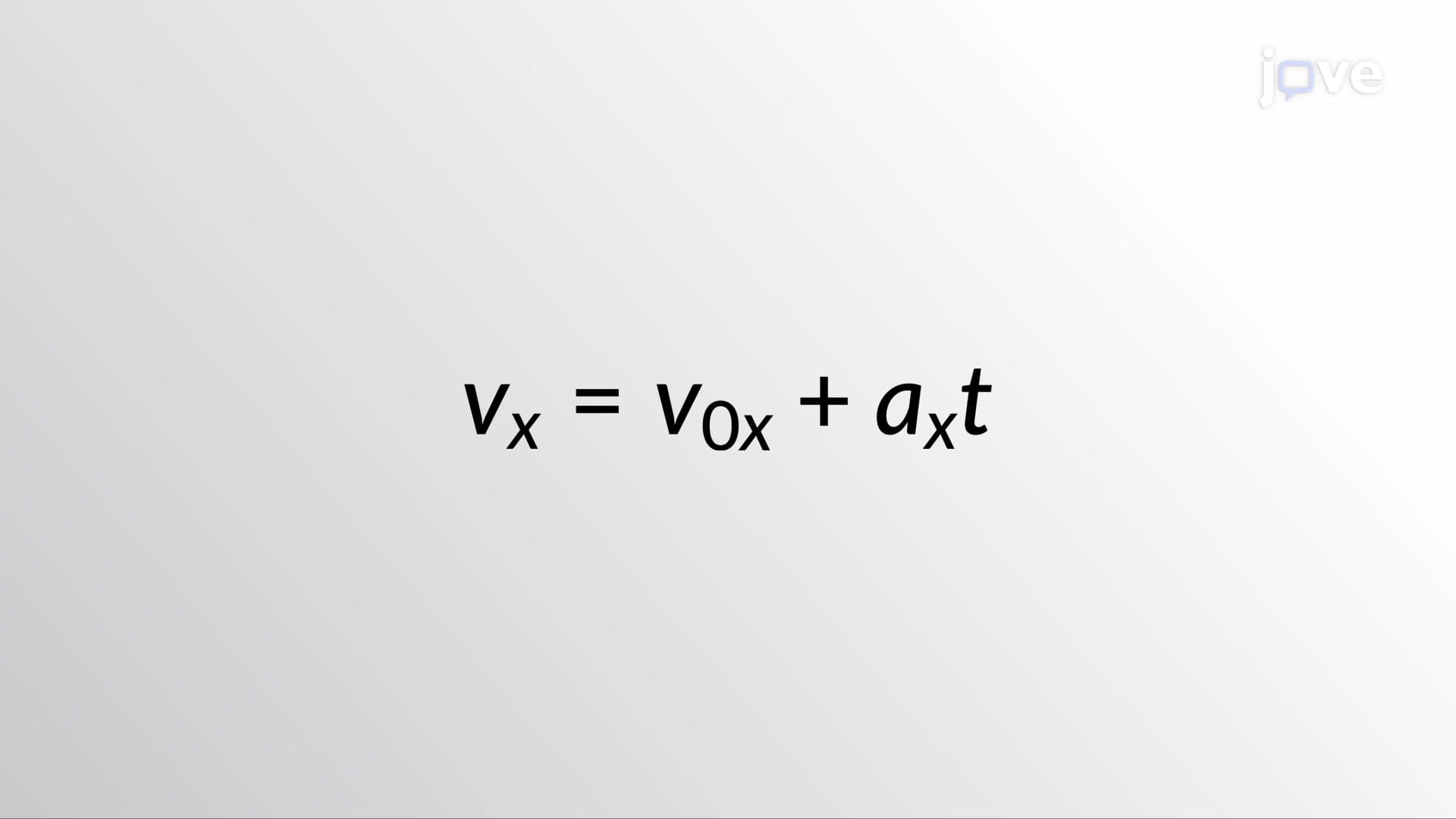
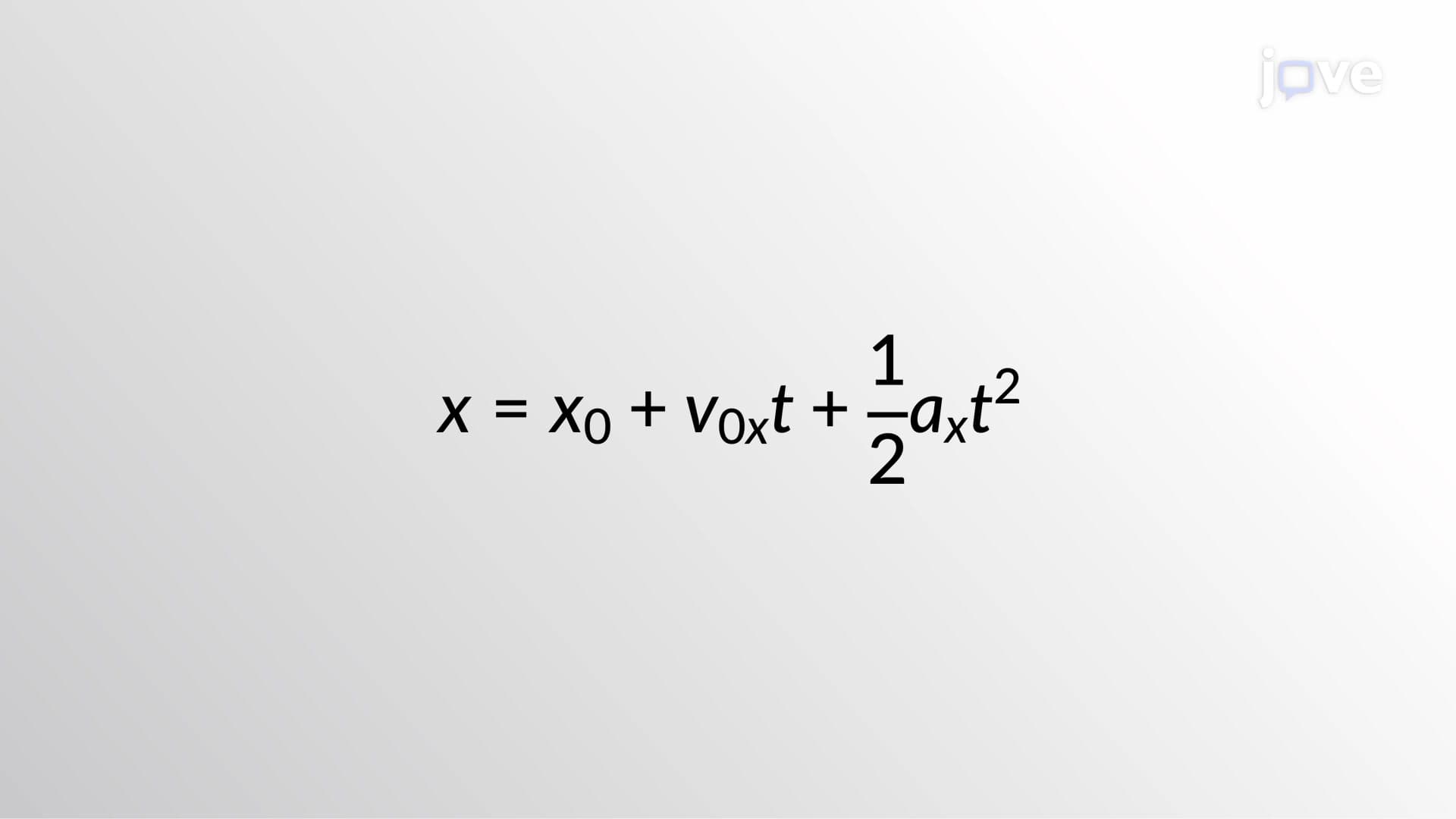
The kinematic equations III definition emerges from the algebraic manipulation of the first two kinematic equations. By solving the first equation (v = v₀ + at) for time and substituting this expression into the second equation (x = x₀ + v₀t + ½at²), we eliminate the time variable entirely. This process yields the elegant relationship where final velocity squared equals initial velocity squared plus twice the acceleration multiplied by the displacement. This derivation demonstrates the interconnected nature of kinematic principles and provides students with deeper insight into mathematical problem-solving techniques essential for AP Physics and college-level mechanics courses.
Understanding kinematic equations III proves crucial in automotive safety engineering, where collision analysis requires determining impact velocities from skid mark lengths and deceleration rates. NASCAR engineers use these calculations to design safer track barriers by analyzing crash dynamics without needing precise time measurements. Similarly, ballistics experts apply this equation to determine bullet velocities from penetration depths in forensic investigations. These real-world applications demonstrate why mastering this concept is essential for students pursuing STEM careers and performing well on standardized tests like the SAT Subject Test in Physics.
The fourth kinematic equation, x - x₀ = ½(v₀ + v)t, complements the third equation by providing an alternative approach when average velocity concepts are more intuitive. This equation derives from the definition of average velocity and proves particularly useful in problems involving uniformly accelerated motion. Students often encounter both equations on MCAT physics sections, where recognizing which formula to apply can significantly impact problem-solving efficiency and test performance.
Related Micro-courses