Loading video…


 15 Concepts
 61.9K views

Video Summary: What Is Propagation of Waves
Ever wonder why a straw looks bent in a glass of water? The propagation of waves explains this everyday optical illusion that demonstrates how light waves behave when moving between different materials. When waves travel from one medium to another with different densities, they undergo partial reflection and transmission, changing their behavior in predictable ways. This fundamental physics principle governs everything from fiber optic communications used by companies like Verizon to medical ultrasound imaging in US hospitals. Watch the full video on JoVE Coach to master this concept with expert-led visuals and step-by-step explanations.
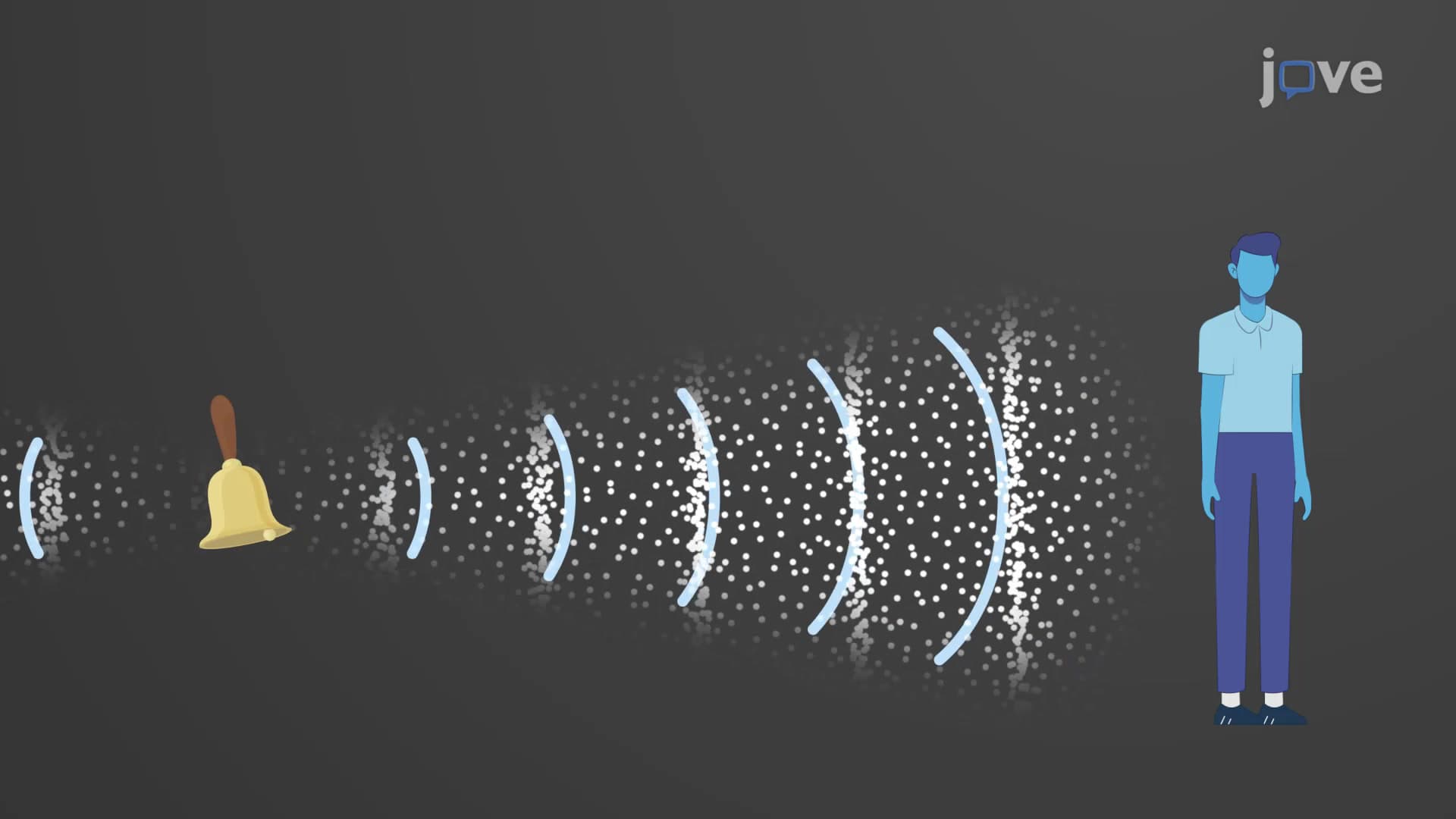
Propagation of waves refers to the movement of wave energy through space and matter, particularly focusing on how waves behave when encountering boundaries between different media. This fundamental concept in physics explains countless phenomena we observe daily, from the shimmering effect of heat waves rising from hot pavement to the way radio signals from stations like NPR travel through the atmosphere.
When waves encounter the interface between two different media, three critical processes occur simultaneously. First, partial reflection sends some wave energy back into the original medium. Second, partial transmission allows some energy to continue into the new medium. Third, the wave's speed changes based on the properties of the new medium, particularly its density and refractive index.
The propagation of waves definition encompasses these interactions, emphasizing that wave energy rarely transfers completely from one medium to another. Instead, the energy splits between reflected and transmitted components, with the proportions depending on the specific properties of both media involved.
The refractive index serves as a crucial parameter for understanding electromagnetic wave propagation. Defined as the ratio of light speed in vacuum to light speed in a given medium, this dimensionless quantity helps predict how waves will behave when crossing boundaries. For example, water has a refractive index of approximately 1.33, meaning light travels about 25% slower in water than in air.
US students preparing for AP Physics or college-level courses should understand that higher refractive indices correspond to denser media where waves propagate more slowly. This relationship explains why diamonds (refractive index ≈ 2.4) create such brilliant sparkles-light slows dramatically inside the gemstone, enabling multiple internal reflections.
What is propagation of waves in detail includes understanding phase relationships between incident, reflected, and transmitted waves. When waves travel from dense to rare media (like underwater light reaching the surface), reflected waves maintain the same phase as incident waves. However, when waves move from rare to dense media (like light entering water from air), reflected waves experience a 180-degree phase shift-effectively flipping upside down.
This phase behavior has practical implications in technologies used throughout the US, from anti-reflective coatings on eyeglasses to the design of optical fibers that carry internet data across the country. Understanding these principles helps students excel on standardized tests like the MCAT, where wave propagation questions frequently appear in the physics section.
Related Micro-courses