Loading video…


 6 Concepts
 5.3K views

Video Summary: What are Derivatives
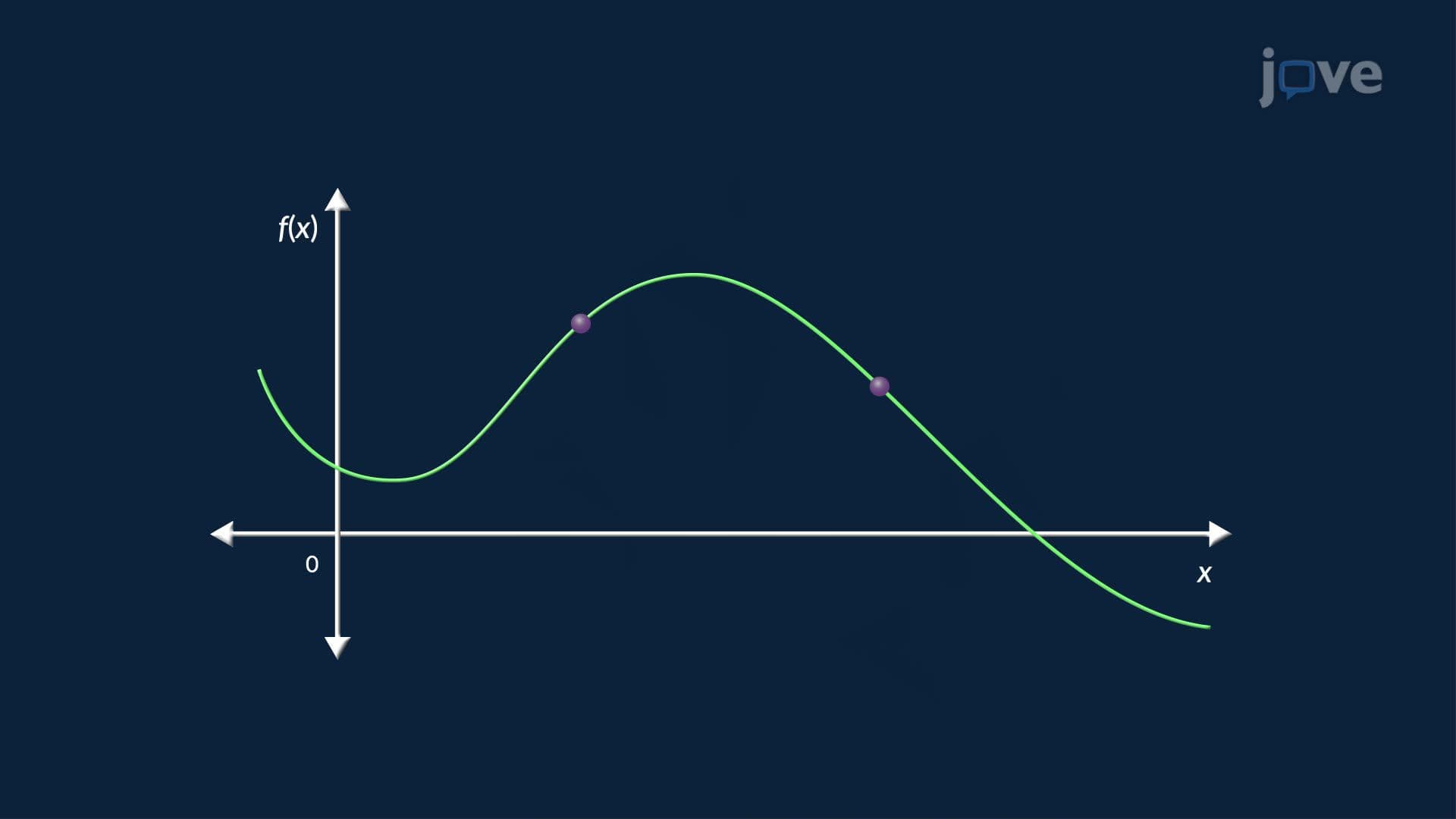
Ever wonder how engineers at NASA calculate the exact speed of a rocket at a precise moment, not over a minute, but at one instant in time? That's the power of derivatives basics in action. Derivatives measure the instantaneous rate of change of a function, representing the slope of a tangent line at any given point. Using the limit definition, even functions like square root reveal precise slope values. Watch the full video on JoVE Coach to master this concept with expert-led visuals and step-by-step explanations.
Derivatives sit at the heart of calculus and are one of the most powerful tools in mathematics. Simply put, a derivative tells you how fast something is changing at a single, precise moment. Think of it this way: if you're driving on I-95 and your GPS shows your current speed as 68 mph, that readout is a derivative, your instantaneous rate of change of position with respect to time. Understanding derivatives basics opens the door to physics, economics, biology, and virtually every quantitative field studied in US universities.
The formal definition of a derivative uses the concept of a limit. For a function f(x), the derivative at a point x is written as:
f'(x) = limit as h approaches 0 of [ f(x + h) − f(x) ] / h
This expression is called the difference quotient. As the increment h gets infinitely small, the average rate of change over an interval transforms into the instantaneous rate of change at a point. This is the same as zooming in on a curve until it looks like a perfectly straight line, and that line is the tangent line. On AP Calculus AB exams, students are frequently asked to apply this limit definition directly, so mastering it early is critical.
Before zooming in to a single point, mathematicians use secant lines, straight lines that connect two points on a curve, to approximate the rate of change over an interval. As the two points move closer together, the secant line approaches the tangent line. This transition from secant to tangent is exactly what the limit captures. Visualizing this progression helps students understand not just the algebra, but the geometric intuition behind derivatives explained in most introductory calculus courses across US colleges.
One of the most commonly tested ideas in AP Calculus and college-level courses is the relationship between differentiability vs continuity. A function must be continuous at a point to be differentiable there, but continuity alone is not enough. For example, the function f(x) = |x| (absolute value) is continuous everywhere, but it has a sharp corner at x = 0 where no unique tangent line exists, making it non-differentiable at that point. Similarly, a vertical tangent line, like the one that appears for the square root function at x = 0, produces an undefined slope, meaning the derivative does not exist there. Recognizing these edge cases is essential for both conceptual understanding and exam performance.
Derivatives aren't just abstract math, they describe the physical world. In physics, instantaneous velocity is the derivative of a position function with respect to time, a concept tested on the AP Physics and MCAT exams. In economics, the marginal cost of producing one more unit of a product is a derivative of the total cost function, a staple topic in US college microeconomics courses. In medicine, pharmacokinetics models how quickly a drug concentration changes in the bloodstream, relying directly on derivative-based equations. Whether you're preparing for the AP Calculus exam, a college midterm, or a career in STEM, a solid grasp of derivatives basics is non-negotiable.
Related Micro-courses