Loading video…


 6 Concepts
 5.3K views

Video Summary: What are Higher Derivatives
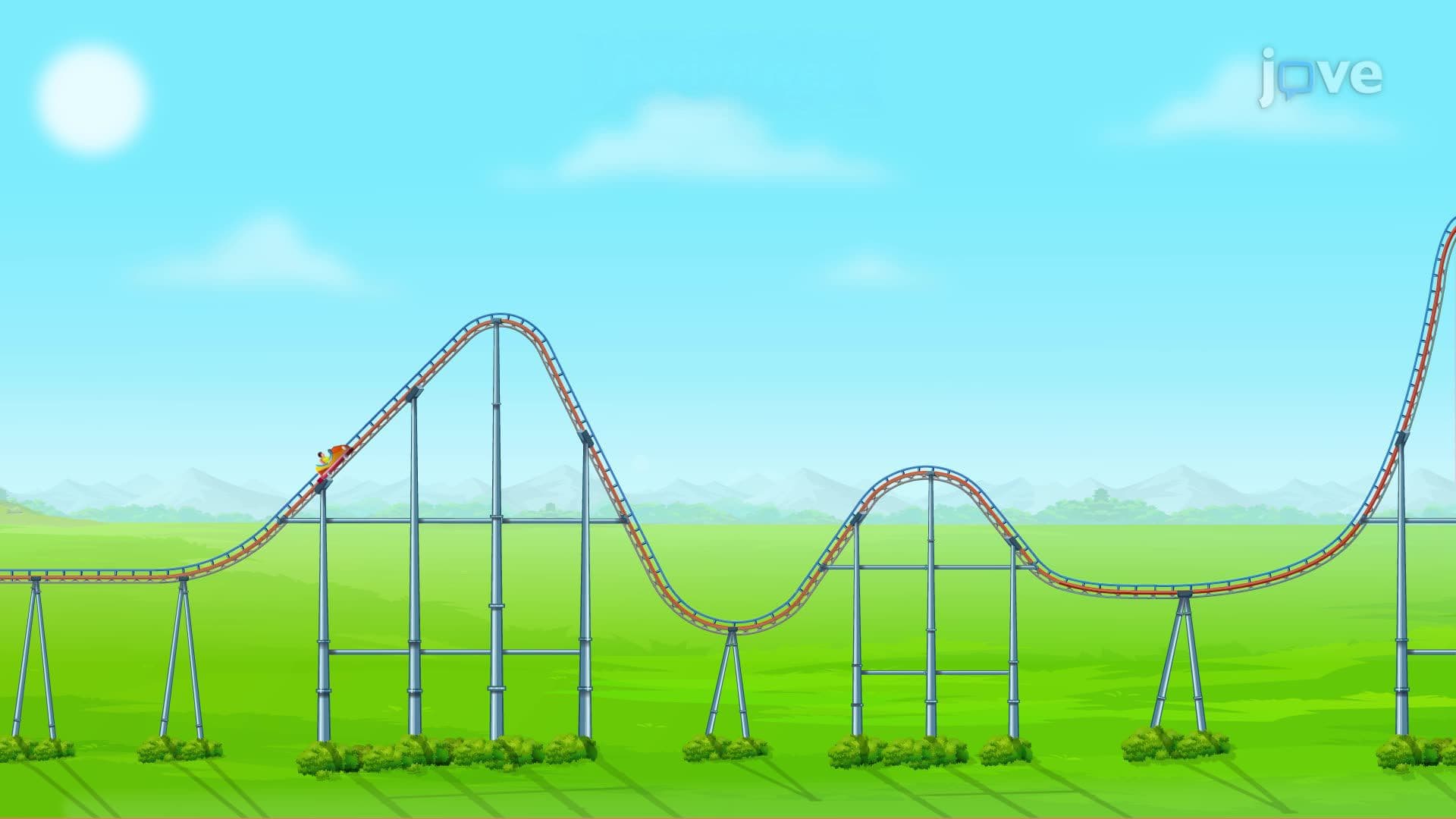
Ever wonder why a rollercoaster feels smooth at some points and jolting at others? That sensation is explained by higher derivatives. Higher derivatives basics reveal that motion isn't just about speed, it's about how speed *changes*, and how *that change* changes. NASCAR engineers, for example, use these concepts to optimize acceleration profiles. Watch the full video on JoVE Coach to master this concept with expert-led visuals and step-by-step explanations.
When most students first encounter calculus, the derivative feels like the finish line, find the slope of a curve, done. But higher derivatives reveal that the story doesn't stop there. A derivative *can itself be differentiated*, producing a second derivative, a third, and beyond. Each level uncovers a deeper layer of how a quantity is changing, making higher derivatives one of the most powerful tools in both pure mathematics and applied science.
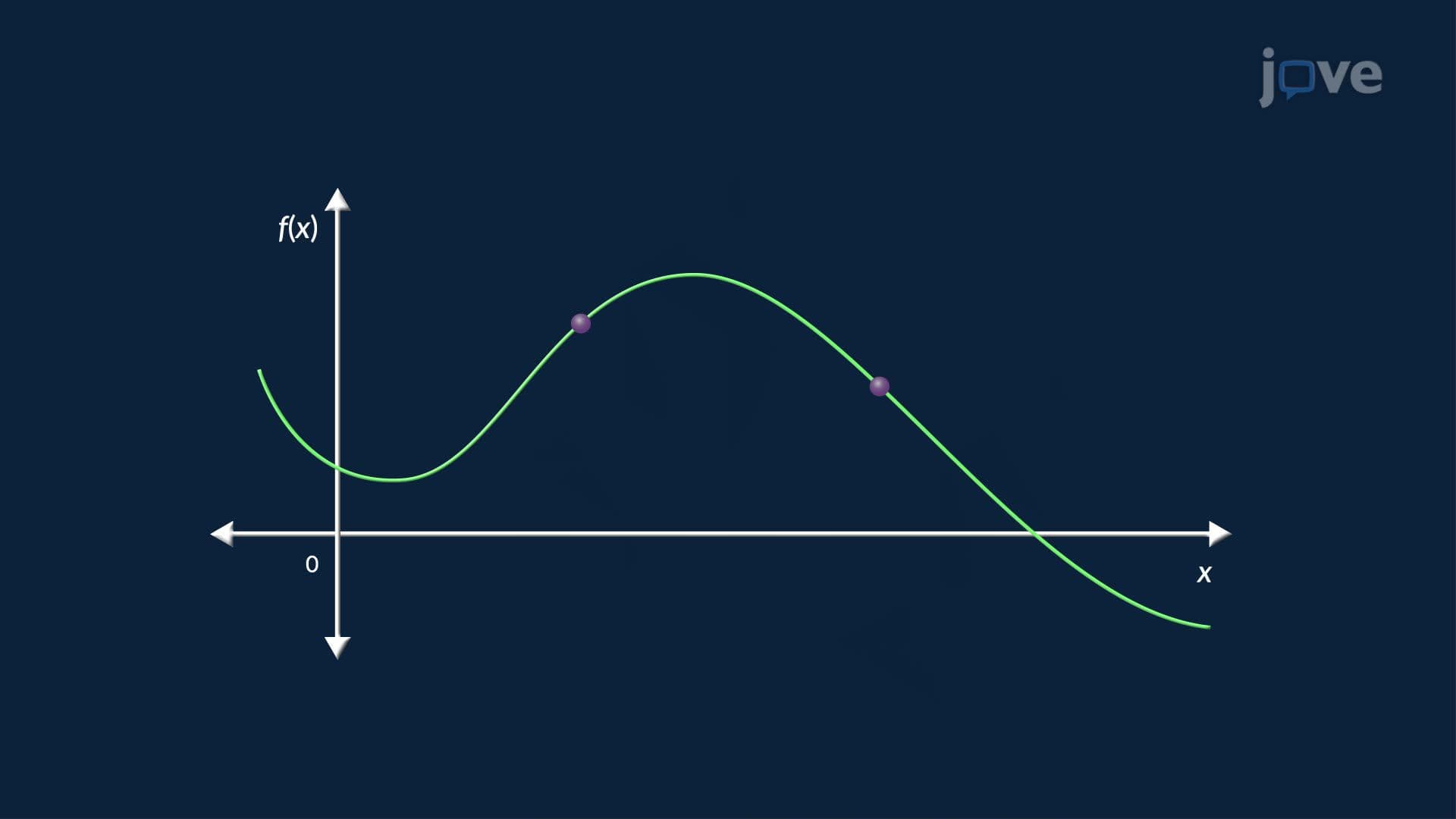
Start with a position function, often written as s(t) or x(t), which describes where an object is at any given moment. The first derivative, s'(t) or ds/dt, gives the instantaneous velocity, the rate at which position changes with time. Geometrically, this is the slope of the tangent line to the position-time curve at any point, which itself is the limit of secant lines as the interval between two points shrinks to zero. On an AP Calculus AB exam, this limit definition of the derivative is tested directly, so understanding it conceptually is non-negotiable.
Differentiating velocity produces the second derivative, written as s''(t) or d²s/dt². Physically, this is acceleration, the rate at which velocity changes. When the second derivative is positive, the object is speeding up (or curving upward on a graph); when negative, it's slowing down or curving downward. In AP Calculus BC and most college Calculus I courses, the second derivative is also used to determine the concavity of a function and identify inflection points, places where the rate of change shifts direction. A car merging onto a US highway accelerates smoothly when the second derivative is steady, and abruptly when it spikes.
The third derivative of position is called jerk, and it has a very real physical meaning. Jerk measures how rapidly acceleration itself is changing. A smooth, gradual press on the gas pedal produces low jerk; slamming the brakes produces high jerk. This is why modern adaptive cruise control systems in vehicles (standard in many 2024 US car models) are engineered to minimize jerk, making rides more comfortable and mechanically less stressful. In physics and engineering courses, jerk is the entry point into an entire family of higher-order motion descriptors, including "snap," "crackle," and "pop" (the 4th, 5th, and 6th derivatives), though these rarely appear in standard curricula.
A critical prerequisite for higher derivatives is understanding differentiability vs continuity. A function must be continuous to be differentiable, but continuity alone doesn't guarantee differentiability, a sharp corner or cusp breaks the derivative chain. Higher derivatives only exist if each prior derivative is itself differentiable. Notation matters on exams: the nth derivative is written as f⁽ⁿ⁾(x) or dⁿy/dxⁿ. On the AP Calculus BC exam, higher derivatives appear in Taylor and Maclaurin series, where the nth derivative at a point determines each term's coefficient. In college physics courses, second derivatives dominate kinematics and Newton's second law (F = ma), anchoring higher derivatives firmly in the real world.
Related Micro-courses