Loading video…


 6 Concepts
 5.3K views

Video Summary: Problem Solving in Derivatives
Did you know that fish growth rates can reveal calculus in action? Problem solving in derivatives becomes tangible when analyzing how brook trout weight gain responds to changing water temperatures, a real-world dataset studied in US fisheries science. By applying forward, central, and backward difference methods, derivatives estimate the rate of change at each data point. Watch the full video on JoVE Coach to master this concept with expert-led visuals and step-by-step explanations.
Problem solving in derivatives is one of the most practically powerful skills in calculus. At its core, it answers a deceptively simple question: *how fast is something changing right now?* Whether you are tracking a car's instantaneous velocity on a highway, measuring a drug's absorption rate in a clinical trial, or estimating fish growth in response to environmental temperature, derivatives give you the mathematical language to describe change precisely. For high school and college students, mastering this skill is essential not just for exams, but for understanding the world quantitatively.
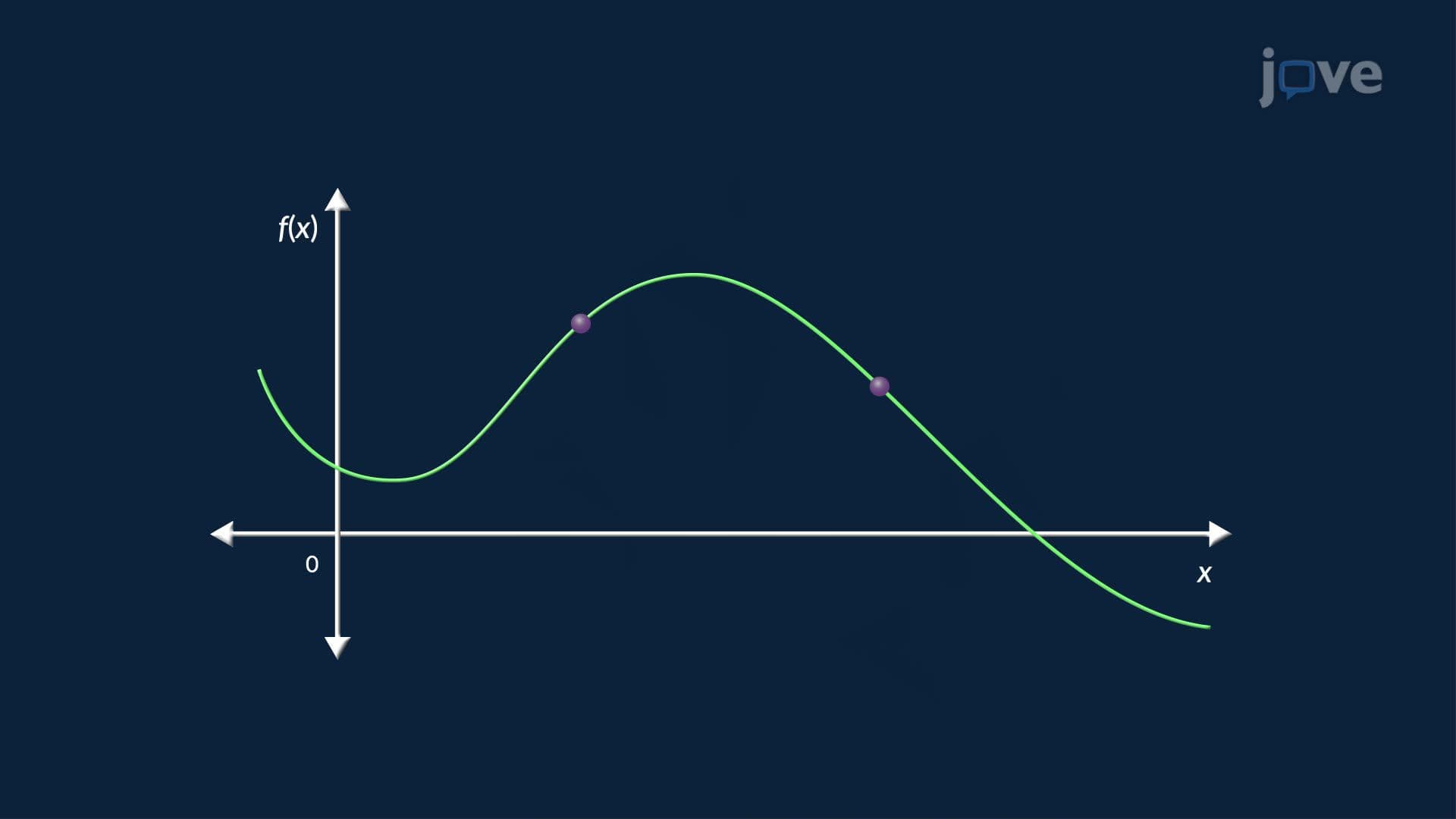
The concept of the derivative begins with the secant line, a straight line connecting two points on a curve. The slope of a secant line represents the *average* rate of change between those two points. As the two points move closer together, the secant line approaches the tangent line, whose slope represents the *instantaneous* rate of change at a single point. This transition is formalized through the limit definition of derivative:
f'(x) = lim [h → 0] of [f(x + h) − f(x)] / h
This formula is foundational in AP Calculus AB and BC, and understanding it geometrically, as the limiting position of secant lines, gives students an intuitive anchor before working through algebraic manipulation.
When data comes in a table rather than a clean algebraic function, as it often does in science and engineering, you estimate derivatives numerically. Three standard approaches apply depending on where a data point sits:
In the brook trout example, a type of dataset commonly used in US environmental biology courses, central differences at interior temperature values produce more reliable growth-rate estimates than edge-point approximations. The resulting table and plot reveal a consistent decline in weight gain as temperature rises, illustrating a negative rate of change across the dataset.
A common point of confusion in calculus courses involves differentiability vs. continuity. Every differentiable function is continuous, but not every continuous function is differentiable. For example, the absolute value function f(x) = |x| is continuous at x = 0 but has a sharp corner there, making the derivative undefined at that point. Recognizing this distinction is tested directly on the AP Calculus AB exam and in college-level calculus midterms. In practice, this matters when modeling real phenomena: a population count or temperature dataset may be continuous but have abrupt shifts where derivative estimates become unreliable.
Understanding how to find the derivative using the limit definition, how to interpret what the derivative represents physically (instantaneous velocity, growth rate, marginal cost), and when numerical methods are appropriate, these skills together define what problem solving in derivatives is truly about.
Related Micro-courses