Loading video…

 6 Concepts
 5.3K views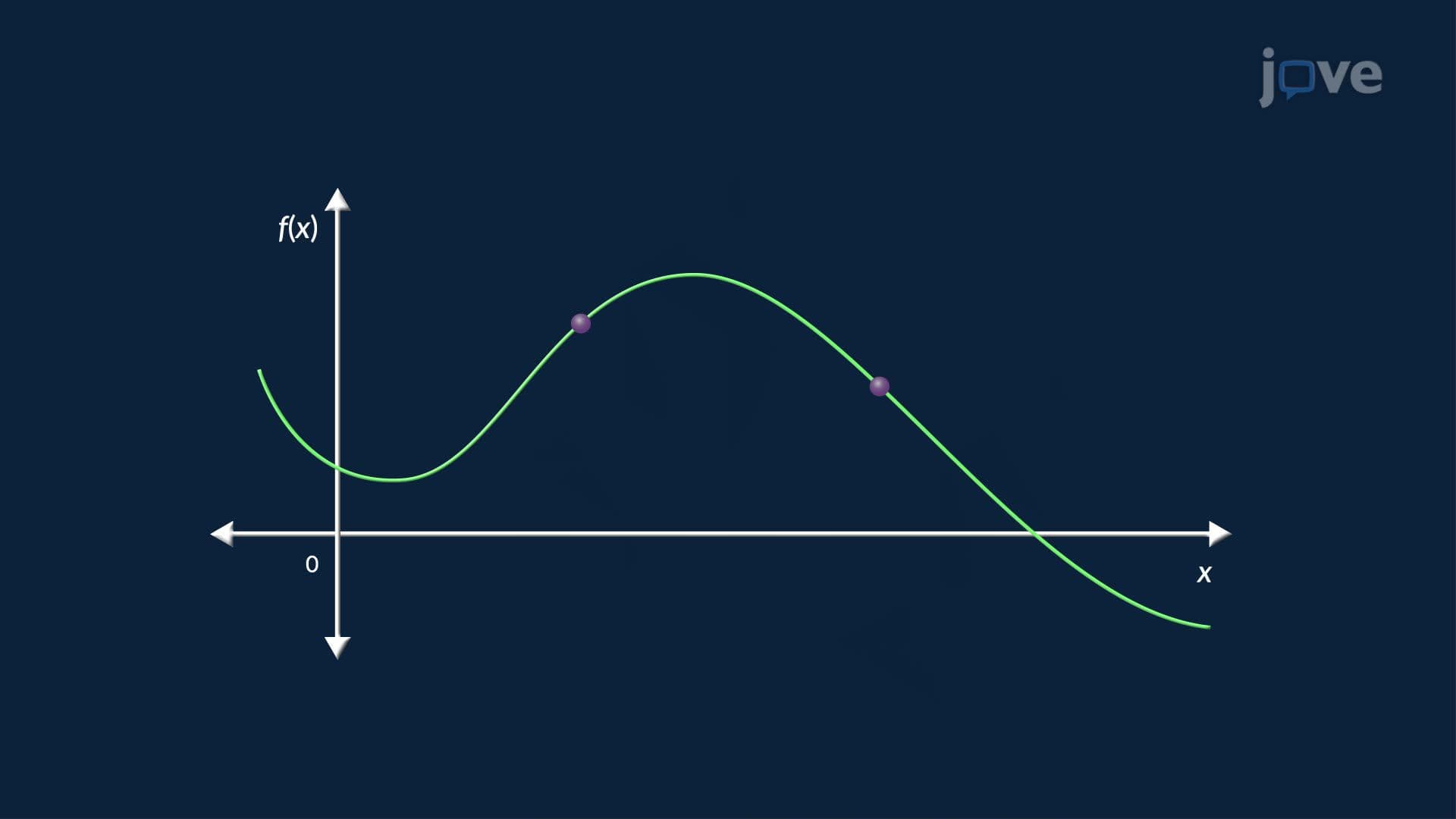

Video Summary: The Derivative as a Function Explained
Did you know that every time a Tesla's cruise control adjusts your speed, it's computing a derivative in real time? Understanding the derivative as a function unlocks how mathematicians and engineers describe change precisely. The derivative as a function basics reveal how slope transforms from a single-point measurement into an entirely new function. Watch the full video on JoVE Coach to master this concept with expert-led visuals and step-by-step explanations.
Most students first encounter slope as a fixed number describing a straight line. The derivative as a function explained takes that idea several steps further: instead of slope at one point, you get a *rule* that computes slope everywhere. Formally, the derivative function f′(x) is defined using the limit definition of the derivative:
f′(x) = lim [h → 0] of [f(x + h) − f(x)] / h
This formula asks: what happens to the average rate of change, the slope of a secant line connecting two points, as those two points get infinitely close together? When that limiting process works at every point in the domain, the result is a brand-new function that maps each input to its corresponding instantaneous slope.
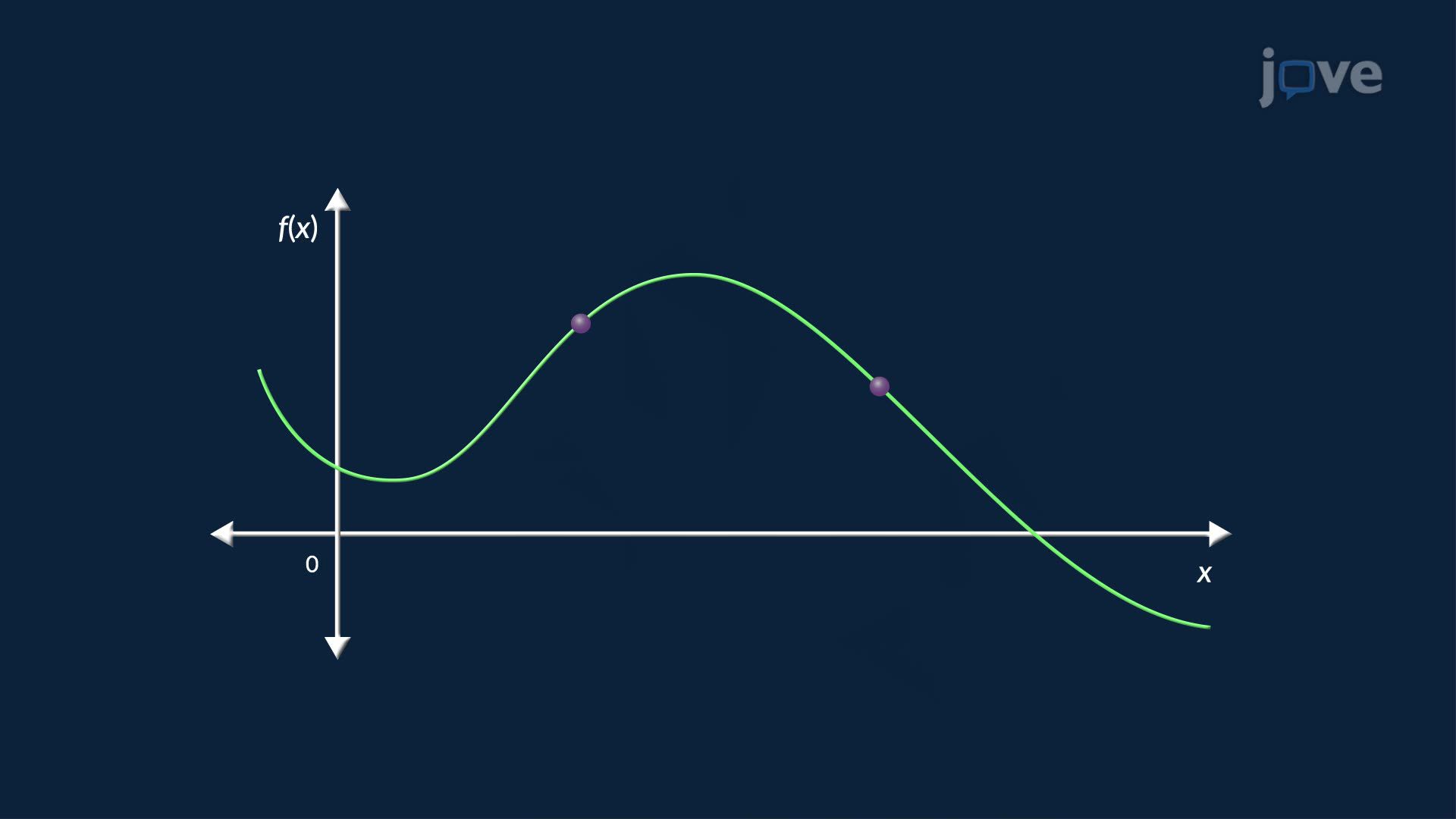
Visualizing this process geometrically makes the concept concrete. Draw any smooth curve, say, a position-vs-time graph of a car on a California highway. A secant line cuts through two points on the curve and gives the average rate of change over that interval. As the second point slides toward the first, the secant line rotates and, in the limit, becomes the tangent line at that point. The slope of that tangent line is exactly f′(x) at that input. When the tangent is horizontal, slope zero, the derivative equals zero. When the curve rises steeply, the derivative is large and positive. This graphical reasoning is frequently tested on AP Calculus AB and BC exams and is a foundational skill in college Calculus I courses nationwide.
One of the most powerful uses of the derivative as a function is interpreting its sign:
These sign relationships underpin the First Derivative Test, a technique students use constantly from AP Calculus through college multivariable calculus. Recognizing these patterns on a graph without calculation is a high-value skill on timed exams.
The clearest physical interpretation of the derivative is instantaneous velocity. If a function s(t) describes an object's position over time, then s′(t) gives velocity at any instant, not the average speed over a trip, but the exact reading on a speedometer at one moment. Taking the derivative once more yields acceleration. NASA engineers use this layered derivative logic when calculating spacecraft trajectories; automotive engineers at Ford or GM apply it when modeling engine performance. In economics, the derivative of a cost function gives marginal cost, one of the most-used concepts in introductory microeconomics courses at US universities. Wherever a quantity changes, the derivative as a function explained provides the precise language to describe *how fast* that change is happening.
Related Micro-courses