Loading video…


 22 Concepts
 8.4K views

Video Summary: What are Derivatives of Simple Functions
Did you know a roller coaster's thrilling twists can be described using math? The derivatives of simple functions basics explain exactly how slopes change at any point along a curve, a foundational idea in calculus. At NASA's Kennedy Space Center, engineers use this same concept to model rocket trajectories. Understanding what are derivatives of simple functions unlocks the power rule, exponential behavior, and more. Watch the full video on JoVE Coach to master this concept with expert-led visuals and step-by-step explanations.
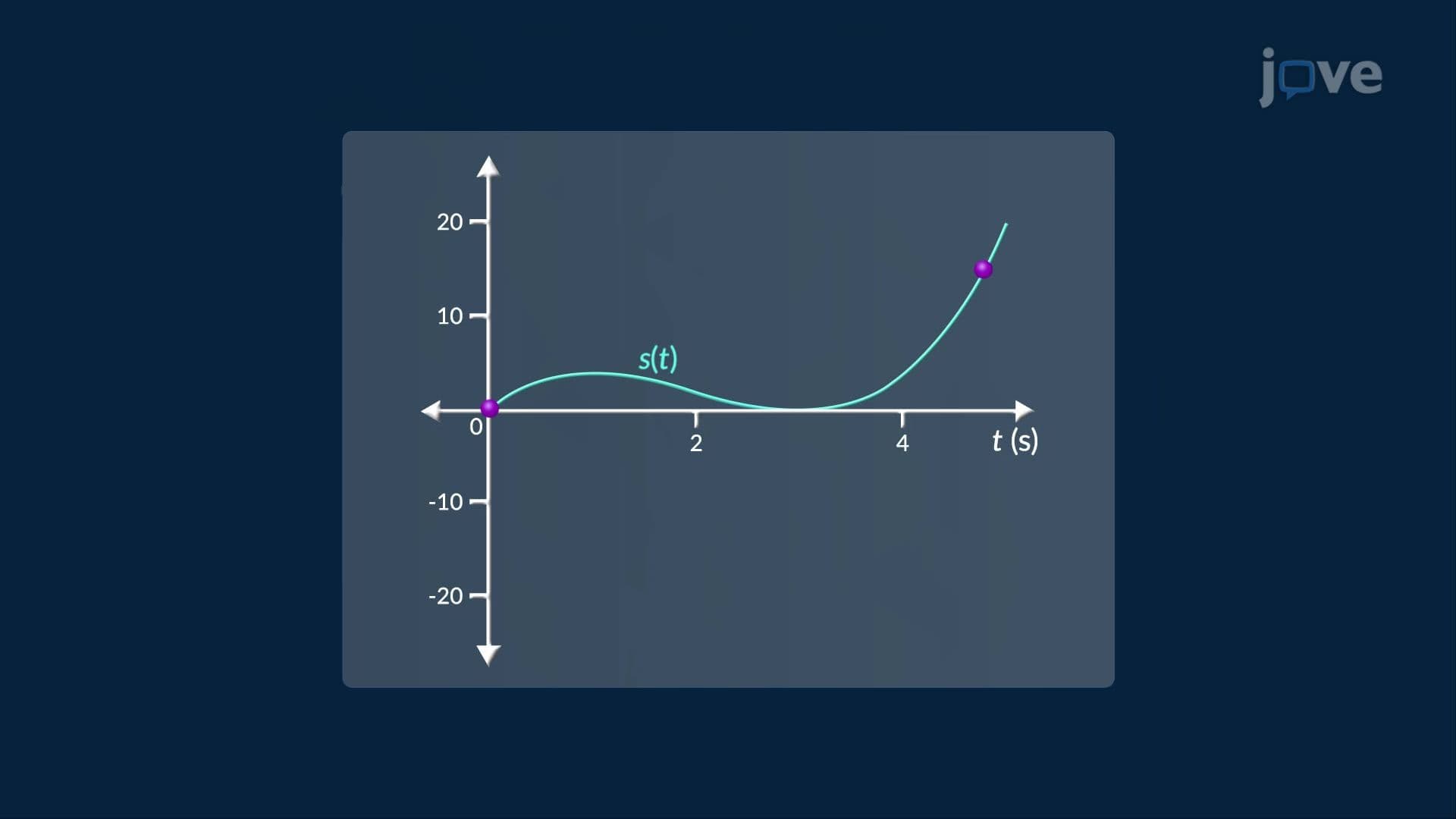
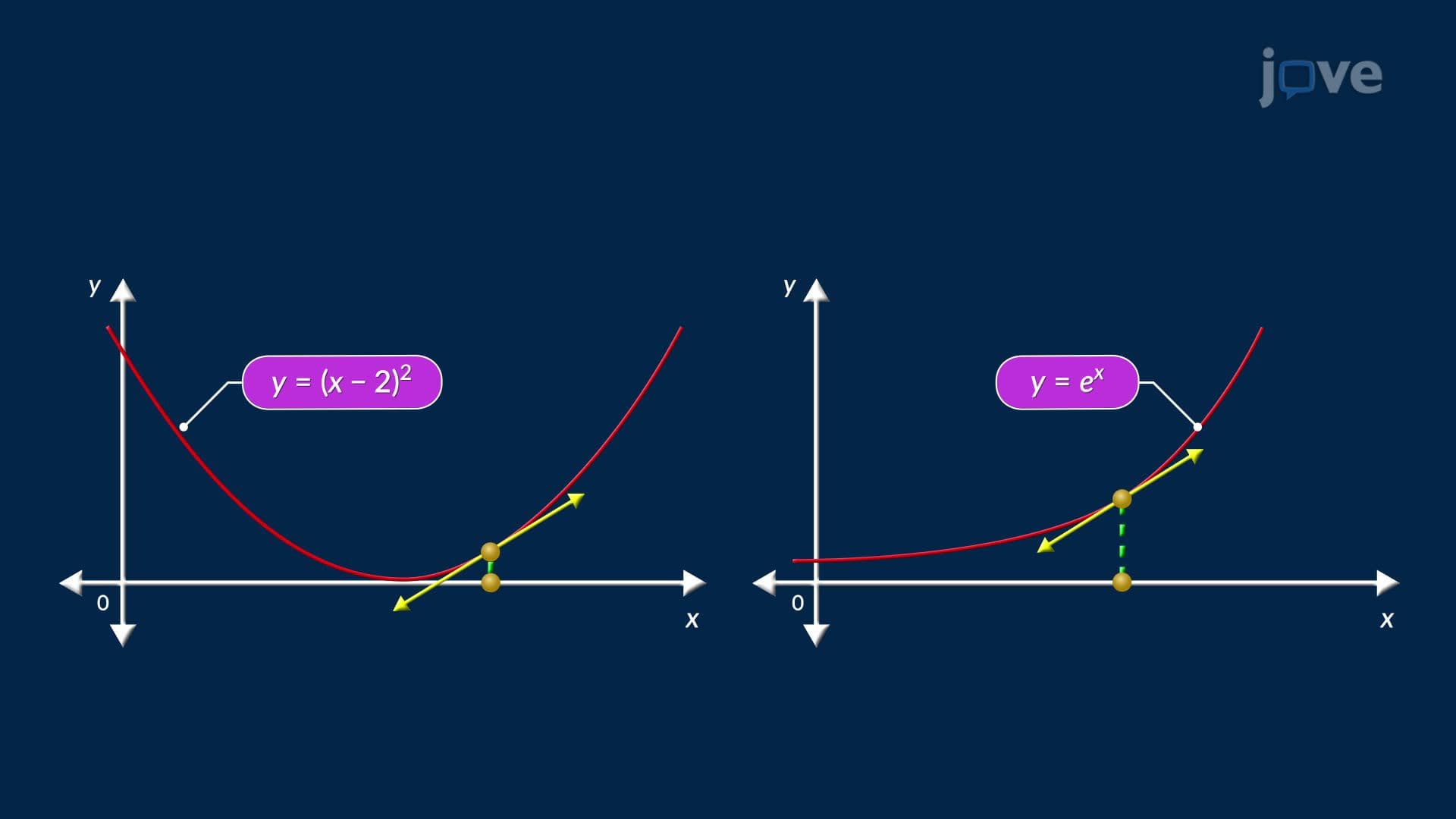
Derivatives of simple functions sit at the very heart of calculus. Before you can tackle advanced techniques like implicit differentiation or higher-order derivatives, you need a solid command of how basic functions behave under differentiation. Simply put, a derivative tells you the slope of a function at any specific point, or more precisely, the instantaneous rate at which the function's output changes with respect to its input.
Start with the simplest case: a constant function, such as f(x) = 7. No matter what value x takes, the output never changes, so the slope is always zero. This is the derivative of a constant, always zero, no exceptions. Next, consider a linear function like f(x) = x, which graphs as a straight line at a 45-degree angle. Its derivative is 1, meaning the slope is perfectly uniform everywhere. Scale that line with a coefficient, say f(x) = 5x, and the derivative becomes that coefficient, 5, reflecting the steeper but still constant incline. These foundational results appear frequently on AP Calculus AB exams and college midterms as entry-level differentiation problems.
Most real-world curves are modeled by polynomial functions, and this is where the power rule becomes indispensable. The power rule states: if f(x) = x^n, then the derivative f'(x) = n · x^(n−1). For example, if f(x) = x^3, then f'(x) = 3x^2. This single rule handles a wide range of functions efficiently. In AP Calculus BC and university-level Calculus I courses across the US, the power rule is among the first differentiation tools students master, and it also underpins more complex techniques like the product rule and the quotient rule, which handle products and ratios of functions respectively.
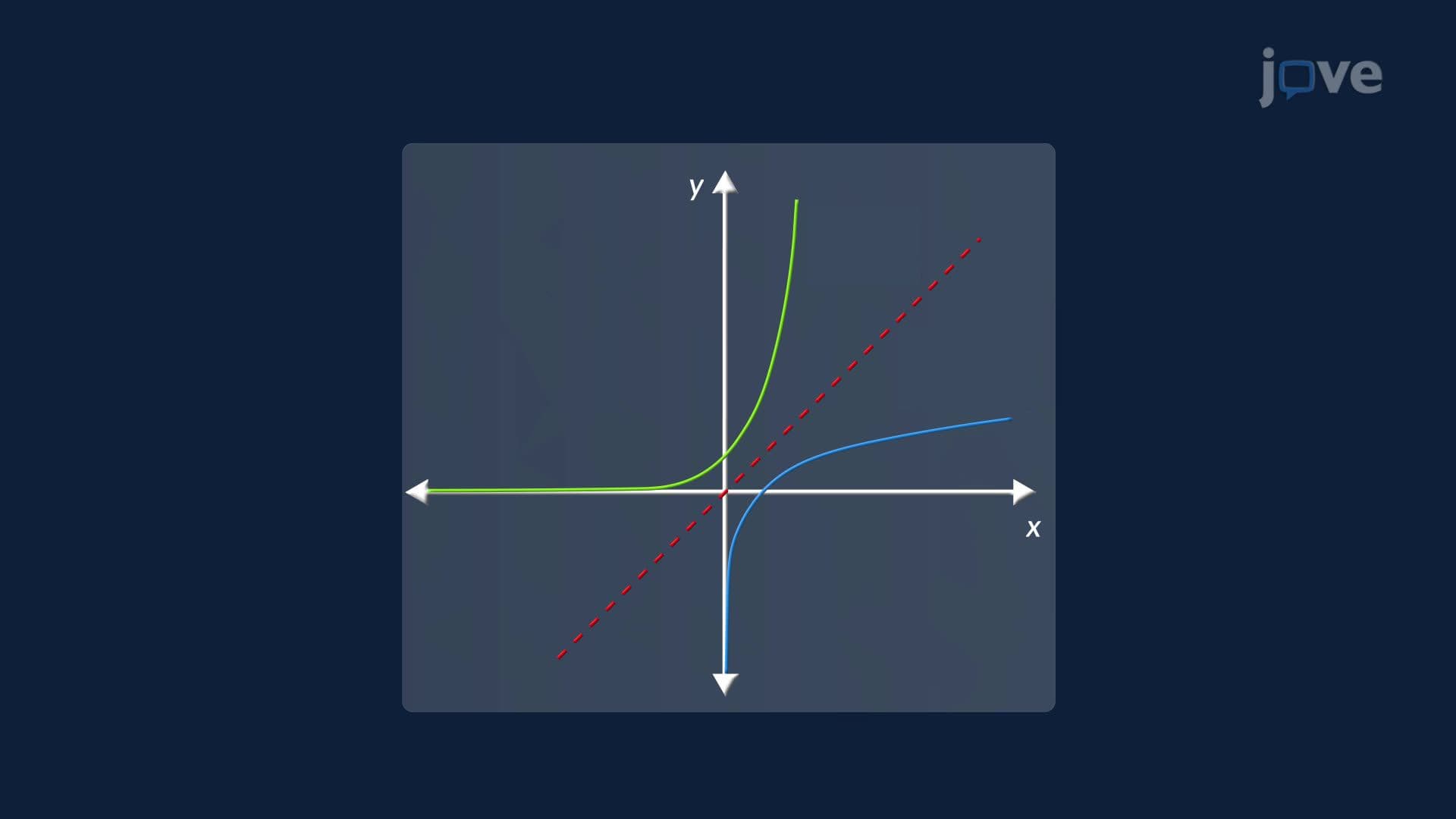
Exponential functions stand apart from polynomials in a remarkable way: their derivative is proportional to the function itself. For the natural exponential function f(x) = e^x, the derivative is simply f'(x) = e^x, it reproduces itself perfectly. This property makes exponential functions essential in modeling population growth, compound interest in US financial markets, and radioactive decay. Understanding this behavior also prepares students for the chain rule, where exponential functions with composite arguments, like e^(3x), require an additional multiplicative factor from the inner function's derivative.
Mastering the derivatives of simple functions explained here directly supports every higher-level differentiation technique. The product rule combines two functions multiplied together; the quotient rule handles division between functions; the chain rule manages composite functions; and implicit differentiation works when y cannot be isolated easily. Even derivatives of trigonometric functions, such as the derivative of sin(x) being cos(x), follow patterns you can verify using limit definitions rooted in these simple cases. On exams like the AP Calculus AB/BC, MCAT, and college-level STEM midterms, questions almost always layer these rules on top of the simple function derivatives covered here. Build this foundation well, and the advanced material becomes significantly more approachable.
Related Micro-courses