Loading video…


 22 Concepts
 8.4K views

Video Summary: Application of Linearization and Approximation Explained
How does a drone navigating mountainous terrain in Colorado estimate its altitude without GPS? The application of linearization and approximation makes this possible by replacing complex exponential pressure-altitude equations with simple linear estimates. This core calculus concept, also called Application of Linearization and Approximation Explained, lets engineers compute rapid, accurate altitude changes from tiny pressure shifts. Watch the full video on JoVE Coach to master this concept with expert-led visuals and step-by-step explanations.
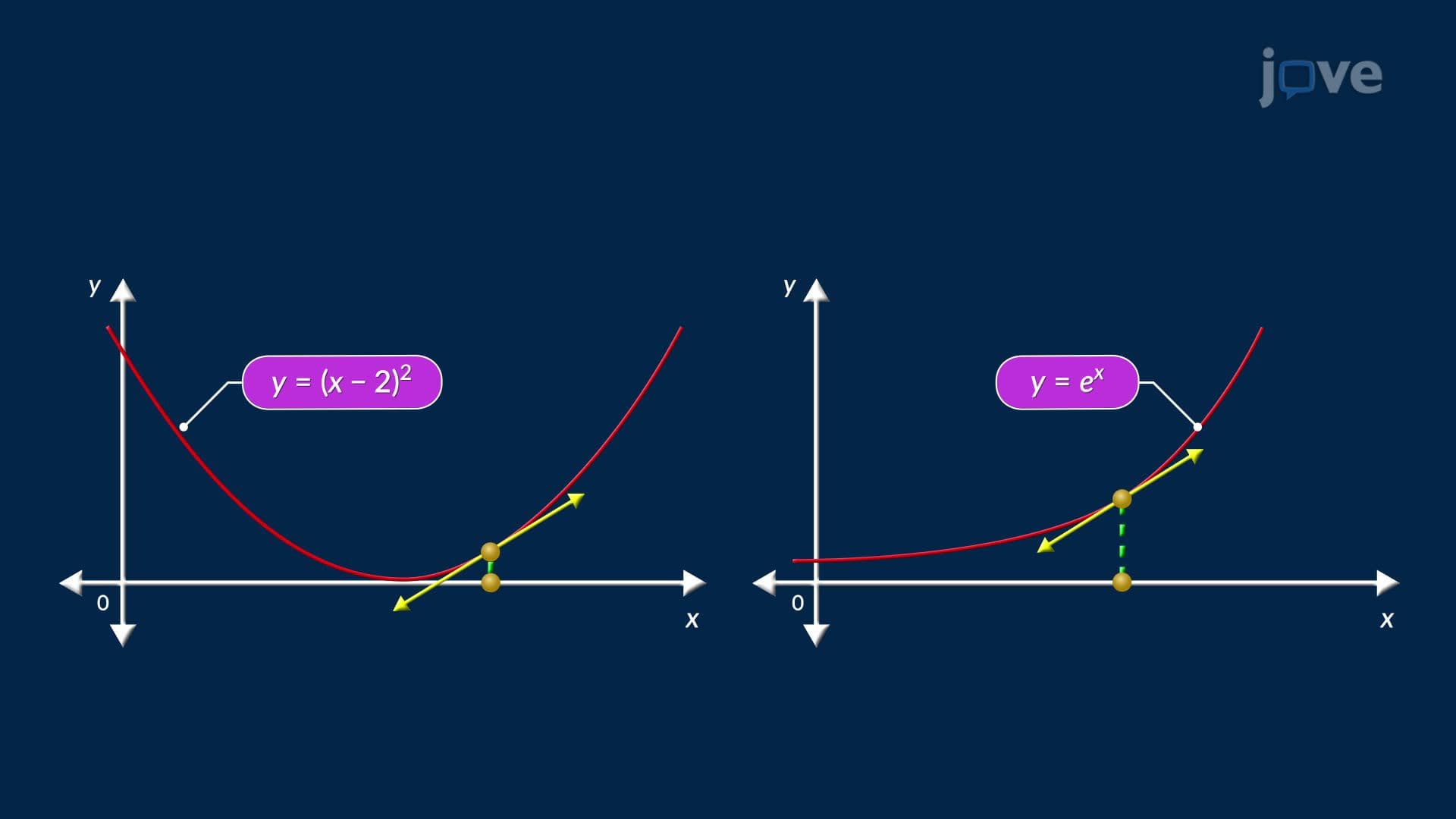
The application of linearization and approximation is one of the most practical tools introduced in a first-semester calculus course. At its core, it answers a powerful question: *When a function is too complicated to evaluate quickly, can a straight line do the job well enough?* The answer, near a chosen point, is almost always yes. Linearization replaces a curved, complex function with its tangent line at a specific input value, producing estimates that are fast to compute and surprisingly accurate for small changes.
This concept appears in AP Calculus AB and BC, college Calculus I courses nationwide, and even shows up in physics and engineering coursework where exact formulas are computationally expensive.
Every linearization follows a consistent three-step structure:
1. Choose the initial point (a): This is the known input value where the approximation is centered, for example, a pressure reading of 90 kilopascals on a drone altimeter. 2. Evaluate the original function at that point, f(a): This gives the exact known output, the actual altitude at the starting pressure. 3. Find the derivative f'(a) and build the linear equation: The derivative acts as the slope. The full linearization formula is:
L(x) = f(a) + f'(a) · (x − a)
This equation is simply the point-slope form of a line, a concept already familiar from algebra. The calculus upgrade is using the *derivative* as the slope rather than a value read from a graph.
To apply linearization correctly, students must first differentiate the original function accurately. Depending on the function's structure, this requires choosing the right differentiation rule:
In AP Calculus and college midterms, students are often tested on setting up the linearization correctly *after* taking a messy derivative, so mastering these rules is non-negotiable.
Beyond drone navigation, linearization is widely used across US industries and academic disciplines:
Higher-order derivatives extend this idea further: while linearization uses the first derivative, higher-order derivatives form the basis of Taylor polynomials, which are the natural next step after mastering basic approximation.
Related Micro-courses