Loading video…


 22 Concepts
 8.4K views

Video Summary: Derivatives of Inverse Trigonometric Functions Explained
Ever wonder how a radar system tracks a fast-moving aircraft without losing it? The answer lies in the derivatives of inverse trigonometric functions. This concept, central to *Derivatives of Inverse Trigonometric Functions Explained*, reveals why radar systems fail when a plane flies directly overhead: a tiny positional change causes a massive angle shift. US air traffic control systems face this exact sensitivity problem. Watch the full video on JoVE Coach to master this concept with expert-led visuals and step-by-step explanations.
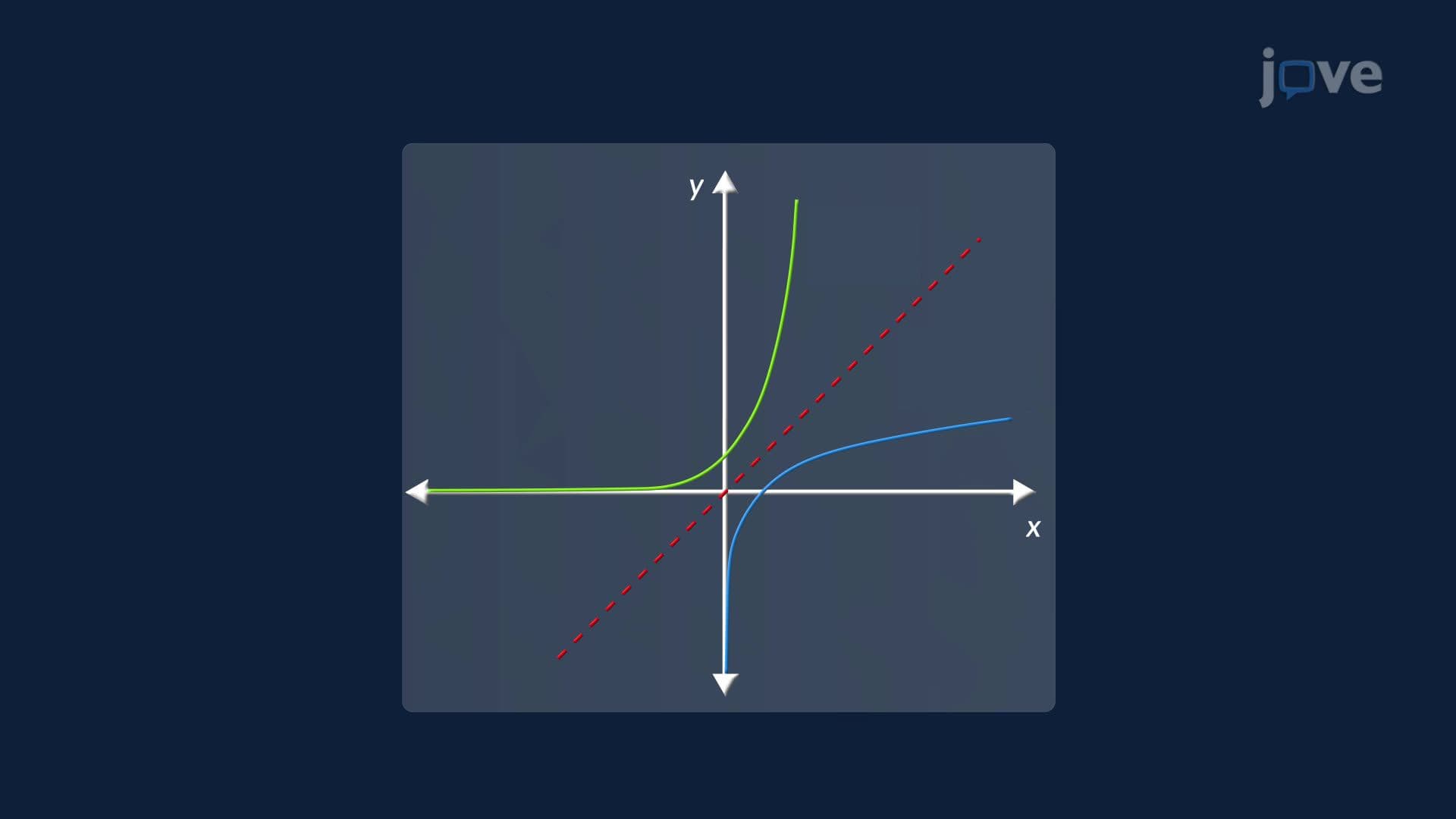
Inverse trigonometric functions, arcsin, arccos, arctan, arccot, arcsec, and arccsc, reverse the input-output relationship of standard trig functions. But unlike their counterparts, their derivatives do not produce other trig functions. Instead, they yield algebraic expressions involving square roots and polynomials. Understanding these derivatives is critical for AP Calculus BC students, college calculus courses, and anyone working with physics or engineering models in the US.
You cannot differentiate arcsin x directly using basic rules. The workaround is implicit differentiation. Start by writing y = arcsin x, then rewrite it as sin y = x. Differentiating both sides with respect to x gives cos y · (dy/dx) = 1, so dy/dx = 1 / cos y.
Now, cos y is not in terms of x, yet. Using the Pythagorean identity sin²y + cos²y = 1, you get cos y = √(1 − sin²y). Since sin y = x, substitute to get cos y = √(1 − x²). The result: d/dx [arcsin x] = 1 / √(1 − x²), valid for x in (−1, 1). This step-by-step logic, setting up, differentiating implicitly, applying an identity, and substituting back, is the same framework used to derive all six inverse trig derivatives.
Once you understand the arcsin derivation, the rest follow similar logic:
A useful pattern: inverse co-functions (arccos, arccot, arccsc) always carry a negative sign relative to their paired function. On AP Calculus exams, this symmetry helps students quickly check their answers.
In real exam problems, inverse trig functions rarely appear alone. You will often need to combine them with the chain rule. For example, d/dx [arctan(3x²)] requires recognizing 3x² as an inner function: the result is (1 / (1 + (3x²)²)) · 6x = 6x / (1 + 9x⁴).
When inverse trig functions appear multiplied by polynomials, the product rule applies. For expressions like x · arcsin x, differentiate as (1)(arcsin x) + x · (1/√(1−x²)). Quotient rule problems appear in college-level calculus courses and standardized exams when these functions appear in numerators or denominators.
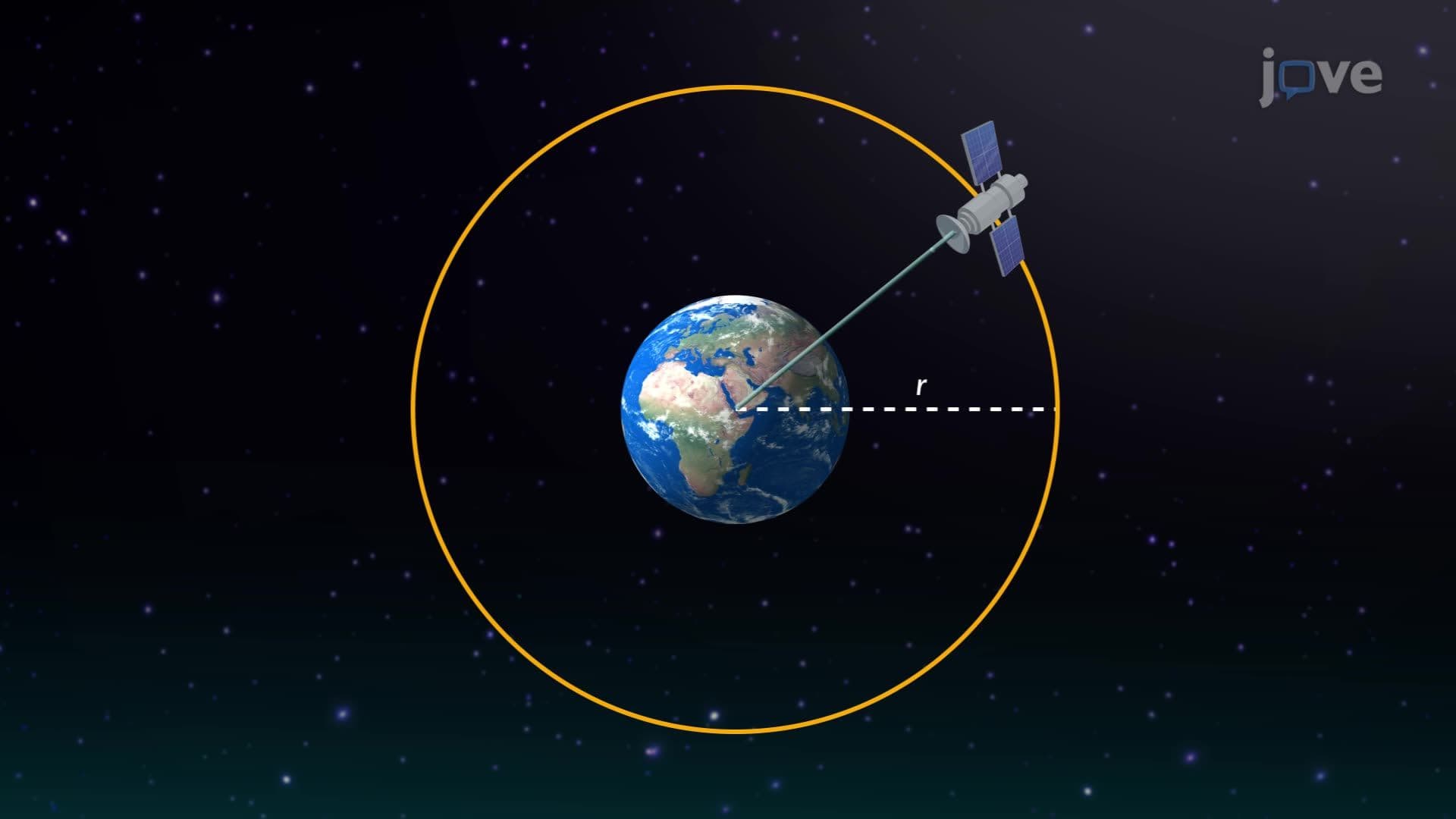
The derivative's behavior reveals practical consequences. For arcsin x, as x approaches ±1, the denominator √(1 − x²) approaches zero and the derivative explodes toward infinity. In radar engineering, a real challenge faced by US military and FAA tracking systems, this means that when an aircraft passes nearly overhead, a tiny horizontal displacement causes a massive angular change. The system cannot adjust fast enough, causing tracking failure. Understanding this mathematically is exactly the kind of applied reasoning tested in college physics and engineering courses across the US.
Related Micro-courses