Loading video…

 22 Concepts
 8.4K views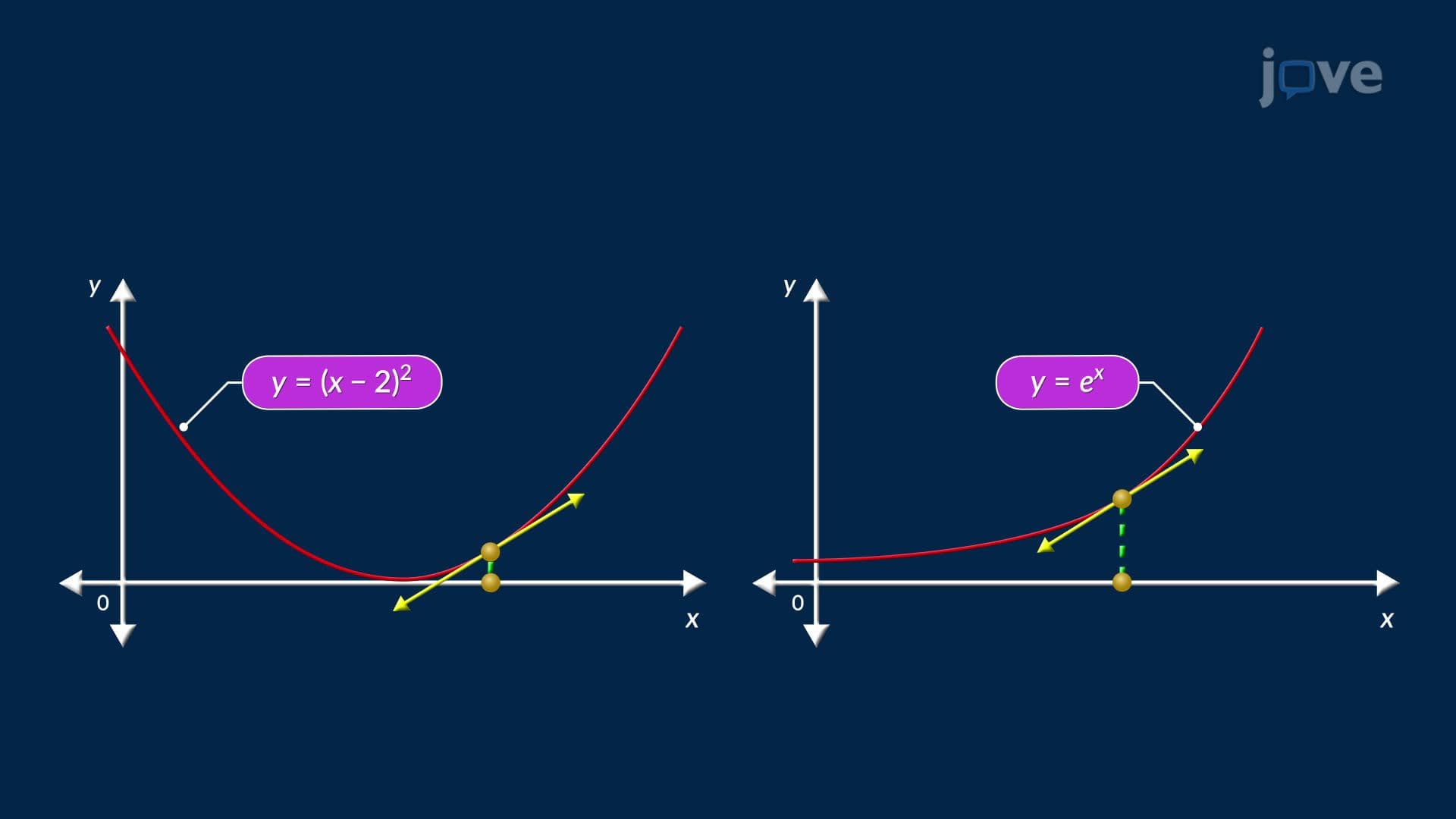

Video Summary: What Is Linearization and Approximation
Ever wondered how engineers at NASA estimate complex calculations without a calculator? Linearization and approximation basics make this possible. Linearization and approximation replaces a complicated function with a simple straight line near a known point, making tricky outputs easy to estimate. For instance, finding √4.1 becomes effortless using this method. Watch the full video on JoVE Coach to master this concept with expert-led visuals and step-by-step explanations.
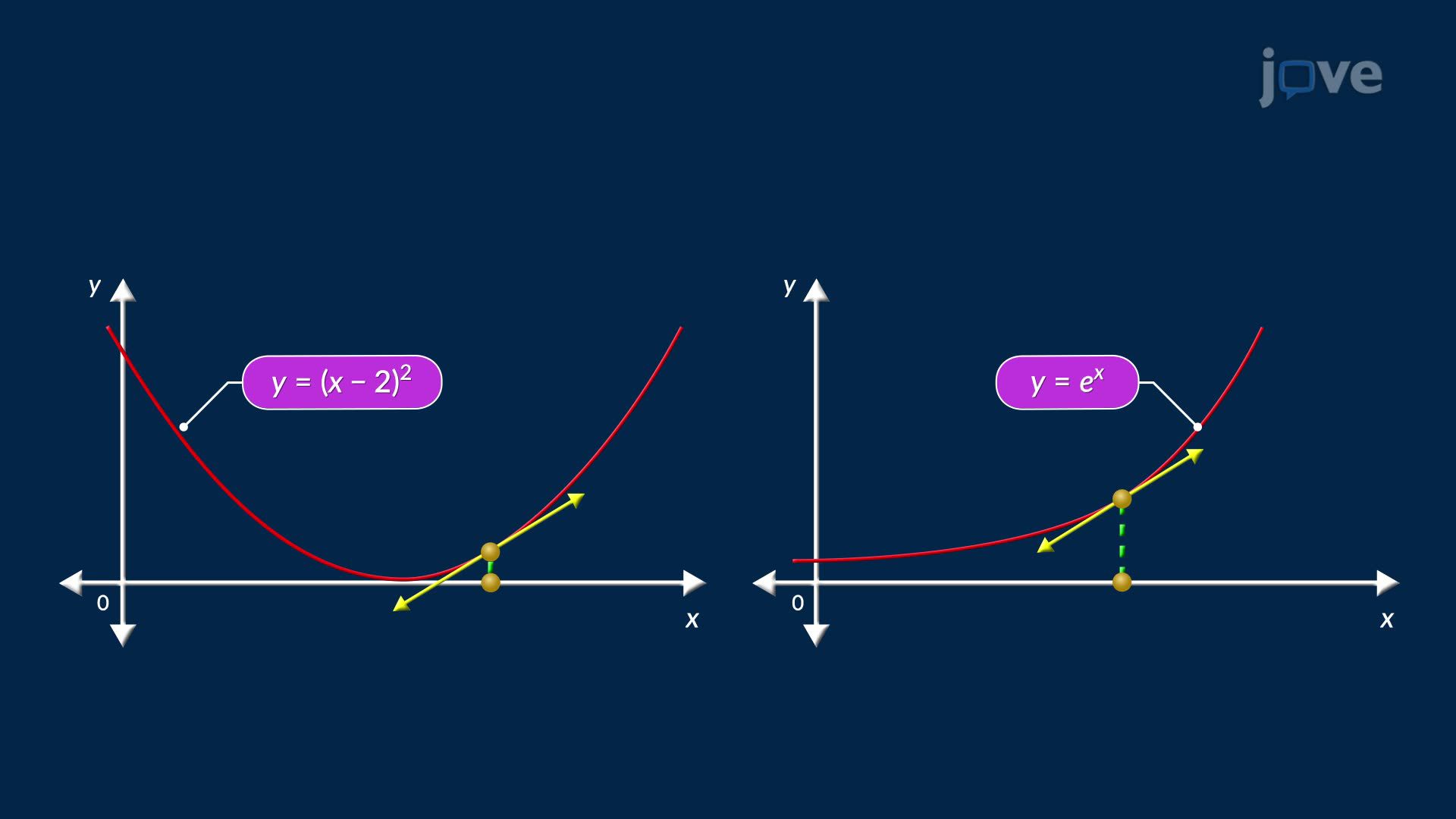
Linearization and approximation is one of the most practical tools in introductory calculus. The core idea is elegant: when a function is too complicated to evaluate exactly at a given input, you can approximate it using a straight line that "hugs" the curve near a known reference point. That straight line is the tangent line at the reference point, and it gives a surprisingly accurate estimate when you stay close to that point.
The linearization of a function f(x) at a reference point x = a is written as:
L(x) = f(a) + f'(a)(x − a)
Here, f(a) is the function's known output at the reference point, f'(a) is the derivative at that point (which gives the slope of the tangent line), and (x − a) is how far your target input strays from the reference. This formula is built directly from the power rule and basic differentiation, the same skills used when applying the chain rule or computing derivatives of trigonometric functions. Mastering those rules first makes this formula intuitive rather than memorized.
Linear approximation doesn't exist in isolation, it is a direct application of differentiation. When the function involves a product of two expressions, you may need the product rule before finding f'(a). If the function is a ratio, the quotient rule applies. For composite functions like √(3x + 1), you need the chain rule to correctly compute the derivative. Understanding when to use the quotient rule vs. the product rule is a skill that directly affects how cleanly you can set up a linearization problem. Each differentiation rule is a building block, and linearization shows why those rules matter in practice.
Linear approximation appears in AP Calculus AB and BC exams, where free-response questions may ask students to estimate a function's value or analyze error. In college courses like Calc I at schools across the US, from community colleges to state universities, this concept appears on midterms and finals as both a computational and conceptual problem.
Beyond the classroom, linearization drives real engineering and science decisions. Aerospace engineers at organizations like NASA use linear models to simplify nonlinear equations in flight dynamics. In physics, the small-angle approximation (sin θ ≈ θ for small angles) used in pendulum problems is a classic form of linearization. Medical devices that rely on sensor calibration also use local linear models to convert raw signal data into readable output. These aren't just textbook ideas, they are practical tools professionals use when precision calculation is too costly or time-consuming.
The closer x is to the reference point a, the more accurate the linear approximation. As x moves farther from a, the straight line and the actual curve diverge, and error increases. This is why choosing the right reference point matters. In AP Calculus and college exams, students are sometimes asked to determine whether a linearization is an overestimate or underestimate, which requires understanding the concavity of the function, connecting this topic neatly to second derivatives and higher-order derivatives.
Related Micro-courses