Loading video…


 22 Concepts
 8.4K views

Video Summary: Problem Solving in Hyperbolic and Inverse Hyperbolic Functions
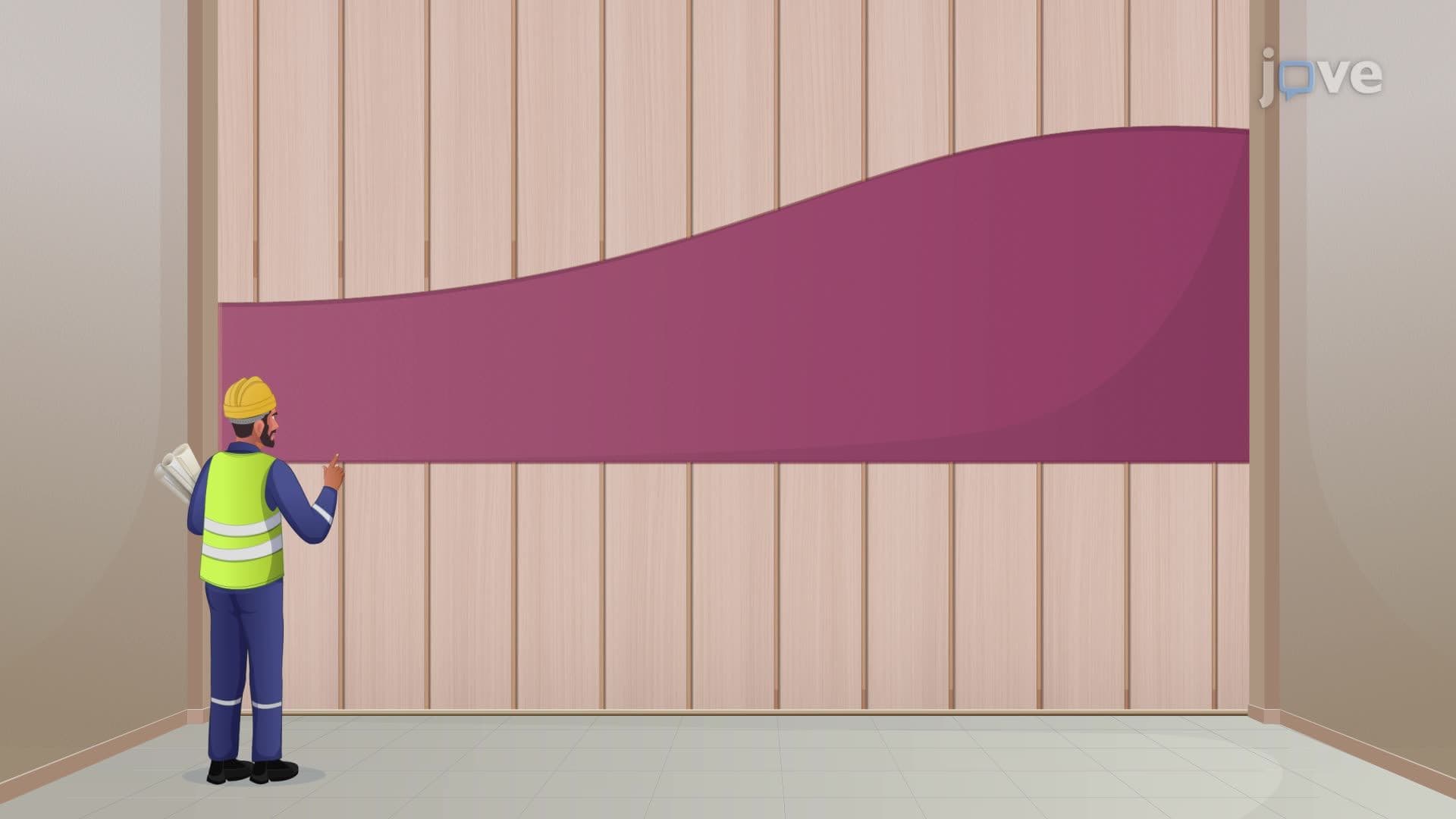
Did you know that the graceful arch of a gateway can be modeled using hyperbolic cosine? Problem solving in hyperbolic and inverse hyperbolic functions becomes tangible when applied to structural design, like calculating where an arched gate reaches exactly 5 meters in height and finding the tangent line slopes at those points. Watch the full video on JoVE Coach to master this concept with expert-led visuals and step-by-step explanations.
Hyperbolic functions, sinh(x), cosh(x), and tanh(x), are not just abstract mathematical tools. They appear in suspension bridge cables, electrical engineering models, and the shape of hanging chains (called catenaries). Mastering problem solving in hyperbolic and inverse hyperbolic functions prepares you for advanced calculus courses, AP Calculus BC topics, and college-level engineering mathematics.
Hyperbolic functions are defined using the natural exponential function. For example:
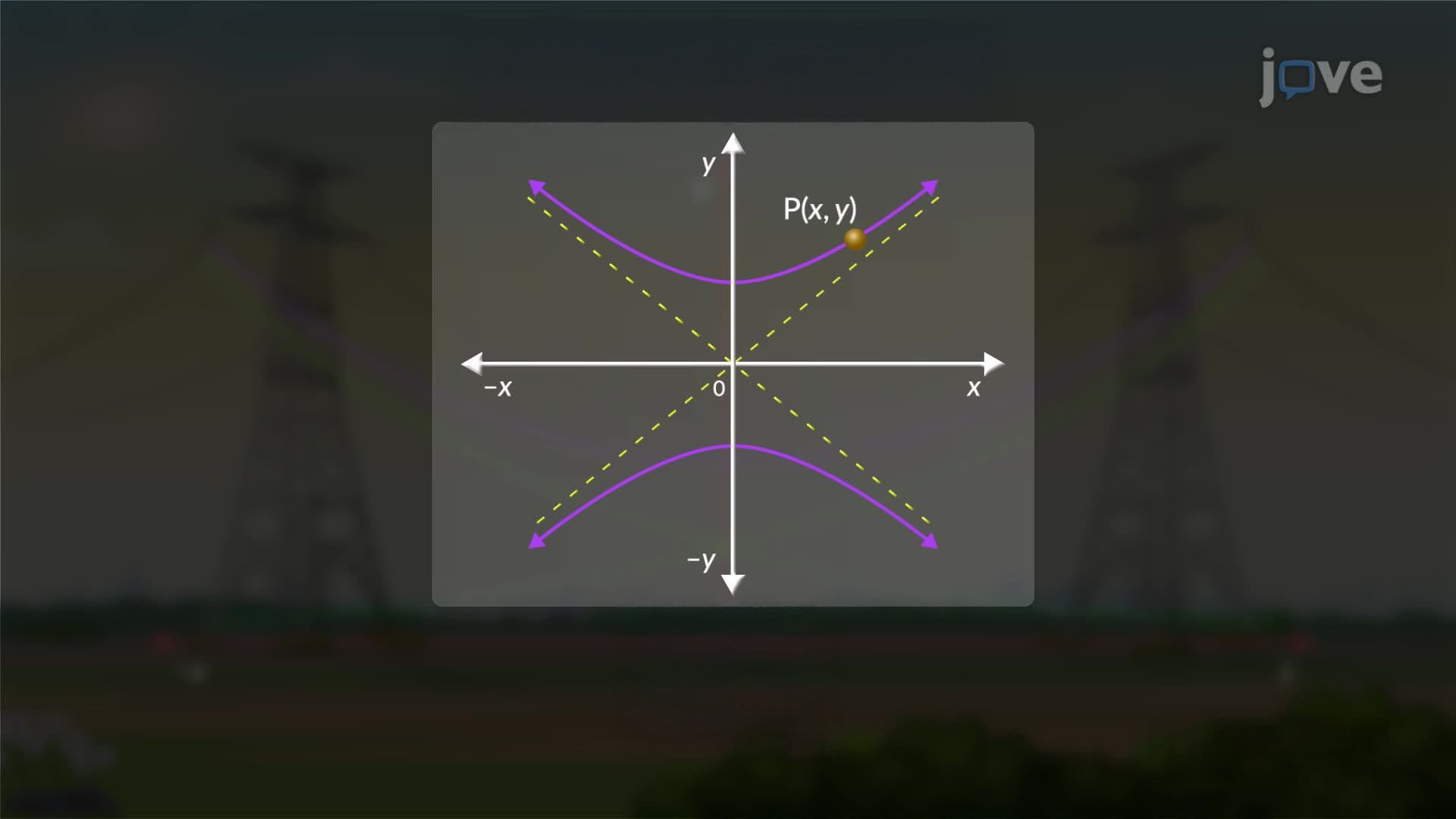
Unlike circular trigonometric functions, which trace a unit circle, hyperbolic functions trace a unit hyperbola. The function cosh(x) is always greater than or equal to 1, making it perfect for modeling arched structures where the minimum height occurs at the center. Its graph is U-shaped, symmetrical about the y-axis, and reaches its minimum at x = 0, which corresponds to the highest point of an inverted arch gate.
Differentiating hyperbolic functions follows the same core rules used throughout calculus:
When working with composite expressions, for instance, cosh(kx) where k is a constant, you must apply the chain rule: differentiate the outer function, then multiply by the derivative of the inner function. This gives k · sinh(kx).
If a problem involves products of hyperbolic and polynomial functions, the product rule applies: d/dx [f(x)·g(x)] = f'(x)·g(x) + f(x)·g'(x). When one hyperbolic expression is divided by another, reach for the quotient rule. Recognizing which rule to apply, and when to combine them, is a critical skill tested on AP Calculus BC exams and college midterms.
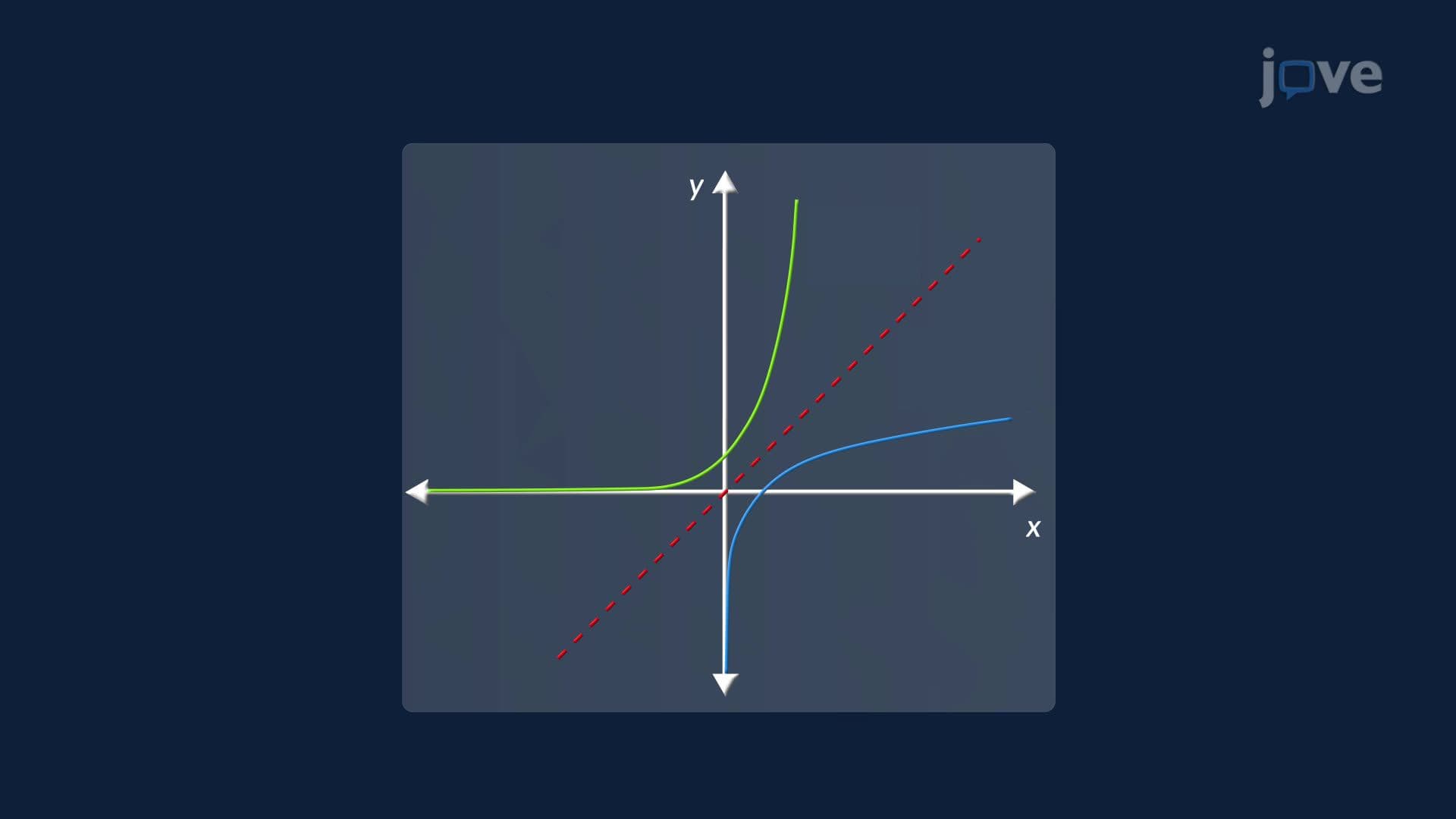
A common problem type involves finding x-values where a hyperbolic function reaches a target output. For example, setting cosh(x) = 5 and solving for x requires using the inverse hyperbolic function: x = arccosh(5), which can be expressed in logarithmic form as ln(5 + √(5²-1)). Because cosh(x) is even (symmetric), two solutions exist: one positive and one negative.
Once the x-coordinates are known, computing the tangent line at each point is a two-step process: 1. Find the slope by substituting the x-value into the derivative function 2. Apply point-slope form: y - y₁ = m(x - x₁)
The resulting slopes, approximately +0.98 and -0.98 in a symmetric arch problem, reflect the structure's geometry and would inform how steeply bracing or supports must be angled in actual US construction projects.
Hyperbolic functions appear in AP Calculus BC free-response sections, college calculus II midterms, and engineering entrance coursework. In the US, programs in civil engineering, physics, and electrical engineering regularly use these functions. The Gateway Arch in St. Louis, Missouri, though technically modeled by a weighted catenary rather than a simple cosh curve, is a famous real-world inspiration for this class of problems. Understanding the interplay between differentiation rules and hyperbolic identities gives students a measurable edge in both academic exams and professional applications.
Related Micro-courses