Loading subject page…

8,360 views

Video Summary: What are Limits on Trigonometric Functions
Ever wonder why a swinging pendulum in a US physics lab behaves so predictably at small angles? The answer lies in limits on trigonometric functions basics, specifically, the foundational identity that sin(θ)/θ approaches 1 as θ nears zero. This core idea of limits on trigonometric functions underpins calculus across AP and college courses. Watch the full video on JoVE Coach to master this concept with expert-led visuals and step-by-step explanations.
Limits on trigonometric functions form one of the most important foundations of calculus. Before you can differentiate sin(x), cos(x), or any composite trig expression, you need to understand how these functions behave as their input approaches a specific value, particularly zero. The most famous result is:
lim(θ → 0) of sin(θ)/θ = 1
This isn't just a curiosity, it's the engine behind deriving the derivatives of all trigonometric functions.
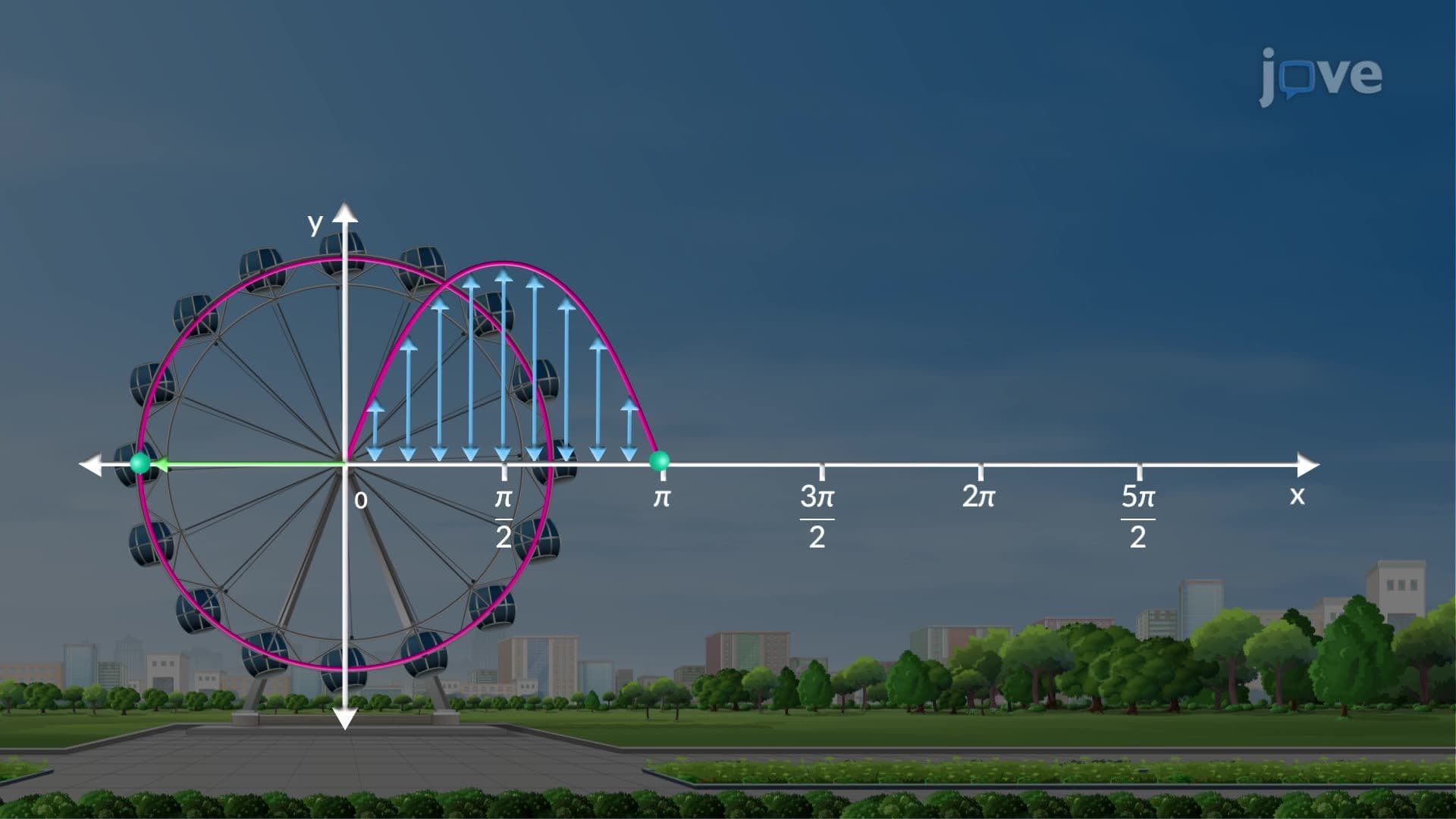
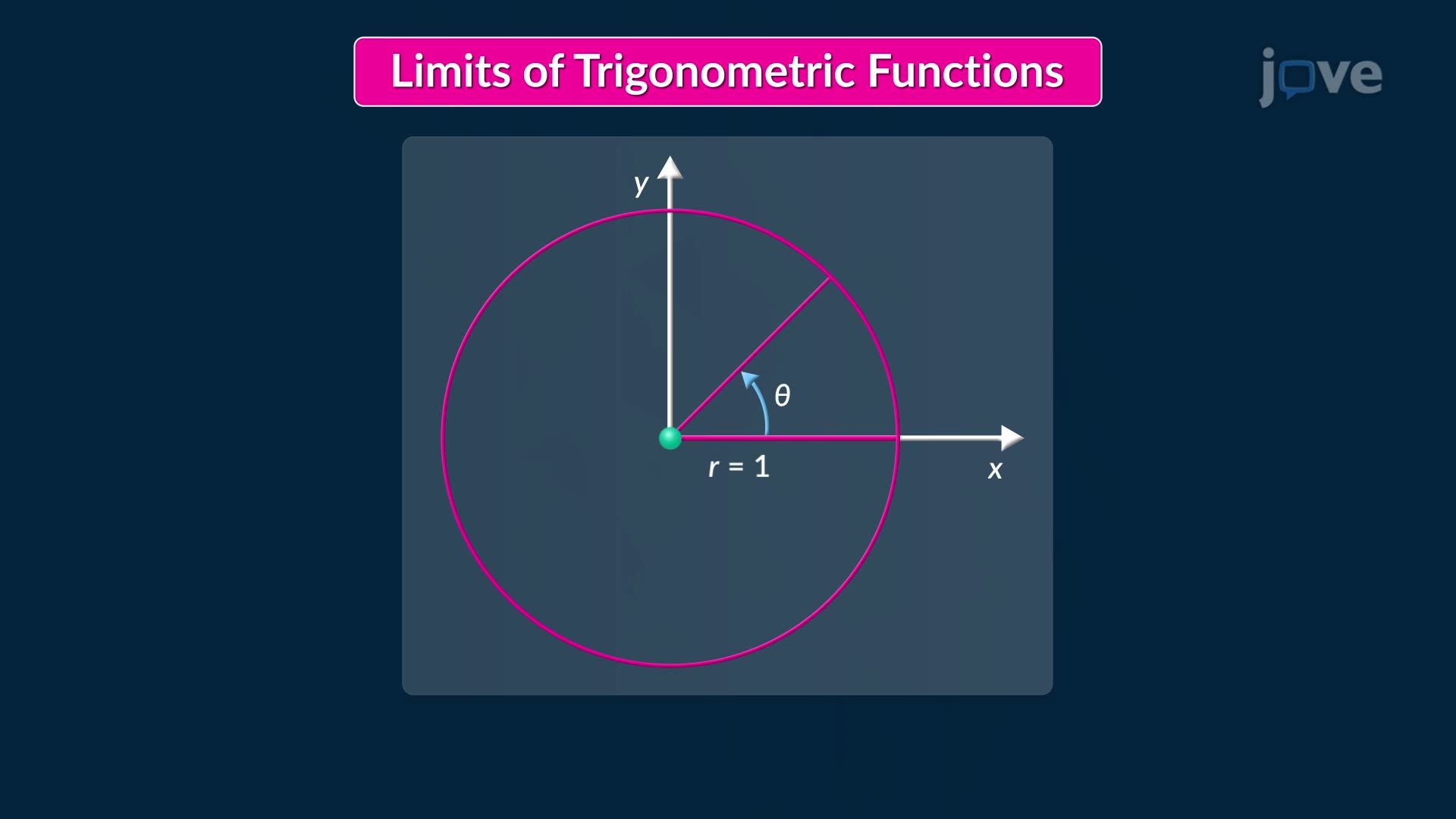
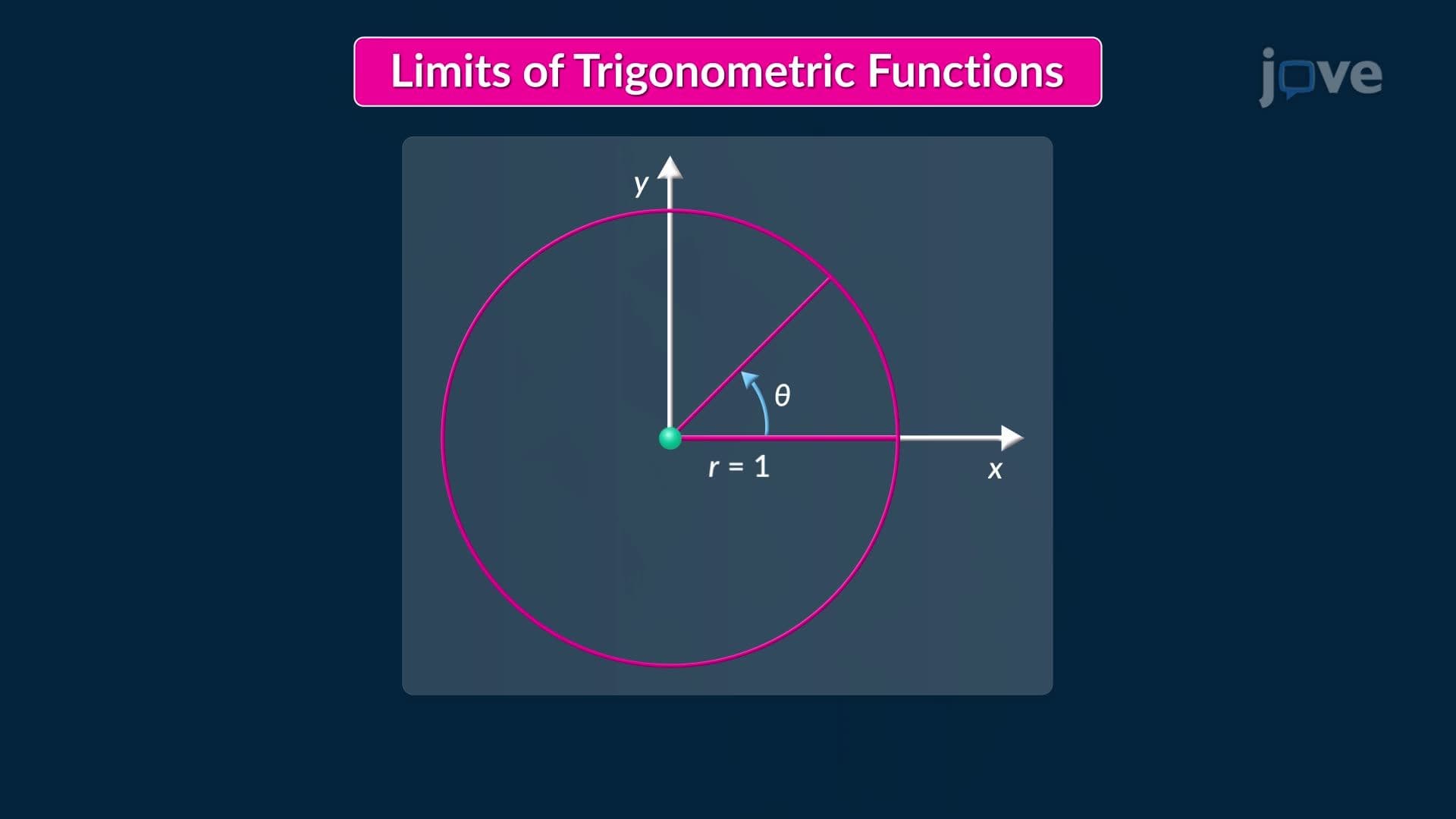
The cleanest way to understand this limit is through the unit circle. Imagine a circle with radius 1 centered at the origin. Draw a small angle θ from the positive x-axis. Three lengths come into play:
Geometrically, it can be shown that:
sin(θ) < θ < tan(θ)
Dividing everything by sin(θ):
1 < θ/sin(θ) < 1/cos(θ)
Taking reciprocals and flipping the inequality:
cos(θ) < sin(θ)/θ < 1
As θ → 0, cos(θ) → 1. So sin(θ)/θ is squeezed between cos(θ) and 1, both approaching 1. This is the Squeeze Theorem in action, and it confirms the limit equals 1 rigorously.
Once this limit is established, the derivatives of trigonometric functions follow naturally. Using the definition of a derivative and applying this limit, you can prove:
From there, the power rule, product rule, quotient rule, and chain rule allow you to differentiate far more complex trig expressions. For example, applying the chain rule to sin(3x²) or using the quotient rule for tan(x) = sin(x)/cos(x) all trace back to this one foundational limit. Students in AP Calculus AB, AP Calculus BC, and college-level Calculus I at universities like UCLA or Ohio State regularly encounter these derivative derivations on exams.
In engineering and physics programs across US universities, this limit appears in the small-angle approximation: when θ is small, sin(θ) ≈ θ. This simplification drives models for pendulum motion, optics, and wave behavior. On the AP Calculus AB/BC exam, limits on trigonometric functions are directly tested, especially recognizing lim(θ → 0) of sin(θ)/θ = 1 and related forms like lim(θ → 0) of (1 − cos(θ))/θ = 0. Mastering these results also supports success in implicit differentiation and higher-order derivatives involving trig functions, both of which appear on college midterms and finals nationwide.
Related Micro-courses