Loading video…

 22 Concepts
 8.4K views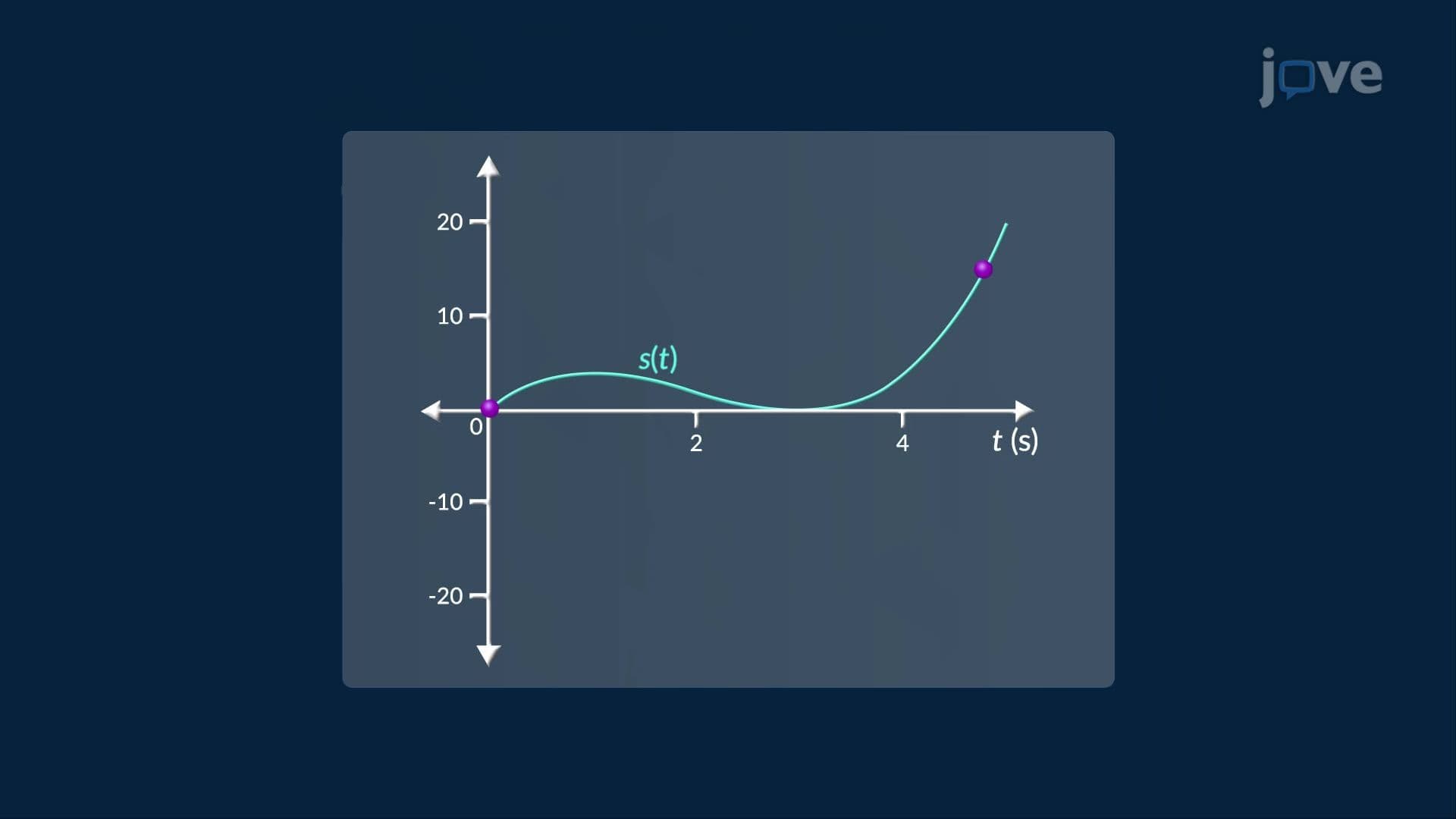

Video Summary: Application of Rates of Change Explained
Did you know calculus can predict exactly when a car on a US highway stops, speeds up, or reverses direction? The application of rates of change connects mathematics to real motion by using derivatives to analyze position, velocity, and acceleration. Understanding application of rates of change basics helps students see how a single function reveals a complete picture of movement at any instant. Watch the full video on JoVE Coach to master this concept with expert-led visuals and step-by-step explanations.
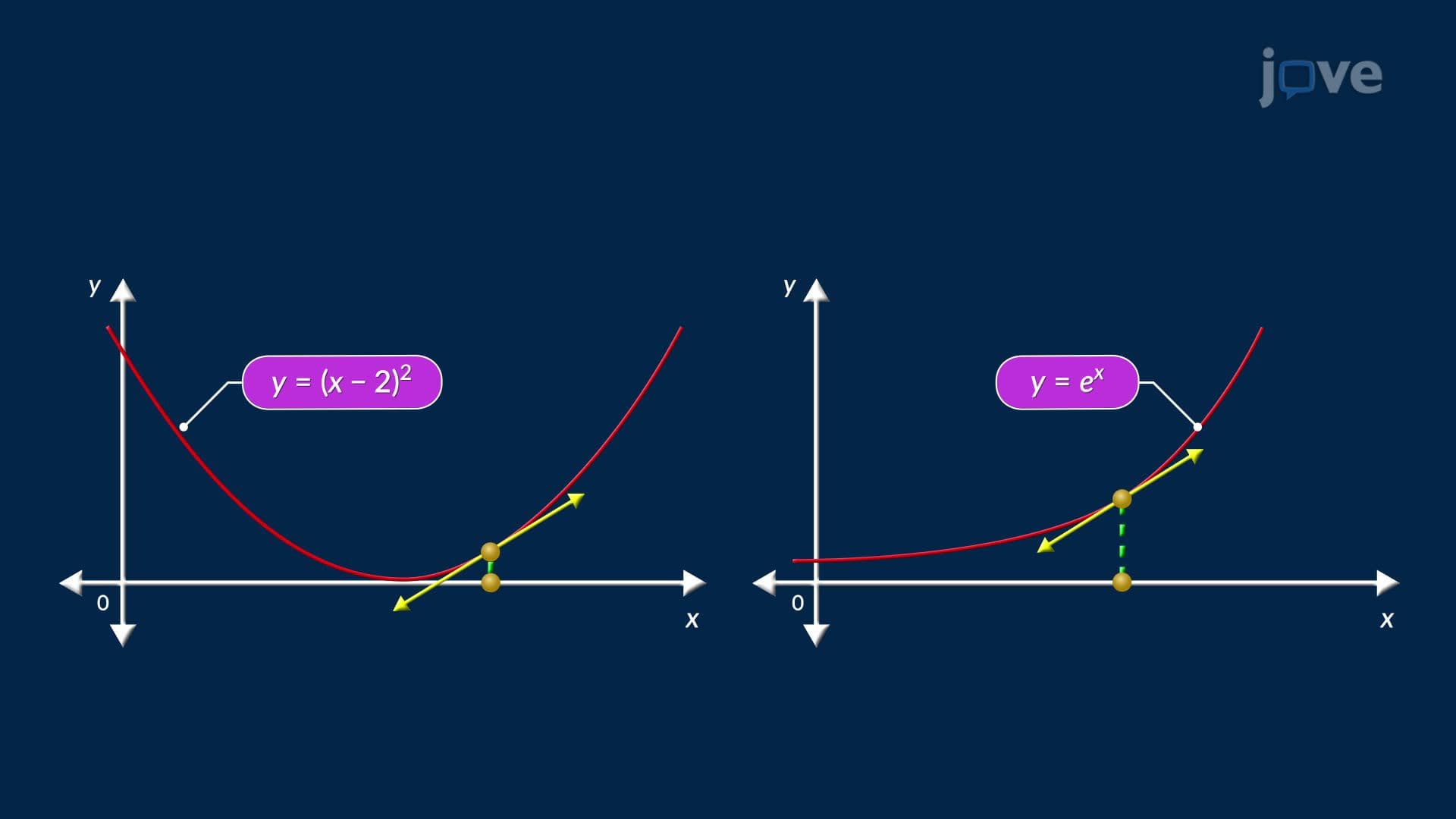
The application of rates of change is one of the most powerful ideas in calculus. At its core, it answers a deceptively simple question: how fast is something changing right now? Rather than calculating an average over an interval, derivatives give us the instantaneous rate of change, the exact behavior of a function at a single moment. This concept appears across physics, engineering, economics, and biology, making it essential for any student in a STEM field.
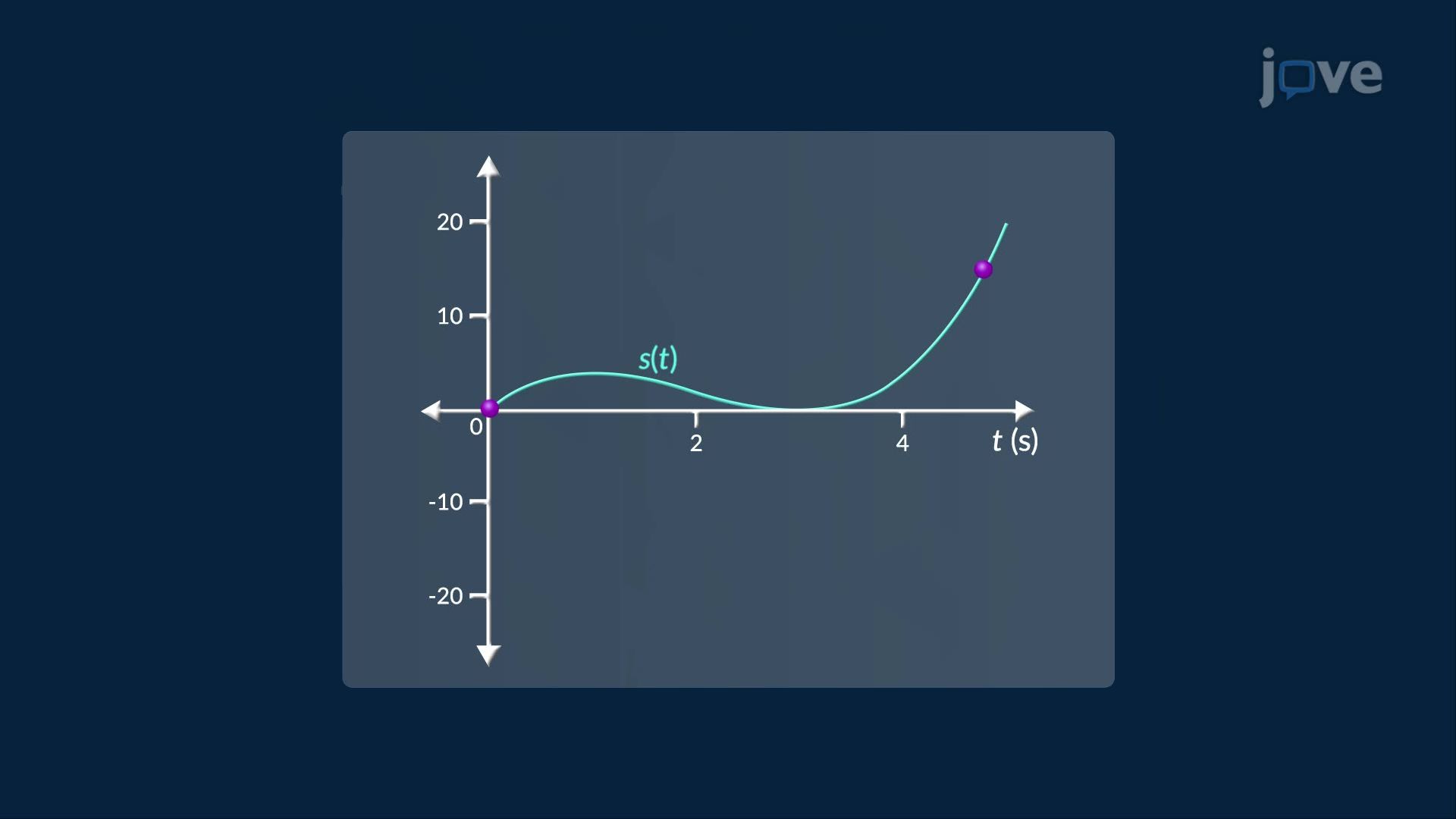
When a car travels along a straight highway, its position at any time t can be expressed as a function, call it s(t). The first derivative, written as s'(t) or ds/dt, gives the car's instantaneous velocity. A positive value means the car moves forward; a negative value means it moves backward toward its starting point. When s'(t) = 0, the car is momentarily at rest. This interpretation is central to AP Calculus AB free-response questions, where students routinely analyze motion graphs and position functions to identify direction changes and stopping points.
Velocity tells you where an object is headed; acceleration tells you how that heading is changing. Acceleration is the derivative of velocity, making it the second derivative of position, written as s''(t). This is a classic example of higher-order derivatives in action. The key rule students must internalize: if velocity and acceleration share the same sign (both positive or both negative), the object speeds up. If they have opposite signs, the object slows down. On AP Calculus BC and college physics midterms at universities like MIT OpenCourseWare-referenced courses, this sign analysis appears frequently in multiple-choice and free-response items.
Solving real application problems rarely involves simple polynomials. Students must master several rules to handle complex rate-of-change scenarios:
Knowing when to use the quotient rule vs. product rule is a frequent point of confusion. Remember: if the expression is a ratio of two functions, reach for the quotient rule. If two functions are multiplied together and neither is simply a constant, use the product rule.
Beyond cars on highways, rates of change appear in NASA trajectory modeling, stock market volatility analysis on Wall Street, and drug concentration curves studied in pharmacology programs at schools like Johns Hopkins. On the AP Calculus AB and BC exams, the College Board consistently tests rate-of-change applications through particle motion problems, related rates, and optimization. Understanding this concept deeply, not just procedurally, is what separates a score of 3 from a 5.
Related Micro-courses