Loading subject page…


8,360 views


Video Summary: What Is Exponential Growth
Did you know a single bacterium can multiply into millions within just a few hours? Exponential growth explains this phenomenon, and it's one of the most powerful concepts in mathematics and science. In a classic biology lab example common across US college courses, bacterial populations are modeled using exponential functions to predict cell counts over time. Watch the full video on JoVE Coach to master this concept with expert-led visuals and step-by-step explanations.
Exponential growth occurs when a quantity increases at a rate proportional to its current value, meaning the bigger it gets, the faster it grows. This self-reinforcing pattern appears in bacterial reproduction, compound interest, viral spread, and population dynamics. Unlike linear growth, which adds a fixed amount each period, exponential growth multiplies by a consistent factor, producing dramatic increases over time. Mastering this concept is essential for AP Calculus, college-level biology, and introductory economics courses across the United States.
The standard exponential growth function is written as P(t) = Ce^(kt), where:
To build this model, you need two pieces of information: the starting value and the value at a second known time. Substituting t = 0 immediately gives you C. Then, plugging in the second data point and applying the natural logarithm (ln) to both sides lets you isolate and solve for k. This two-step setup process is a standard technique tested in AP Calculus AB and BC, as well as college calculus courses at institutions like UCLA, UT Austin, and Georgia Tech.
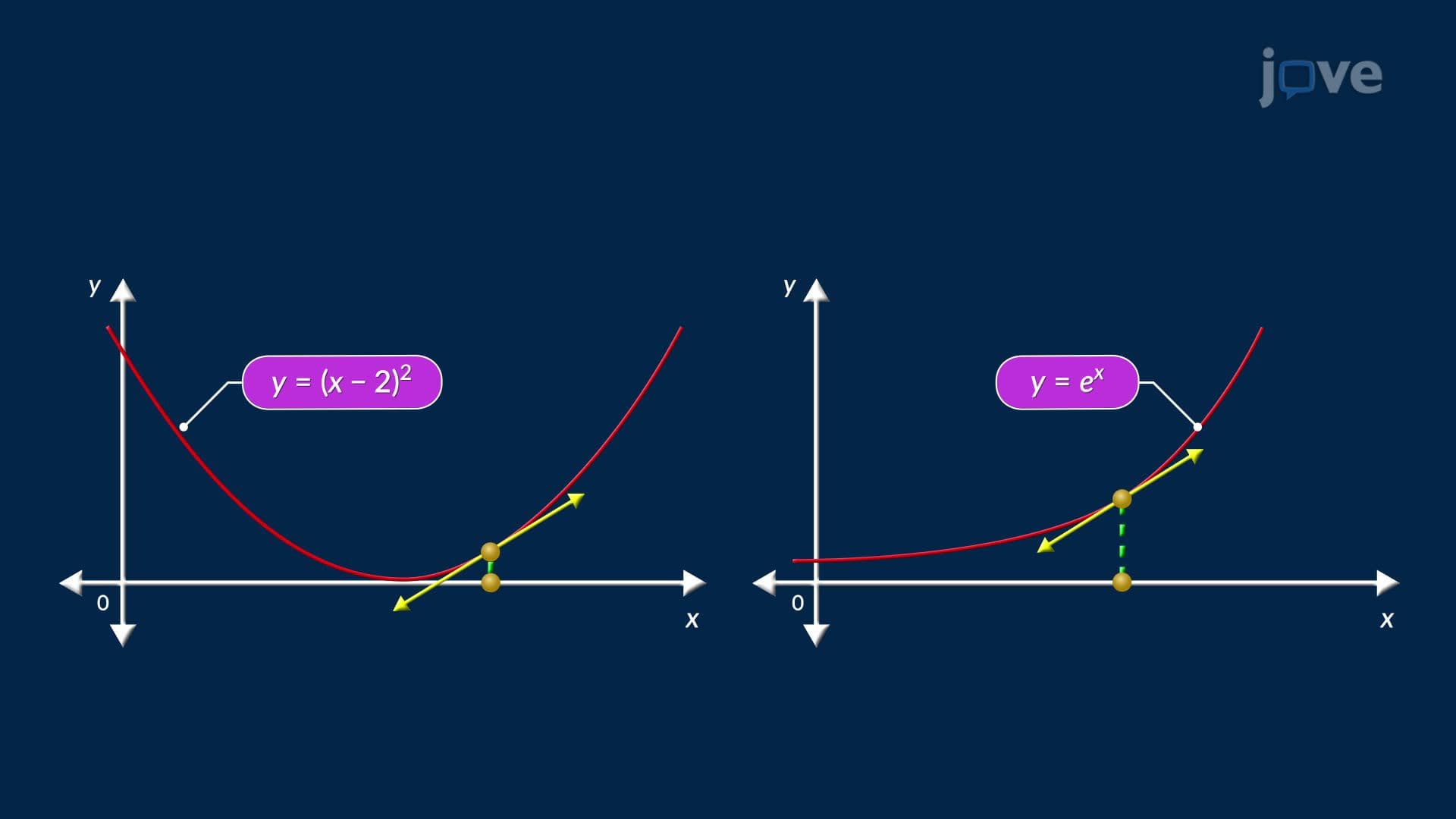
One of the most important properties of exponential functions is that their derivative takes a beautifully simple form. If P(t) = Ce^(kt), then the derivative is P'(t) = k · Ce^(kt) = k · P(t). This means the rate of growth at any moment is directly proportional to the current population, a defining characteristic of exponential behavior. Applying the chain rule is the key calculus skill here: the derivative of e^(kt) with respect to t brings down k as a coefficient. This connection between a function and its own derivative is a concept that appears repeatedly in AP Calculus FRQs and college midterms, and understanding it deeply gives students a significant advantage.
In US college microbiology labs, students routinely model bacterial cultures using exactly this framework, estimating cell counts at future time points based on early measurements. Beyond biology, exponential growth describes compound interest in personal finance (a core concept in AP Economics), the early spread of infectious disease (studied in US public health programs like those at Johns Hopkins), and even technology adoption curves in business school case studies. The MCAT tests exponential reasoning in biology and biochemistry passages, making this a cross-disciplinary skill. Recognizing when a situation calls for an exponential model, versus a linear or polynomial one, is a high-value analytical skill that spans STEM and social science disciplines alike.
Related Micro-courses