Loading video…


 17 Concepts
 6.3K views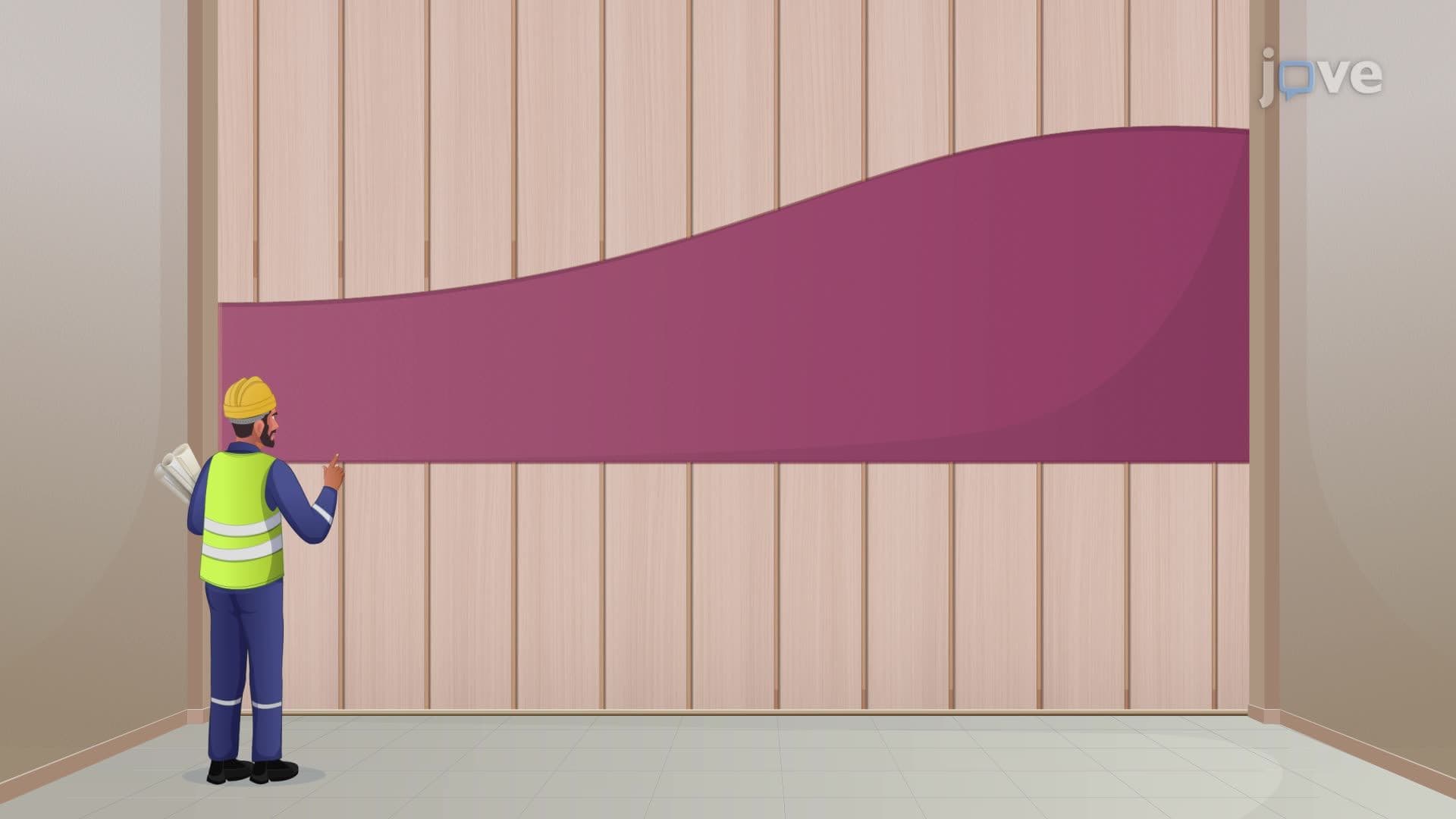

Video Summary: What Is Area Problem
How do contractors painting hundreds of curved-wall homes calculate exactly how much paint they need? The area problem sits at the heart of this challenge, and calculus solves it. What is the Area Problem? It's the process of finding the exact area beneath a curve using rectangles that get progressively thinner. Watch the full video on JoVE Coach to master this concept with expert-led visuals and step-by-step explanations.
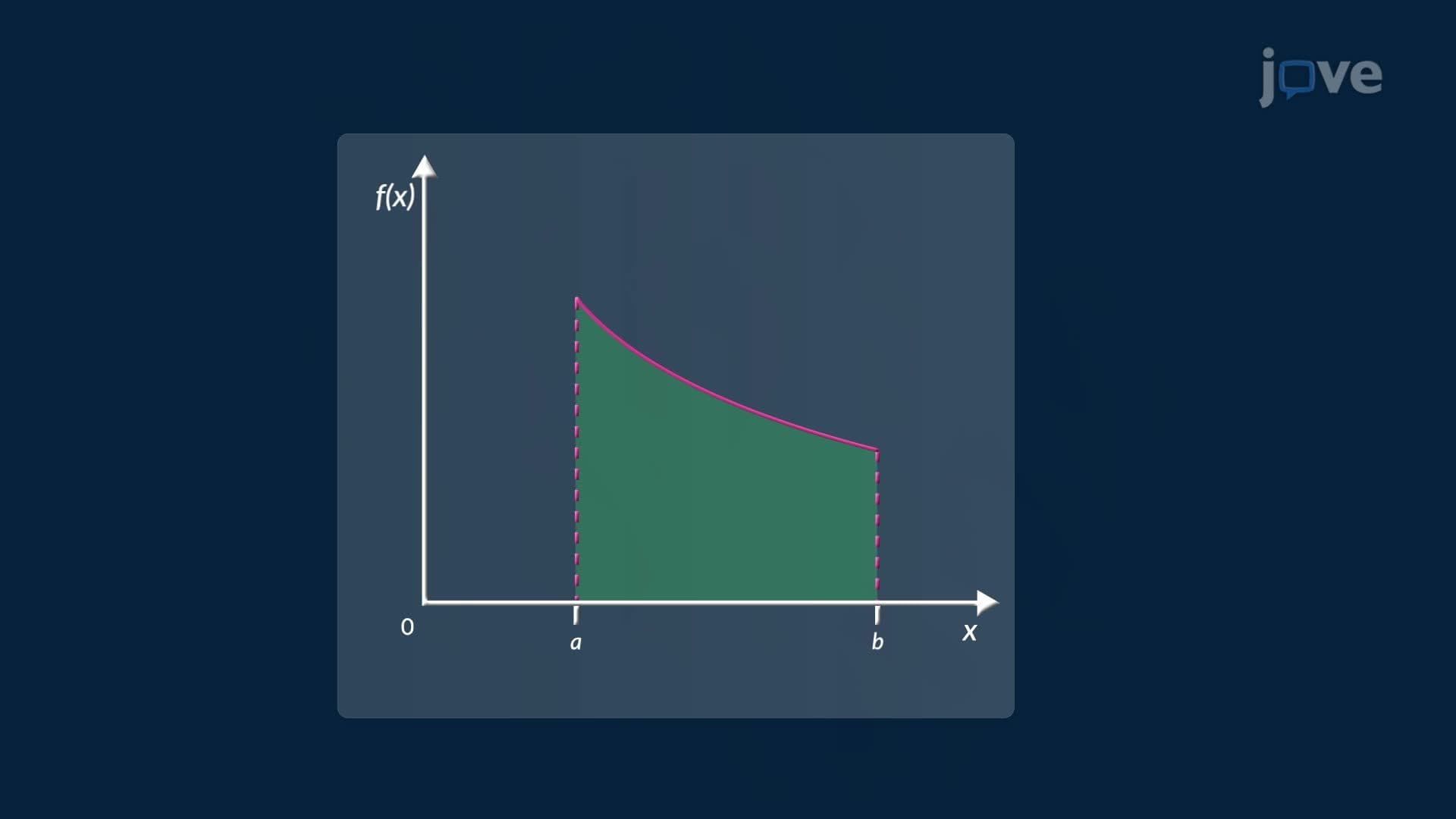
The Area Problem asks a deceptively simple question: *How do you find the exact area of a region bounded by a curve?* Unlike rectangles or triangles, curved shapes don't yield to basic geometry formulas. This challenge motivated the development of integral calculus and remains one of the most important ideas in all of mathematics. Whether you're in AP Calculus AB or a college Calculus I course, understanding this problem unlocks the deeper logic behind the definite integral.
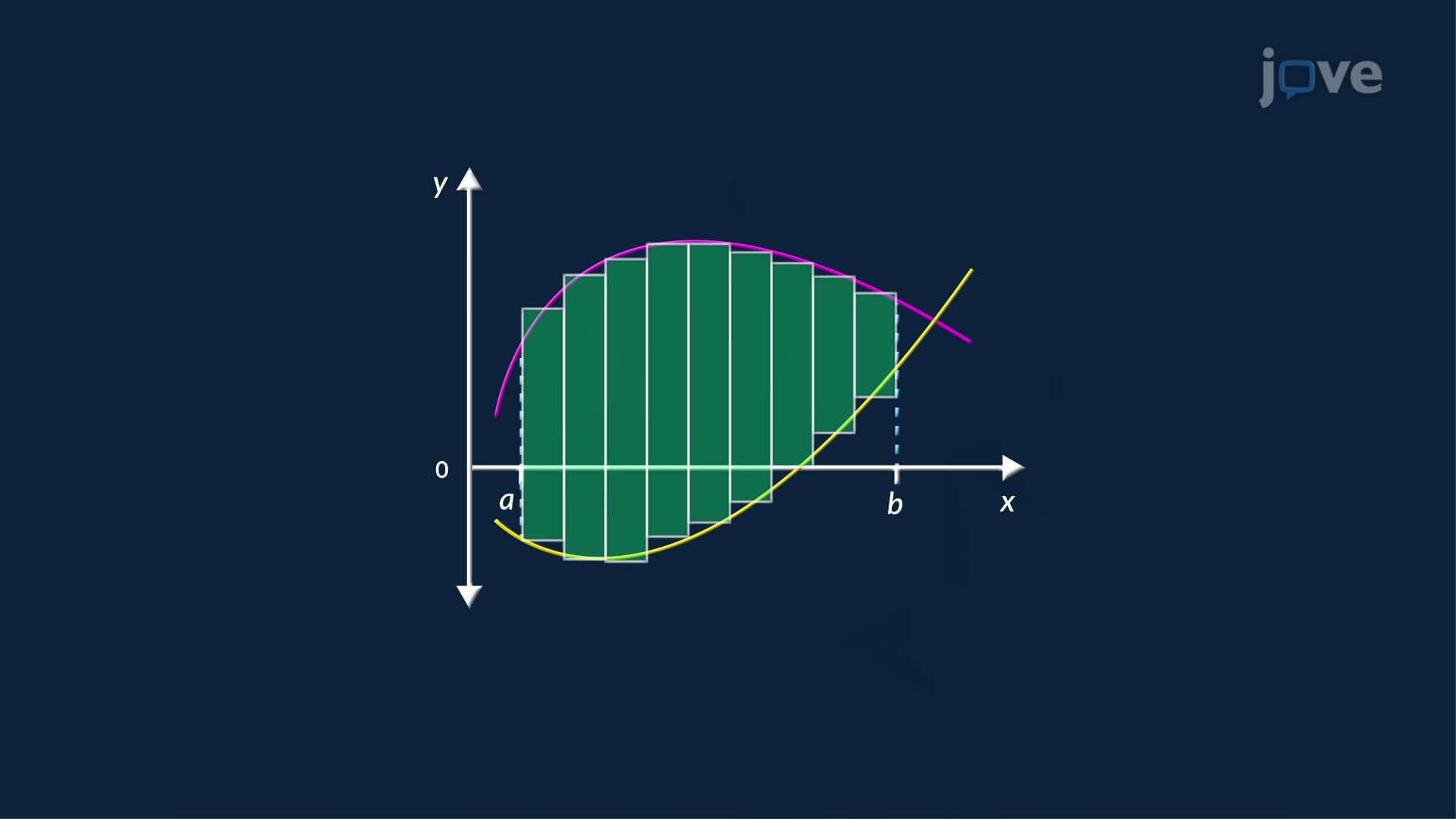
The practical approach to the Area Problem starts with Riemann sums. Imagine dividing the region under a curve, say, f(x), into *n* thin vertical rectangles, each with equal width Δx. The area of each rectangle is calculated as f(x*) × Δx, where x* is a chosen sample point within that subinterval. Three common choices exist:
For an increasing function, the Left Riemann Sum underestimates the area while the Right Riemann Sum overestimates it, and vice versa for decreasing functions. AP Calculus students frequently encounter questions asking them to identify which method over- or underestimates and by how much.
Here's where the real power emerges. As the number of rectangles *n* approaches infinity, and their width Δx approaches zero, the Riemann sum converges to an exact value. That value is the definite integral, written as the integral of f(x) from a to b. This limit process transforms a geometric approximation into a precise mathematical tool. In US college courses, this transition from summation notation to integral notation is typically covered in the first semester of Calculus I (often MATH 1151 or equivalent).
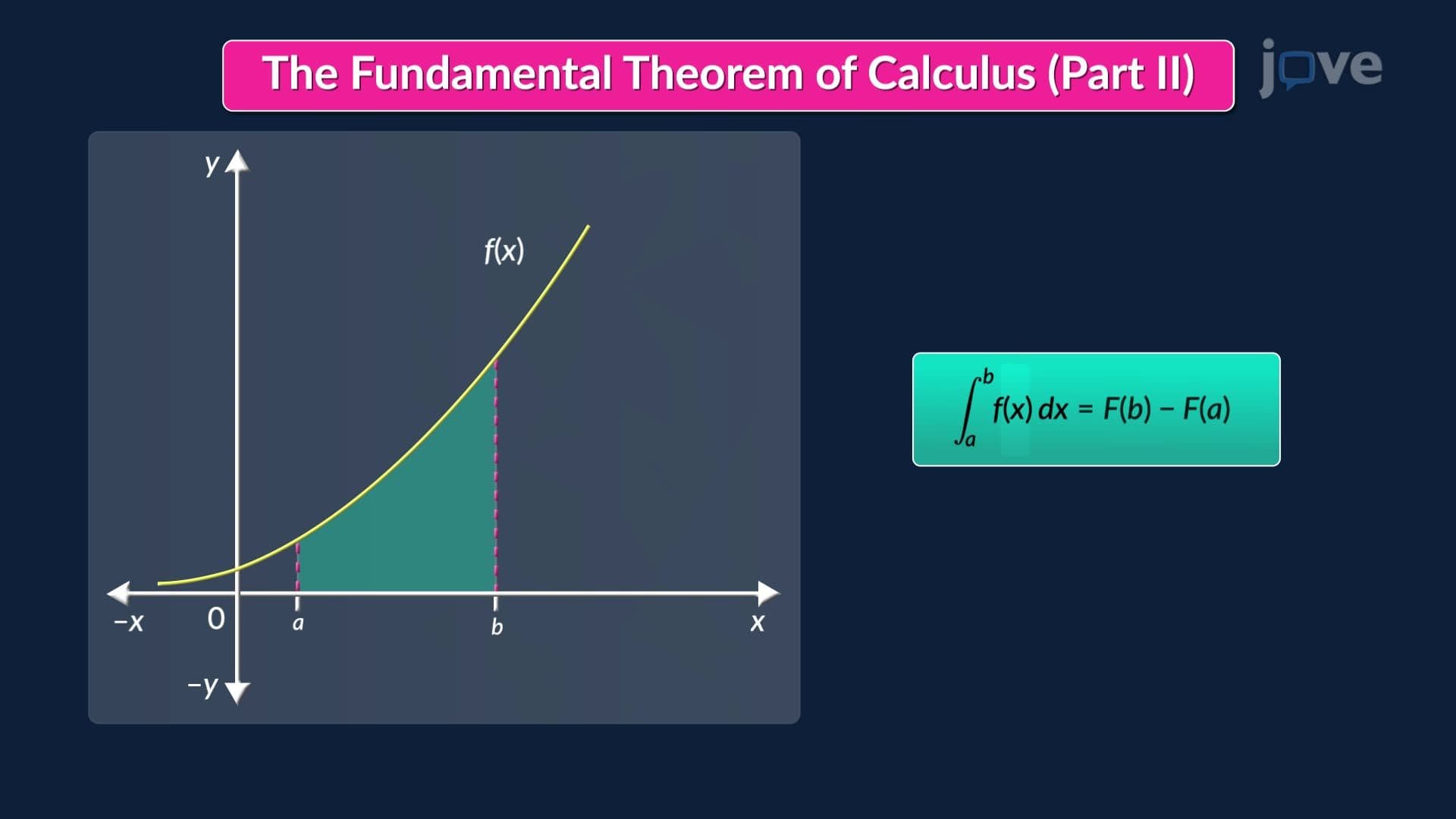
The Fundamental Theorem of Calculus bridges the Area Problem to antiderivatives, making computation possible without calculating infinite sums manually. It states that if F(x) is an antiderivative of f(x), then the definite integral from a to b equals F(b) − F(a). This theorem transforms a hard limit problem into straightforward algebraic evaluation. For example, a civil engineering student at a US university calculating the cross-sectional area of a curved beam would apply exactly this method, find the antiderivative, plug in the bounds, subtract.
The Area Problem appears across multiple disciplines. Architects estimating material for curved facades, environmental scientists calculating watershed areas under a flow-rate curve, and economists measuring consumer surplus under a demand curve all rely on this concept. On the AP Calculus AB and BC exams, area under a curve problems regularly appear in both the multiple-choice and free-response sections. Expect to set up a definite integral, identify the correct bounds, and interpret the result in context, skills built directly on mastering the Area Problem from the ground up.
Related Micro-courses