Loading video…

 17 Concepts
 6.3K views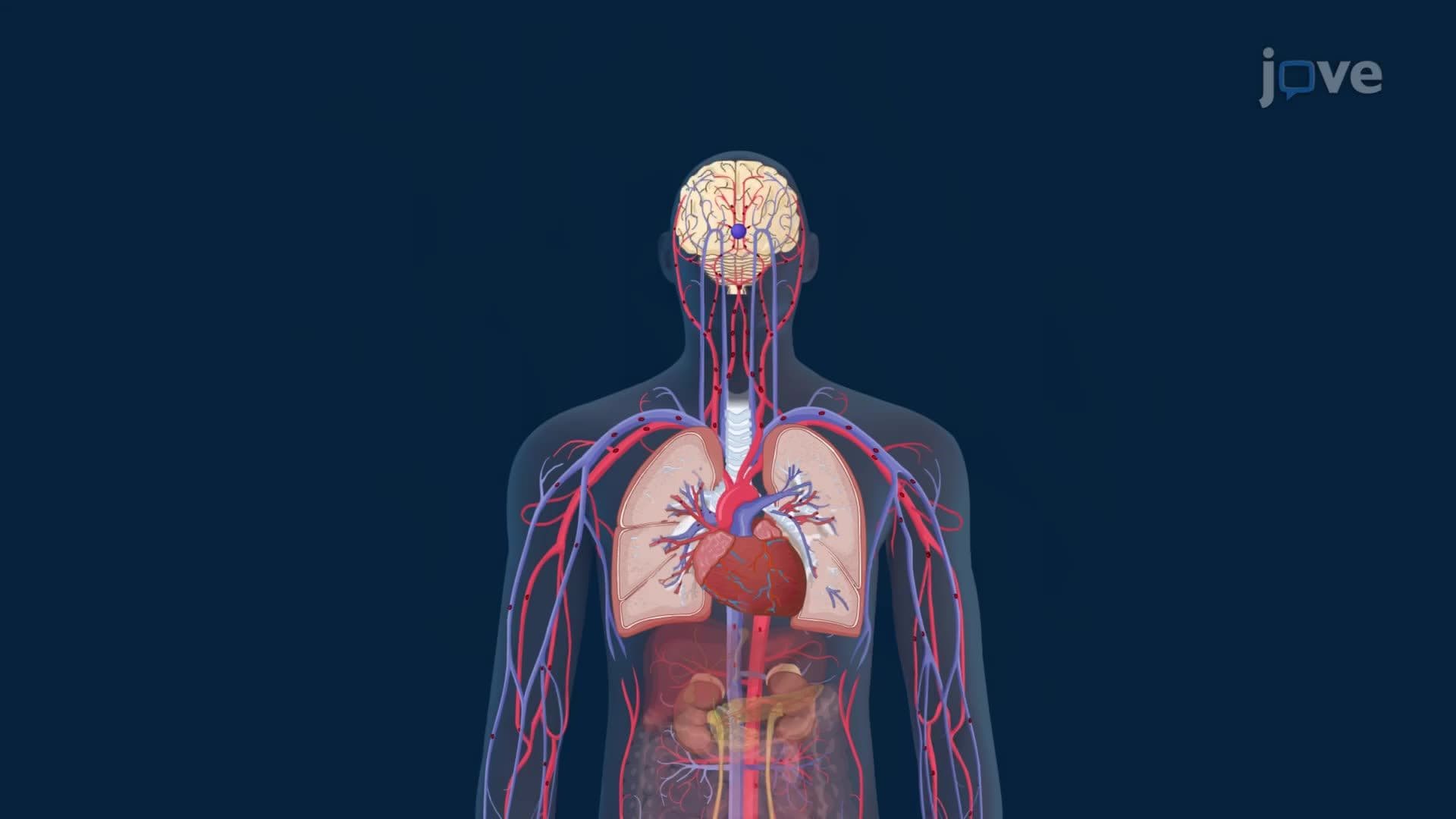

Video Summary: Problem Solving in Application of Integration
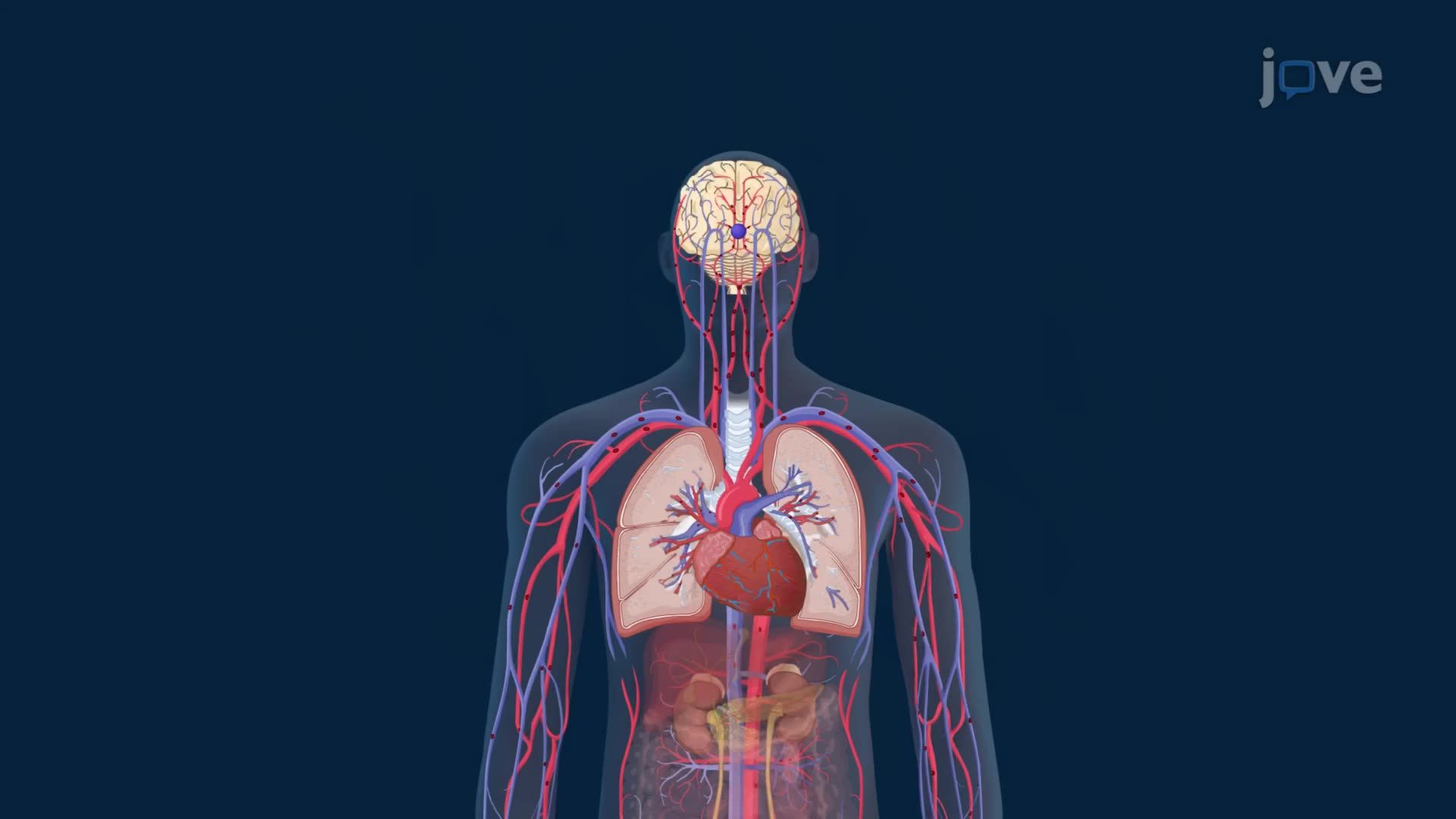
Did you know your lungs follow a precise mathematical rhythm every 5 seconds? Problem solving in application of integration reveals how calculus models real biological processes, like breathing. By integrating a sinusoidal airflow rate function, students can calculate the exact volume of air inhaled at any moment during a respiratory cycle. Watch the full video on JoVE Coach to master this concept with expert-led visuals and step-by-step explanations.
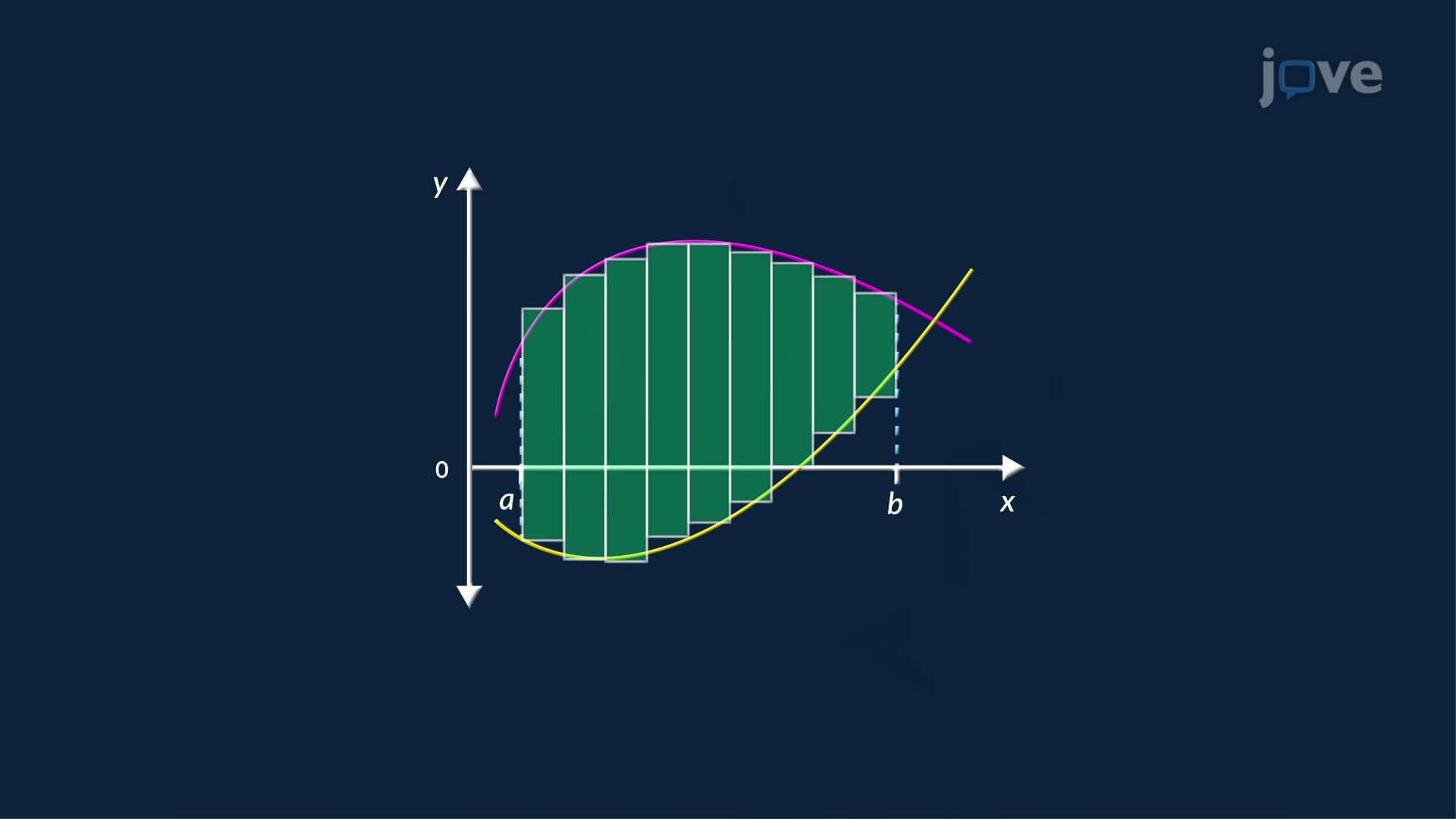
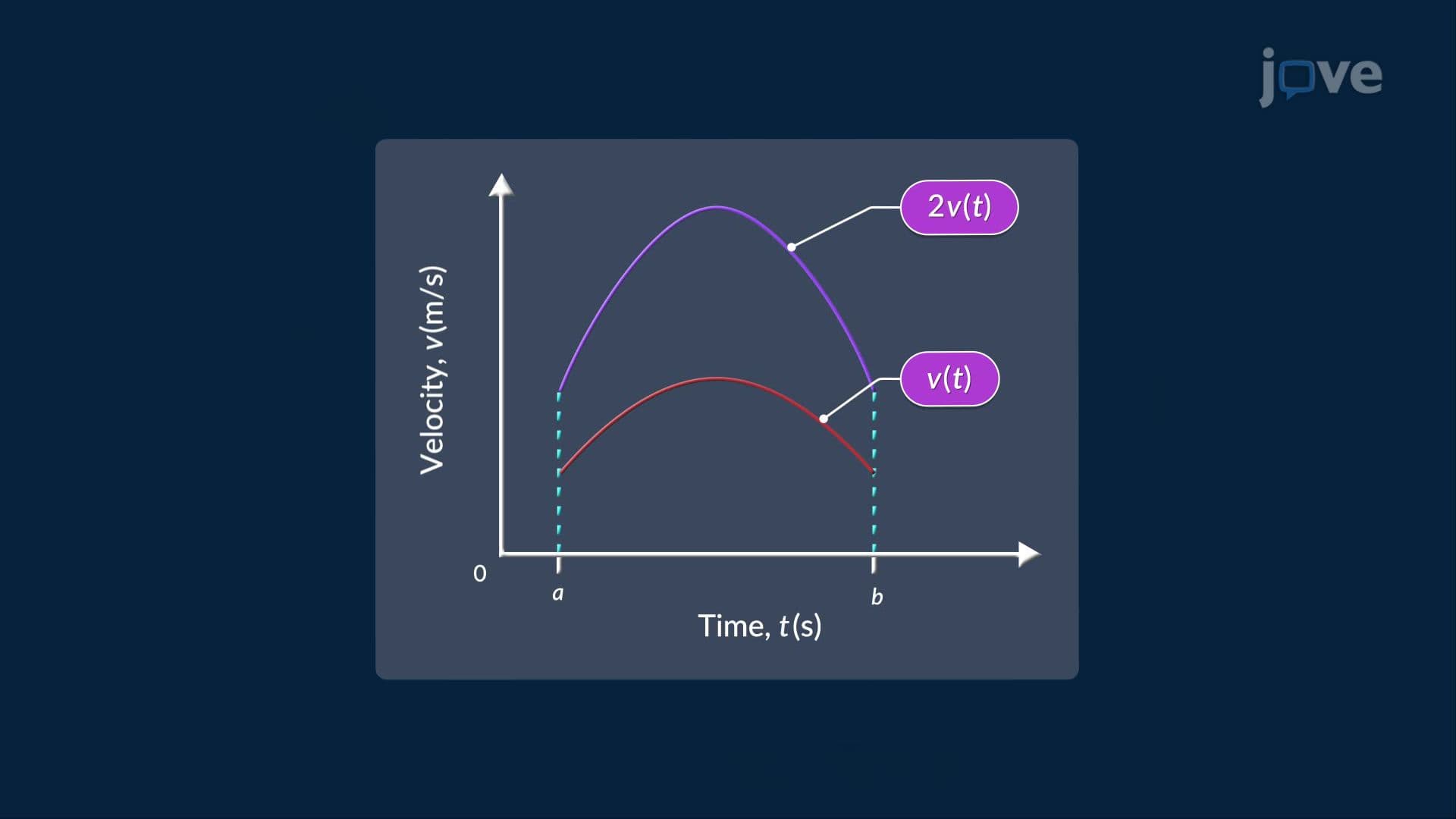
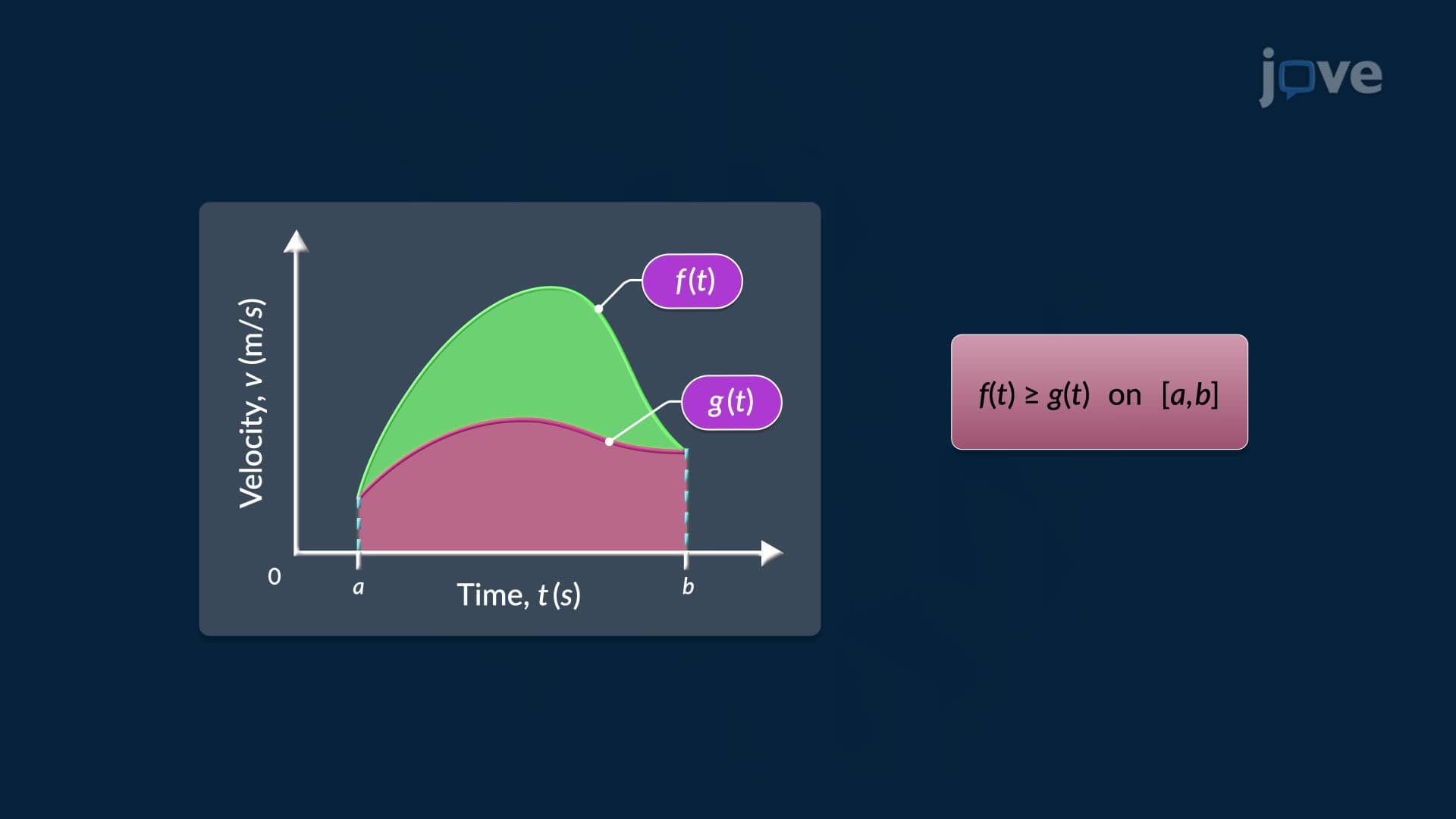
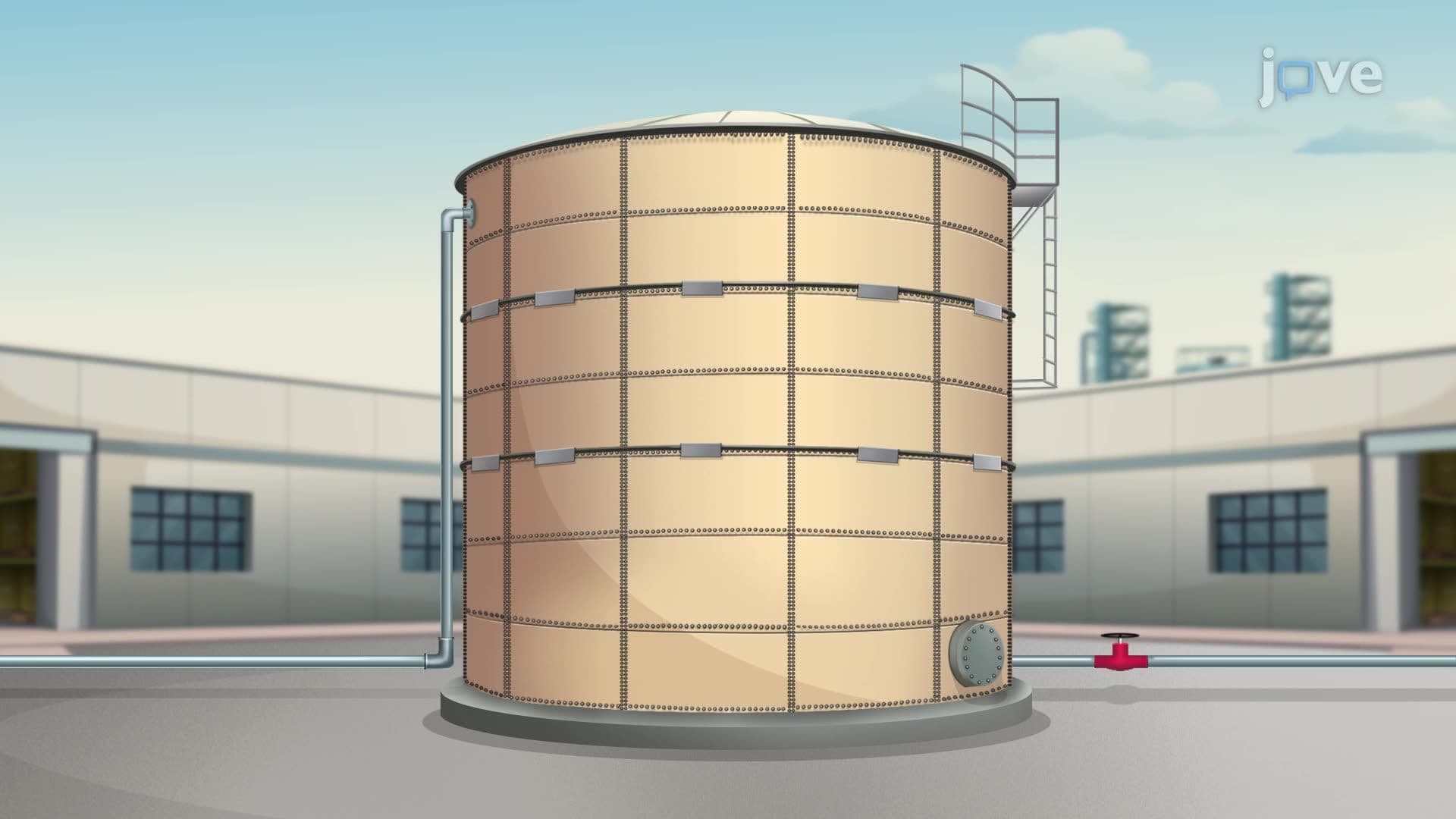
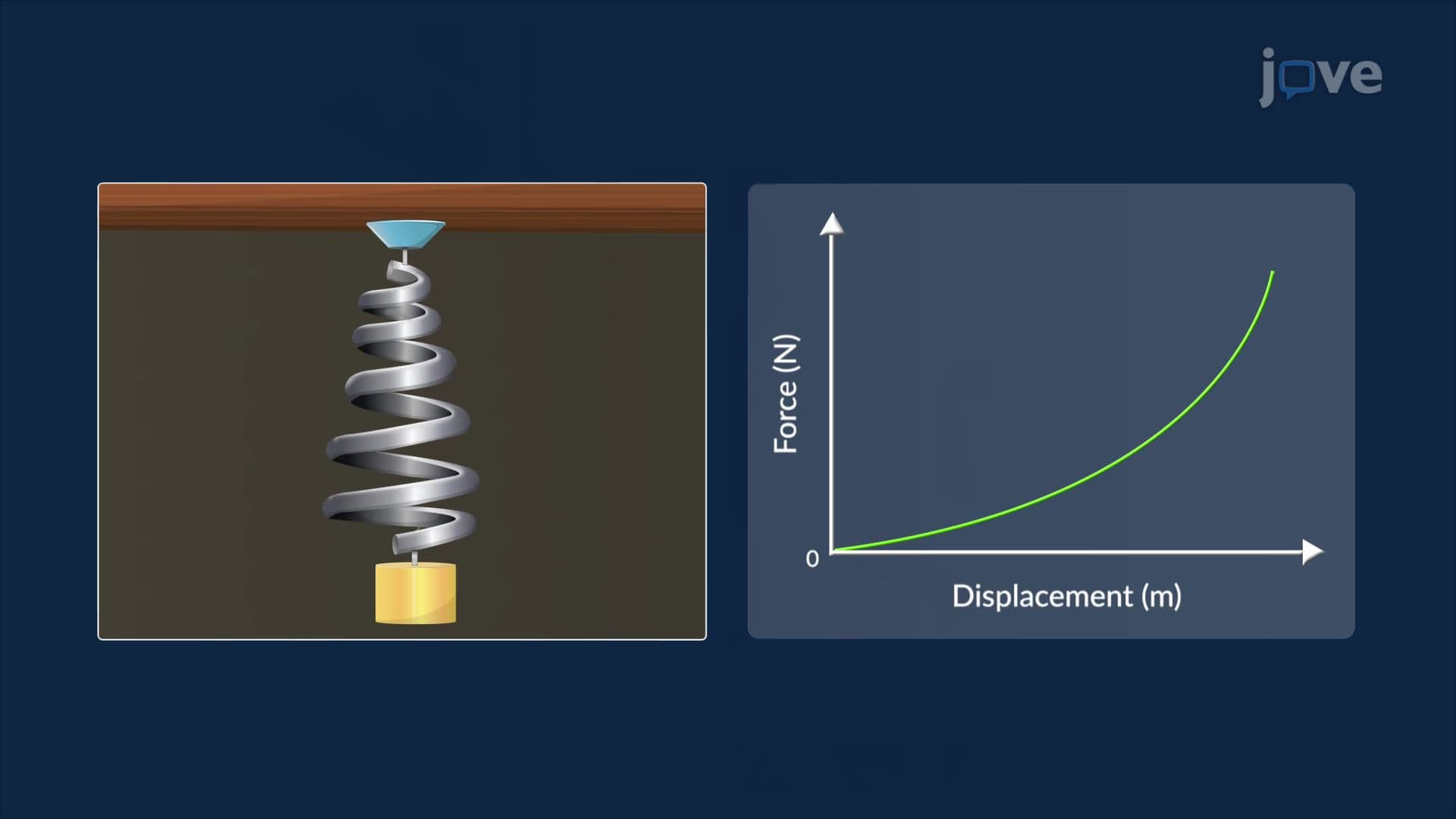
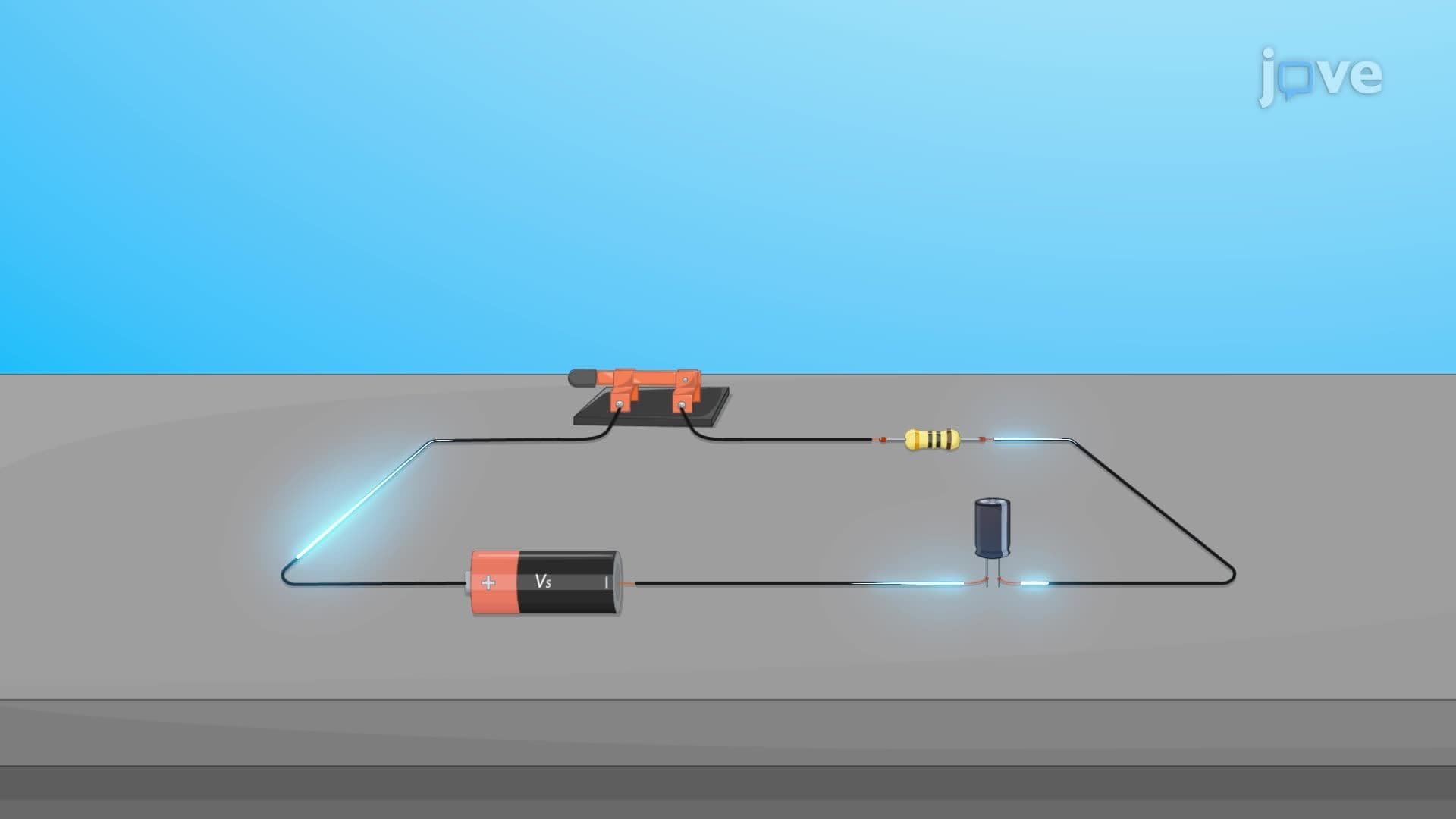
Integration is one of the most powerful tools in calculus, not just as an abstract operation, but as a method for solving real problems involving accumulation, area, volume, and change. Problem solving in application of integration means taking a known rate of change and using it to find a total quantity. Whether calculating the volume of air in your lungs, the work done by a variable force, or the area under a velocity curve, integration gives exact answers to questions that simple arithmetic cannot.
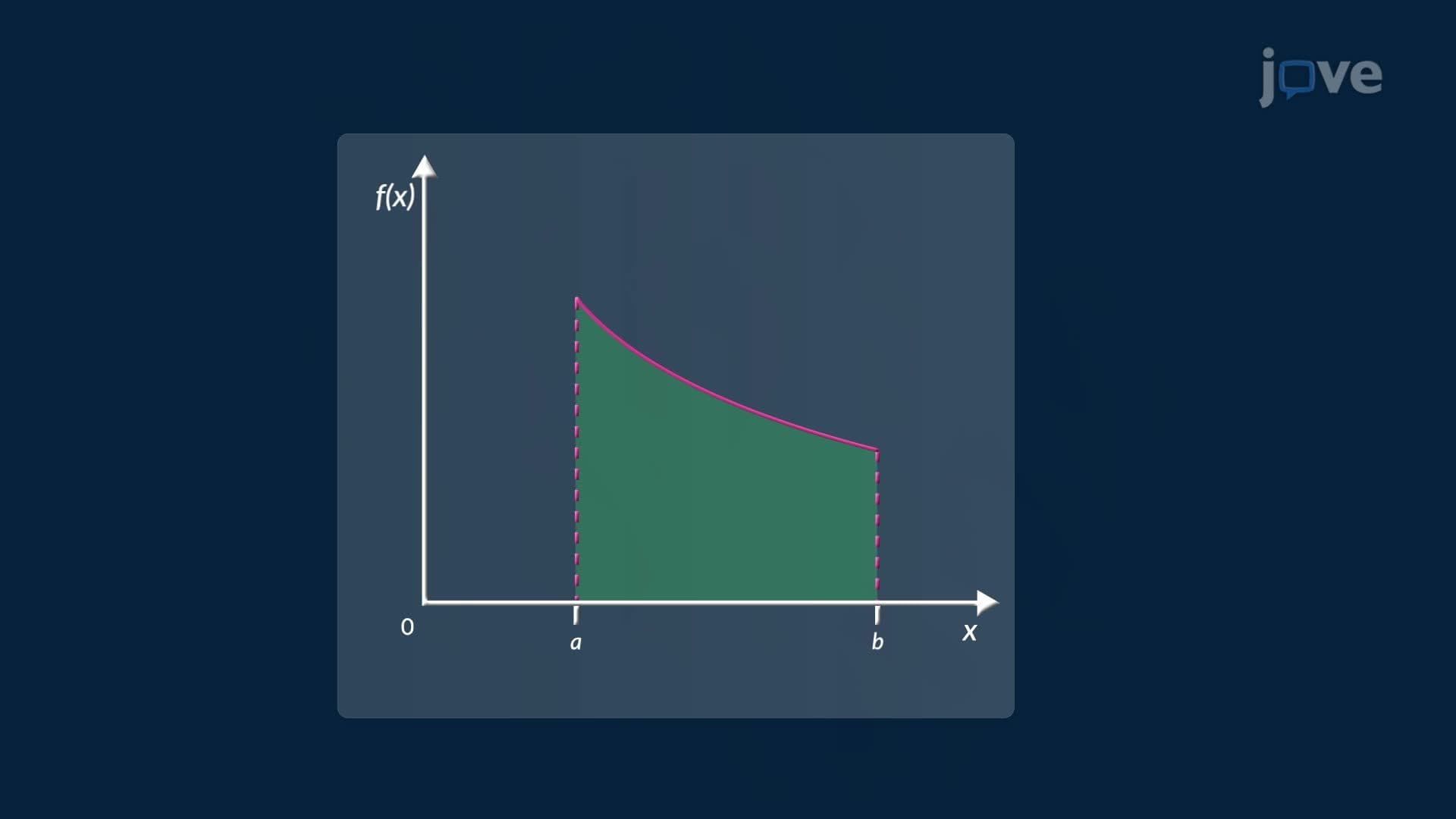
At its core, integration is the reverse of differentiation. If differentiation breaks a quantity down into its rate of change, integration builds that rate back into a total. There are two main types: indefinite integrals, which produce a general antiderivative (plus a constant C), and definite integrals, which evaluate that antiderivative over a specific interval to yield a numerical result.
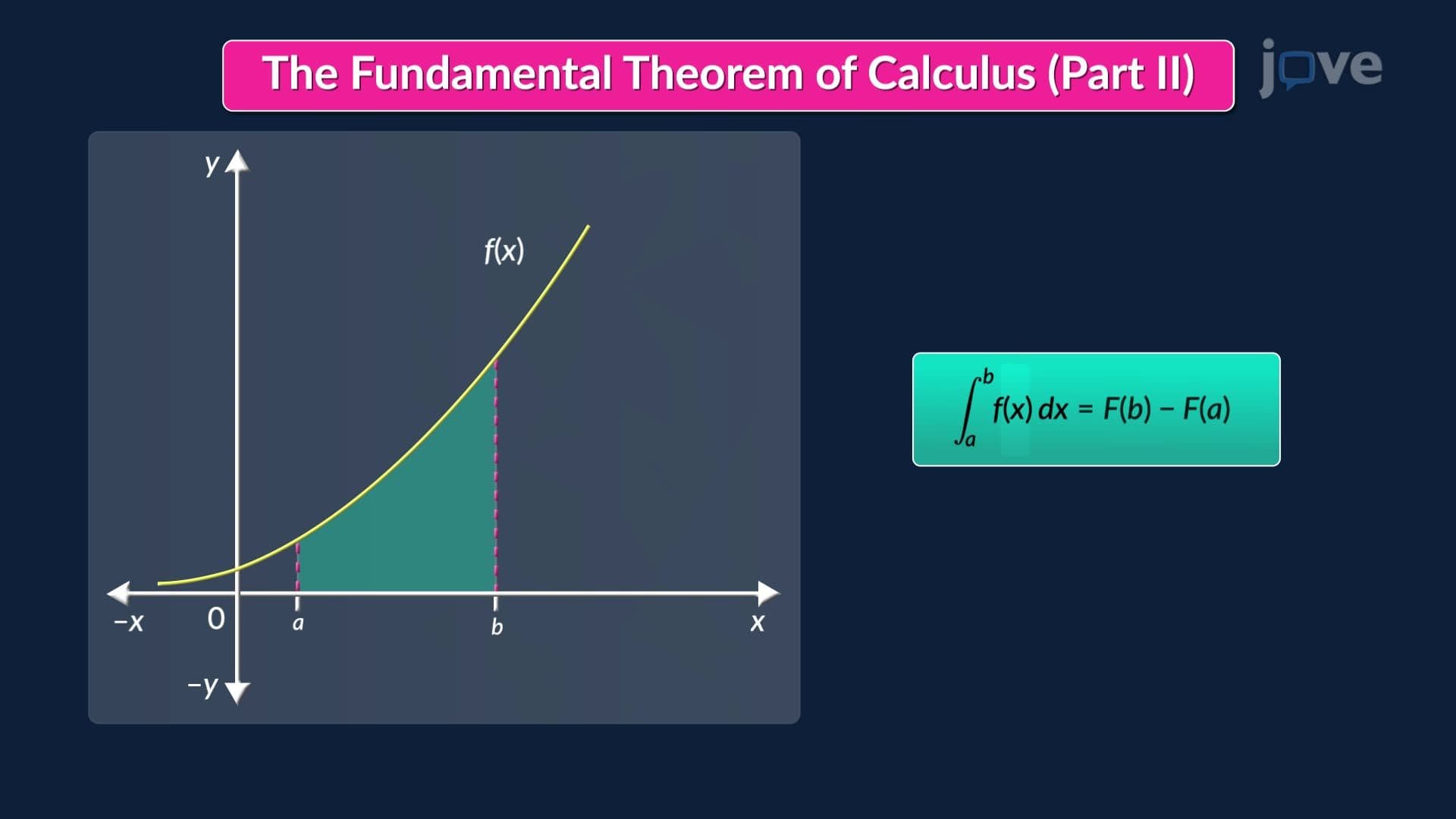
The Fundamental Theorem of Calculus connects these two ideas: it states that if F(x) is the antiderivative of f(x), then the definite integral of f(x) from a to b equals F(b) minus F(a). This theorem is the engine behind every application of integration you will encounter in AP Calculus AB, AP Calculus BC, or a college Calculus I course.
Many real-world integrals don't appear in a simple standard form. That's where u-substitution becomes essential. In the respiratory cycle example, the airflow rate is modeled as a sinusoidal function, specifically something proportional to sin(2πt/5), where t is time in seconds and 5 is the period of one full breathing cycle. The maximum airflow rate is approximately 0.5 liters per second, consistent with normal adult respiratory physiology.
To integrate this function, a new variable u is set equal to the expression inside the sine function (such as 2t/5). The differential dt is then rewritten in terms of du, and the limits of integration are updated to match the new variable. This transforms the integral into a standard sine form, whose antiderivative is negative cosine, making it straightforward to evaluate. This exact technique appears on AP Calculus exams and college midterms as a core problem-solving skill.
Once the integral is evaluated, the result is a function that describes the cumulative volume of inhaled air at any moment during the breathing cycle. The function rises during inhalation, peaks around 2.5 seconds, and returns toward zero during exhalation, perfectly matching the physiological reality of breathing. The negative cosine form naturally captures this oscillation.
This interpretation step is critical. In problem solving in application of integration, getting a numerical answer is only half the work, understanding what it means in context is just as important. In US college courses like Calculus for Life Sciences (taught at institutions such as UCLA, UT Austin, and Duke), students regularly apply exactly this kind of biological modeling. On the AP Calculus exam, questions often ask students to interpret integrals in context, not just compute them. Building that skill, linking math to meaning, is what makes integration genuinely useful.
Related Micro-courses