Loading video…

 22 Concepts
 8.4K views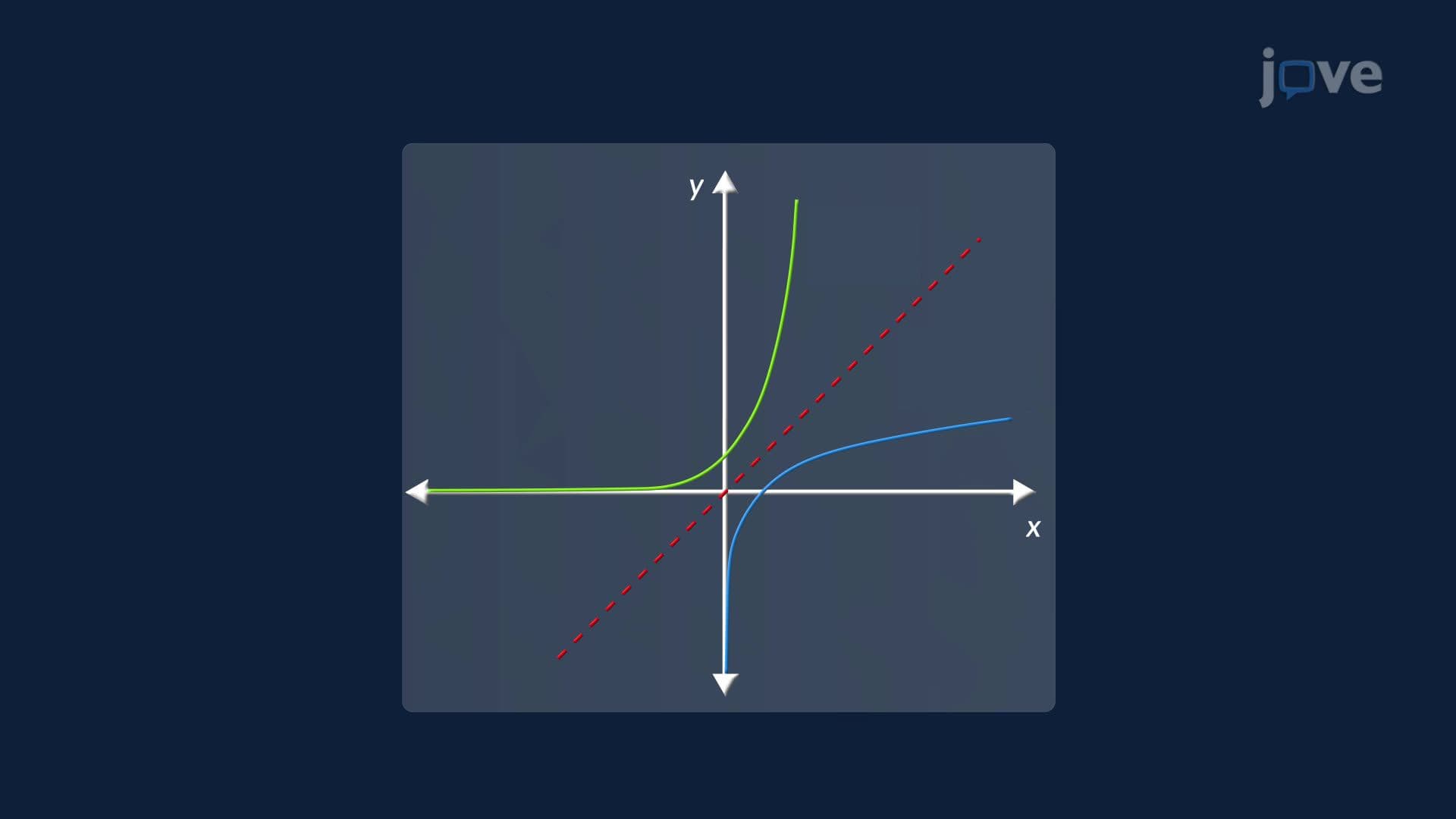

Video Summary: The Number E as a Limit Explained
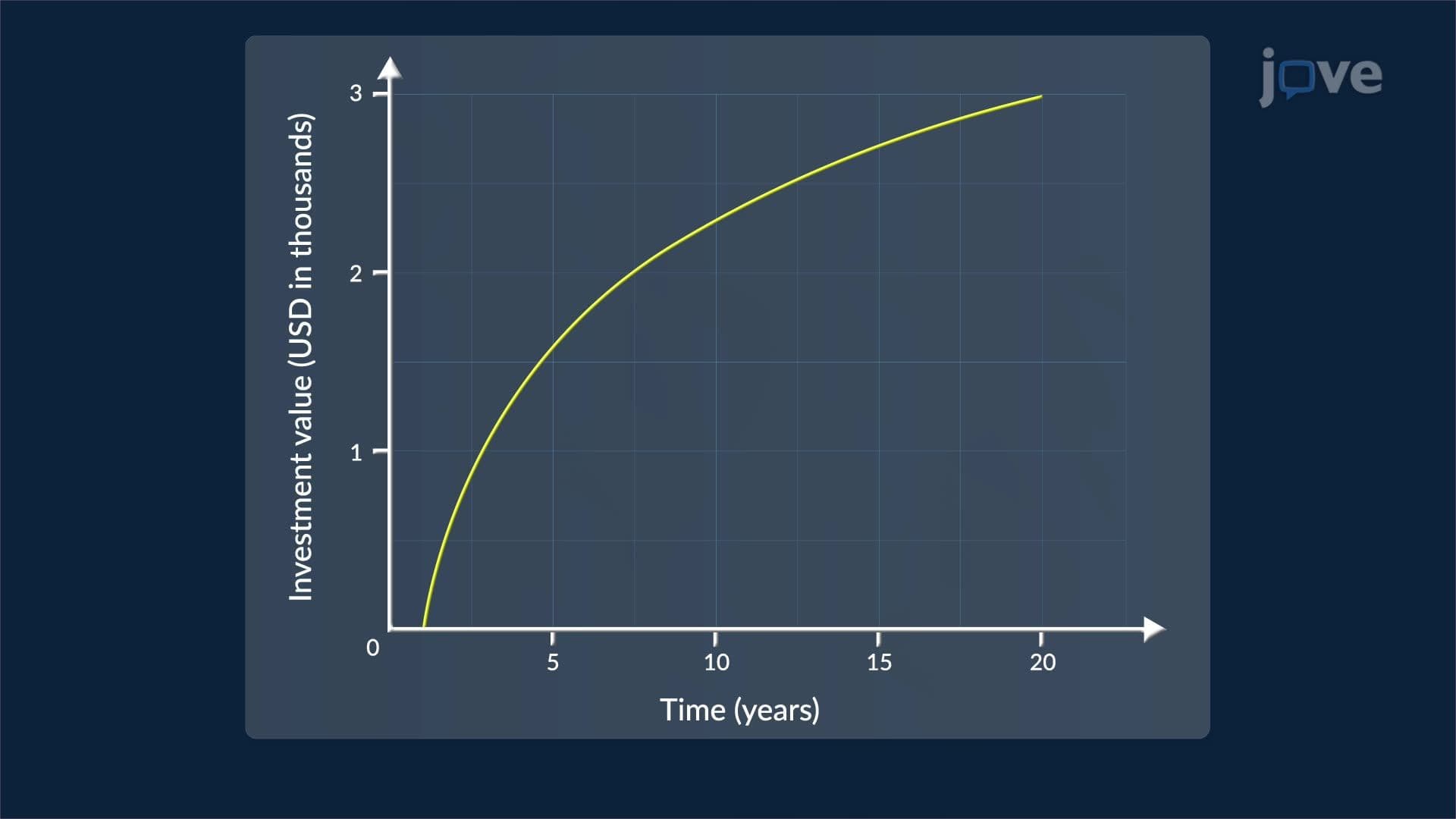
Ever wonder why your savings account grows the way it does? The number e as a limit is the hidden engine behind continuously compounded interest, one of the most powerful concepts in calculus. Understanding The Number E as a Limit Explained reveals how this constant (~2.718) emerges naturally from exponential growth. US banks use this principle when modeling investment growth. Watch the full video on JoVE Coach to master this concept with expert-led visuals and step-by-step explanations.
The number e (~2.71828) is one of the most important constants in mathematics, right alongside pi. But unlike pi, which comes from geometry, e emerges directly from calculus and the behavior of limits. Understanding The Number E as a Limit Explained means understanding *where* this constant comes from, not just what it equals. This distinction matters enormously in AP Calculus AB/BC and college-level calculus courses across the US.
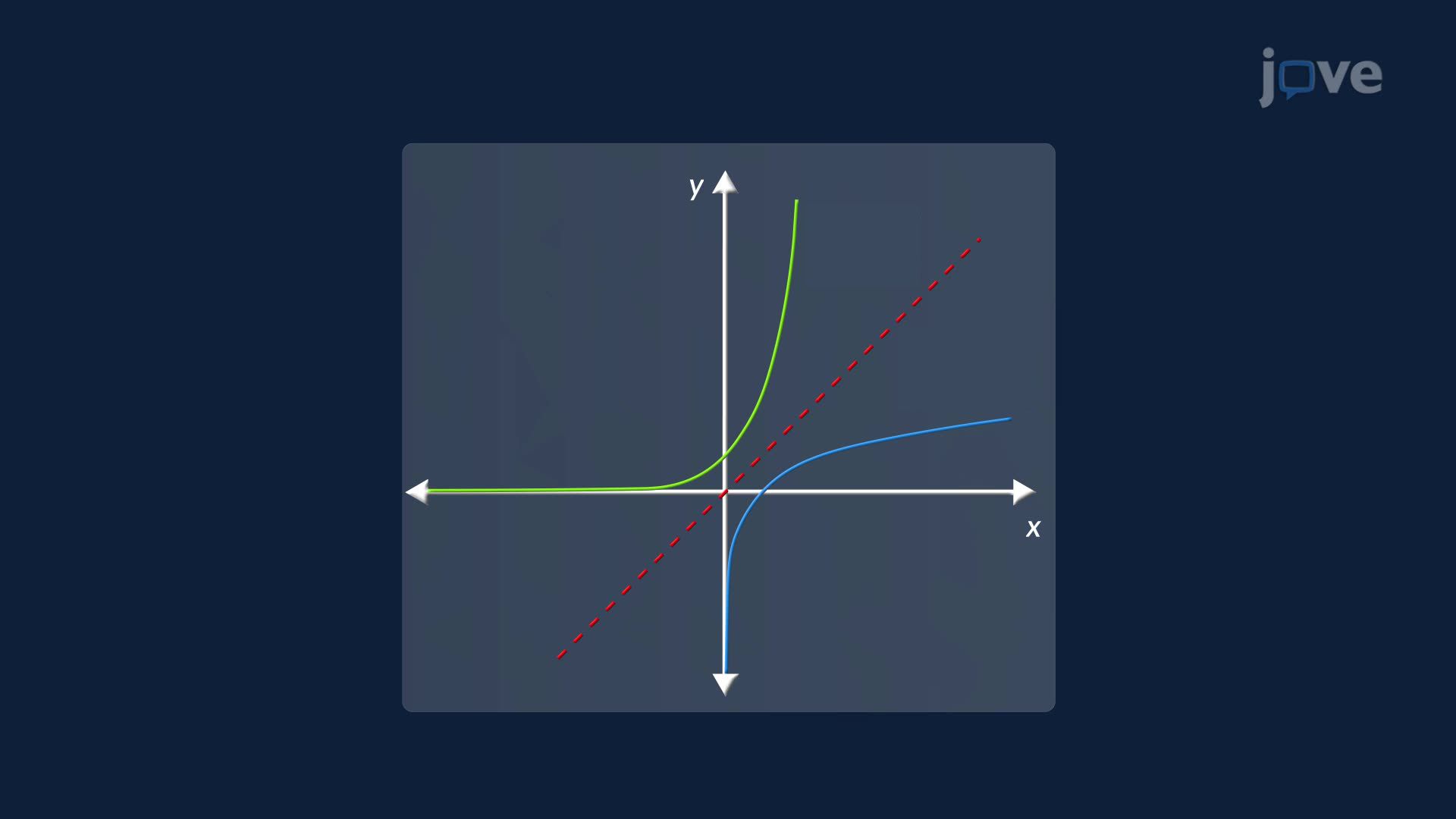
The natural logarithm, ln(x), is the inverse of the exponential function e^x. One of its most elegant properties is that its derivative is simply 1/x. At the specific input x = 1, this derivative equals exactly 1, a clean, special result.
Using the first principle of calculus (the formal limit definition of a derivative), the derivative of ln(x) at x = 1 can be written as a limit expression involving a small change h approaching zero. Since ln(1) = 0, the expression simplifies dramatically. By exponentiating both sides to eliminate the logarithm, we arrive at the first limit definition of e:
e = lim (1 + x)^(1/x) as x → 0
This expression tells us that as x gets infinitely small, the value of (1 + x)^(1/x) stabilizes at exactly e. This is not a coincidence, it is a direct consequence of how the natural log function behaves near x = 1.
A closely related, and perhaps more famous, definition replaces x with 1/n, where n is a growing integer:
e = lim (1 + 1/n)^n as n → ∞
As n increases without bound, the fraction 1/n shrinks toward zero, and the entire expression converges to e. This version is especially intuitive because it models continuously compounded interest. If a US bank compounds interest on a $1 deposit n times per year at 100% annual interest, the account balance after one year approaches e dollars as compounding becomes continuous. This is exactly why the formula A = Pe^(rt) appears in every US college finance and calculus textbook.
Once students understand e as a limit, they unlock a cascade of related calculus tools. The derivative of e^x is itself, a property that flows directly from the limit definition. This makes e^x unique and central to solving differential equations.
In practice, problems involving e regularly require the chain rule (differentiating composite functions like e^(3x²)), the product rule (differentiating x · e^x), and the power rule in combination. On AP Calculus exams, these combinations appear frequently. Implicit differentiation also uses e, for example, differentiating equations like e^y = x requires careful application of the chain rule on the left side.
On the AP Calculus AB and BC exams, limits and derivatives of exponential and logarithmic functions are tested directly. Understanding e as a limit helps students answer questions about exponential growth models, justify why d/dx[e^x] = e^x, and evaluate limits analytically rather than numerically. In college calculus courses (Calculus I and II), this concept is typically introduced in the first or second unit and reappears throughout topics like Taylor series, L'Hôpital's Rule, and higher-order derivatives.
Related Micro-courses