Loading subject page…


8,360 views


Video Summary: Inverse Hyperbolic Functions and Their Derivatives Explained
Did you know the drooping cables of the Golden Gate Bridge follow a mathematical curve modeled by hyperbolic functions? Understanding inverse hyperbolic functions and their derivatives unlocks how engineers calculate exact positions along structures like suspension bridges. These functions, including inverse hyperbolic sine, cosine, and tangent, reveal how horizontal and vertical positions relate. Watch the full video on JoVE Coach to master this concept with expert-led visuals and step-by-step explanations.
Calculus students often encounter trigonometric functions early, but inverse hyperbolic functions and their derivatives tend to appear later, in Calculus II or advanced high school courses, and carry significant power for modeling real-world shapes and physical systems. Far from being abstract, these functions describe curves seen in architecture, electrical engineering, and physics across the United States and beyond.
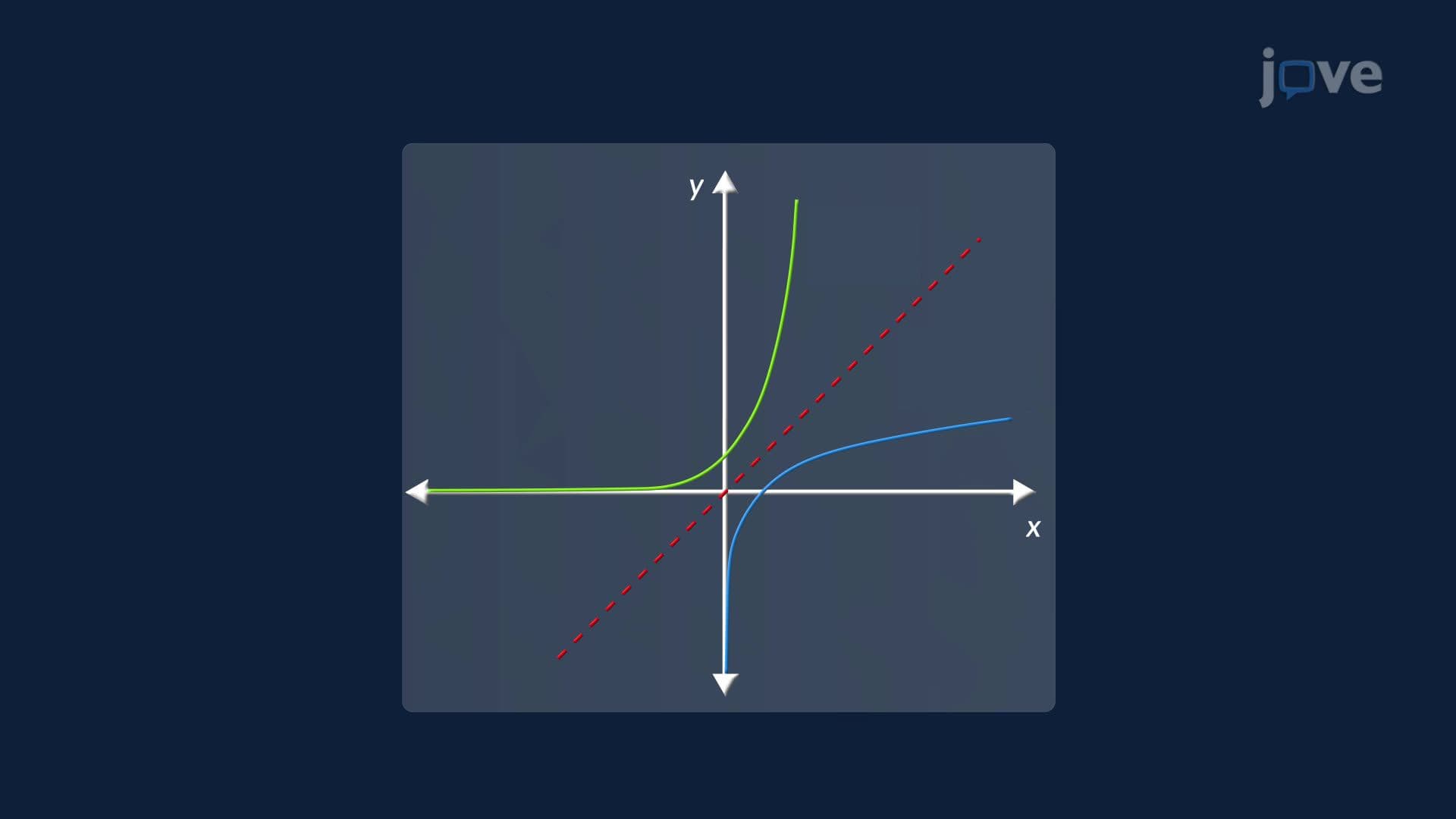
Hyperbolic functions, sinh(x), cosh(x), tanh(x), and their reciprocals, are defined using exponential functions rather than unit circles. Their inverses, written as sinh⁻¹(x), cosh⁻¹(x), tanh⁻¹(x), csch⁻¹(x), sech⁻¹(x), and coth⁻¹(x), reverse those mappings. One key advantage: each inverse hyperbolic function can be expressed as a natural logarithm. For example, sinh⁻¹(x) = ln(x + √(x² + 1)). This logarithmic form is especially useful for integration and for verifying derivative formulas by hand, a skill commonly tested in college Calculus II courses at universities across the US.
The most rigorous way to find the derivative of an inverse hyperbolic function is through implicit differentiation, a technique introduced in AP Calculus AB and extended in college calculus. Take y = cosh⁻¹(x) as an example. Rewriting gives cosh(y) = x. Differentiating both sides with respect to x: sinh(y) · (dy/dx) = 1, so dy/dx = 1/sinh(y). Using the hyperbolic identity cosh²(y) − sinh²(y) = 1, substitute sinh(y) = √(cosh²(y) − 1) = √(x² − 1). The final result: the derivative of cosh⁻¹(x) = 1/√(x² − 1), valid for x > 1. This multi-step process draws on the chain rule, algebraic identity substitution, and careful domain awareness, all core skills in AP Calculus BC and college-level math.
Once the basic formulas are established, the chain rule extends them to composite functions. For instance, if y = sinh⁻¹(3x²), then dy/dx = [1/√((3x²)² + 1)] · 6x, applying the chain rule to the inner function 3x². Similarly, the quotient rule and product rule become relevant when inverse hyperbolic functions appear alongside polynomials or other expressions. Memorizing the standard derivative forms, such as the derivative of tanh⁻¹(x) = 1/(1 − x²) for |x| < 1, is essential for solving problems efficiently on AP Calculus BC exams and college midterms.
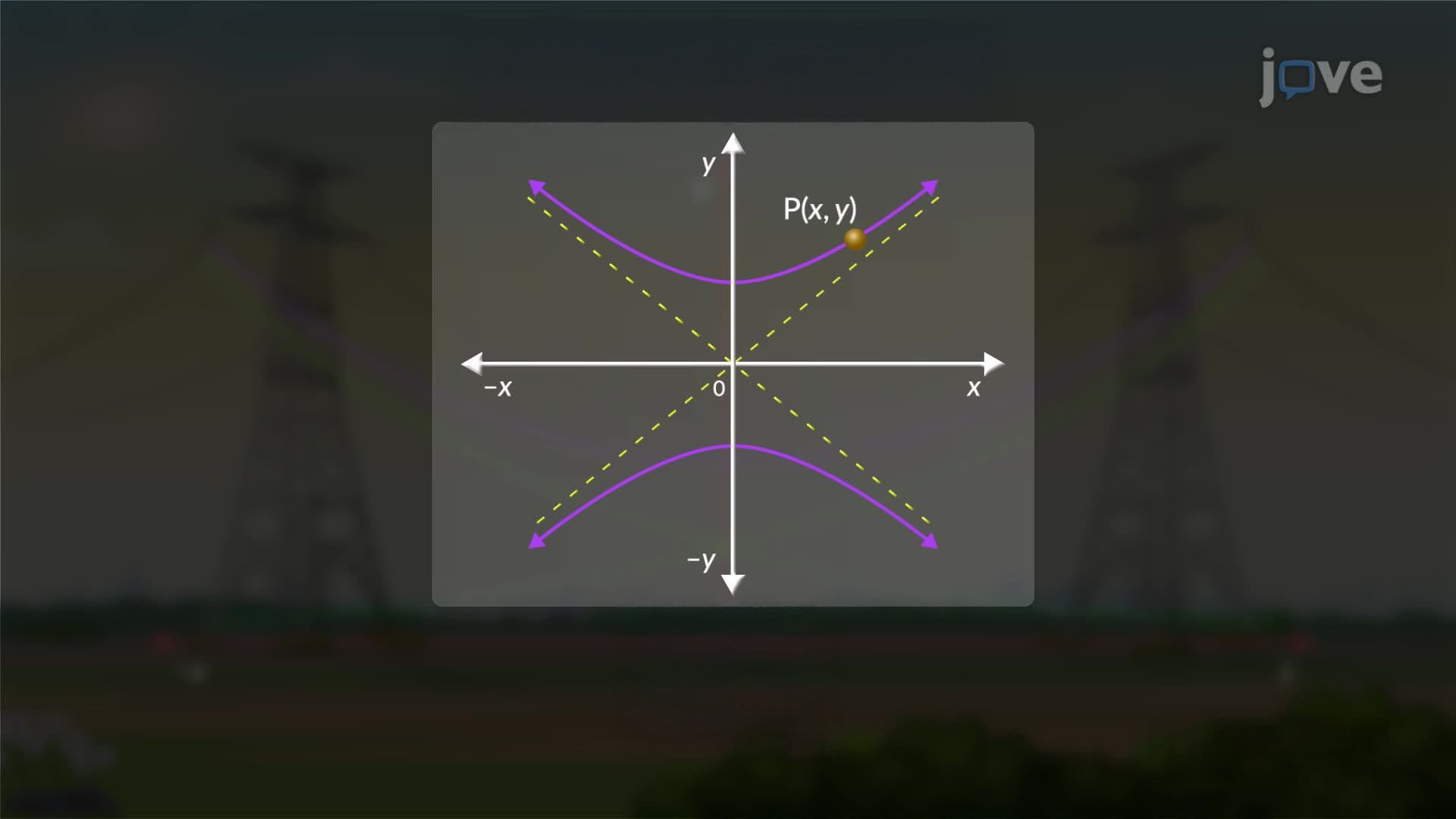
The cables of suspension bridges like the Verrazzano-Narrows Bridge in New York or the Mackinac Bridge in Michigan hang in a shape called a catenary, modeled by the equation y = a · cosh(x/a). When engineers know the vertical position y of a point on the cable, they use cosh⁻¹(y/a) to find the horizontal position x. The derivative of that inverse function tells them the rate of positional change, the curve is steepest near the towers and flattest at the midpoint. This real application shows why understanding the derivative of cosh⁻¹(x) is not just a textbook exercise but a genuine engineering tool used in US infrastructure design.
Related Micro-courses