Loading video…

 6 Concepts
 2.5K views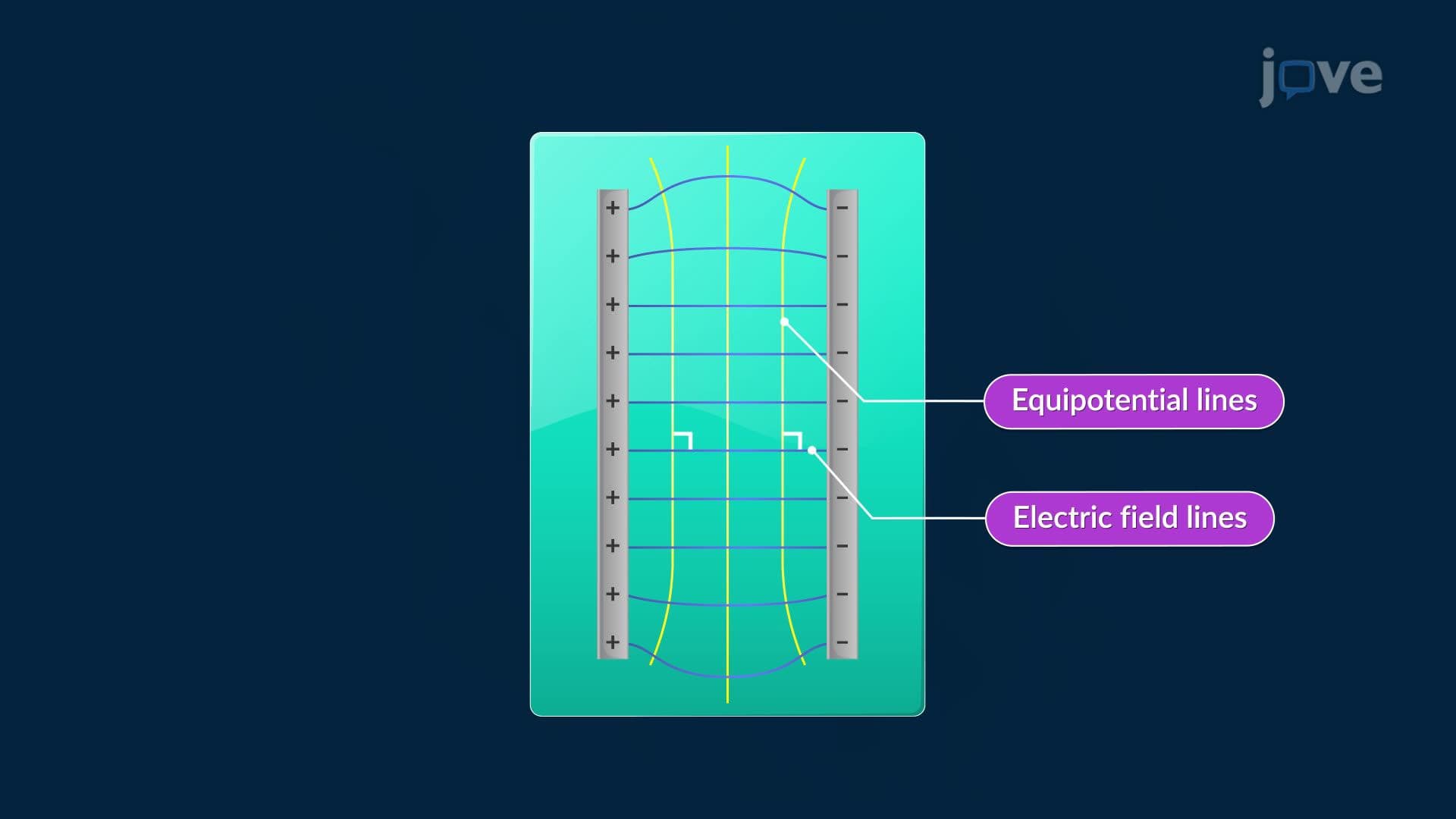

Video Summary: What are Orthogonal Trajectories
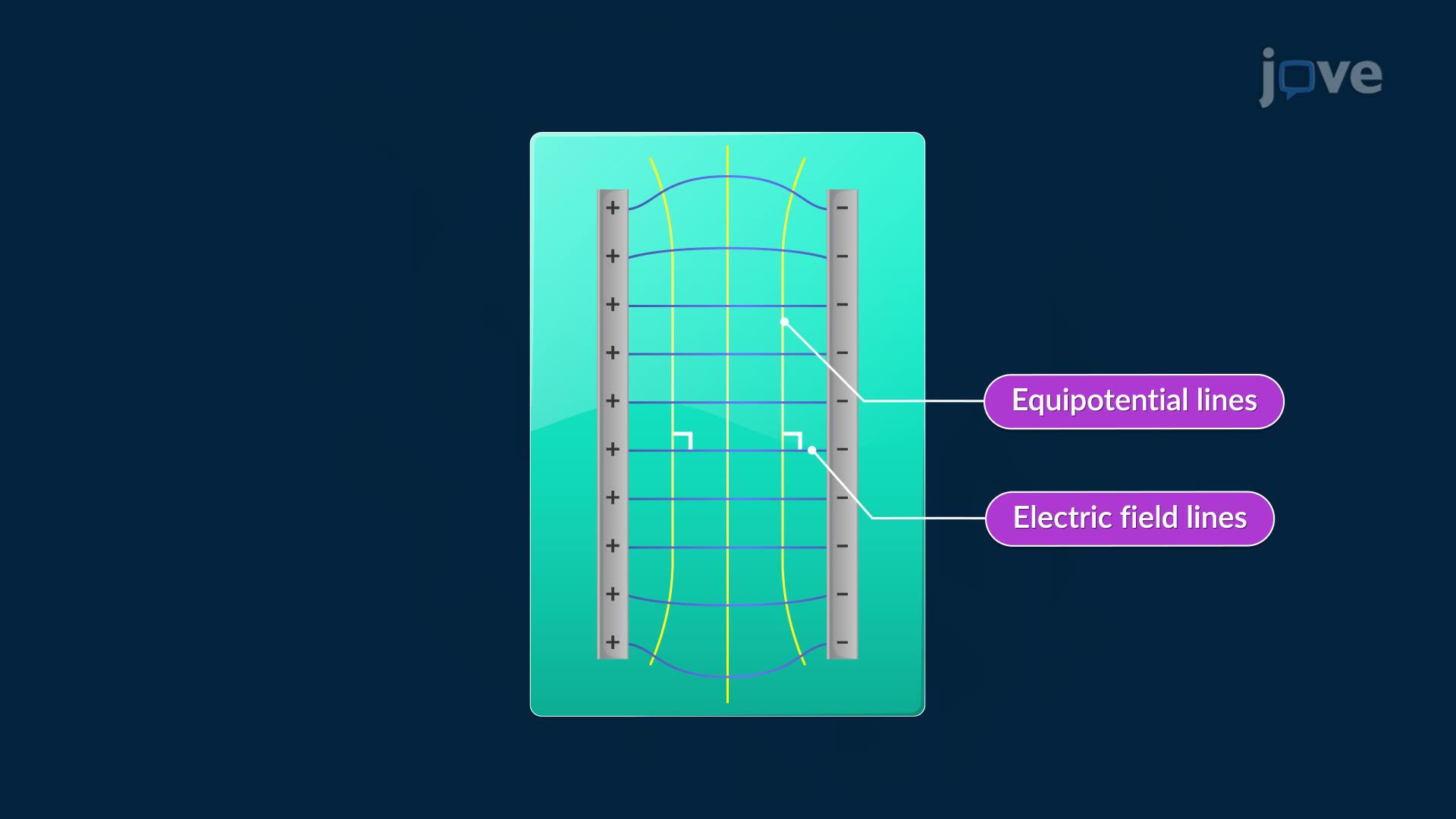
Did you know electric field lines in a physics lab never cross equipotential lines, they always meet at perfect right angles? That's orthogonal trajectories in action. This concept from orthogonal trajectories basics shows how two families of curves intersect perpendicularly, like parabolas crossing ellipses at every point. Understanding What are Orthogonal Trajectories? unlocks real connections between geometry, calculus, and electromagnetism. Watch the full video on JoVE Coach to master this concept with expert-led visuals and step-by-step explanations.
Orthogonal trajectories are pairs of curve families where every curve in one family intersects every curve in the other family at exactly 90 degrees. The word "orthogonal" means perpendicular, and "trajectory" refers to a path or curve. Together, they describe a geometric relationship that turns up repeatedly in calculus, physics, and engineering. At its core, finding orthogonal trajectories is a differential equations problem, making it a key topic in any college-level calculus or ODE course across the United States.
To find the orthogonal trajectories of a given curve family, follow a structured process rooted in ordinary differential equations. Start with the equation of the original family, which typically contains an arbitrary constant (like *k*). Differentiate the equation with respect to *x* to get an expression for the slope, dy/dx. Then eliminate the constant *k* to express the slope purely in terms of *x* and *y*, this gives the differential equation of the original family.
Here's the key insight: if two curves are perpendicular at a point, their slopes are negative reciprocals of each other. So if the original family has slope *m*, the orthogonal family has slope *-1/m*. Replace dy/dx with *-dx/dy* (or equivalently substitute the negative reciprocal into the slope expression) to get the differential equation for the orthogonal trajectories. Solving this new equation, often using separable equations or integration techniques, gives the orthogonal family.
For example, starting with the parabola family x = ky², differentiating and eliminating *k* yields the slope dy/dx = y/(2x). The orthogonal trajectory equation becomes dy/dx = -2x/y. Separating variables and integrating both sides produces the equation 2x² + y² = C, a family of ellipses centered at the origin. Every ellipse in this family crosses every parabola at a right angle, a beautiful result confirmed geometrically and algebraically.
Orthogonal trajectories appear throughout applied science. In AP Physics C and college electromagnetic theory, electric field lines are always perpendicular to equipotential lines, a direct physical manifestation of orthogonal trajectories. When students at US universities study electrostatics, they use this property to sketch field maps and solve boundary value problems.
In fluid mechanics, streamlines and equipotential lines in ideal fluid flow are orthogonal trajectories of each other. Civil and mechanical engineering programs at schools like MIT, Georgia Tech, and Purdue use this concept in modeling fluid behavior around surfaces. In heat transfer, isothermal curves (lines of equal temperature) are orthogonal to heat flow lines, another direct application of this mathematical relationship.
Orthogonal trajectories are a standard topic in college-level Ordinary Differential Equations (ODE) courses, typically covered after students master separable equations and first-order linear equations. On AP Calculus BC, students encounter related ideas through slope fields and differential equations, building the foundation needed to understand this topic fully in college. For students preparing for college midterms or final exams in Calculus II or Differential Equations, orthogonal trajectories problems test the ability to differentiate implicitly, eliminate constants, apply negative reciprocal slopes, and integrate, all in one problem. Practicing these multi-step problems strengthens fluency across several core calculus skills simultaneously.
Related Micro-courses