Loading concepts…


6 Concepts
22 Concepts
19 Concepts
17 Concepts
8 Concepts
11 Concepts
14 Concepts
6 Concepts
8 Concepts
16 Concepts
10 Concepts
13 Concepts
24 Concepts
17 Concepts
19 Concepts
 16 Concepts
 51 Views
 Popular topics






Sequences and Series Fundamentals covers one of the most essential topics in Calculus 2, building from ordered number patterns to infinite sums and their real-world behavior. Students explore convergence tests, power series, Taylor and Maclaurin series, and the binomial series-supported throughout by JoVE Coach with US applications ranging from spring-mass systems to special relativity energy approximations.
1. Introduction to Sequences and Convergence A sequence is an ordered list of numbers generated by a specific rule, indexed by natural numbers. Zeno's paradox-where a walker always covers half the remaining distance-illustrates an infinite sequence where each term gets smaller but never exactly reaches zero. A sequence converges when its terms approach a single finite value as the index grows. Two key properties determine this: boundedness (terms stay within fixed limits) and monotonicity (terms always increase or decrease). The Monotonic Sequence Theorem states that any sequence satisfying both conditions must converge-like a cooling cup of coffee settling to room temperature.
2. Infinite Series and Partial Sums An infinite series is the sum of all terms in an infinite sequence. Because the addition never ends, mathematicians track convergence through partial sums-running totals of the first *n* terms. If these partial sums approach a finite limit, the series converges; otherwise, it diverges. A bouncing ball dropping from one meter, with each bounce reaching half the prior height, produces a convergent series summing to exactly two meters total travel distance. By contrast, summing all positive integers produces partial sums that grow without bound, making that series divergent.
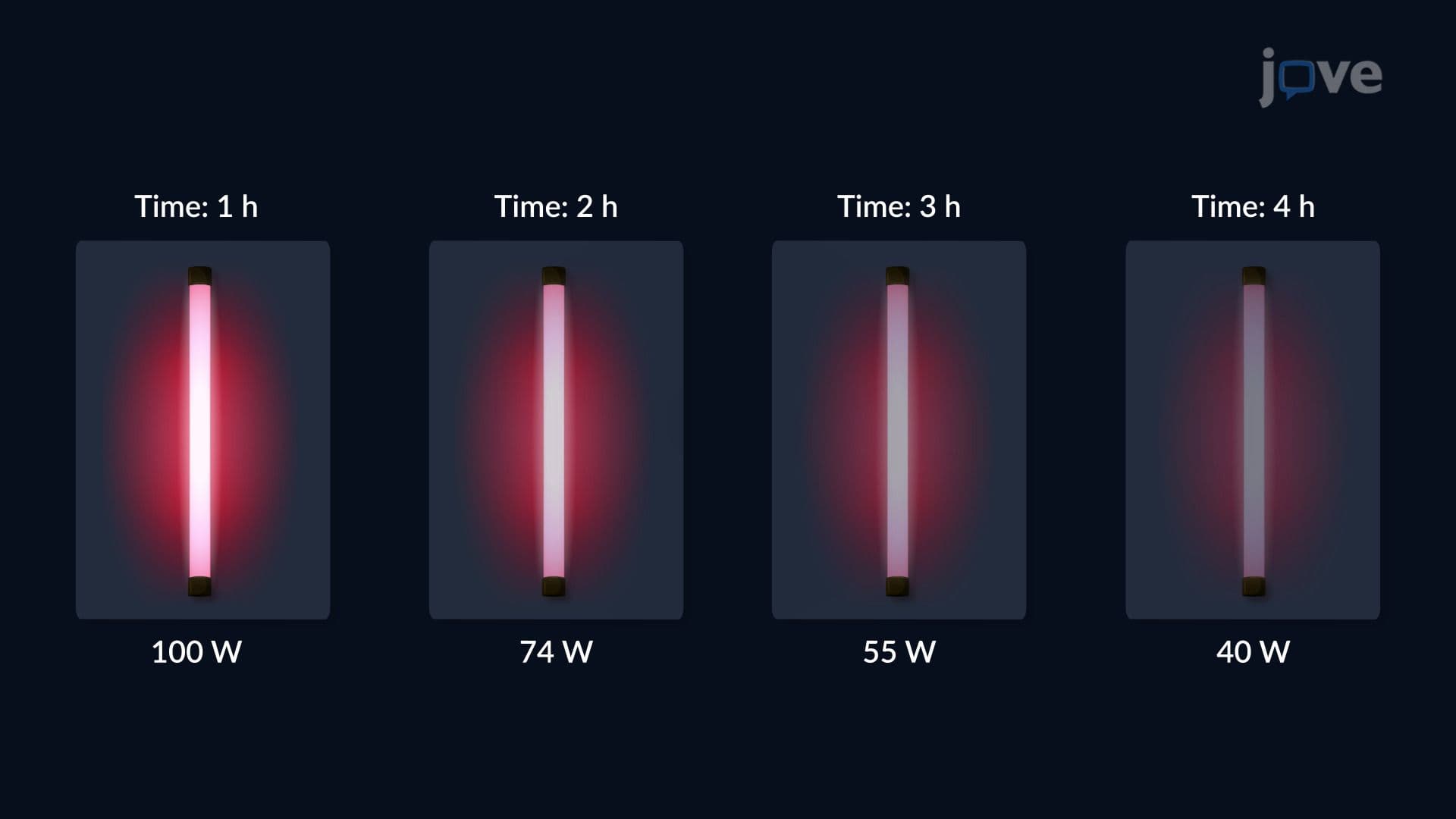
3. The Integral Test When direct summation of a series is too complex, the Integral Test connects the convergence of a series to the convergence of a related improper integral. The test applies when the corresponding function is positive, continuous, and decreasing. If the improper integral converges to a finite value, so does the series-and vice versa. A practical analogy is a glow stick dimming exponentially over time: the total energy emitted maps onto an improper integral, and its finite value confirms the series of hourly energy values also converges to a finite total.
4. Comparison Tests Two comparison strategies help determine convergence for series of positive terms. The Direct Comparison Test checks whether each term of an unknown series is bounded above or below by a known benchmark. If the unknown series is term-by-term smaller than a convergent benchmark, it converges; if larger than a divergent one, it diverges. When direct comparison is awkward, the Limit Comparison Test evaluates the ratio of corresponding terms as the index approaches infinity. A positive, finite ratio means both series share the same convergence behavior. In clinical research, this method models long-term drug accumulation to verify safe, steady-state concentrations.
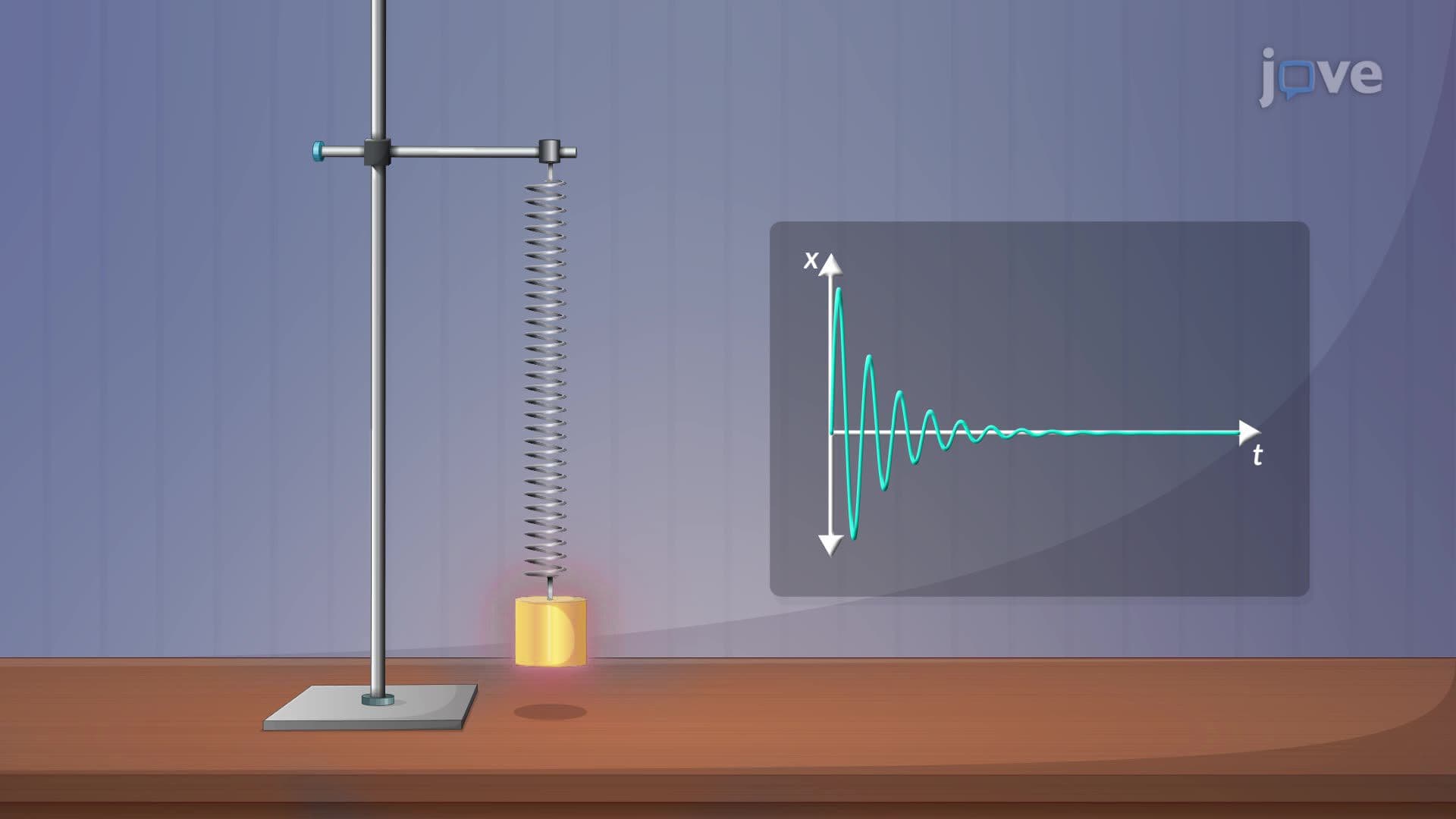
5. Alternating Series and Absolute Convergence An alternating series has terms that switch between positive and negative values. The Alternating Series Test confirms convergence when two conditions hold: the absolute values of the terms decrease steadily, and those magnitudes approach zero. A damped spring oscillating with decreasing amplitude models this perfectly-each swing is smaller than the last, and motion eventually stops. If the series of absolute values also converges, the series is called absolutely convergent, which is a stronger condition. Absolute convergence guarantees that rearranging terms will not change the sum.
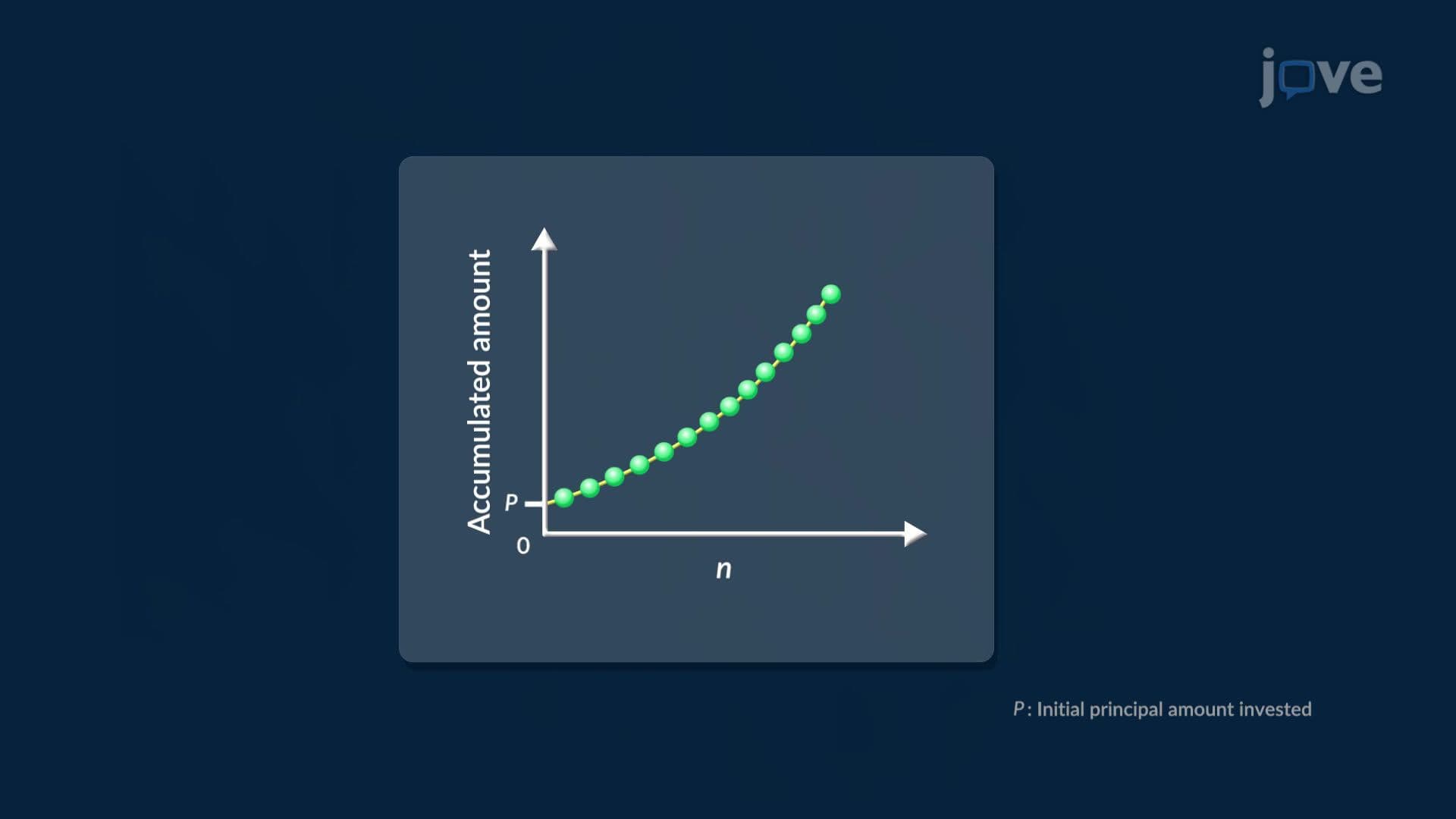
6. The Ratio Test The Ratio Test determines convergence by examining the limit *L* of the ratio of consecutive term magnitudes. If *L* < 1, the series converges; if *L* > 1 or equals infinity, it diverges; if *L* = 1, the test is inconclusive and another method must be used. A compound interest scenario illustrates divergence clearly: when each term is 1.04 times the previous one, the ratio equals 1.04, which exceeds 1, confirming the accumulated sum grows without bound. The Ratio Test is especially effective for series involving factorials or exponential terms.
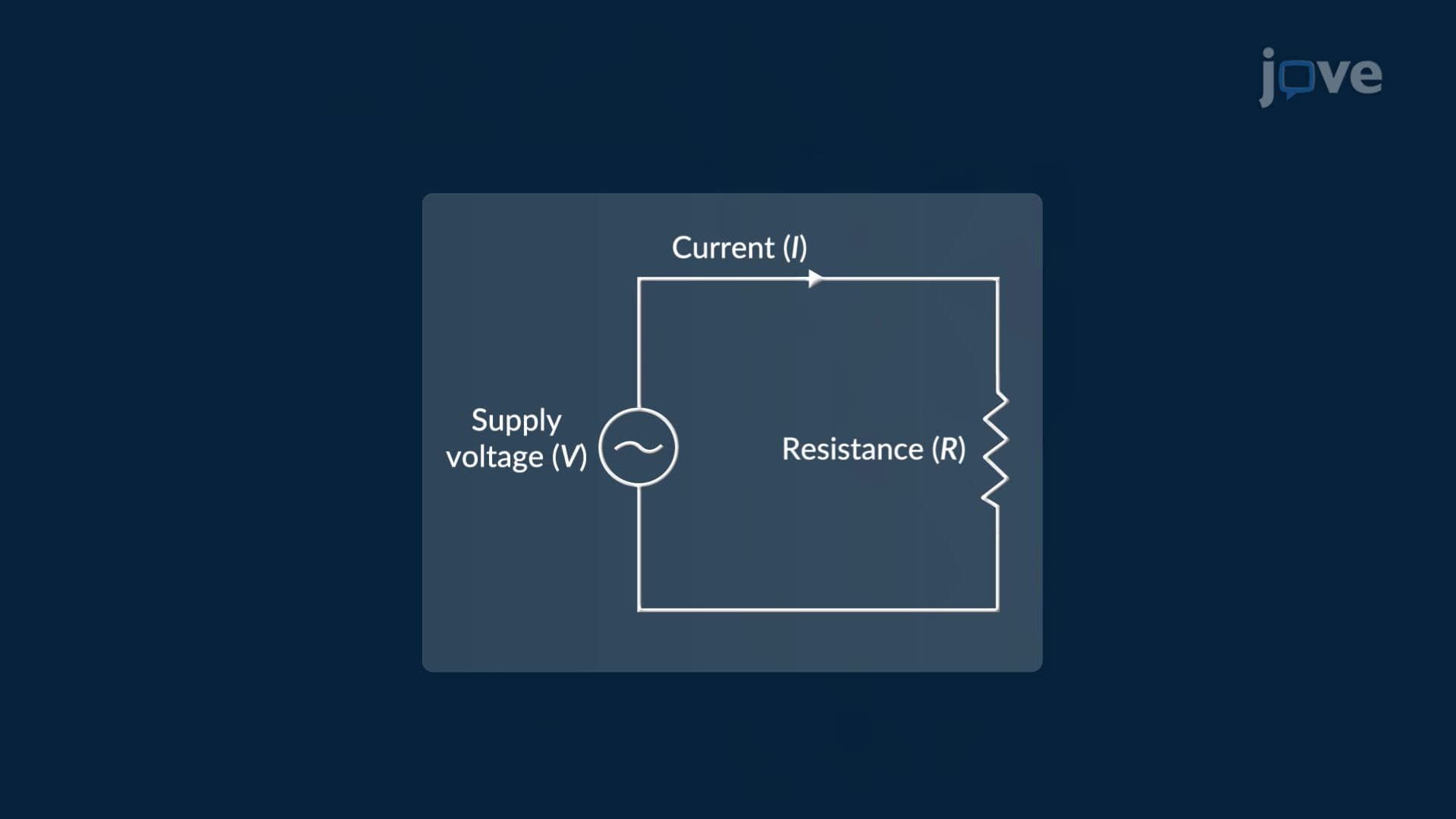
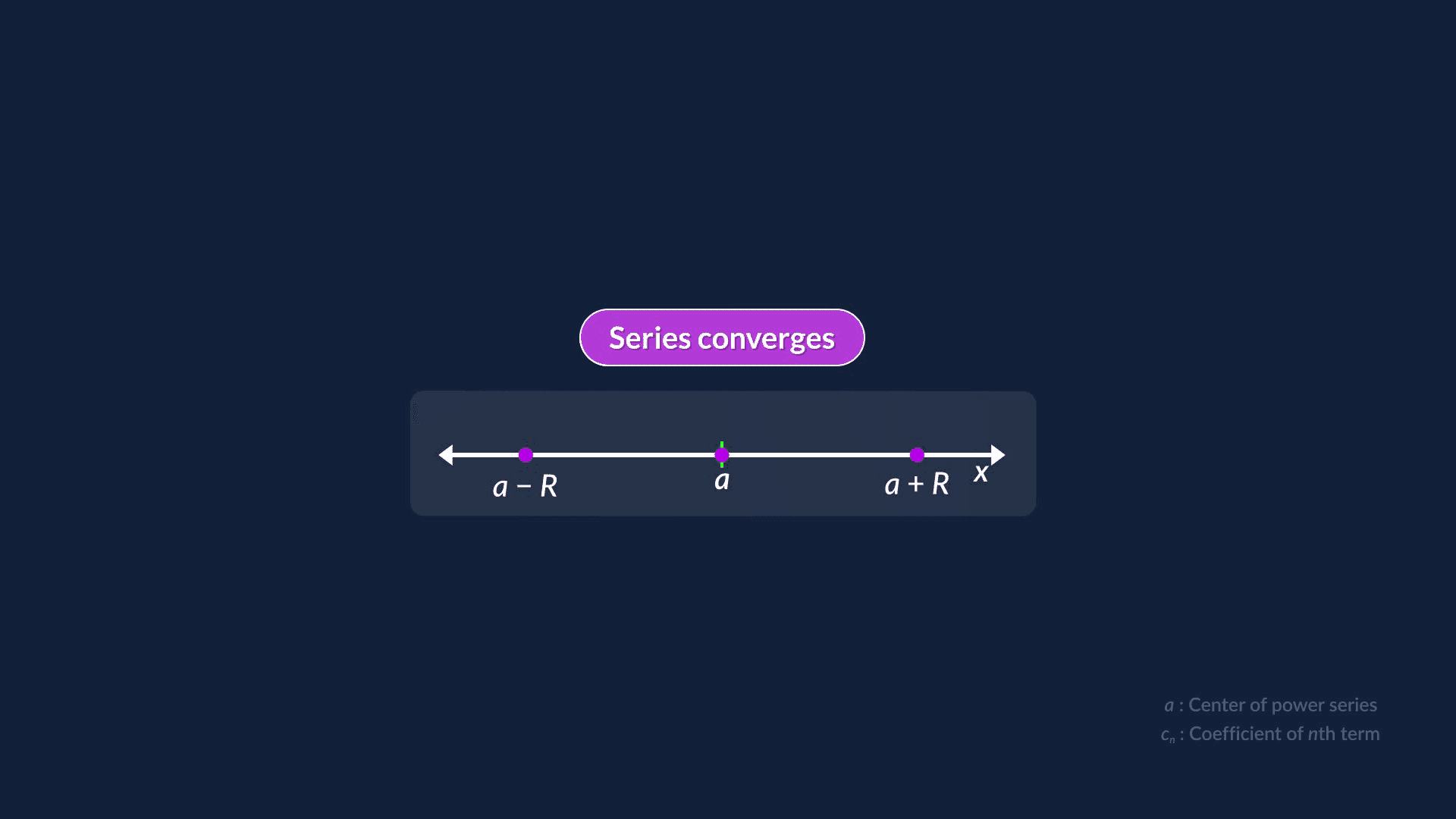
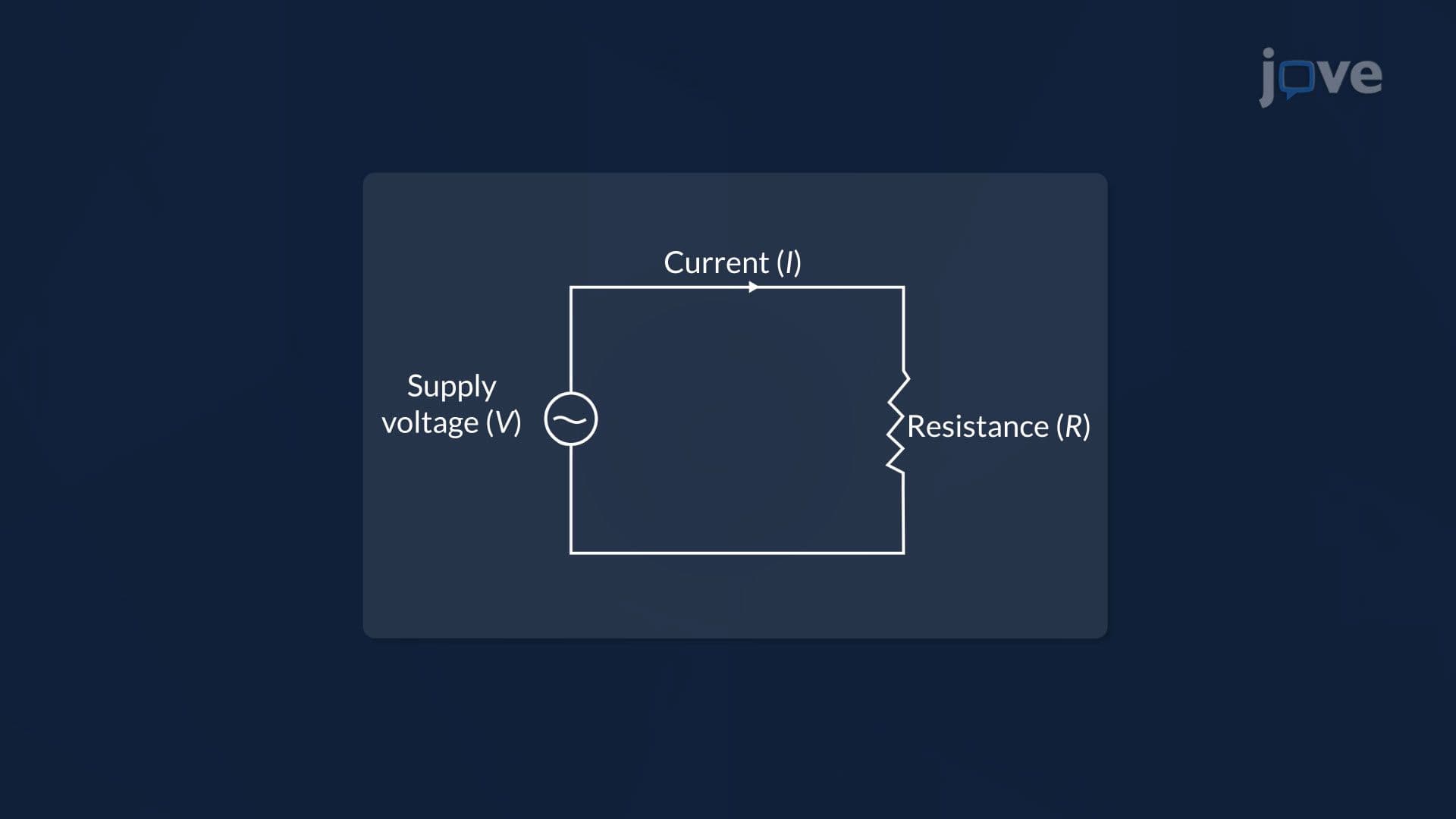
7. Power Series, Radius, and Interval of Convergence A power series is an infinite polynomial-like sum centered at a point *a*, with each term built from a coefficient and a power of (*x* − *a*). The series converges only within a specific range of *x* values called the interval of convergence. The radius of convergence *R* measures the distance from the center to the interval's boundary. For the geometric series centered at zero, the interval is (−1, 1) and the radius equals 1. Endpoints must always be tested separately because the Ratio Test is inconclusive there. In AC circuit simulation, power series replace trigonometric voltage functions with polynomial expressions for faster computation.
8. Bessel Function of Order Zero The Bessel function of order zero is a specific power series built to model phenomena with radial symmetry and energy decay-something standard sine and cosine functions cannot capture. When a stone is thrown into a still pond, the circular ripple spreads outward, and wave height decreases with distance from the center. The Bessel function tracks this behavior using alternating signs and rapidly growing denominators in each term, which prevent the series from growing to infinity. Each successive term acts as a mathematical correction that pulls the oscillating curve back toward zero, faithfully capturing the physical decay of wave energy.
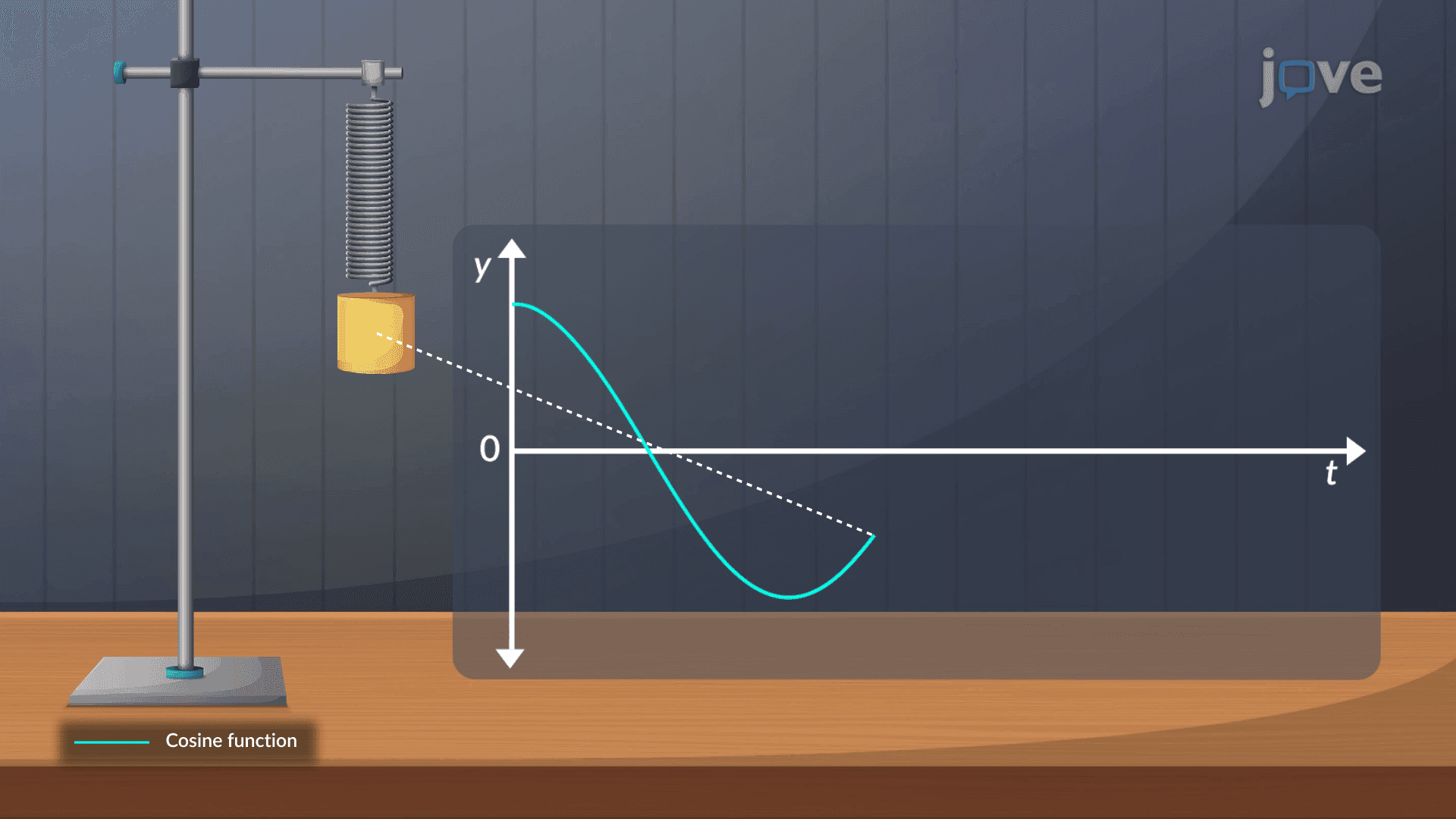
9. Taylor Series, Maclaurin Series, and Applications A Taylor series represents a smooth function as an infinite power series centered at a chosen point *a*. Each coefficient is determined by the function's derivatives evaluated at *a*, divided by the corresponding factorial. When the center is zero, the result is a Maclaurin series. Practical applications include approximating cosine in a mass-spring system for high-speed computing, replacing the sine function in a nonlinear pendulum equation to produce a solvable linear model, and expanding relativistic energy using the binomial series to recover the classical kinetic energy formula when velocity is much smaller than the speed of light.
10. Convergence of Taylor Series and Taylor's Theorem Taylor's Theorem states that a function near a point *a* equals a finite Taylor polynomial plus a remainder term that quantifies the approximation error. This error depends on a higher-order derivative evaluated somewhere between *a* and *x*. As the polynomial degree increases, the remainder often shrinks near *a*. If the remainder approaches zero for all *x* in an interval as the degree grows to infinity, the Taylor series converges to the actual function on that interval. This distinction-between a Taylor series existing and a Taylor series actually equaling its function-is critical for rigorous use of series approximations in physics and engineering.