Loading video…


 16 Concepts
 51 views

Video Summary: Bessel Function of Order Zero Explained
Why can't a simple sine wave model the ripples spreading across a pond at Yellowstone's Morning Glory Pool? The answer lies in the Bessel function of order zero, a powerful mathematical tool built to handle wave behavior with radial symmetry. Unlike standard trigonometric functions, this special power series decays as distance increases, mirroring real physical energy loss. Watch the full video on JoVE Coach to master this concept with expert-led visuals and step-by-step explanations.
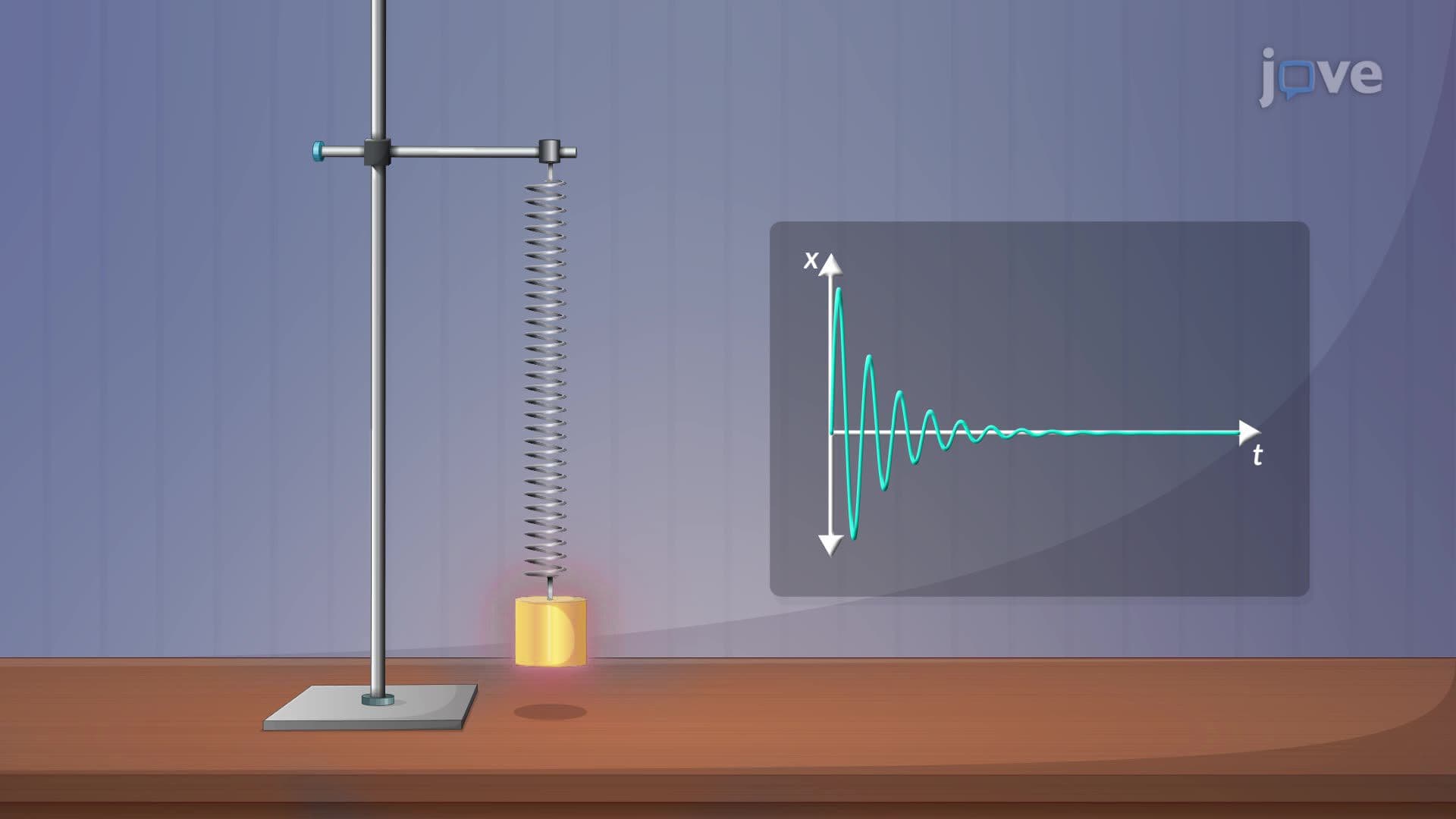
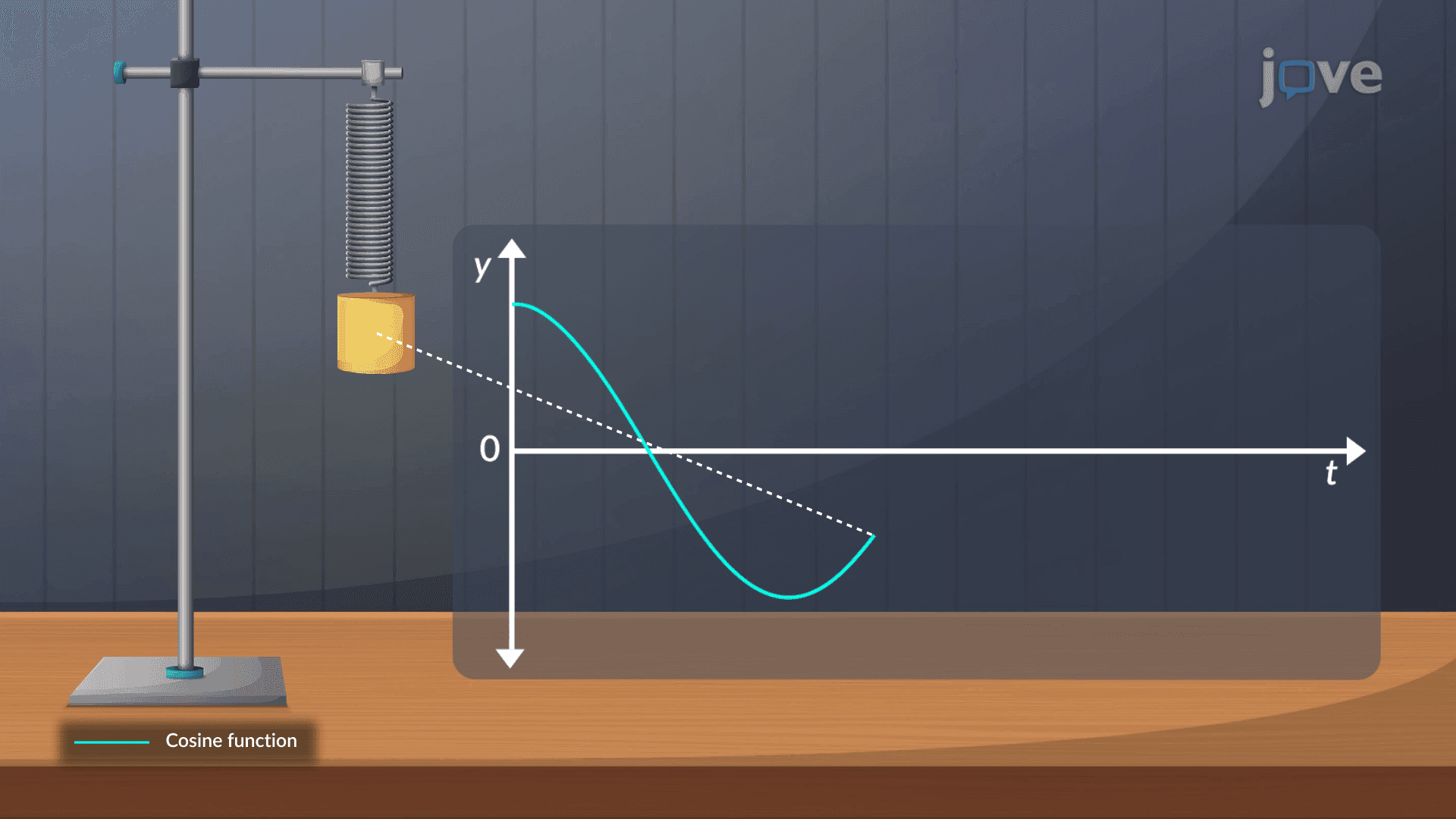
Drop a pebble into a calm lake and watch the circular wave that fans outward. The height of that wave does not stay constant, it shrinks as energy spreads across a larger and larger ring. Standard trigonometric functions like sine and cosine oscillate at a fixed amplitude forever, making them mathematically useless for this situation. The Bessel function of order zero solves this problem by encoding both oscillation and decay into a single, elegantly constructed power series.
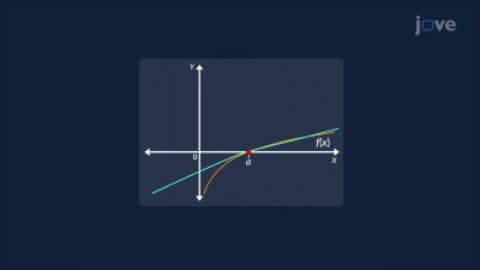
Before engaging with the Bessel function directly, it helps to ground it within the broader family of power series, infinite sums of terms in the form c(n) · x^n. You have likely already met members of this family. The Maclaurin series represents a function as an infinite sum centered at zero, while the Taylor series generalizes this to any center point. The geometric series is perhaps the most familiar: 1 + x + x² + x³ + ···, valid only when |x| < 1.
The Bessel function of order zero, often written as J(0)(x), belongs to this same family but is defined by a specific pattern of alternating signs and factorial-squared denominators:
J(0)(x) = 1 − x²/2² + x⁴/(2² · 4²) − x⁶/(2² · 4² · 6²) + ···
Each term grows more slowly than the last, which is precisely what forces the function to behave like a decaying wave rather than an exploding polynomial.
A natural follow-up question is: *how do you tell if a series converges?* For the Bessel function, mathematicians rely on tools taught in second-semester college calculus, tools you will encounter in AP Calculus BC, college Calculus II midterms, and university-level differential equations courses.
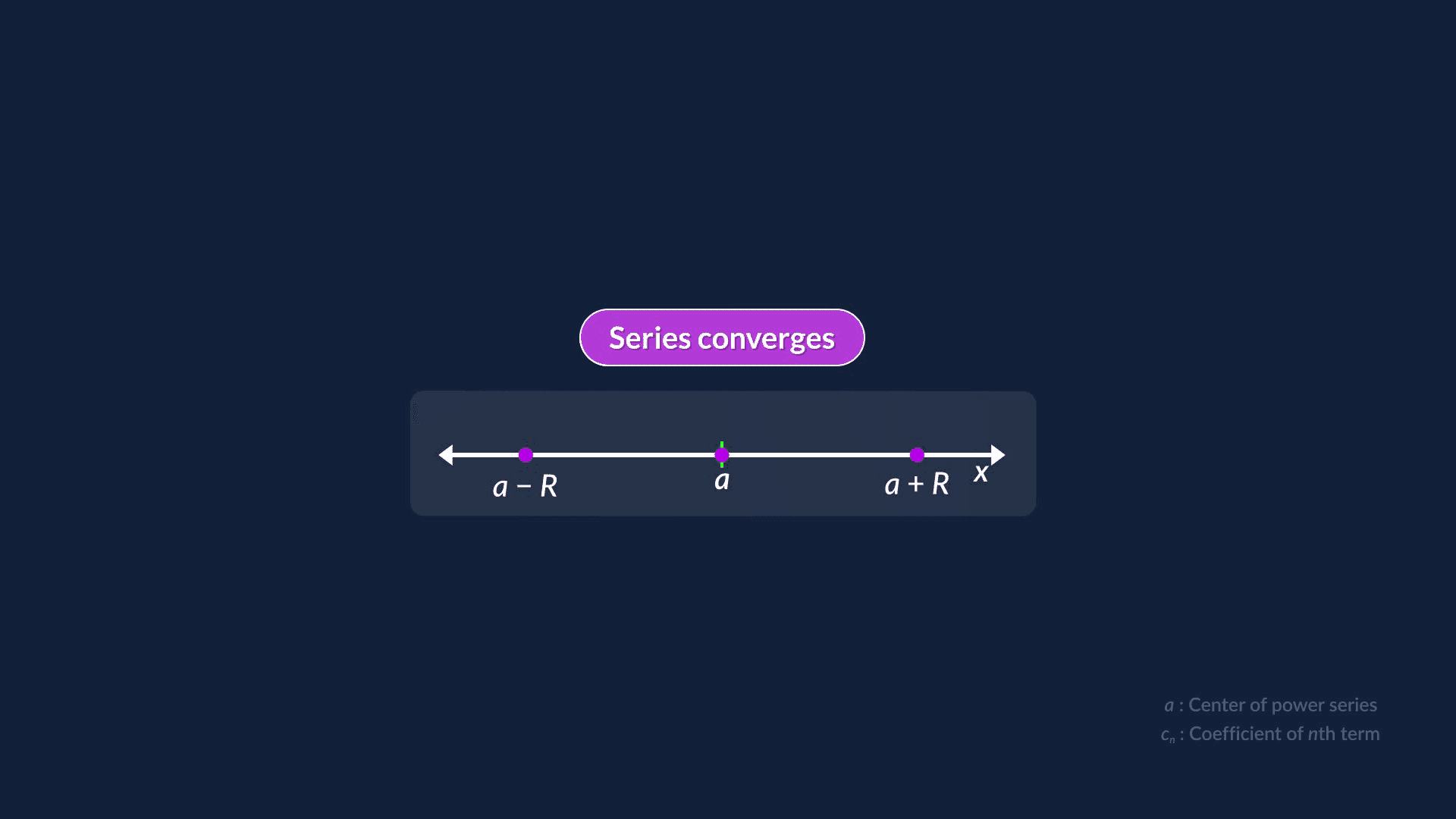
To find the interval of convergence of a power series, you apply one of these tests and solve for the values of x that make the series converge. For the Bessel function, that interval is (−∞, +∞), all real numbers, which is a strong result and confirms that J(0)(x) is defined everywhere.
The Bessel function of order zero is not abstract mathematics confined to textbooks. Acoustic engineers at institutions like MIT's Media Lab use Bessel functions to model how sound radiates from circular speakers. NASA engineers apply them when analyzing heat distribution across cylindrical fuel tanks. In medical imaging, MRI signal reconstruction in cylindrical geometries at US hospitals relies on Bessel function mathematics. Even the design of fiber-optic cables, critical to US internet infrastructure, uses these functions to describe how light propagates inside a circular waveguide.
For students in AP Physics, college physics, or engineering programs, recognizing the Bessel function as a member of the power series family, and understanding how convergence tests validate its behavior, builds the foundation for tackling partial differential equations (PDEs) in junior and senior-level STEM coursework.
Related Micro-courses