Loading video…


 10 Concepts
 60 views

Video Summary: What are Vectors
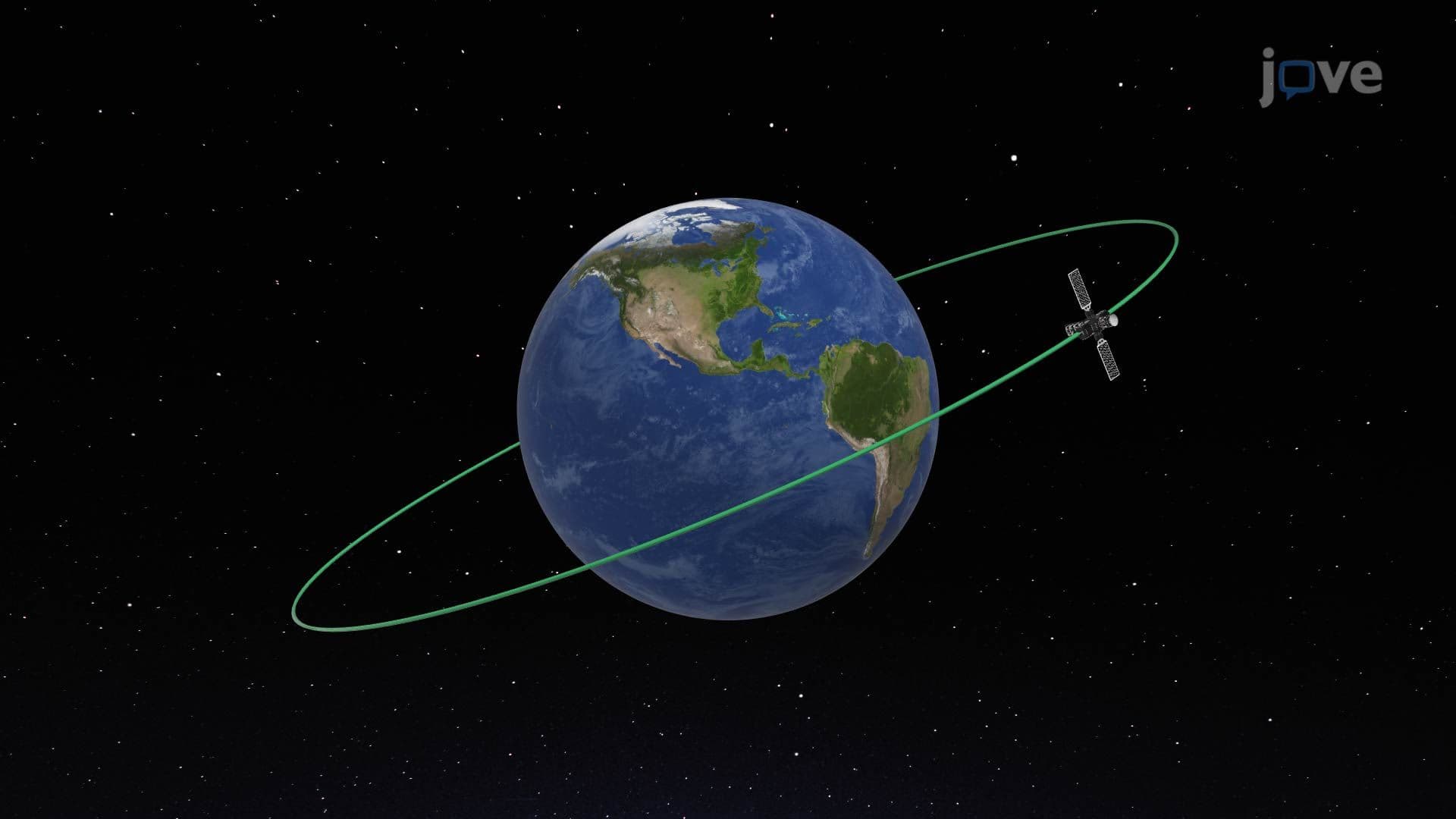
Ever wonder how a quarterback's throw or a rocket launch gets calculated with precision? Vectors basics make that possible. What are Vectors? They are mathematical quantities defined by both magnitude and direction, unlike simple numbers. NASA engineers and AP Physics students alike rely on vectors to model motion in 3D space. Watch the full video on JoVE Coach to master this concept with expert-led visuals and step-by-step explanations.
Vectors are one of the most powerful tools in mathematics and physics. Unlike a scalar, a quantity with magnitude only, such as temperature or mass, a vector carries both magnitude and direction. When a wide receiver sprints diagonally across a football field, the distance he covers is a scalar, but the precise path he takes is described by a vector. This distinction is fundamental in AP Physics 1, AP Calculus BC, and introductory college courses like Calculus III and Linear Algebra.
In three-dimensional space, a vector is represented as an arrow. The tail marks the starting point, the tip marks the endpoint, and the arrow's length encodes the vector's magnitude, how large the quantity is. Its orientation captures direction. This visual model helps students move from abstract numbers to geometric intuition. On the SAT Math section and AP Physics exams, questions often ask students to interpret vector diagrams, making this visualization skill directly testable.
To work with vectors numerically, mathematicians break them down into components, one value for each coordinate axis. A vector written as ⟨3, 2, 1⟩ means: move 3 units along the x-axis, 2 units along the y-axis, and 1 unit along the z-axis. When a vector originates at the coordinate origin (0, 0, 0), it is called a position vector, and its components directly match the coordinates of its endpoint.
When a vector connects two points, say, Point A at (1, 2, 3) and Point B at (4, 5, 6), you find its components by computing B minus A for each axis: ⟨4−1, 5−2, 6−3⟩ = ⟨3, 3, 3⟩. This subtraction captures the net displacement along each axis, a technique used constantly in physics mechanics and computer graphics programs at US universities.
The magnitude of a vector is its total length in space. For a vector ⟨a, b, c⟩, the magnitude is calculated as the square root of (a² + b² + c²), a direct extension of the Pythagorean Theorem into three dimensions. For example, the magnitude of ⟨3, 2, 1⟩ equals the square root of (9 + 4 + 1), which simplifies to the square root of 14, approximately 3.74 units.
This formula is a prerequisite for understanding direction cosines, unit vectors, and vector projection, concepts that appear in Calculus III courses at colleges across the US, including in STEM programs at MIT, UCLA, and state universities. It also lays the groundwork for more advanced operations like the dot product, cross product, parametric equations of a line, and computing the distance from a point to a plane, all of which depend on a solid grasp of vector magnitude and components.
Mastering vectors basics early creates a durable scaffold for everything from equations of planes in multivariable calculus to force diagrams in engineering statics.
Related Micro-courses