Loading video…

 10 Concepts
 60 views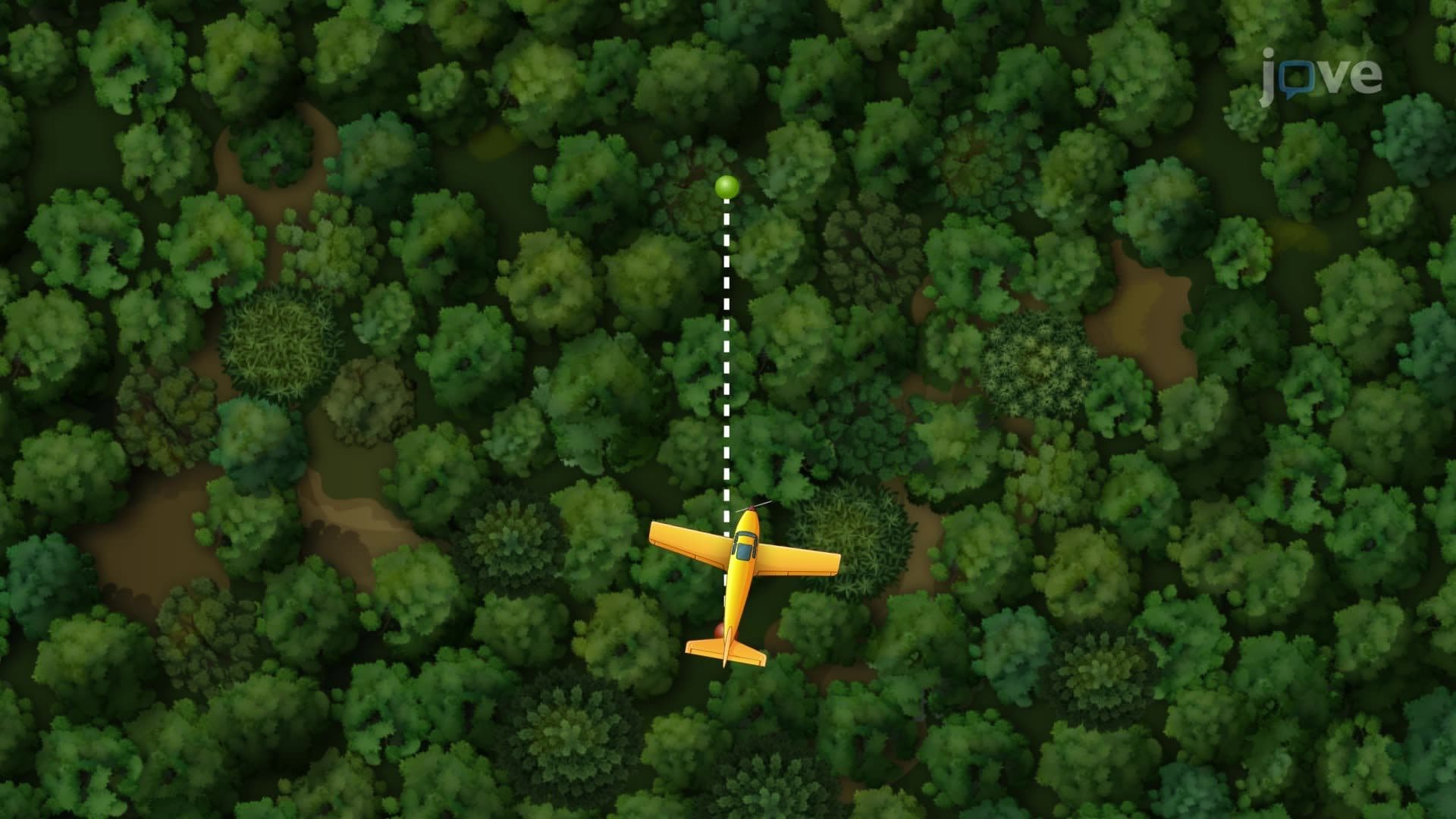

Video Summary: Problem Solving with Vectors in 2d
Did you know a commercial flight from New York to Boston can drift miles off course due to wind, without the pilot even realizing it? Problem solving with vectors in 2D basics helps explain exactly how that happens and how pilots correct it. This concept combines airspeed, ground velocity, and wind velocity into a solvable vector triangle. Watch the full video on JoVE Coach to master this concept with expert-led visuals and step-by-step explanations.
Vectors are one of the most powerful tools in mathematics and physics, and nowhere is that clearer than in two-dimensional motion problems. Problem solving with vectors in 2D means breaking complex real-world motion, like an aircraft battling crosswinds, into manageable components that can be calculated using algebra and trigonometry. This skill appears across AP Physics, AP Calculus BC, college-level linear algebra, and even standardized test prep, making it essential for any STEM-focused student.
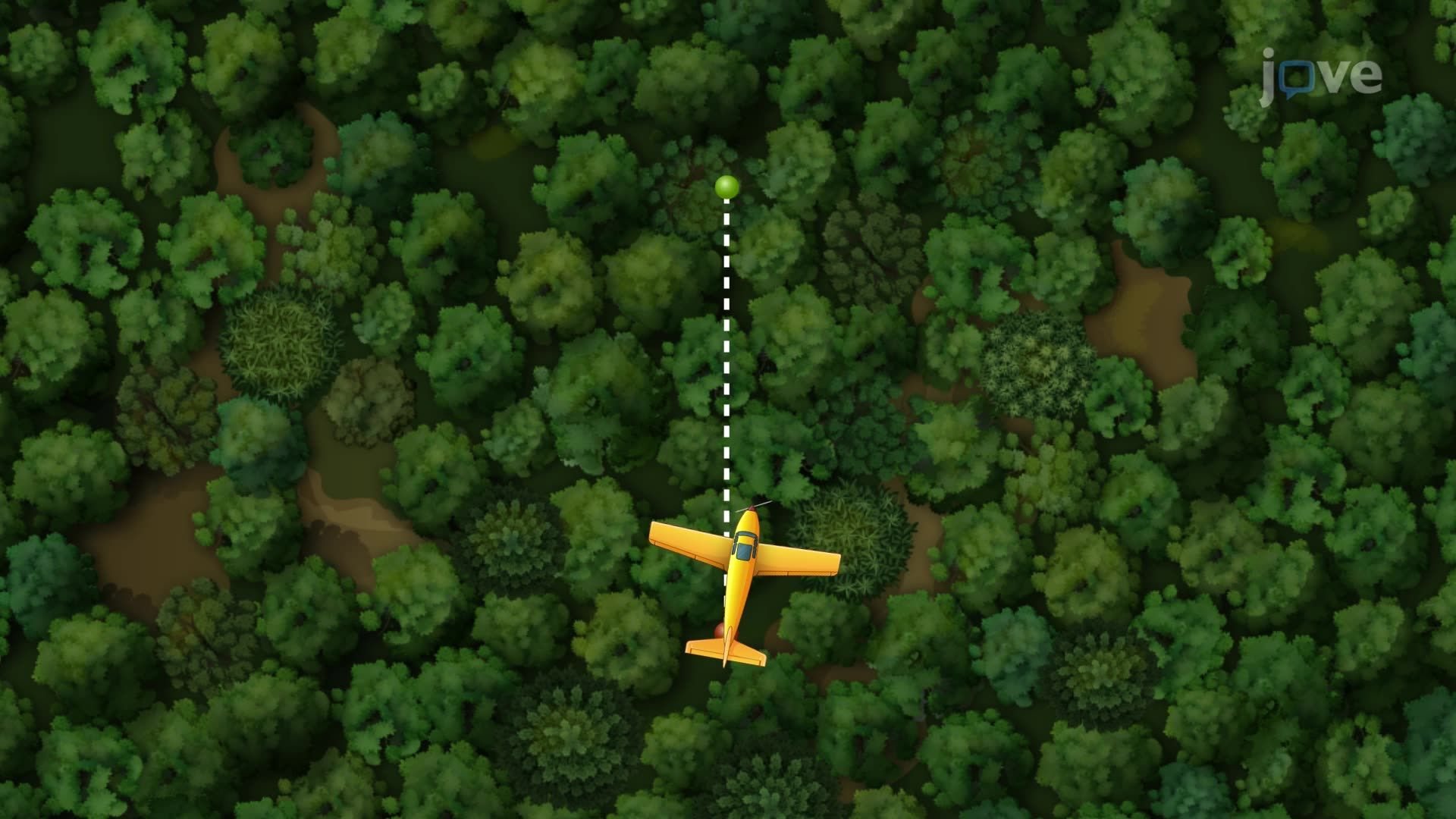
When a plane flies due north at 180 km/h but ends up displaced 5 degrees east of north, three velocities are at play: the airspeed vector (the plane's intended motion), the wind velocity vector (an invisible push), and the ground velocity vector (the actual path). Together, these form a vector triangle, one of the most common structures in 2D vector problems.
The ground velocity vector is found first. If the plane travels 80 km in 30 minutes, its ground speed is 160 km/h. Since the direction is 5 degrees east of north, this vector has two components:
Subtracting the airspeed vector (180 km/h due north) from the ground velocity gives the wind's contribution. The northward part of the wind is 159.4 − 180 = −20.6 km/h (southward), and the eastward part is 13.9 km/h. The wind's magnitude is found using the Pythagorean Theorem: sqrt(20.6² + 13.9²) ≈ 24.8 km/h.
The ability to resolve any vector into perpendicular components, typically horizontal (x) and vertical (y), or east and north, is the foundation of 2D vector problem solving. This technique appears on the AP Physics 1 exam, college midterms, and in fields like aerospace engineering and meteorology.
The general rule: for a vector of magnitude v at angle θ from a reference direction,
Direction cosines extend this logic into three dimensions, and vector projection, using the dot product, lets you find how much of one vector lies along another. These tools are directly tested in college-level multivariable calculus and linear algebra courses at US universities like MIT, UCLA, and Georgia Tech.
To stay on a true north heading despite a wind pushing east, the pilot must aim slightly west of north. The corrective angle is found by setting the westward component of the airspeed equal to the wind's eastward push:
180 × sin(θ) = 13.9 → θ = arcsin(13.9 / 180) ≈ 4.4 degrees west of north
This approach mirrors what the FAA teaches in aviation navigation and what physics students apply when solving relative motion problems. The same logic governs river-crossing problems (a classic on AP Physics exams), projectile motion with wind resistance, and robotic path correction in engineering courses.
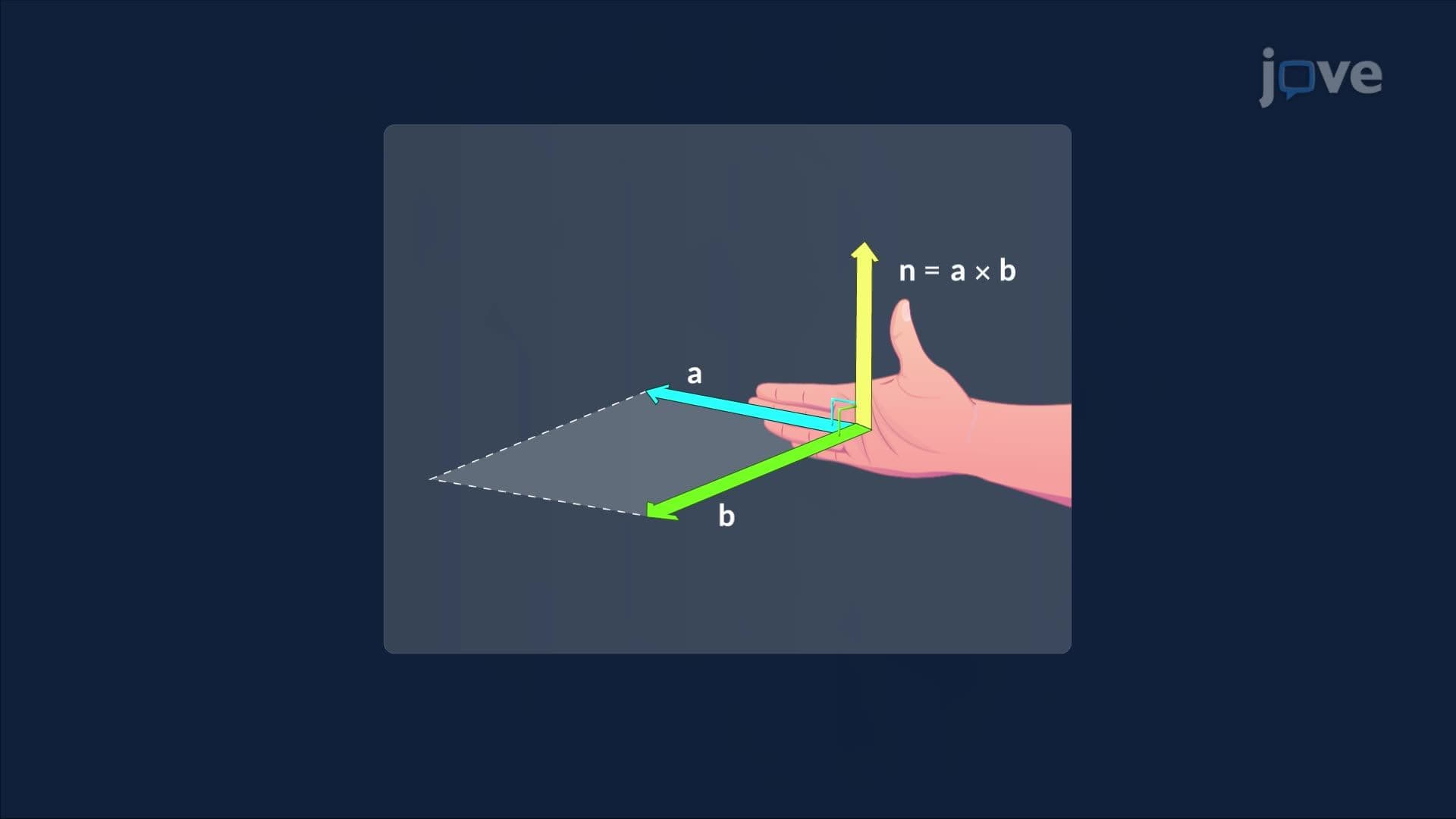
Mastering 2D vector problems builds direct intuition for harder topics: the cross product gives a vector perpendicular to two others (with a geometric interpretation as the area of a parallelogram), parametric equations of a line describe motion along a vector direction, and the distance from a point to a plane uses vector projection. Each of these grows naturally from the same component-based thinking used in the airplane navigation problem above.
Related Micro-courses