Loading video…


 10 Concepts
 60 views

Video Summary: What are Planes in Space
Ever wonder how architects ensure a massive glass façade on a skyscraper is perfectly angled? The answer lies in planes in space basics. Understanding planes in space means knowing how a single point and a perpendicular vector completely define an infinite flat surface, a principle used in structural engineering across US construction projects. Watch the full video on JoVE Coach to master this concept with expert-led visuals and step-by-step explanations.
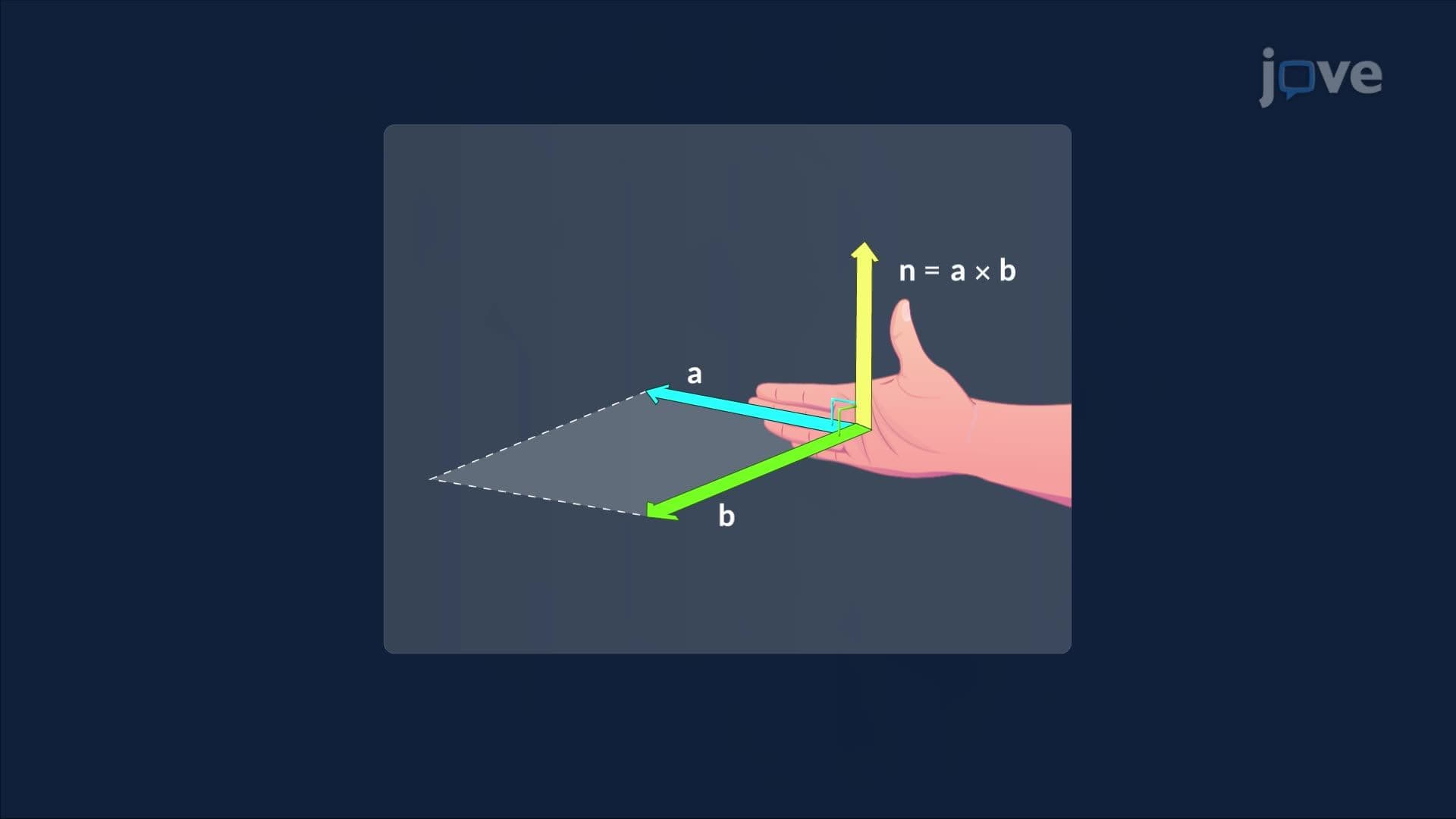
A plane in three-dimensional space is one of the most fundamental structures in multivariable calculus and linear algebra. Unlike a line, which needs just a direction, a plane needs two pieces of information: a fixed point it passes through and a normal vector perpendicular to its surface. This combination is surprisingly powerful. It allows mathematicians, engineers, and physicists to describe any flat surface in 3D, no matter how it's tilted or positioned.
Here's where the dot product becomes essential. If r₀ is the position vector of the known point on the plane and r is the position vector of any other point on the plane, then the vector (r − r₀) lies entirely within the surface. Since the normal vector n is perpendicular to everything in the plane, it must be perpendicular to (r − r₀) as well. Orthogonal vectors have a dot product of zero, giving the vector equation of the plane:
n · (r − r₀) = 0
This can be rewritten equivalently as n · r = n · r₀, which is just another face of the same relationship. Understanding this step-by-step derivation is exactly the kind of reasoning tested on AP Calculus BC free-response questions and college-level Calculus III midterms.
To work with a plane practically, the vector equation is expanded into its x-, y-, and z-components. If the normal vector is n = (a, b, c) and the fixed point is (x₀, y₀, z₀), the scalar equation of the plane becomes:
a(x − x₀) + b(y − y₀) + c(z − z₀) = 0
This simplifies to the standard form ax + by + cz = d, where d = ax₀ + by₀ + cz₀. The scalar equation is particularly useful because it lets you test whether any specific point lies on the plane, simply plug in the coordinates and check if the equation holds. This technique appears regularly in college entrance exams, university physics courses, and engineering coursework across the US.
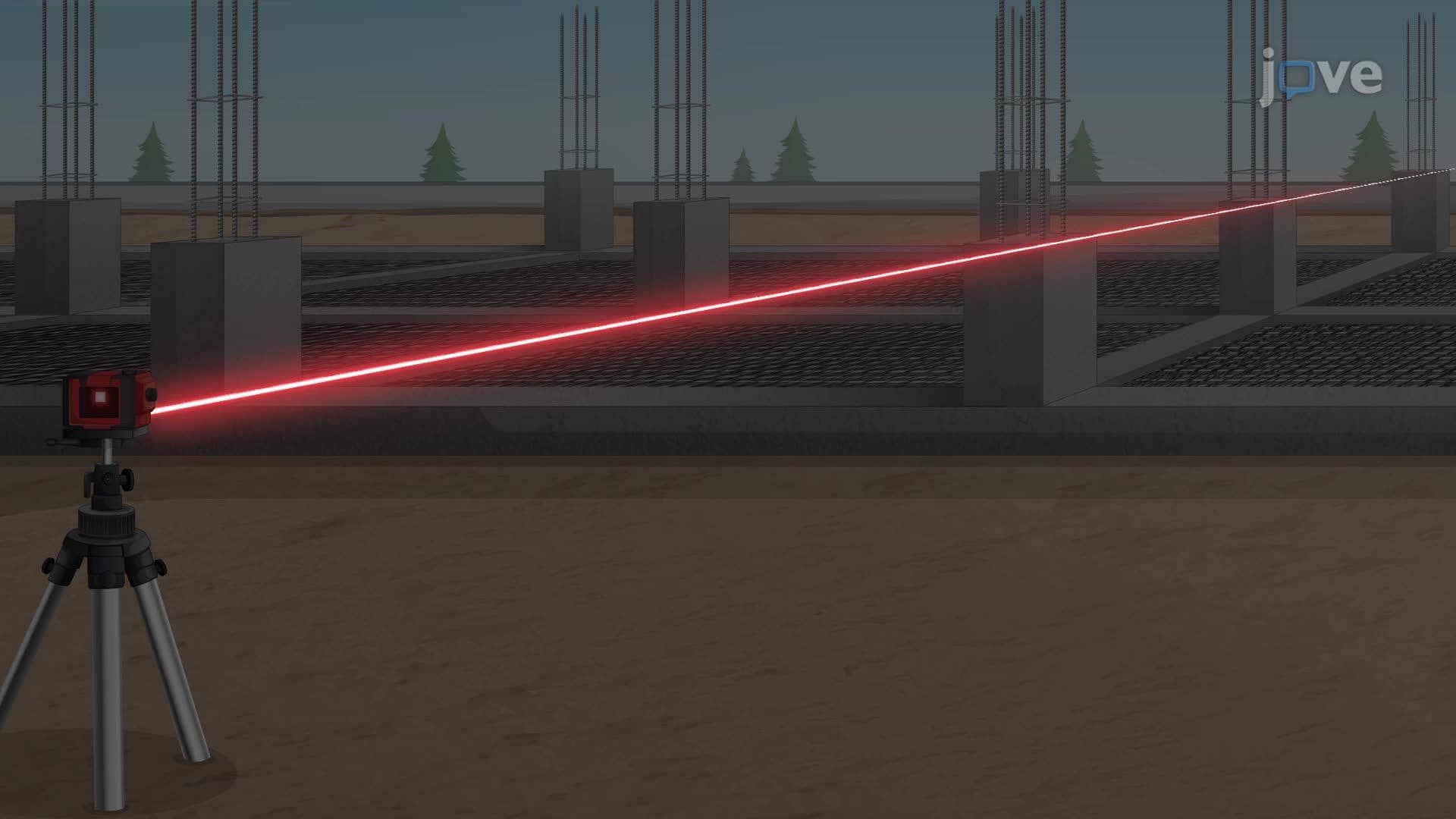
Consider a sloped glass curtain wall on a modern building, like those seen on landmarks such as the One World Trade Center in New York City. Engineers must verify that every mounting bracket lies on the same geometric plane to ensure structural integrity. By modeling the glass panel as a plane in space, they define the surface using one corner point and the panel's outward normal vector, then test each bracket's coordinates against the scalar equation. If every mounting point satisfies the equation, the alignment is confirmed mathematically before a single bolt is tightened. This is a direct, real-world use of equations of planes that connects classroom theory to life-safety engineering decisions.
Beyond construction, plane equations are foundational to computer graphics (defining surfaces in 3D rendering engines), robotics (calculating tool orientations), and even MRI imaging analysis in US medical research centers. Mastering planes in space is not just an academic exercise, it's a gateway concept that supports everything from vector projection and direction cosines to finding the distance from a point to a plane.
Related Micro-courses