Loading video…


 10 Concepts
 60 views

Video Summary: What are Quadric Surfaces
Believe it or not, the curved heads on industrial pressure vessels used across US manufacturing plants are engineered using quadric surfaces, three-dimensional shapes born from conic sections. What are Quadric Surfaces? They are surfaces defined by second-degree equations in x, y, and z, and understanding their traces (cross-sections) reveals their true shape. Watch the full video on JoVE Coach to master this concept with expert-led visuals and step-by-step explanations.
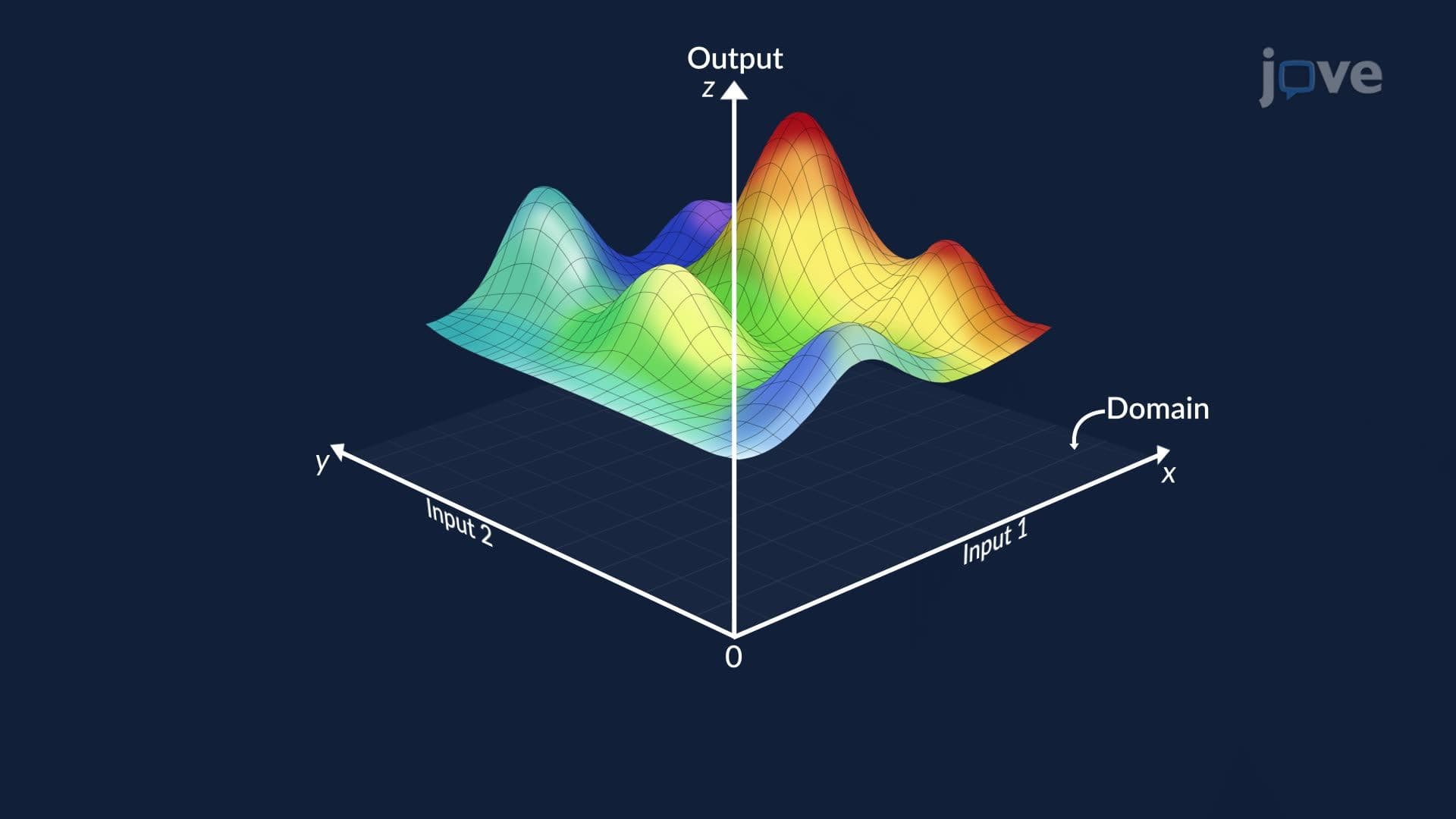
To truly understand quadric surfaces, start with what you already know. In two dimensions, second-degree equations produce conic sections, circles, ellipses, parabolas, and hyperbolas. Quadric surfaces are the natural three-dimensional extension of those shapes. Instead of an equation in just x and y, a quadric surface is described by a second-degree equation in x, y, and z. These surfaces appear throughout multivariable calculus courses taught at US universities, and mastering them is essential for success in courses like Calculus III, Linear Algebra, and Differential Equations.
The most powerful tool for identifying a quadric surface is analyzing its traces, the cross-sections created when one variable is held at a constant value. Think of slicing a 3D object with a flat plane and examining the outline left behind.
For example, setting z = 0 reveals how the surface intersects the xy-plane. Setting z = 1, z = 2, or z = −3 produces parallel cross-sections at different heights. By examining whether these cross-sections are ellipses, circles, parabolas, or hyperbolas, you can determine exactly which quadric surface you are working with. This trace-analysis method is a core skill tested in college-level calculus courses and appears frequently on midterm and final exams.
When all three types of traces, those parallel to the xy-plane, the xz-plane, and the yz-plane, are ellipses, the surface is called an ellipsoid. The standard equation for an ellipsoid is:
(x^2 / a^2) + (y^2 / b^2) + (z^2 / c^2) = 1
Here, a, b, and c represent the semi-axis lengths along the x-, y-, and z-axes, respectively. As the value of z increases from zero toward its maximum value c, the elliptical traces shrink progressively until they collapse into a single point, marking the top of the ellipsoid. The surface is completely bounded, meaning it does not extend to infinity in any direction. A special case occurs when a = b = c, which produces a sphere.
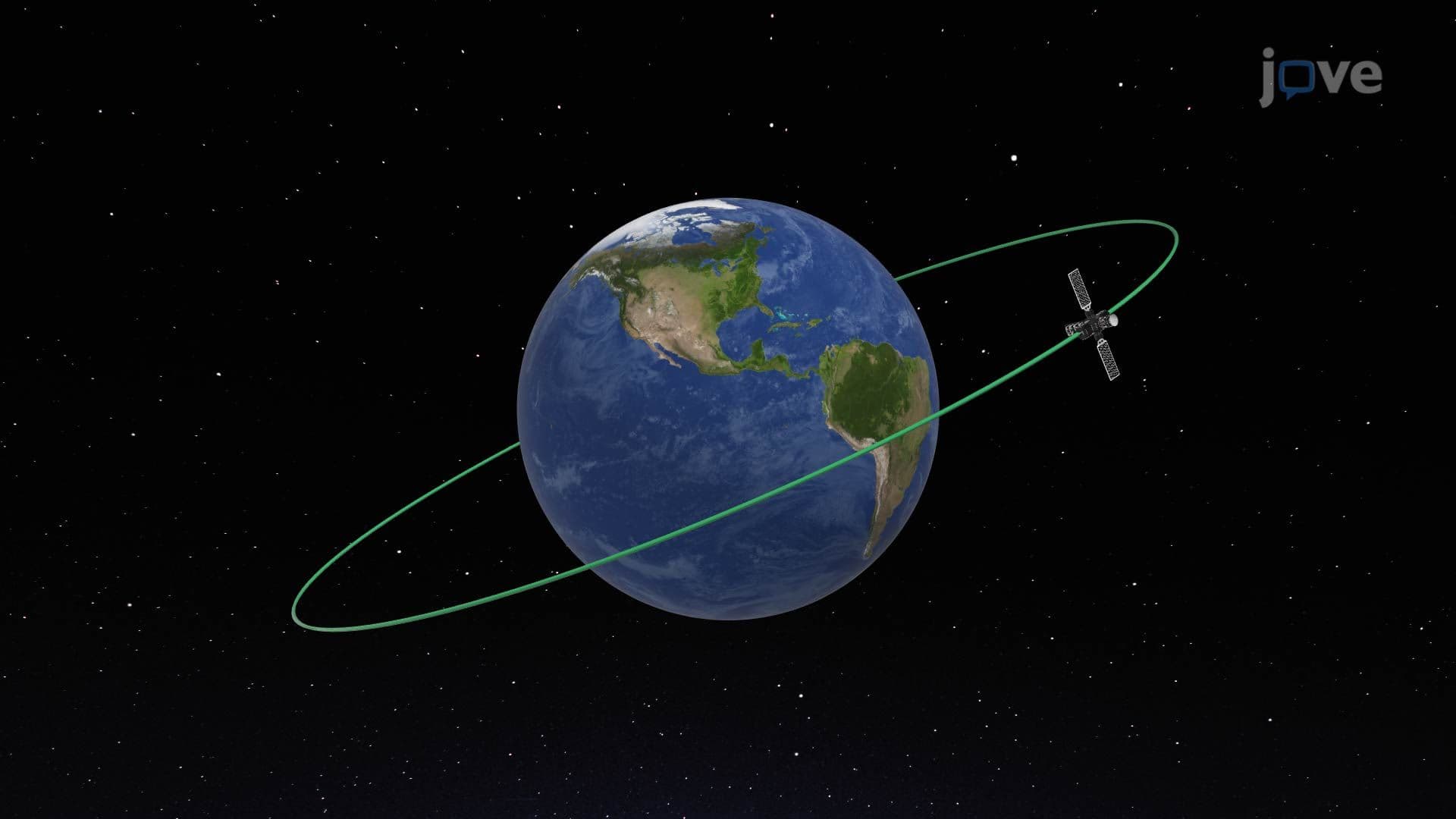
Quadric surfaces are not just abstract mathematics, they are actively used in engineering design and scientific modeling across the United States. The ellipsoidal heads on pressure vessels, used in oil refineries, chemical plants, and pharmaceutical manufacturing facilities, are shaped the way they are precisely because an ellipsoidal surface distributes internal pressure more evenly than a flat cap. NASA engineers use ellipsoidal and paraboloidal geometry when designing antenna dish reflectors and spacecraft fuel tanks. In medical imaging, the mathematics behind MRI machine geometry also draws on quadric surface equations.
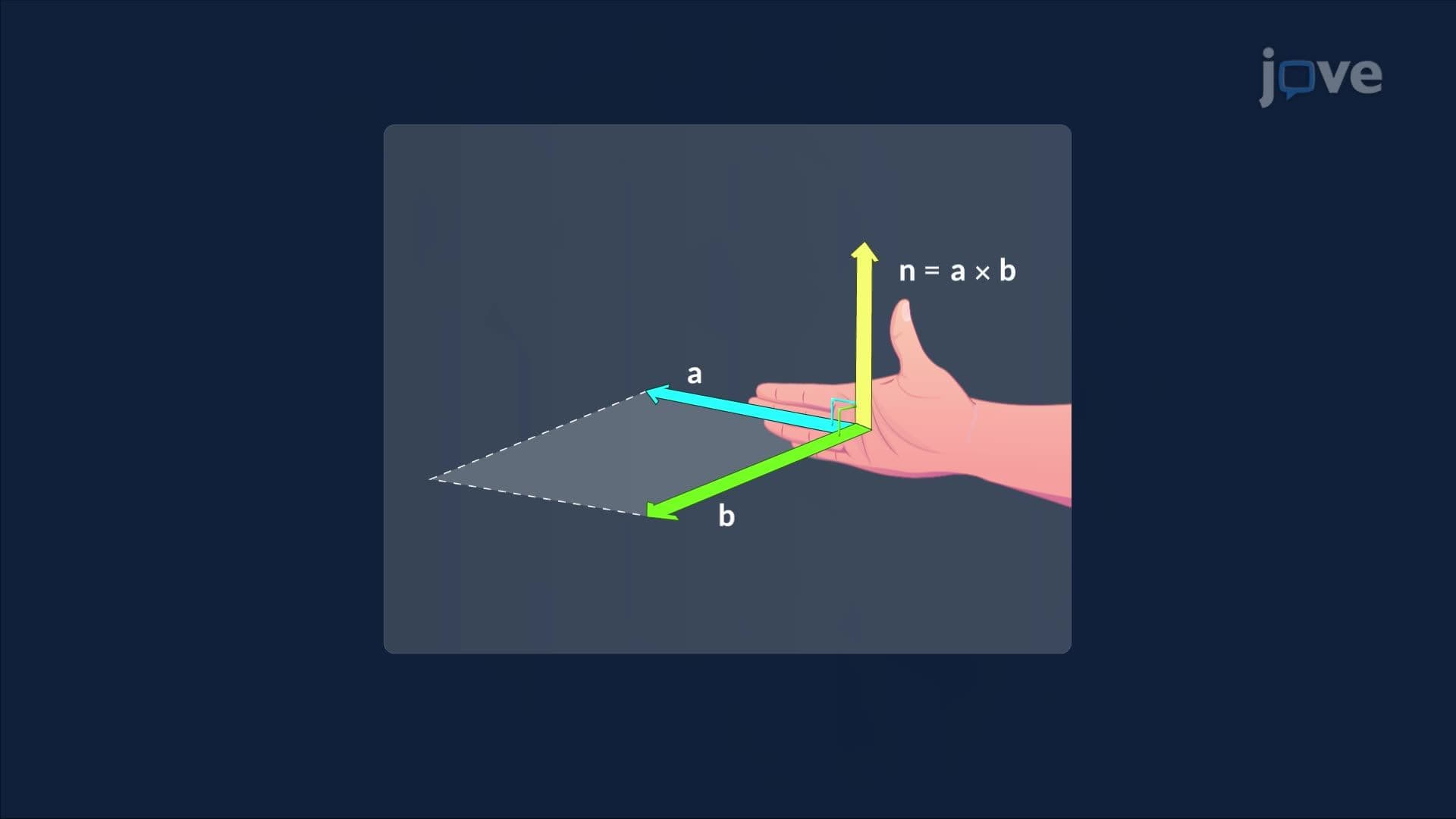
For students preparing for AP Calculus BC, college Calculus III, or physics and engineering courses, a strong grasp of quadric surfaces also reinforces adjacent concepts such as dot product, cross product, vector projection, equations of planes, and parametric equations of a line, all of which rely on the same three-dimensional coordinate framework.
Related Micro-courses