Loading video…

 16 Concepts
 51 views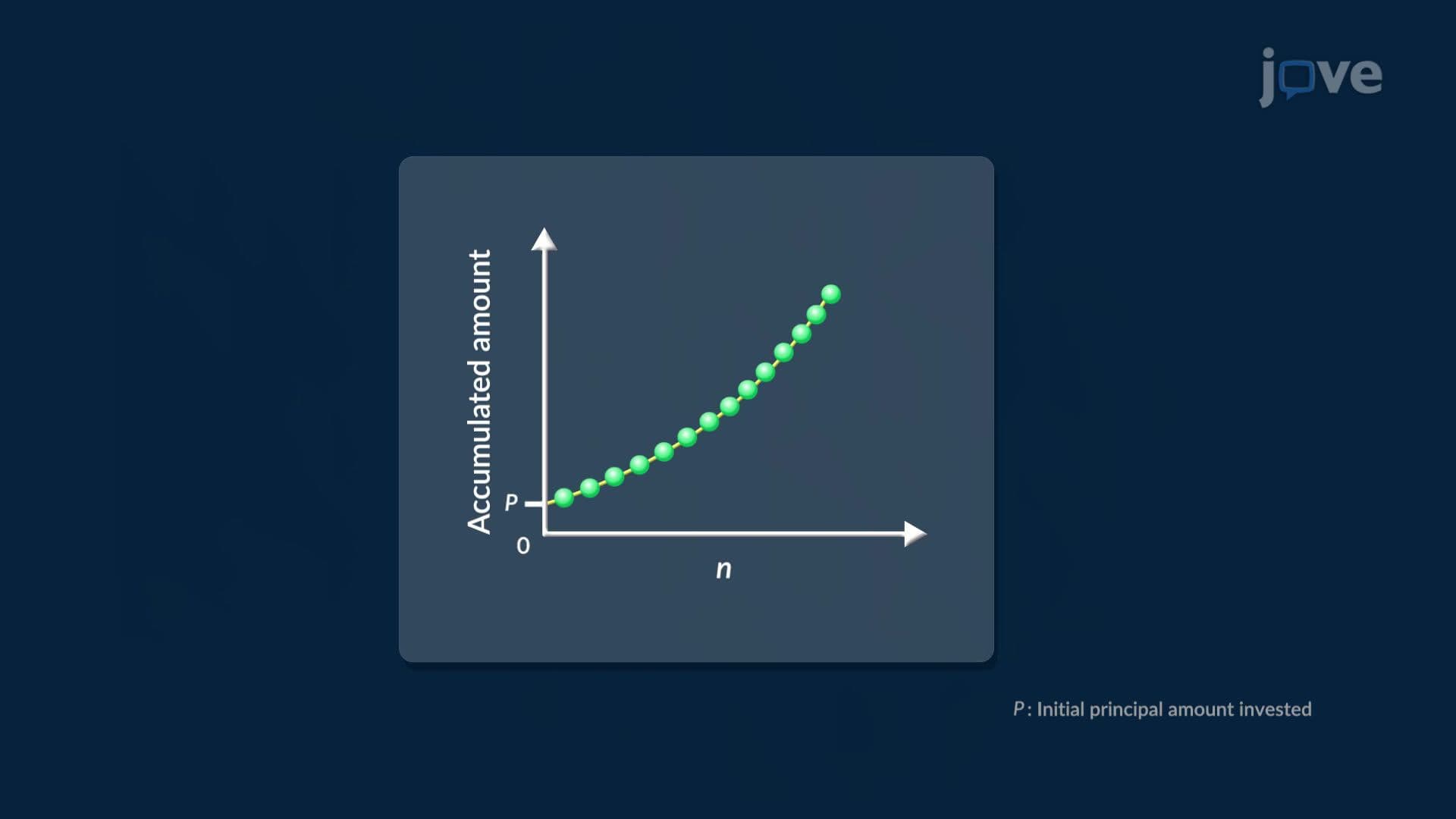

Video Summary: What Is the Ratio Test
Can an infinite series actually add up to a finite number? The ratio test basics answer exactly that question. The ratio test is a powerful convergence tool used in calculus to determine whether an infinite series settles at a finite sum or explodes toward infinity. Consider a US savings account earning 4% compound interest annually, the ratio test reveals that series diverges. Watch the full video on JoVE Coach to master this concept with expert-led visuals and step-by-step explanations.
The ratio test is one of the most widely used convergence tests in calculus. It answers a deceptively simple question: does an infinite series, a sum with infinitely many terms, add up to a finite number, or does it grow without bound? By examining how consecutive terms relate to one another, the ratio test gives students and mathematicians a reliable method for classifying series behavior without needing to find an explicit formula for the partial sums.
To apply the ratio test to a series with terms a(n), compute the limit L = lim(n → ∞) |a(n+1) / a(n)|. This ratio captures how fast the terms are growing or shrinking relative to each other. Three outcomes are possible:
This clean decision framework makes the ratio test especially efficient for series involving factorials, exponentials, and powers, term types that appear frequently in Taylor series and Maclaurin series.
The ratio test is a central topic in AP Calculus BC, where students are expected to test series for convergence and determine intervals of convergence for power series. It also appears in Calculus II courses at virtually every US college and university, typically in units covering sequences, series, and Taylor polynomials. On AP Calculus BC free-response questions, correctly applying the ratio test and interpreting L is often worth multiple points.
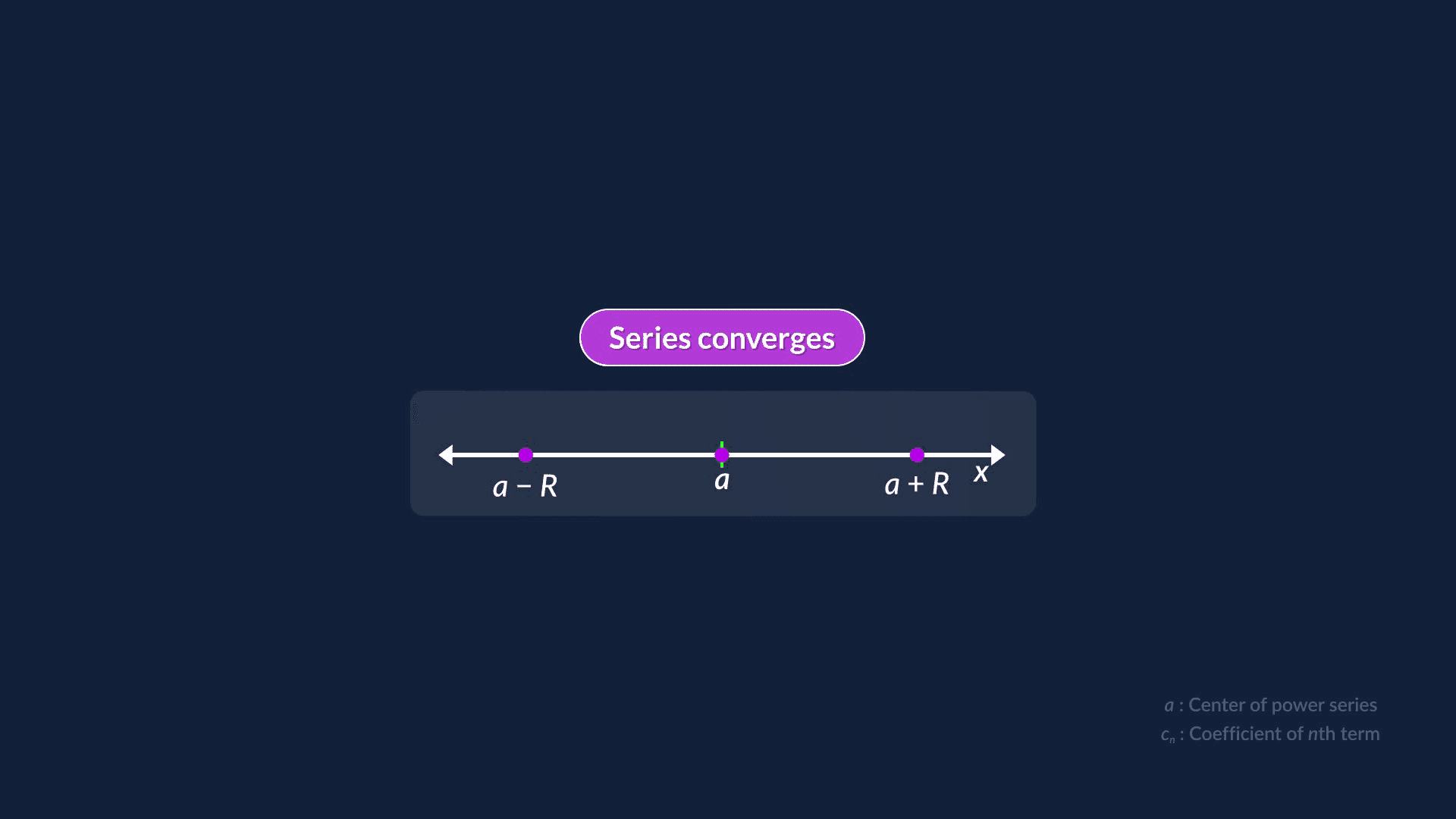
In college coursework, the ratio test becomes essential for answering questions like: How do you find the interval of convergence of a power series? The approach involves treating the power series as a general series, applying the ratio test, and solving the resulting inequality for x. The endpoints are then tested separately using other convergence methods.
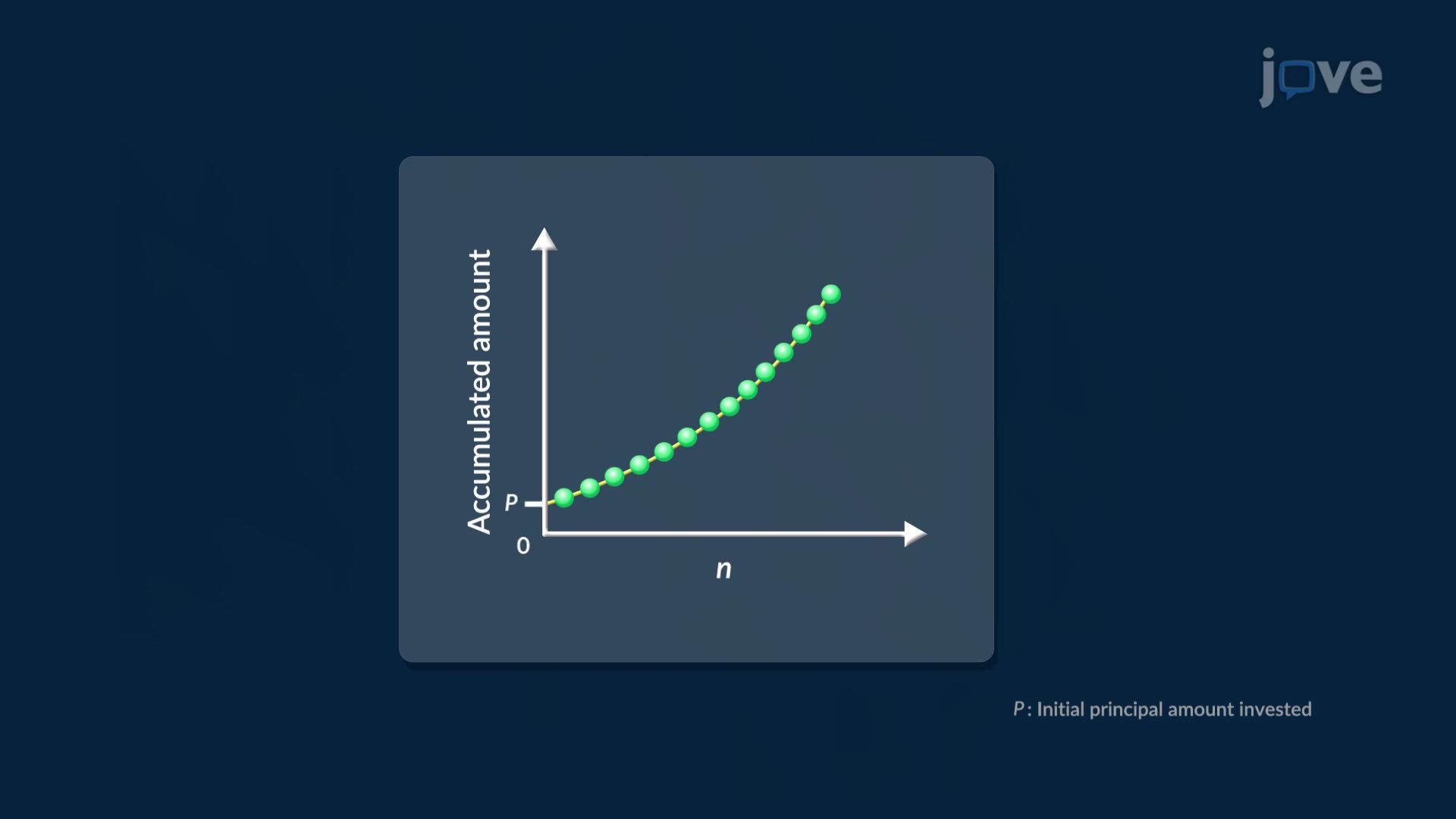
A concrete US example helps illustrate divergence. Imagine an investment account where each year's balance is 1.04 times the previous year's. As a series, each term is larger than the last. Applying the ratio test yields L = 1.04, which is greater than 1, so the series diverges. This confirms what finance students intuitively know: unchecked compounding grows without limit, and you cannot assign a finite total to an infinite sequence of growing deposits.
Beyond finance, the ratio test is foundational in physics and engineering. In quantum mechanics courses at US universities, power series solutions to differential equations, such as those describing a quantum harmonic oscillator, are validated using the ratio test to ensure convergence within a physically meaningful domain.
Understanding the ratio test also deepens your grasp of related ideas. A geometric series, for example, converges when its common ratio r satisfies |r| < 1, a fact the ratio test confirms directly, since L equals |r| for any geometric series. Taylor series and Maclaurin series rely on convergence guarantees to be valid approximations of functions, and the ratio test is often the fastest way to establish those guarantees. Knowing when to use the ratio test versus the root test or alternating series test is itself a critical exam skill that separates strong calculus students from exceptional ones.
Related Micro-courses